
The 3 Stages of Communication in Leadership
“The art of communication is the language of leadership.” — James Humes
What is one thing that is common between gaming and communication?
Both gaming and communication have STAGES.
Pro players don’t start their game at the pro level. They start as rookies, and work their way up just like everyone else. Some players — the ones that are dedicated, focused, and strategic — move up the stages faster.
Similarly, communication is a skill that every leader can master. And every leader operates at different stages, depending on their proficiency, experience, and approach to communication.
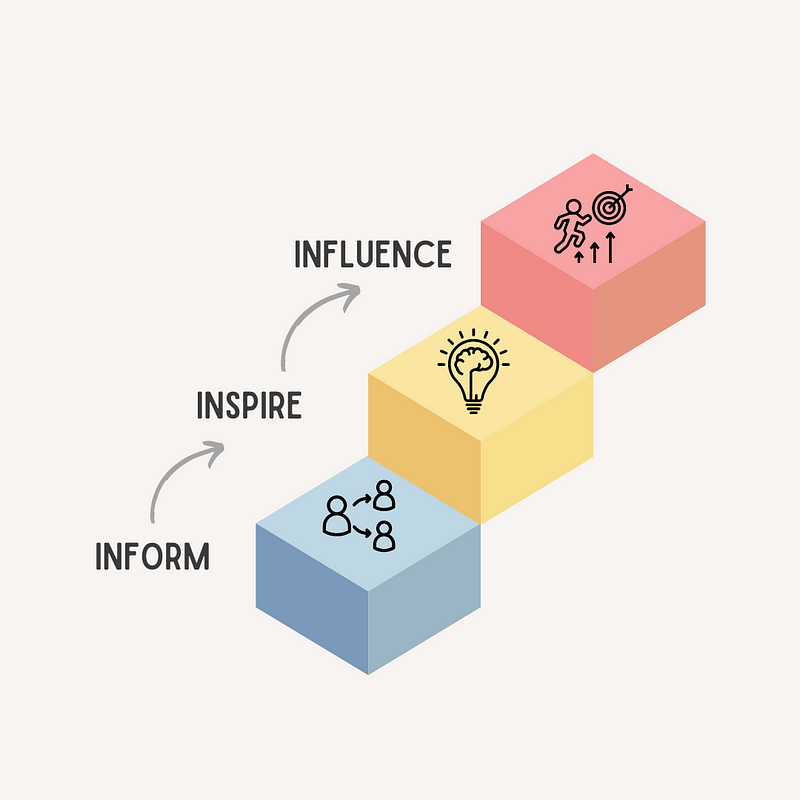
In this article, I will discuss the 3 Stages of Communication in Leadership, aka the 3 I’s — Inform, Inspire, Influence — and how you as a leader can navigate these stages to master the art (and craft) of communication.
Stage 1 — Inform
“Power today comes from sharing information, not withholding it.” — Keith Ferrazzi
As a new gamer (or a gamer new to a game), you start as a rookie. Your focus is on staying alive, and as you play the game you learn the rules, the nitty-gritty, and the tactics.
Similarly, as a leader, your first stage of communication is Inform.
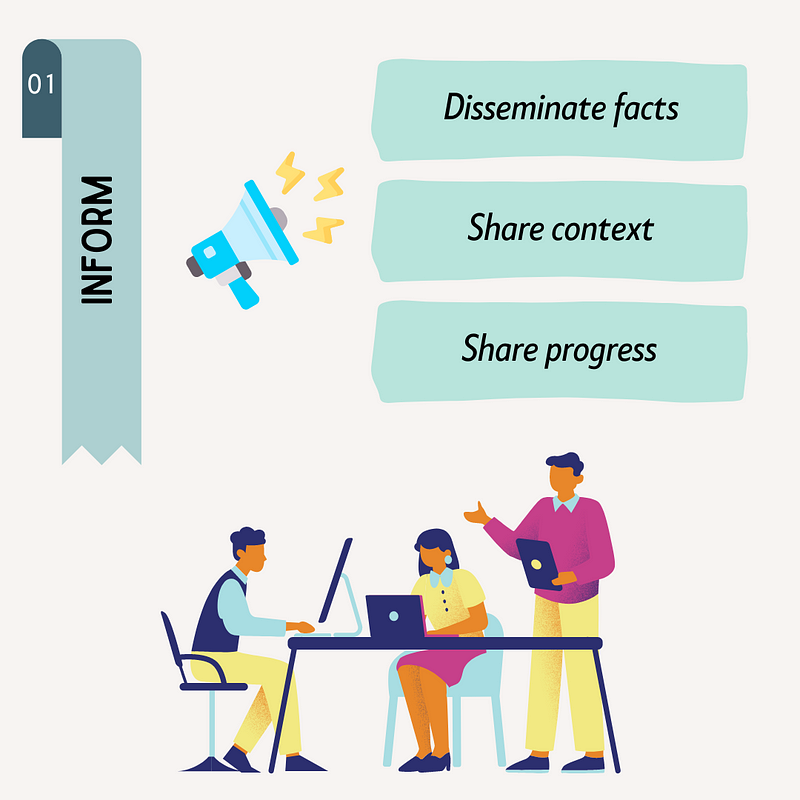
At its core, informing involves laying out facts, data, and relevant information.
As a leader, you need to ensure your team members and stakeholders are kept updated with pertinent information, and are equipped with the knowledge that they need to get their job done.
Examples of informing:
- Cascading information from leadership to your teams
- Keeping leadership updated on progress made by your team on projects in flight
- Sharing decision outcomes that impact your team or stakeholders
As you go about sharing information, you also need to be mindful of how you communicate. In The Dumbest Mistake Leaders Make in Communication, I discussed how you need to be authentic and transparent as you communicate with your teams.
As a leader, your goal is to provide accurate and timely information to your teams and your stakeholders.
Stage 2 — Inspire
“A leader must inspire, or his team will expire.” — Orrin Woodword
In gaming, as you progress to the intermediate level, you learn some of the strategies and moves you weren’t aware of earlier. Your focus shifts from staying alive to making progress.
Similarly, as a leader, your second stage of communication is Inspire.
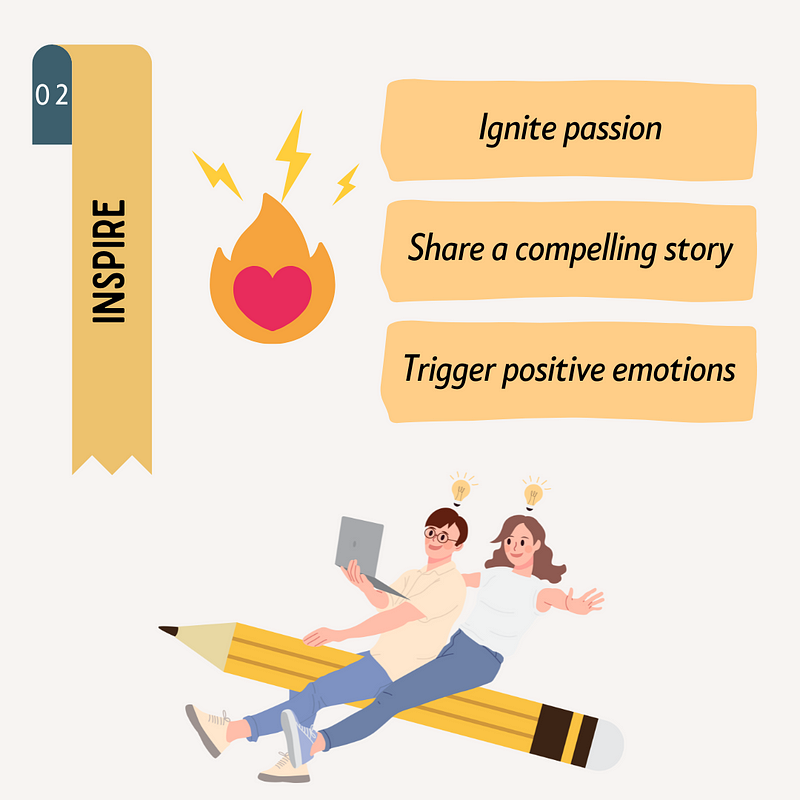
Inspiration goes beyond just information sharing. When you inspire, you ignite passion, fuel motivation, and trigger positive emotions in your audience.
Examples of inspiring:
- Sharing a compelling story that resonates with your team
- Painting a vivid image of the future to inspire your team
- Getting your teams excited about the shared goal or vision
In Sight vs Vision: 4 Strategies to Become a Visionary Leader, we discussed the importance of open-mindedness and optimism in shaping the path for your organization.
When you inspire, you tap into the emotional dimension of communication.
As a leader, your goal is to inspire your teams about the shared goals and vision, and to get them excited about what the future holds.
Stage 3 — Influence
“The key to successful leadership today is influence, not authority.” — Ken Blanchard
In gaming, as you advance to the pro level, you come up with your own unique strategies, which are then adopted by other gamers. Your focus shifts from making progress to creating new paths and strategies.
Similarly, Influence belongs to the advanced stage of communication in leadership.
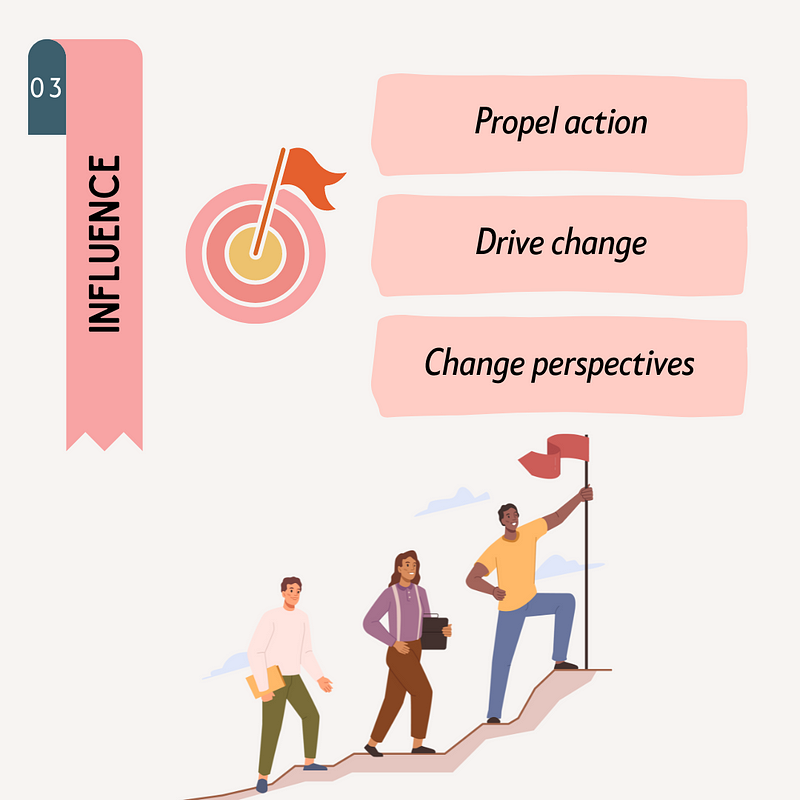
While informing and inspiring lay the groundwork for communication, influence is the catalyst that propels action.
You can share all the information you have, and inspire your team all you want, but all that is for nothing if they fail to take action.
As a leader, you need to influence your team, your stakeholders, and your boss to shape opinions, attitudes, and behaviors.
Examples of communicating with influence:
- Compelling others to change their perspective
- Driving alignment toward a common goal or objective
- Propelling others into action
Influence is the highest stage of communication, and it requires strategic thinking and a focus on the long-term objectives of the organization.
As a leader, your goal should be to communicate with influence to drive change and alignment toward the corporate goals.
Final Thoughts: The Interplay of The 3 I’s
In this article, we discussed the three I’s, or stages, of communication in leadership:
- Inform. Provide accurate and timely information to your team and stakeholders.
- Inspire. Get your teams excited about the shared goals and vision.
- Influence. Drive change and alignment towards corporate goals.
It’s important to note that, while the three I’s serve distinct purposes, they are not mutually exclusive.
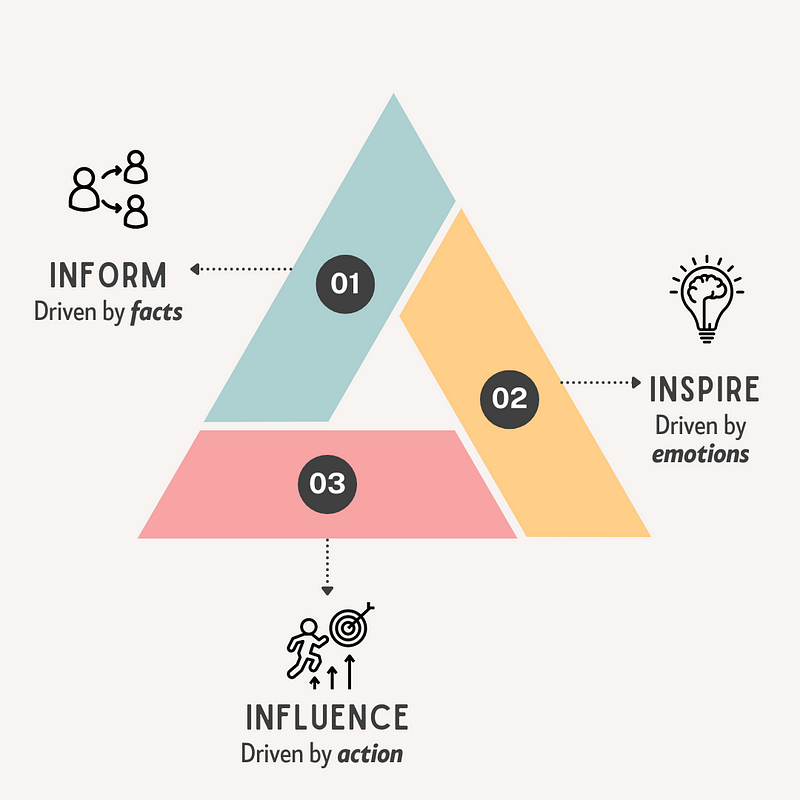
In reality, the three I’s often overlap and complement each other, and that further amplifies their impact.
As an example, if you are looking to inspire your team with a futuristic vision, you first need to make sure they have sufficient context and understand the objectives. In that sense, informing serves as a foundation for inspiration.
Similarly, if your team is well-informed, you can use inspiration to bring meaning and purpose to their goals. And to take that a step further, you can use influence to drive their energy towards concrete action towards those goals.
At the end of the day, communication is a tool, and you need to be intentional and strategic in your communication.
Like my writing?
If you found this valuable, I would appreciate some claps👏 as a form of encouragement. Thank you!
To read similar content you can follow me (Gaurav Jain) and subscribe to get these posts delivered directly to your Inbox. Check out my profile for other ways to connect with me.
Feedback is a gift! I would love to hear your thoughts and suggestions in the comments below 🙏
Related articles:


