
Sight vs Vision: 4 Strategies to Become a Visionary Leader

I recently wrote a post about strategic leadership and how that is a crucial skill for senior leaders in any organization. In this post I want to build on one aspect of that, and talk about the most fundamental skill that great leaders possess — vision.
Sight vs Vision
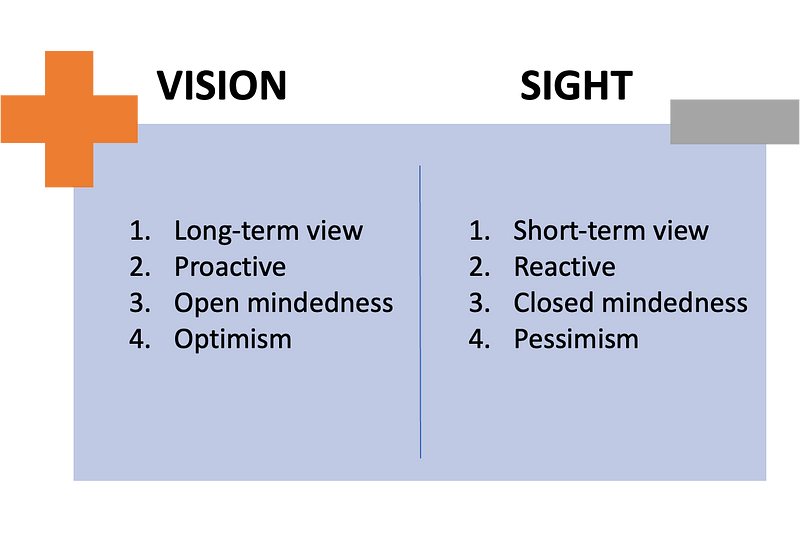
What are some of the key differences between leaders who demonstrate vision vs those who only have sight? In my experience, there are 4 areas:
#1 Long-term vs Short-term view
Leaders with vision have a longer term view of any situation. They are willing to make short-term sacrifices in favor of longer-term gains. For example, a great leader would hire for new and backfill positions in their team only after due diligence and identifying the skill gaps the team will face going forward. They will always focus on customer success and high quality deliveries, even if that takes longer to deliver. Leaders who lack vision take a short-term view and make decisions hastily and poorly.
“Never let a short term desire get in the way of a long term goal.” — Curtis Martin
#2 Proactive vs Reactive approach
Visionary leaders are proactive because they already have a long-term view of where they want to be — personally and professionally. They take decisions proactively which preempt the need to react later on. For example, a good leader would foresee future threats in a project and plan contingencies ahead of time, thereby avoiding disappointment and churn later on.
“The way to bring about change is to be proactive and active.” — Octavia Spencer
#3 Open Mindedness vs Closed Mindedness
Great leaders embrace change, even if that threatens their current position or situation, as long as the change is right for the company. They continuously adapt to the changing circumstances, and are usually ahead of the curve by anticipating those changes. On the other hand, non-visionary leaders are threatened by change and are closed minded about anything that threatens their position.
“Your life does not get better by chance, it gets better by change.” — Jim Rohn
#4 Optimistic vs Pessimistic
Visionary leaders are optimistic about the future because they have a strong passion to achieve their goals. Their positive outlook motivates their teams towards the vision, and helps them to remain focused and engaged even during tough times. Pessimistic leaders, on the other hand, create resentment and a lack of trust in their teams.
“Optimism is the faith that leads to achievement. Nothing can be done without hope and confidence.” — Helen Keller
Conclusion
Great leaders are visionary, and have a long-term vision for their organization. They inspire their teams with the vision and the possibilities ahead of them. They are proactive and embrace change that helps them move towards the vision. They help their teams navigate uncertainty and tough times by leading from the front, and always staying positive about the future.
“The most pathetic person in the world is someone who has sight but has no vision.” — Helen Keller
What has been your greatest experience working with a visionary leader? Share your stories in the comments below!
Enjoy my writing?
If you liked this post, I’ll appreciate your claps as a form of encouragement. If you feel this article may be relevant to your friends or colleagues, please share it and spread the word. Consider subscribing here to see similar content and stay up to date. If you have any suggestions or feedback about this post or my writing in general, please drop me a comment below, or you can get in touch with me on LinkedIn or Twitter. Thank you!


