
The $3.4M Painting Abandoned for over 70 Years in a Paris Apartment
An infamous actress, a Nazi raid, and a priceless discovery
Ms. de Florian paced the floors of her Paris apartment. She knew time was running out. In 1940, London residents slept under blackened windows to the sounds of air raids shaking their homes’ foundation. But France had yet to see much of Hitler’s devastation. All of that was about to change.
She had two choices. She could flee the city and abandon her opulent lifestyle, or wait for German forces to invade and hope to be one of the lucky homes left standing.
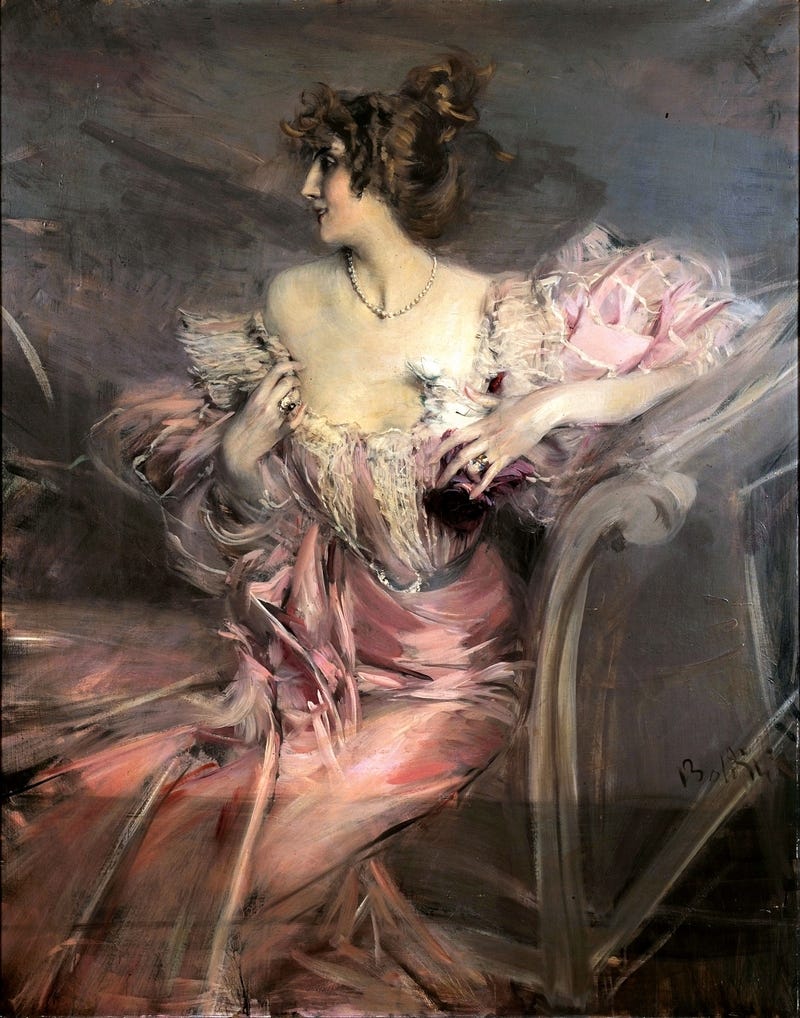
She looked up at the painting of her grandmother bathed in swirls of pale pink mousseline with her devil-may-care smile and wondered….What would grandmother do?
In the nineteenth century, her grandmother, Marthe de Florian (shown above), had been an actress and reigning demimondaine. As a popular courtesan, she accumulated a treasure trove of opulence and an impressive list of lovers, including the prime minister of France, George Clemenceau. Now, her grandmother’s flushed profile gazed out at the door that held her granddaughter’s escape.
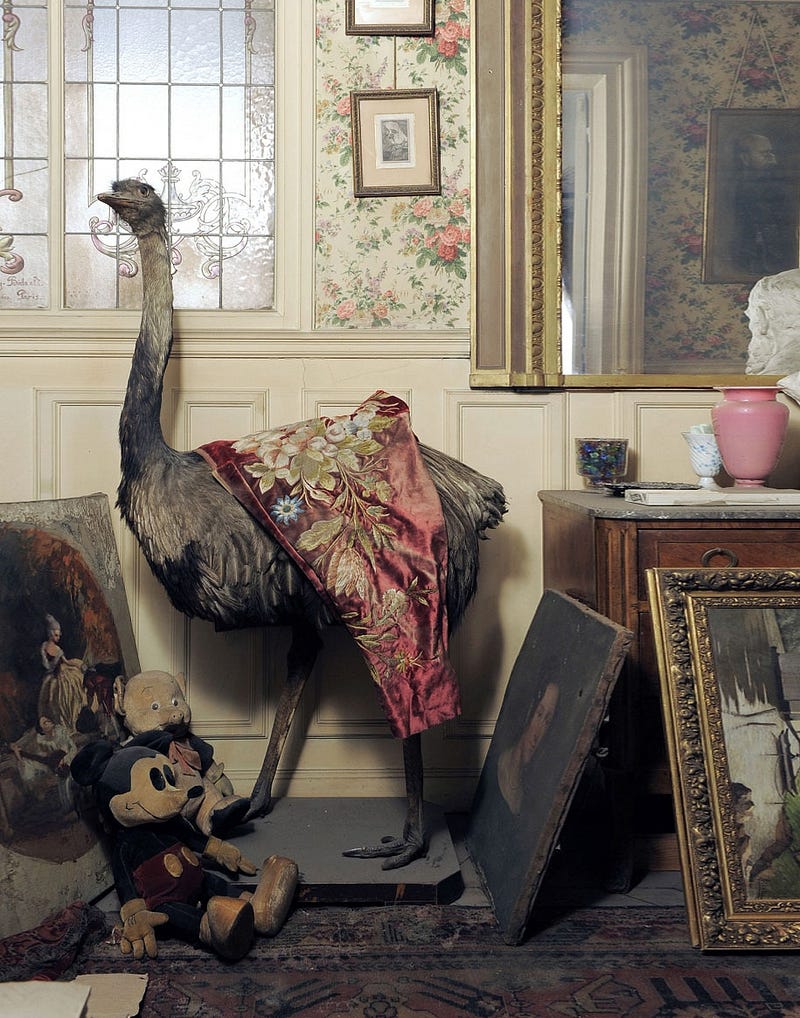
Ms. de Florian decided then and there that she had enough of her grandmother’s moxie to not end up in a government-issued cardboard coffin. She stuffed a few precious belongings into her suitcase as she hastily knocked a Mickey Mouse doll to the floor. The doll’s vacant, pupil-less eyes stared back, and the door locked behind her.
Seventy years later, auctioneer, Monsieur Olivier Choppin-Janvry, got a call about an apartment whose heirs had passed away. He was told the apartment was abandoned during WWII, and the owner had continued to pay the rent until she passed away at the age of ninety-one. His job was to inventory the contents of the apartment.
He could not have been expecting much. The apartment may have survived the German invasion, but it could not have survived marauding thieves. Plus, little old ladies who abandon apartments often do not leave behind many treasures.
Mr. Choppin-Janvry stepped into the decadent foyer, his feet kicking up clouds of seventy-year-old dust across the priceless, oriental carpets. In one corner, he spied a stuffed ostrich staring back at him, the bird’s quizzical stare demanding to know who dared to disturb its slumber. The walls were covered with floral wallpaper and paintings in gold gilt frames.
One painting of a woman in profile wearing a pink dress caught Janvry’s eye. He recognized the painter immediately as Giovanni Boldini — the ‘Master of Swish.” He had never been aware of this painting’s existence, nor did he recognize the sitter. A clue lay in another corner of the room where the thick, damask drapery let in a sliver of light upon an ornate, wooden dressing table.
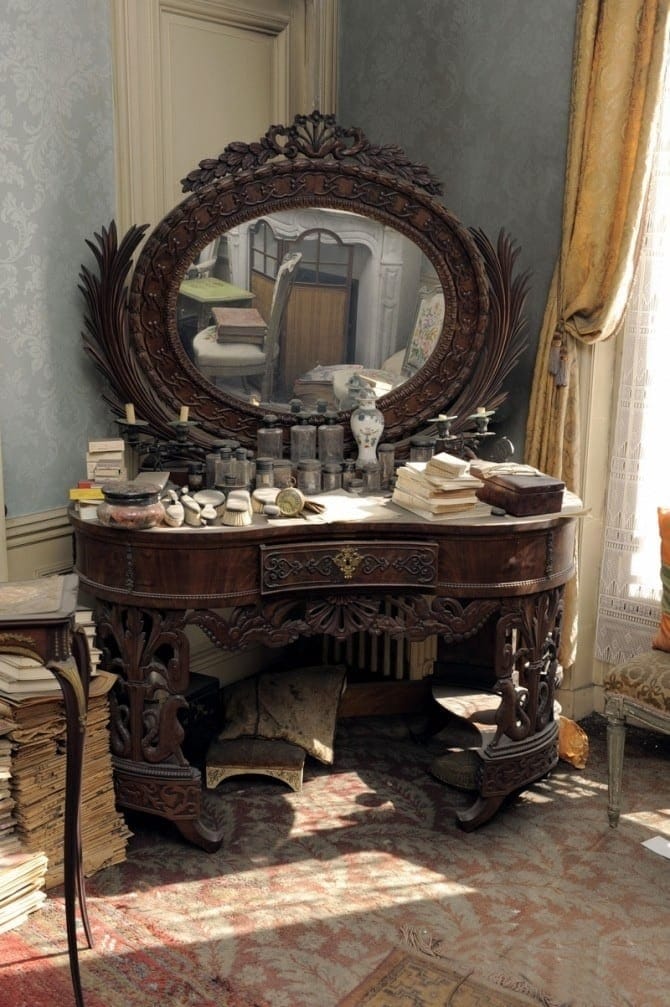
Beneath layers of dust and cobwebs were glass perfume bottles, silver hair combs, and small books, but inside the vanity’s drawers lay the true treasure. Upon opening the creaky drawers, Janvry found love letters “in little packages wrapped up with ribbons of different colors.” One of those letters contained a visiting card with a scribbled love note from Giovani Boldini to Marthe de Florian. Further digging revealed a reference to the work in a book by the artist’s widow, stating it was painted in 1898 when Miss de Florian was twenty-four.
Janvry had hit pay dirt. The painting later sold at auction for 3.4 million dollars.
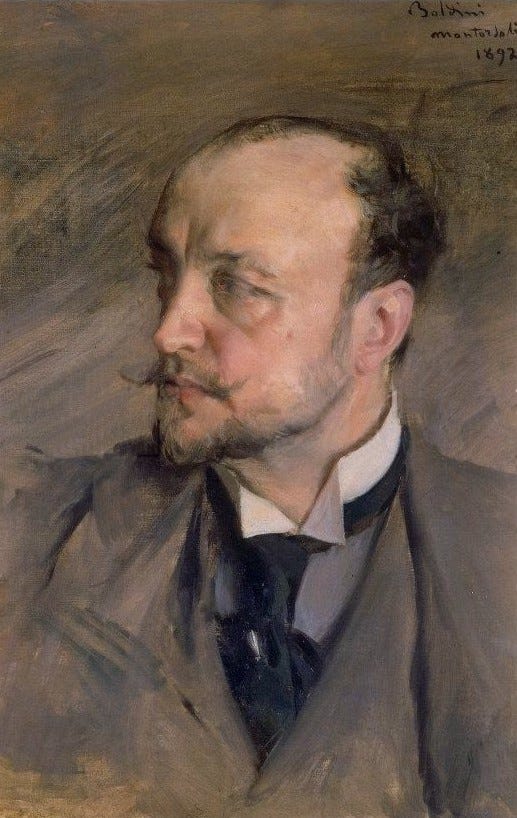
If you have a Boldini collecting dust in your basement, you probably could safely retire. Boldini paintings are tricky to find. He traveled so extensively that his paintings became scattered throughout Europe, making for a cataloger’s nightmare.
Giovanni Boldini (1842–1931) was born in Ferrara and later moved to Florence to study painting. In Florence, he became a member of the Macchiaioli — a coalition of realistic painters who did much of their painting in the outdoors, predating the impressionists. In an 1867 visit to Paris, Boldini met Manet, Degas, and Courbet.
Influenced by their painting techniques, Boldini later moved to Paris in 1871 and became one of the Belle Epoque’s top portraitists. Heiresses, authors, and actresses found themselves sitting for him at the Boulevard Berthier. Interestingly, this was the same Paris studio used by John Singer Sargent. Sargent was forced to abandon it and move to London after the Madame X scandal destroyed his career.
Always fond of the ladies, Boldini married for the first time to journalist Emilia Cardona at the age of eighty-six, and she was several decades his junior. Much like his paintings, Boldini was hard to pin down.
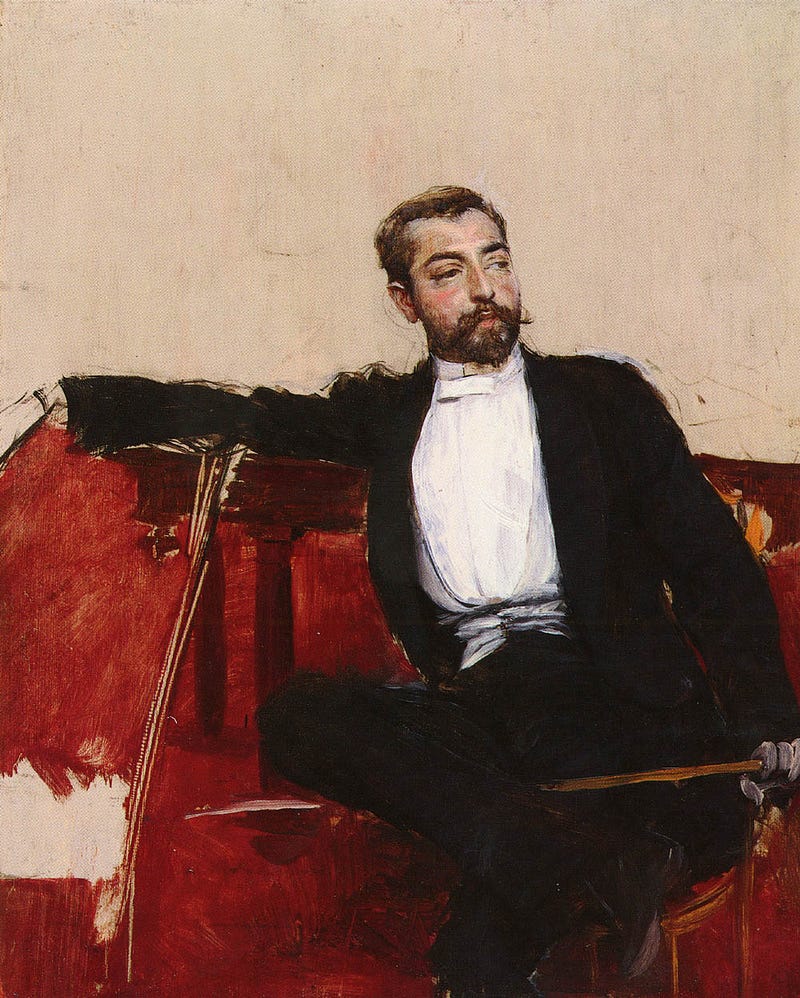
I first saw Boldini’s work while traveling through Italy. I was immediately carried back to the never-ending hustle and bustle of Paris at the turn of the century. Nothing sits still in his art. His subjects are always placed in strong, seductive poses where you can feel their bodies’ weight cutting through space and time.
He was also a master of painting the edge. In his portraits, especially his landscapes, he knew exactly when to use a bold, dashing stroke and a sharp, quiet edge to focus the viewer’s attention. Much like classical music, his art builds with a steady merging of color into a fast-tempo explosion of brushwork. Most importantly, he knew when to use which. For the eyes and cheekbones of his portraits, he made the focus sharp and almost photographic. For the luxurious fabrics, he used long, slashing brushstrokes by thinning his paint.
Boldini died in 1931, and his work lost some of its commercial value as art collectors gravitated toward Art Deco aesthetics. Today, his work is much more appreciated, with an entire museum dedicated to his art in Ferrara, Italy.
Boldini’s portrait of his infamous lover is his highest-sold painting to date.
To read more and support The Grim Historian, please visit my affiliate link and become a Medium Member. A portion of your subscription supports my writing.


_-_A_Portrait_of_John_Singer_Sargent.jpg)