
The Scandalous History of the Little Black Dress (LBD)
How this simple dress became a fashion staple
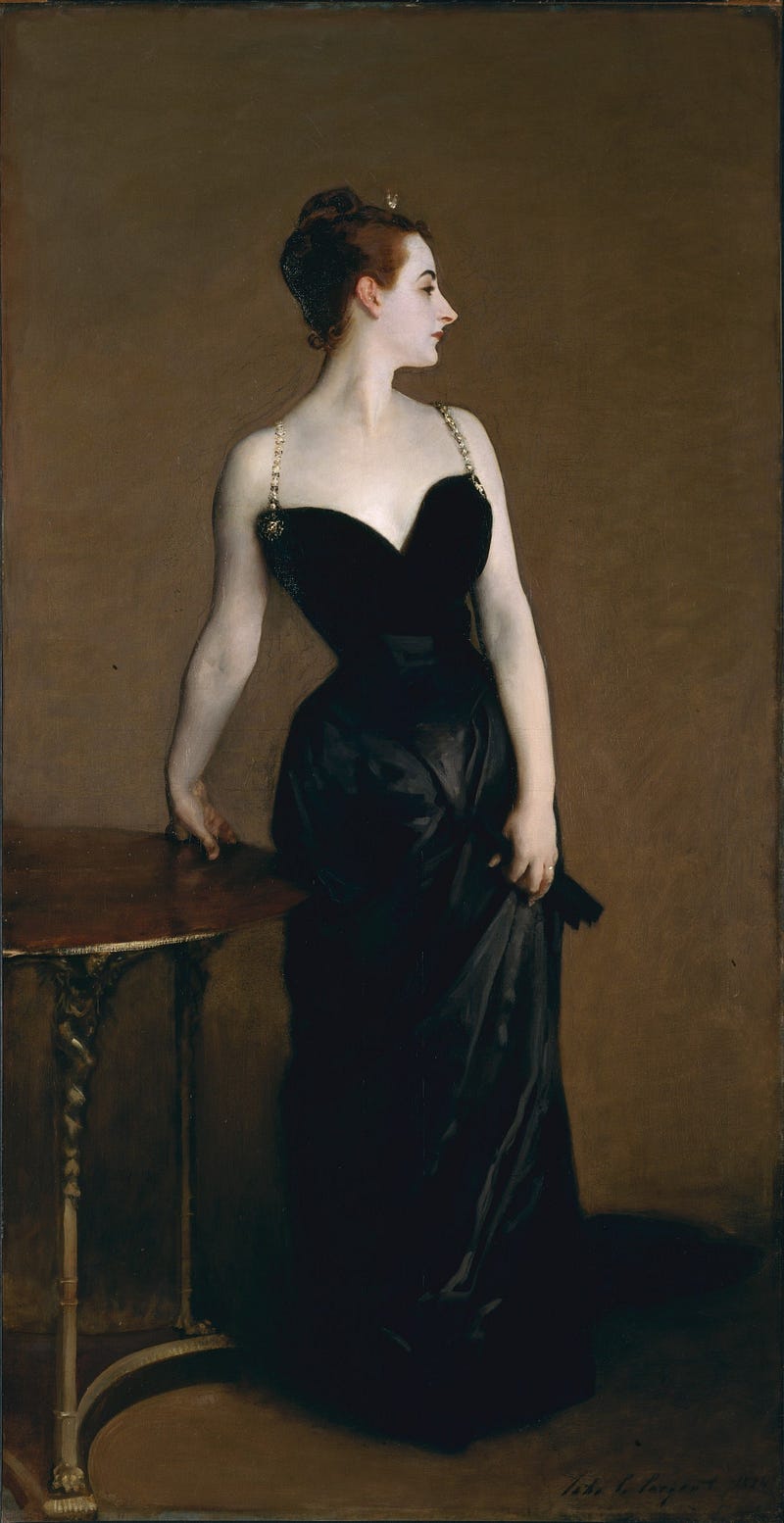
On a warm May day in 1884, Madame Avegno, “bathed in tears,” burst unannounced into John Singer Sargent’s cluttered studio apartment overlooking the Seine. Catching the twenty-eight-year-old artist off guard, she let loose a tirade.
“All of Paris is making fun of my daughter. She is ruined!”
She demanded Sargent remove his portrait of her daughter from the Paris Salon.
The shy, young artist was always uncomfortable around women. But with his awkward, schoolboy hair flopping to one side, he suddenly found the courage to defend his painting.
“Nothing said about Madame Gautreau at the Salon was any worse than what the fashionable world had said of her already.”
Sargent did have a point. A longtime target of scandal sheets and rumored affairs, Virginie Amelie Avegno Gautreau, was no wallflower. As a celebrated socialite, Sargent pursued his “unpaintable beauty” for years, trying to get her to sit for him. The resulting uncommissioned portrait, now titled “Madame X,” was finished in 1884 and entered into the most prestigious art show, the Paris Salon.
The painting bombed.
Critics called it “beastly” and “a sort of caricature.” One went as far as to claim it was “offensive in its insolent ugliness and defiance of every rule of art.”
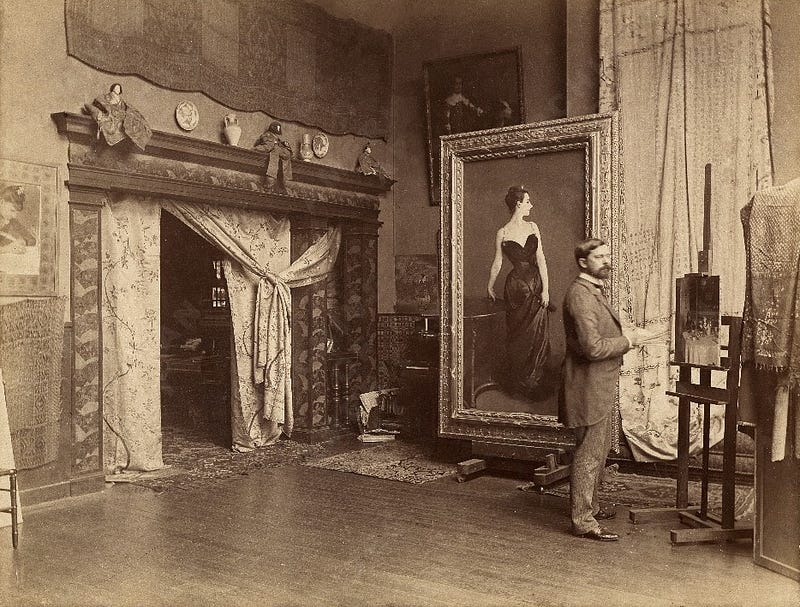
Heartbroken, Sargent moved to London to paint society portraits and never dared to break the rules again. After the firestorm passed, he admitted that the painting was “the best thing I have done.” Most art critics today agree. And the woman who caused such a scandal has become one of the most recognizable art icons.
Gautreau suffered a similar ignominious fate. She was forced to withdraw from Parisian society for the rest of her life.
And to think all the brouhaha was caused by what she was wearing.
Black had become a popular color in stately portraits that used fine silks. But the color itself was typically worn by shopgirls and ladies of the lower and middle class.
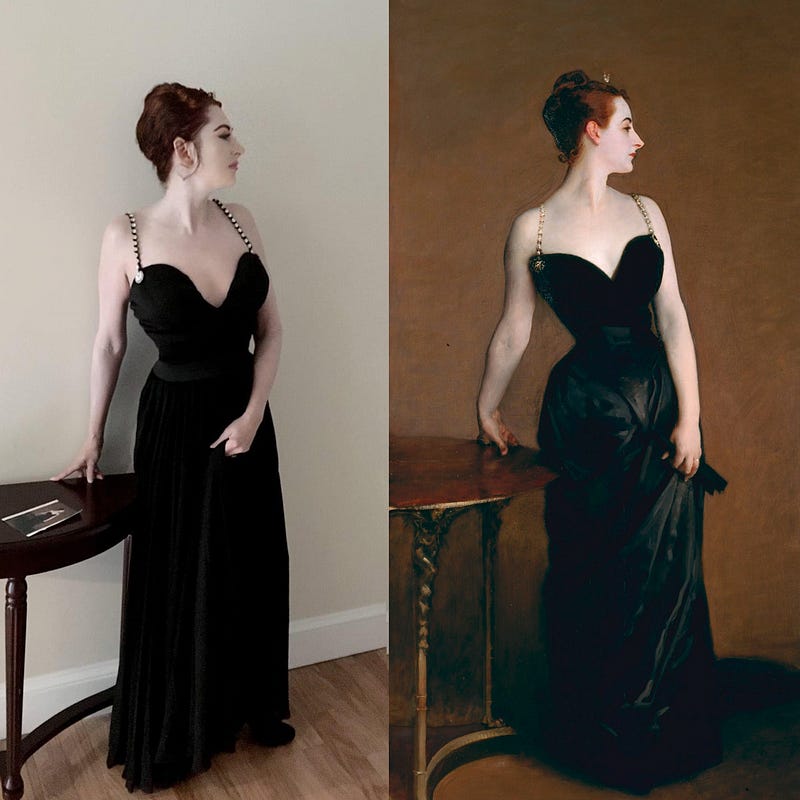
It was the simplicity of Gautreau’s dress that really shocked Parisians. In Sargent’s portrait, Gautreau wears a floor-length black dress with a deep decolletage held up by two slender gold threads. (Sargent originally painted one errant strap falling down her shoulder, but later repainted the strap in its proper place to appease critics.) While we think of a black dress as simple and timeless, polite society saw it as a gross caricature that blurred class lines.
The LBD was off to a bad start.
But when it comes to fashion, simplicity often wins (or else, ladies, we would still be stuck in corsets and petticoats.)
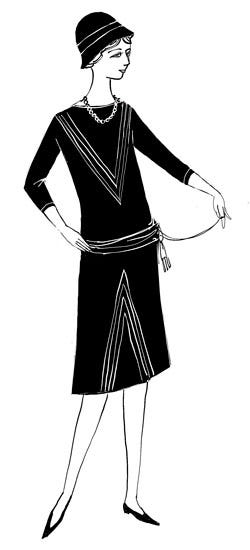
In 1926, Gabrielle “Coco” Chanel staged the coup d’état of fashion mutiny. She took black crêpe de Chine — a fabric only worn by aged dowagers in mourning and armed with scissors and enough chutzpah…nipped, tucked, pinned, and whipped out a simple black sheath in ninety minutes flat. Vogue called it the “Ford” of dresses, and it soon became every gal’s go-to dress to look effortlessly chic.
“Women think of all colors except the absence of color. I have said that black has it all. White too. Their beauty is absolute. It is the perfect harmony.”
― Coco Chanel, Chanel
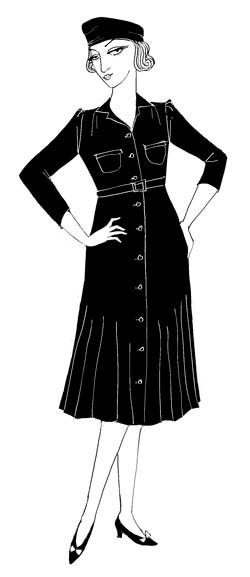
In the 1940s, a boxier, more somber version of the LBD became popular. This simpler version was due to wartime rationing that did not allow for expensive embellishments or dyes. Most suits were in practical colors like black, grey, or navy blue. These colors were not only inexpensive to produce but could be easily cleaned.
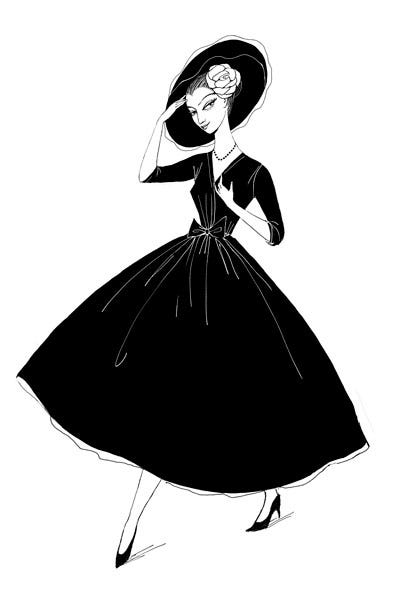
In 1947, Christian Dior updated the LBD by cinching the waist to give it more form. This was part of his “Corolla” line and became the basis for the ballet style dresses that are popular today.
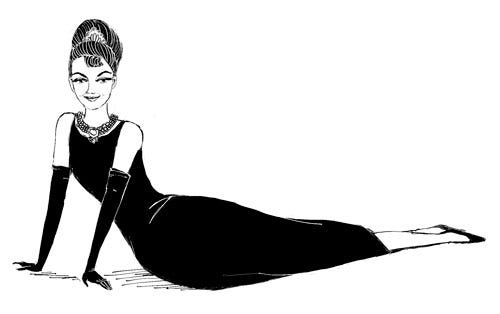
In 1961, Hubert de Givenchy designed an elegant black dress for Audrey Hepburn for the opening scene of Breakfast at Tiffany’s. The original dress was redesigned by Edith Head because it showed a bit too much leg for the 1960s. Today, the dress is considered one of the most iconic black dresses in fashion history.
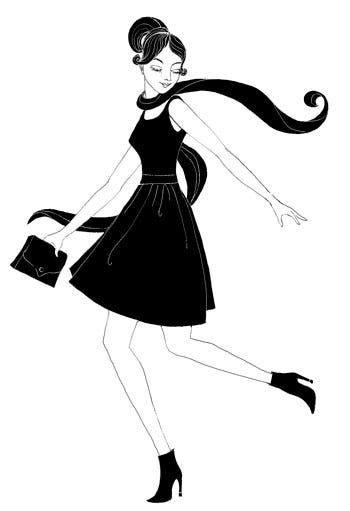
The 1970s were all about color, but the LBD made a comeback in the 1990s when Princess Diana strutted into a gala at London’s Serpentine Gallery in her “revenge dress.” — a dress that resembled Madame X’s original LBD except shorter.
Ironically, the dress that once shocked society by blurring class lines has become ubiquitous for this very reason. No matter what your budget, the LBD is every fashionista’s go-to dress.
About the author:
Carlyn Beccia is an author, illustrator, columnist, and speaker. Beccia's books, including The Raucous Royals, I Feel Better with a Frog in My Throat, They Lost Their Heads, and Monstrous have won numerous awards, including the Golden Kite Honor, The International Reading Association's Young Adult Book Award, and the Cybil Award. For more information: www.CarlynBeccia.comTo read more and support The Grim Historian, please visit my affiliate link and become a Medium Member. A portion of your subscription supports my writing.


,_John_Singer_Sargent,_1884_(unfree_frame_crop).jpg)
