
The #1 Christian writer was a woman never seen publicly
Sarah Young, author of “Jesus Calling,” was a mystery
Sarah Young wrote the most bestselling Christian book in history, but was rarely seen publicly. If asked for an interview, she might send a quick email.
In 2012, Publisher’s Weekly got through to her — “by e-mail, through her publicist,” the report notes. All she’d say is that she had Lyme disease and other problems, so no, she can’t talk on the phone.
“I’m very thankful I am still able to write,” she writes.
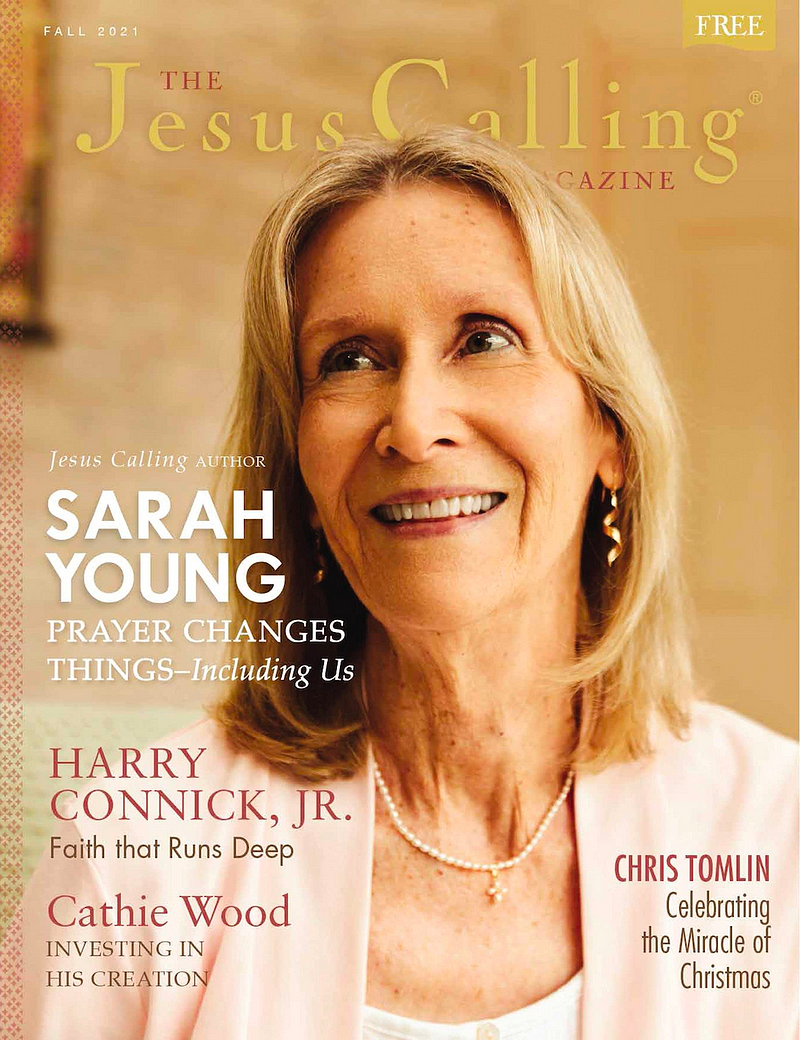
In 2013 she agreed to a fuller interview with Christianity Today magazine.
But then, as they report, she “declined to participate due to additional health setbacks.” She did agree to email—through her publisher. All she gave them was an update on her health, and a reply to a single question: Does she really communicate with Jesus?
She said that her writing is “listening and then writing what I feel he is placing on my heart…”
The same year, the New York Times gave it a shot. As that report went:
“Hobbled by Lyme disease and other health problems, she mostly sticks close to home. There are almost no public photographs of her, and she will not talk by telephone.”
Meanwhile, she was writing a library of books.
As I look over the life of Sarah Young, I’m asking: How had a woman so debilitated by illness that she couldn’t hold a phone to her ear been able to write a vast franchise? Her first book, Jesus Calling, published in 2004, sold 40 million copies. There were many sequels, children’s books, a study Bible.
She became the most popular Christian writer in history all without doing any publicity of any kind. A few interviews were brief exchanges by email, stage-managed by her publisher.
She had Christian critics who objected to anyone, much less a woman, ‘speaking’ in Jesus’ own voice. She ignored them, and kept writing.
Not much is available about Sarah Young’s life.
In 2016, her publisher put out a brief author bio (later deleted). It says she was born in Nashville on March 15, 1946. Both her parents were teachers. Her father was a college professor. No names, no details.
She grew up “in the South,” it says, then she went to Wellesley College. Majoring in philosophy, she graduated in 1968. Is she the first Christian leader to have attended the women’s college?—unless one counts Hillary Clinton.
With some help from Wellesley’s archives, I find her. She was Sarah Jane Kelly from Richmond, Virginia. She attended Glass High School in Lynchburg, Virginia, voted “most likely to succeed.”
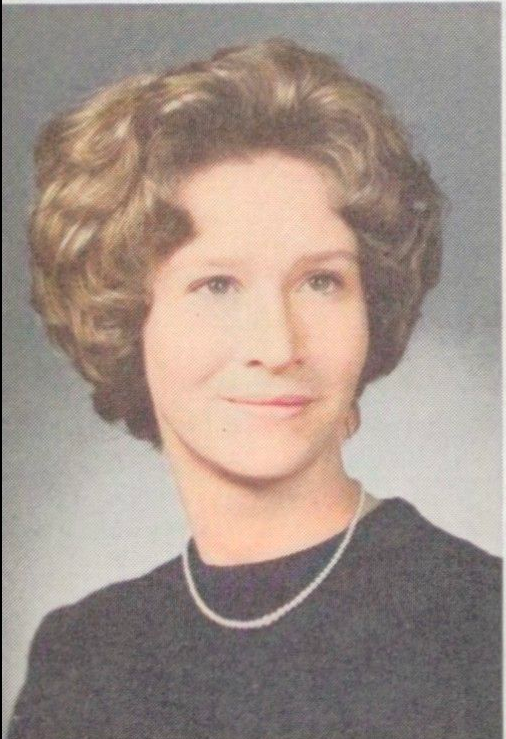
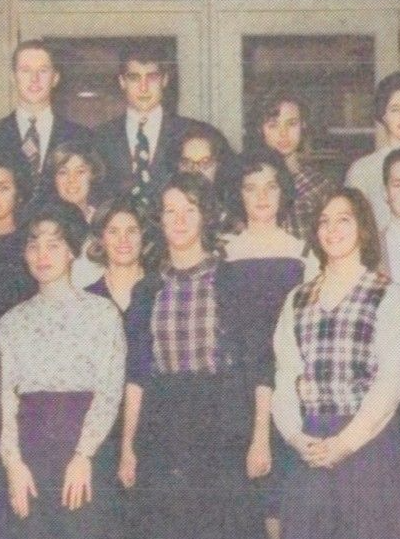
She got a Master’s degree in child development at Tufts University.
She went to Europe a lot for some undisclosed reason. Around 1974, she was “living and studying” at L’Abri, a Swiss Christian community founded by Francis and Edith Schaeffer.
Or that’s her famous origin story for her Christian writings. It’s typically presented without supporting details. There’s no description of the Schaeffers, or anything about L’Abri except an mystical experience she says she had during the day. One night she went for a walk amid the ‘snowy mountains’. She writes in Jesus Calling:
“Suddenly I felt as if a warm mist enveloped me. I became aware of a lovely Presence, and my involuntary response was to whisper, ‘Sweet Jesus.’ This utterance was totally uncharacteristic of me, and I was shocked to hear myself speaking so tenderly to Jesus.”
Or maybe it went another way?
In a 2021 ‘interview’ with her own magazine, she has a different story of becoming Christian at L’Abri. A counselor there, she recalls, asked her a question: “Are you a Christian?”
Sarah said she wasn’t sure. She explains: “I wanted to be a Christian, but I didn’t really understand why I needed Jesus. I thought that knowing God might be enough.”
The counselor added: “What can you not forgive yourself for?”
The answer in Sarah’s mind, she says, was ‘sin’. She needed Jesus for that.

This story makes no sense to me.
Jesus Calling has little talk of sin. The word is barely used, and when it is, seems to refer to a concept more like ‘inner conflict’.
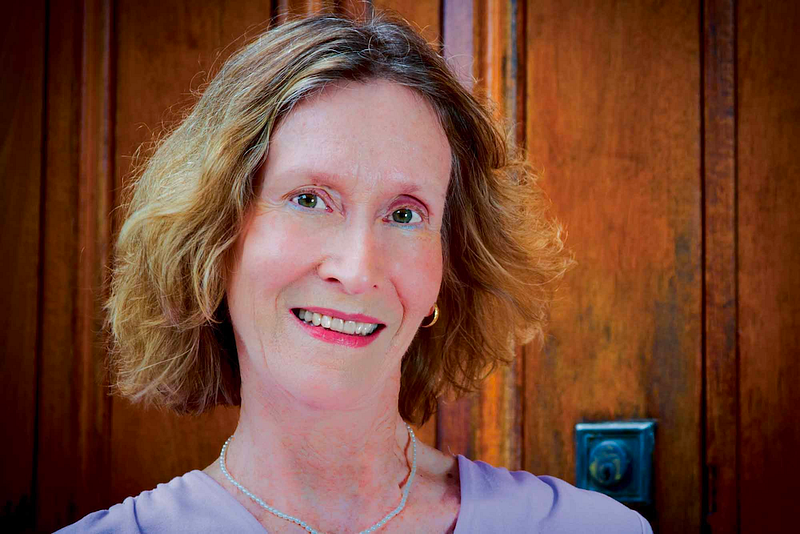
She enrolled in Covenant Theological Seminary.
This is a Presbyterian school in St. Louis. The registrar has a ‘Sarah Jane Young’ graduating with an M.A. in ‘Religion and Counseling’ in 1977. So it seems, in 1976, she wanted to learn Christian approaches to counseling.
She married a fellow student, Stephen Young, a man four years younger and from a family of missionaries to Japan—work he’d continue. They moved to Japan. They had a daughter in 1979, and a son in 1982.
Stephen Young’s missionary board has a mini-bio of the couple. In 1987, after eight years in Japan, they were transferred to a suburb of Atlanta to work at a Japanese Presbyterian church.
Though Sarah Young is sometimes identified as a missionary, I don’t see that she has ever been one herself. While her husband did religious work she was attending Georgia State University to get a “further degree” in counseling. Though she is presumably a “Dr.,” she never calls herself that.
In 1991, her husband was relocated to Melbourne.
There she continued her counseling practice with women. She mentions one: an incest survivor who “began remembering experiences of satanic ritual abuse.”
She says she became fascinated by a 1935 book called God Calling, said to be written by two women who heard the voice of Jesus.
In Melbourne, as well, Sarah Young says she began writing ‘devotionals’ in the voice of Jesus, who sounds curiously like a therapist.
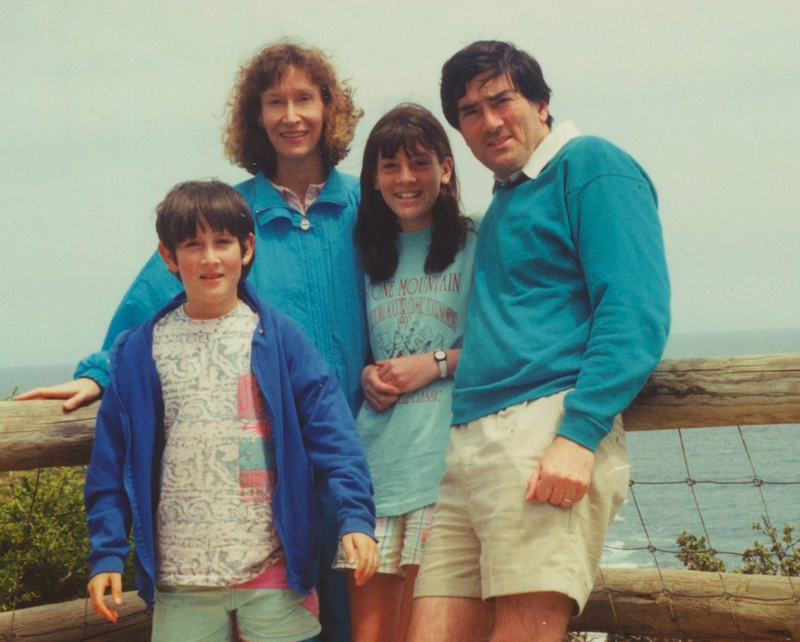
In 2021, she said more about how it was written.
A video was uploaded to her YouTube channel that included a statement in Sarah Young’s own voice—the only recording of her to be public.
She says Jesus Calling began as journal entries. She spent years shaping a manuscript, then submitted it to publishers but it didn’t sell. In 2001 the Young family moved to the remote Perth, Australia. As she narrates:
“I stopped looking for a publisher, but I continued to pray every day for God’s will to be done with my manuscript. Two and a half years later, a publisher in Nashville found me in faraway Western Australia and asked if I would consider letting him publish my work.”
Or did it happen another way?
Two months after the YouTube statement went up, Byron Williamson, the former head of Sarah Young’s initial publisher, Integrity Publishers in Brentwood, Tennessee, put out a press release.
He is quoted saying that an employee had noticed Sarah Young’s writings circulating in the Nashville area. He says he thought of the similarity to God Calling, and ordered more texts to round out a devotional format.
I reach Byron Williamson by email. He verifies that the press release is his version of the story. He adds:
“Sarah’s words in Jesus Calling were not edited to sound like the voice of Jesus, though I’m not sure that ‘Jesus’ was exactly her intent. The title, Jesus Calling, was something I came up with. A title like ‘Words of the Spirit’ might have been just as fitting, though not as commercially advantageous.”
I mull this puzzle of competing accounts.
The key, I think, is a event I see reported in early 2021. Byron Williamson received an award in Christian publishing. It looks like he took the opportunity to tidy up his legacy, which included Jesus Calling.
He put out his own version of the book’s origins—which was different from Sarah Young’s version and damaged her mystical ‘channeling’ brand.
So then she put out the YouTube message, with angelic music to reinforce that Jesus Calling had in fact come straight from Heaven.
What was her story?
An intellectual woman trained as a psychologist decided to work with Christian people. That much is clear. It was an unusual occupation since Christians were trained not to go to therapy. Jesus would fix you!
She then became an author, writing a book in very simple language for a Christian market in the voice of Jesus and lightly suggesting channelling. Or rather, per Byron Williamson’s account, she hadn’t suggested Jesus but rather a vague “spirit” speaking. Then Williamson saw the commercial potential to identify the voice as Jesus.
I have to wonder if she was acting on some interest in A Course in Miracles, published in 1976. That book also has Jesus being channeled through a woman psychologist, Helen Schucman.
Indeed, the story might be that Sarah Young read A Course in Miracles in 1976, then set out to write a more religiously acceptable version. She would then be a very similar figure to Marianne Williamson, the New Age guru, just more clearly packaged as ‘Christian’.
“Jesus Calling” appears to have sold decently.
But in 2006, a key event in her history happened when Integrity Publishers, Inc. was absorbed into Thomas Nelson, Inc., a Rupert Murdoch company.
The Murdoch team seems to have recognized a potential blockbuster. Jesus Calling was revised and reissued. The idea of her “channelling” Jesus faded. As The Daily Beast reported in 2018:
“The paragraph about God Calling has been deleted, and references to received ‘messages’ have been changed to the less mystically inflected ‘writings’ and ‘devotions.’”
But the book didn’t become a phenomenon until she was promoted by right-wing politicians. Around the 2016 presidential campaign, plugs for Jesus Calling were flying fast and furious. Scott Walker read from it while running for president. As Donald Trump’s press secretary, Sarah Huckabee Sanders displayed her copy.
All of these promotional efforts could have been arranged by Rupert Murdoch’s media empire. The GOP was selling his products, and with it, a modified, calmer version of Christianity.
When Sarah Young started getting ill is unclear.
She writes in Jesus Today that she lived on her parents’ property in Tennessee from 1999 to 2001, without explaining why she wasn’t in Australia. She thinks she contracted Lyme disease there.
She writes of returning to the U.S. in 2009 for treatment. She described feeling like her skin had “been stuck with a needle or like someone has set fire to it. The pain is so bad I get dizzy.”
The reality is that interviews wouldn’t have helped her.
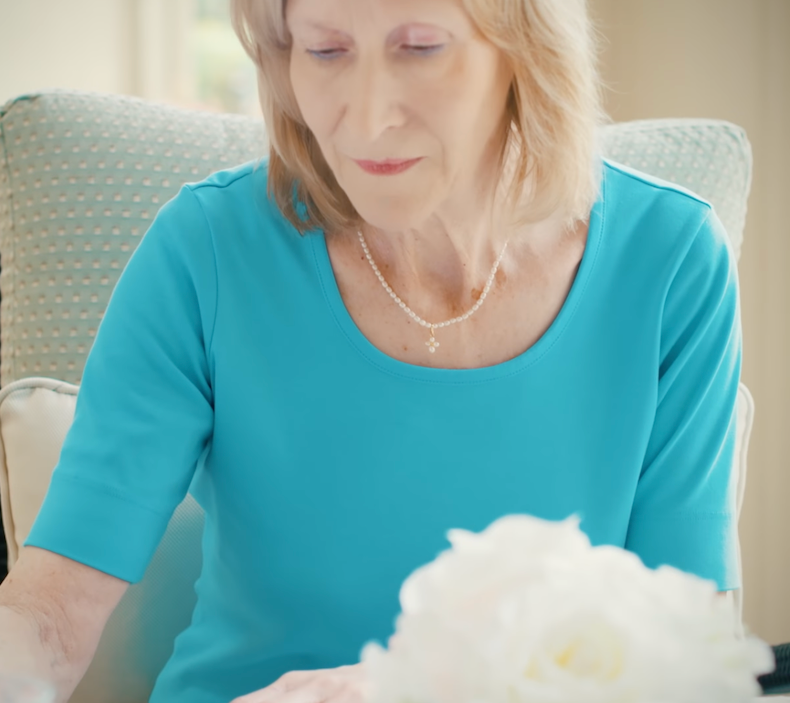
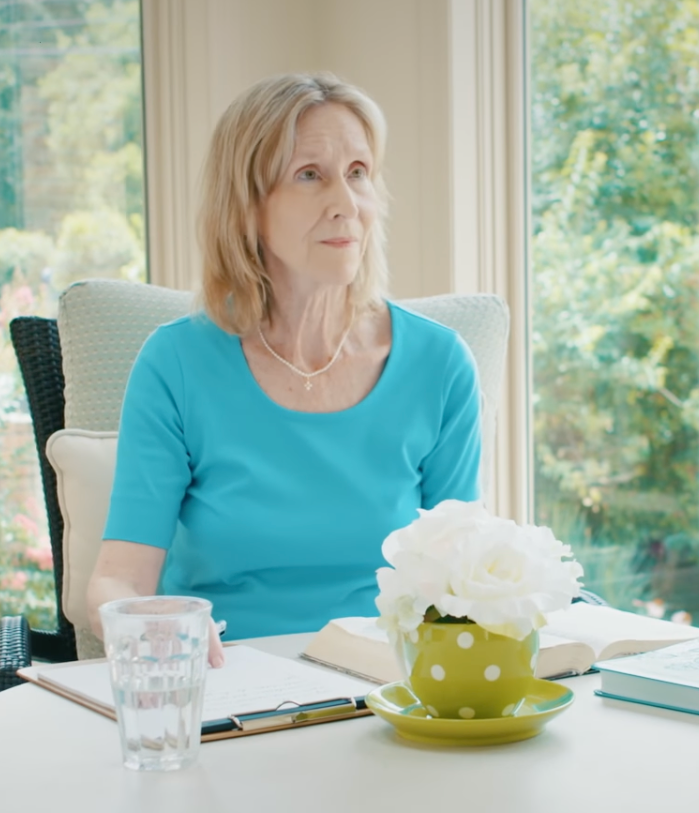
As of 2013, she lived in Brentwood — heard from even less than before.
She made a brief appearance in a 2017 video. We see Sarah Young out on her patio as a ‘message’ from her is read by another woman.
Then there was the Jesus Calling podcast, and magazine. It’s all non-sectarian, and heavy on celebrity Christian stories. She did a cover interview, but it was just a few lines.
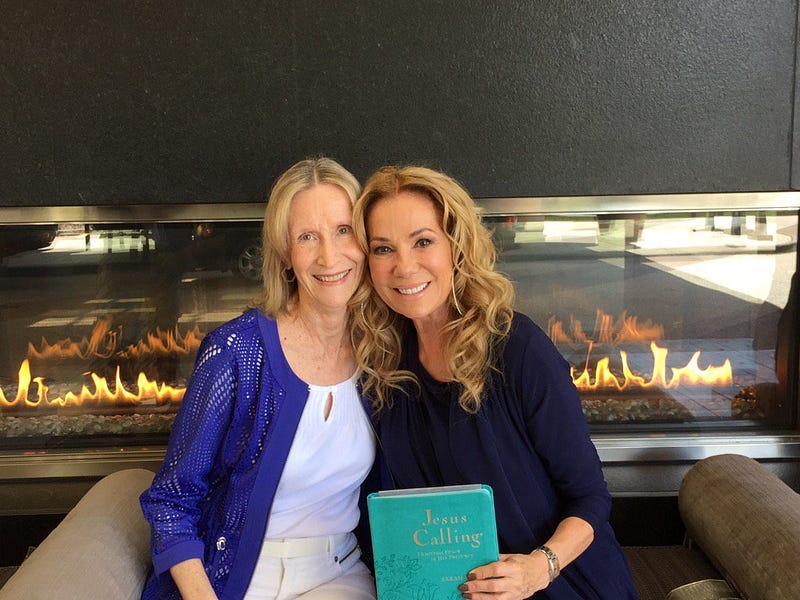
Ill as she was, Sarah kept churning out books.
The deity always had more to say—on sale at bookstores near you.
She died on August 31, 2023, as I keep trying to understand who she had been. Maybe she was a Christian, like she said. But her act was startlingly un-Christian. It should’ve been irreligious to write in the deity’s voice.
This story makes more sense to me if Sarah Young is read as a psychologist who decided to work with Christian people. The best way to do that was to write a Jesus who was a calm cosmic therapist, trying to get Christians to calm down and organize their thoughts.
Was it really Jesus? Maybe so. 🔶


