
That depends, of course, on where you stop your story.
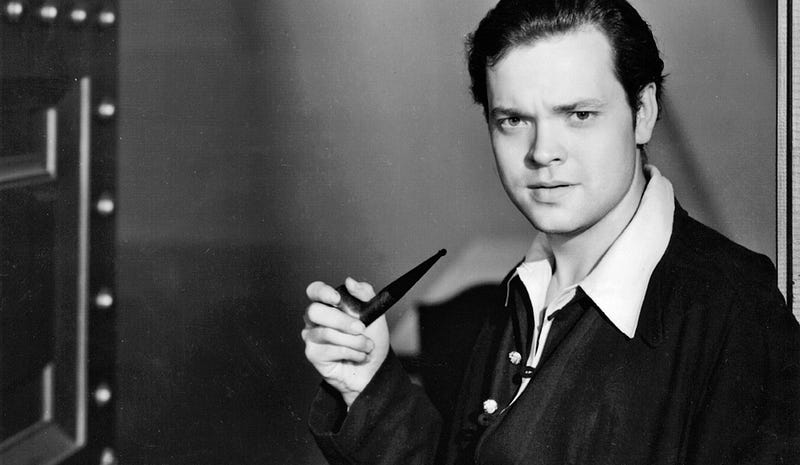
Orson Welles on a happy ending. (The Commonplace Book Project)
You can find all the posts in The Commonplace Book Project here:
“If you want a happy ending, that depends, of course, on where you stop your story.” — Orson Welles, The Big Brass Ring
I love this quote because it’s really the essence of a story.
Any story is just a segment.
Where it starts, where it stops, is all up to the writer.
When you start thinking about your characters as living, breathing people who live outside their story, your writing will reach a deeper level.
But also? You get to decide. If you want to write a tragedy, you end the story with the dark night of the soul. If you don’t want to write a tragedy, you just keep writing a little. Another quarter or so of your book and your character figures out a way out of the pit.
I’m not drawn to tragic stories. I always thought it was because I didn’t want to leave the book or the movie feeling sad. Which is true. But it’s also the truth that I’m just nosy. I want to know what happens next. How they recover.
A story I came across on Welles’ Wikipedia page about his early education stuck out to me. After his mother died when he was nine, he was sent to an expensive private school where he “came under the influence of Roger Hill, a teacher who was later Todd’s headmaster. Hill provided Welles with an ad hoc educational environment that proved invaluable to his creative experience, allowing Welles to concentrate on subjects that interested him. Welles performed and staged theatrical experiments and productions there.”
How interesting to think about what given space to follow interests and passions can shape a person. The same that being a round peg forced into a square hole can.
As I wrote this post, I watched Citizen Kane — Welles’ crowning achievement. Citizen Kane is overwhelmingly recognized as one of the greatest films of all time, but it was a slow burner. It was released in 1942 to good acclaim, but a small box office. After World War II it gained more attention, but it wasn’t until it started to be shown on television in 1956 that it really gathered steam.
Welles is well known, of course, for reading an adaptation of H.G. Wells’s novel War of the Worlds over the radio in 1938, causing wide-spread panic as people thought that the Earth was really being invaded by aliens.
That’s the story, at least. It’s mostly not true. A hoax that’s become part of the American story.
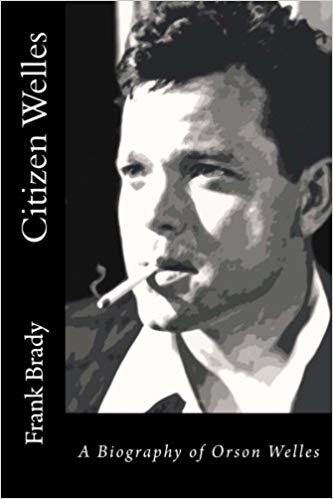
I own a copy of Frank Brady’s Citizen Welles — I bought it at a used bookstore last year. I’m going to have to pick it up one of these days. Welles was a fascinating person.
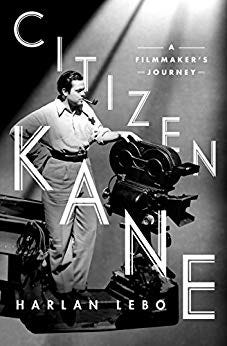
I’m also interested in reading Harlen Lebo’s book Citizen Kane: A Filmmaker’s Journey, about the making of Citizen Kane. Especially since I’m learning to write a screenplay.
Today’s Poem:
Aliens By Amy Lowell
The chatter of little people Breaks on my purpose Like the water-drops which slowly wear the rocks to powder. And while I laugh My spirit crumbles at their teasing touch.
Thanks for reading and clapping (to let me know you enjoyed it!) If you’d like to get these daily doses of inspiration in your inbox, fill out the form below.
Shaunta Grimes is a writer and teacher. She is an out-of-place Nevadan living in Northwestern PA with her husband, three superstar kids, two dementia patients, a good friend, Alfred the cat, and a yellow rescue dog named Maybelline Scout. She’s on Twitter @shauntagrimes and is the author of Viral Nation and Rebel Nation and the upcoming novel The Astonishing Maybe. She is the original Ninja Writer.


