
Ten Years After My Son’s Suicide
Here are 10 things I have learned.
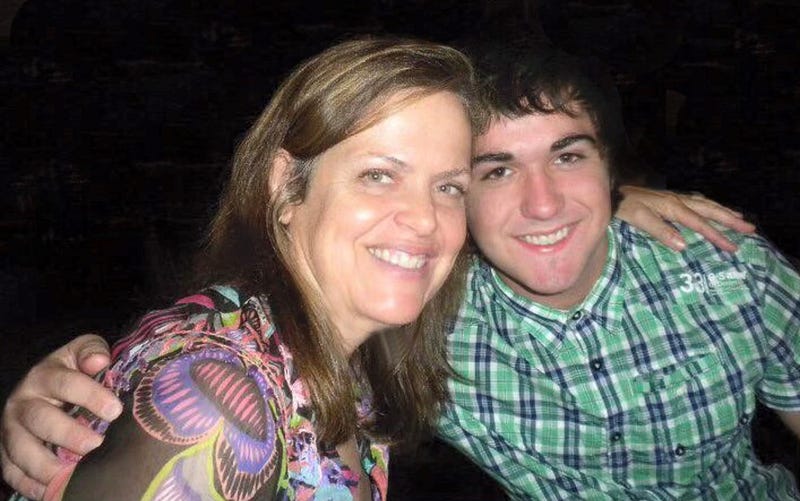
Our son, Will, died at age 18 of mental illness and suicide. I continue to learn how to live with this loss over time, and I share here some things I’ve learned in the first 10 years.
1. People who have not lost a child really don’t understand. The loss of a child is indescribable pain and unimaginable to someone without this experience, even if they are sympathetic. I came to know this based on the inane platitudes that people offered after my son’s death. “It was God’s will.” “Be strong.” “You will be okay.” “Time heals all wounds.” “People make choices.” “You can move on.” “I know how you feel. I just lost my dog.”
Over time, I realized that while people meant well, they just could not imagine the pain we felt. I also learned that people actually can forget about your loss. This seemed unbelievable to me, but people who knew of our loss have asked me “And how are the boys?” When I remind them only one of our boys is alive, “Oh yes. I’m sorry.” I’ve learned not to exercise judgment and just to realize they don’t have the experience to feel what I feel.
There were empathetic people who realized they could not fully understand what we were going through.
“I can’t imagine…. I’m so sorry.” Those people got it.
“Everyone can master a grief but he who has it.” William Shakespeare
2. The spirit lives on after death. I was raised in a religious Christian home, so the concept of a spiritual life after physical death was familiar. As I trained in science, I still thought in spiritual terms, but I had some doubts about what happened after death. After my son’s death, I clung to the hope of my Christian faith that I would see my son again in some form. And, there have been several times that I have sensed Will’s presence by touch, sound, visual signs, or intuition.
The first instance was three days after his death. That morning, I awoke with a start when I felt three distinct pats on my back. At first, I thought it could have been my husband, but he was asleep and turned the other way. I thought maybe it was the dog’s long tail, but he was on the floor and not near me. I knew then it was Will telling me he was okay. There have been other unmistakable visits. I accept these as gifts and I am grateful for them.
3. I do want to live. In the early days after Will died, it felt very difficult to go on. I was not suicidal, but the experience of living was painful. Six weeks after my son died, I was diagnosed with uterine cancer. I felt overwhelmed with this loss of health occurring so soon after the loss of my child, but the silver lining was I realized I wanted to live. Fortunately, the cancer was detected early and after surgery and hormone therapy, I am cancer-free. Again, I am grateful.
And, I knew I wanted to do more than just live. I had more work to do. I leaned on my faith, family, and friends, and I was grateful for meaningful work that gave me a reason to get out of bed in the morning. There was something inside me with a spiritual connection that would see me through the pain to life ahead. It was this inner strength that helped me more than counseling or medication.
“The highest tribute to the dead is not grief, but gratitude.” Thornton Wilder
4. I can have joy. After my son’s death, the definition of happiness changed for me. Some say that happiness is based on circumstances and while I do feel happiness at times, it is not carefree and unconditional as it was at times before my son’s death. For me, joy is based on spirituality rather than circumstances. I find joy in family, friends, work and other areas of my life. In fact, I appreciate joy even more than before. Experiencing a great loss has made me realize it is a treasure.
The holidays are challenging. We had many family Christmas traditions, and I felt a huge hole in our lives that time of year. One of my happiest memories was making Christmas cookies for my children. After Will’s death, I had no inspiration for doing this. I forced myself to make a batch here and there in the last few years. This past year, it was different.
I felt Will’s spirit was with me, encouraging me to make cookies again. It felt like he was smiling down and encouraging me. For the first time in many years, I turned on the Christmas music and baked cookies with joy in my heart.
5. I can love again. The loss of a child tears away part of the heart. I felt like my ability to love completely was disabled. In the early days, I clung to love for my husband, my living son, my daughter-in-law, other family and friends. Two years after my son died, we brought a new puppy into our home and my heart was ready to attach and love again — something I was not sure would happen.
My grief journey led me to gain new knowledge and skills at work, and to move on to love my work in a new way. The new directions at work felt like I was creating something worthwhile out of the tragedy — making art out of loss.
6. I can sing again and I can dance again. In the early days after our loss, I thought I would never do either of these things. Before Will’s death, I had loved to sing — along with the radio, with my guitar, at church. After he died, I could not even imagine singing, and if I attempted it, I cried. Eventually, somewhere around year 3, I could sing again.
And, somewhere around year 5, my husband and I attended a conference that included a dinner dance. I was surprised to find I could dance again as well. I don’t do these things often, even still, but I am heartened to know that I can do them, and I have hope that I can do more in the future.
7. I learned how to answer the question “Do you have children?” I had to travel a few weeks after my son’s death. I usually don’t like to engage in much conversation with people on the plane, and I especially did not want to on this trip.
Yet, a particularly chatty woman sat next to me. She began to make conversation and asked, “Do you have children?” Most people think nothing of this question and ask it in a glib way to make conversation. I had not thought about how to answer this, and I just started to cry. Perhaps because it caused me to realize the permanence of the loss, it opened a fountain of tears. I cried the rest of the day, even after getting home.
I’ve learned from social media support groups that other people who have lost children also hate this question. If I don’t mention the deceased child, it feels like I am not acknowledging their existence. Yet, if I do mention them, it often makes the other person uncomfortable and can upset me as well.
After many iterations, I found a way to answer the question that worked the best for me. “We raised two boys. Our son who is still living is . . . .” I also learned to think of this question as a sober one and not just a pleasantry; it is a difficult question for people who have experienced child loss or for those who cannot have children.
8. My son’s death changed me, but it does not define me. I became more compassionate, less judgmental, slower to anger, less consumed with the trivial. This loss led me to focus on priorities in life — family, friends, meaningful work, spirituality. I can move forward with appreciation for what I’ve learned but I am not tethered to the loss. In fact, it has empowered me to do new things with my work and with writing.
“…there is nothing we can do without meaning and nothing we can suffer that does not hold the seed of creation in it.” May Sarton
9. Grief is a journey. This kind of grief does not end; we learn to live with it. It is a journey that changes over time. The unrelenting, stifling grief with physical pain in the early days evolved to days when I would feel waves of grief. Unpredictable, uncontrollable waves. Those waves still come but they are less frequent and less intense. And, now sometimes I will smile with a happy memory when the waves come.
I see my son’s friends get married, have children. I am glad for them and I know Will would be, too. I’m sad that he didn’t have this experience. I still feel a terrible loss. But I have joy and I’m grateful for the 18 years and 10 months we had together. I am still learning to live with the loss day by day.
10. I can tell my story. Initially, it was hard to talk about Will’s death. There is still a lot of stigma about suicide. Mental illness killed my son. I believe he only wanted to end the pain. I began to tell my story to small groups of friends as I taught about essential oils which had helped with my grief and other aspects of my health.
These circumstances led me to appreciate holistic therapies. After 30 years in academic conventional medicine, I charted a new path and I trained in integrative medicine, which uses holistic therapies integrated with conventional therapy.
Now I have simple yet effective measures to share with patients and empower them for self-care. I’ve made this a major part of my meaningful work. This work was a new creation arising from the loss.
Writing the story of my grief in my book, Breath for the Soul: Self-Care Steps to Wellness, was therapeutic, and it’s a way to share what helped me with others. I continue to tell my story in person more and more. Each time it gets a little easier and unloads a little more pain from me. As the writer and Holocaust survivor said,
“Whoever survives a test, whatever it may be, must tell his story. That is his duty.” Elie Wiesel
For information about breathwork, nutrition, movement, and spirit as ways to cope with life’s difficulties, check out my book, Breath for the Soul: Self-Care Steps to Wellness
Your support makes my writing on Medium possible. You can subscribe to emails when I publish a story or join Medium to directly support me and gain full access to all Medium stories. Best, Dr. Jan
To subscribe to my newsletter, go to https://www.drjanpatterson.com


