
Tell Stories like Pixar’s Greatest Movie Director
How to create like Pete Docter
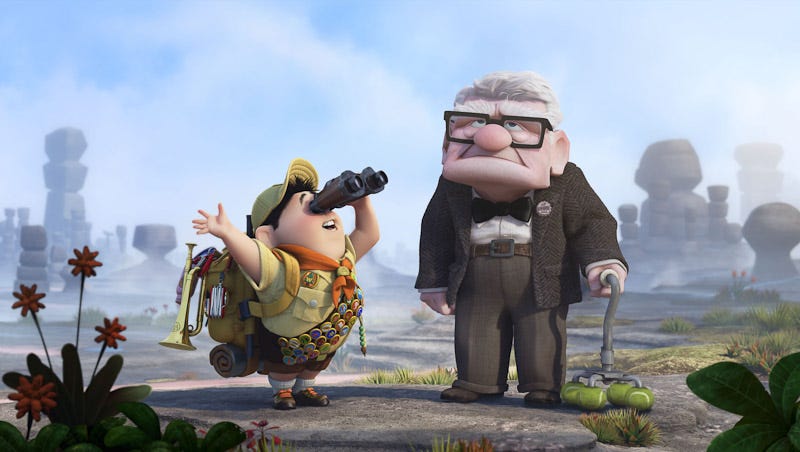
Pete Docter might just be, in his own words, a “geeky kid from Minnesota who likes to draw cartoons.” But he’s also won three Oscars for best-animated feature — the only person in history to do this.

The Pixar movies he’s directed — Monsters Inc., Up, Inside Out, and Soul are among the best-rated Pixar movies of all time. They’re some of my personal favorites also.
This got me curious about how Docter does it. What are his storytelling secrets?
As a writer and creator, I believe you can learn a lot by looking at top performers and how they work.
Docter is generous in sharing his writing methods and techniques, in particular in the online course Pixar in a Box. I spent several hours digging in to find the most useful techniques for writers.
This is what I found.
Write to give your audience big feelings
Docter is a six-feet-four-inch giant with a giant heart. And he writes from his heart, too. “The power of story is that it has an ability to connect with people on an emotional level,” Docter says.
When Docter was directing Monsters Inc., he came up with a funny idea — a monster who scares kids for a living. The monster would clock in, eat donuts, pay his union dues, terrify a few kids, then clock out. Docter would tell people the idea and they would smile. The idea was working!
But then, when Docter put the story into the film, viewers got bored. They’d fidget in their seats. Docter asked them what was happening and they’d say “I don’t understand what this story is about.”
At the time, Docter had just become a father. As he explored what the story was about, he realized he needed to draw on his own experience. Docter unlocked the key to the story when this clicked:
“What I finally figured out was that it’s not actually about a monster who scares kids, it’s about a man becoming a father.”
This revelation allowed Doctor to pour his heart into the story. He transferred his feelings about becoming a Dad onto the screen, through a story about monsters.
Because of this experience, Doctor encourages writers to reflect on the moments in their life when they felt big feelings. He says:
“What you’re trying to do really when you tell a story is to get the audience to have the same feeling.”
Write what you know — plus car chases and monsters
One of the pieces of writing advice that Docter came across as a kid is “write what you know”. If you’ve been a writer any length of time, you’ve probably heard this advice too. But when you think of the world’s bestselling writers, it doesn’t make sense. If JK Rowling wrote what she knew, she wouldn’t have told a story about wizards and magic. If Stephen King wrote about what he knew, he’d never have created novels about characters with supernatural abilities.
Docter’s instinct as a child was to dismiss this advice:
“I was like, I don’t want to write about suburban Minnesota, that’s boring. I want to write about explosions and monsters and car chases.”
After weaving his experience of fatherhood into Monsters Inc, Docter now realizes that “write what you know” means injecting elements of your own life into your stories — whether you’re writing about car chases, monsters, or wizards. Docter explains:
“Go ahead and write about explosions and monsters and car chases, but put something into it that talks about your own life, how you feel. Do you feel scared? Do you feel alone? Something from your own life will make the story come alive.”
Docter says that car chases would be “boring” if they weren’t also infused with the emotional landscape of the writer. As readers, we don’t get invested in a story because of stunts and Lamborghinis. We get invested in a story because we care about the characters. We care about the characters because the writer is writing what they know — from an emotional perspective.
With everything I write, I aim to add my own perspective or angle. I aim to show why what I share matters to me — and this is an invitation for my readers to get invested too.
Storytelling is story re-telling
When Doctor first started telling stories he thought he’d “just tell the story once and it would be perfect.” He believed this is what storytelling geniuses like Walt Disney would do. He thought “this brilliance comes out of their head once, and there it is.”
His big revelation was that stories are hard work. In his own words:
“The truth is, our stories don’t always come out exactly perfectly the first time or the second time, or the third time, or the fourth time, up to the 30th time. And so you keep going again and again and again. And only after retelling the story many times does it really sparkle.”
Telling a story thirty times seems like a lot of work. Yet Docter has come to be suspicious if a story shows up too perfectly the first time. He says:
“If I start on a film and right away know the structure — where it’s going, the plot — I don’t trust it. I feel like the only reason we’re able to find some of these unique ideas, characters, and story twists is through discovery. And, by definition, ‘discovery’ means you don’t know the answer when you start.”
Writing often means writing into the dark — starting with a thread of an idea, and not fully knowing where it is going. An important skill as a writer is the ability to embrace the unknown — to lean into the darkness, and write to discover what happens next.
My personal take on telling the same story over and over again is to publish each version. Pixar holds themselves to a high standard in their theatrical releases, and rightly so. But the truth is they create multiple versions of their movies before creating the final version — and each of these is tested on the Pixar Braintrust — a group of writers, creators, and directors who are trusted to give candid feedback.
As an online writer, I trust my audience to give this candid feedback in how they respond to my writing. Most of what I write is only seen by a handful of readers, and that’s okay. Some of it takes off. Telling the same story in different ways helps me understand better what resonates with my readers. It also gives my writing more opportunities to fly up to the stars.
You can write like Pixar’s greatest movie director
Pete Docter is popular with his colleagues — they love to work with him and learn from him. Pixar co-founder and president of Walt Disney Animation Studios Ed Catmull has said:
“I’ve heard people who’ve been on Pete’s crews say that they would volunteer to take out the trash if it meant getting to work with him again.”
Thankfully, you don’t have to take out the trash to learn from Docter.
Pete Docter is a great movie director because he puts his heart into his writing. He injects his life into what he writes, and in doing so he aims to give his audience big feelings. This makes his writing relatable — even when he’s telling stories about monsters, talking dogs, or the emotions that live inside our brains.
He’s also learned that it’s almost impossible to get your story exactly as it should be the first time around, so the key is to keep telling the story in plenty of different ways. It takes Pixar scriptwriters up to 30 attempts to get the story right — and they’re some of the best around when it comes to storytelling. So, don’t despair that it takes you time to develop your stories and improve your craft.
Writing is all about telling stories that create emotions in your readers. So, dive into your emotions, and get telling. Good luck!