
How to Create Like The Beatles
5 creative principles that sold over a billion records
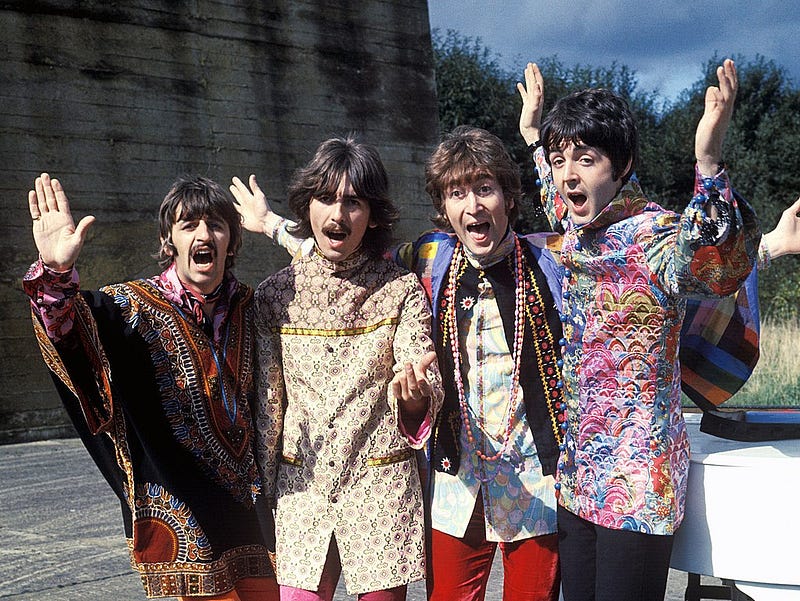
Ringo Starr and Rory Storm both performed in the hottest up-and-coming band in Liverpool, UK. You’ve likely heard of Ringo Starr, but you’ve probably never heard of Rory Storm. And there’s a good reason for that.
Starr and Storm were members of Rory Storm and the Hurricanes. Storm was the lead singer; Starr played the drums. Storm seemed destined to be the bigger artist, but Starr is the name we remember.
Rory Storm and the Hurricanes were Liverpool’s most popular rock group in the early 1960s. “You’d better pull your socks up because Rory Storm and the Hurricanes are coming in, and you know how good they are,” The Beatles were once told while they were performing at a club. “They’re going to knock you for six.” The Hurricanes were seen as the better band. They helped forge the 1960s Liverpudlian rock scene. In many respects, they paved the way for The Beatles.
There’s one crucial difference between the two bands, however. And this difference matters if you’re a creative who wants long-term success.
Rory Storm never signed a contract with a record label. Storm’s band performed in Liverpool’s clubs for the best part of a decade, but during that time they only put out one record.
Why? The Hurricanes never wrote their own songs. They only performed covers of American hits.
You can be the greatest artist in your city, the rising star, but unless you can come up with your own ideas — consistently and over the long term — your position at the top won’t last.
The Beatles consistently created groundbreaking music. It’s their astonishing creative output that’s a key reason they’ve sold over a billion records, and have been named the greatest artists of all time by Rolling Stone.
So, what’s the secret to the prolific output of the fabulous four — John Lennon, Paul McCartney, George Harrison, and Ringo Starr? And how can you learn to create like The Beatles?
Let’s explore what it takes in their own words. It starts with real-world practice.
Principle 1: Get Sweaty Honing Your Craft in Seedy Nightclubs
A lesser-known aspect of The Beatles' story is that they were forged as a band in the redlight district of Hamberg, Germany. British music promoter Allan Williams saw promise in The Beatles and sent them to the north German city to develop their craft.

It was intense. The band performed for up to eight hours each night, seven nights a week. “We had to play for hours and hours on end,” John Lennon reflected. “Every song lasted twenty minutes and had twenty solos in it.”
For Lennon, this intensity created the band they became. In his words: “That’s what improved the playing. There was nobody to copy from. We played what we liked best and the Germans liked it as long as it was loud.”
They performed both famous crowd-pleasers, covering American hits, and their own music. As they played, they paid attention to what kept the attention of their audience.
“At that time we weren’t so famous, and people who came to see us were drawn in simply by our music and whatever atmosphere we managed to create. We got very tight as a band there.”
In other words, the Beatles didn’t spend years practicing in a garage. They went direct to the skill they wanted to master: live performance.
“If you can play your stuff in a pub, then you’re a good band.” ― Paul McCartney
Scott H. Young, the author of Ultralearning, has devoted his life to finding the most effective methods for learning new skills. Young explains:
“It’s actually doing while doing the thing you want to get good at when much of learning takes place.”
The Beatles used this principle of directness to their advantage. Ringo Starr put it this way:
“I never studied anything, really. I didn’t study the drums. I joined bands and made all the mistakes onstage”
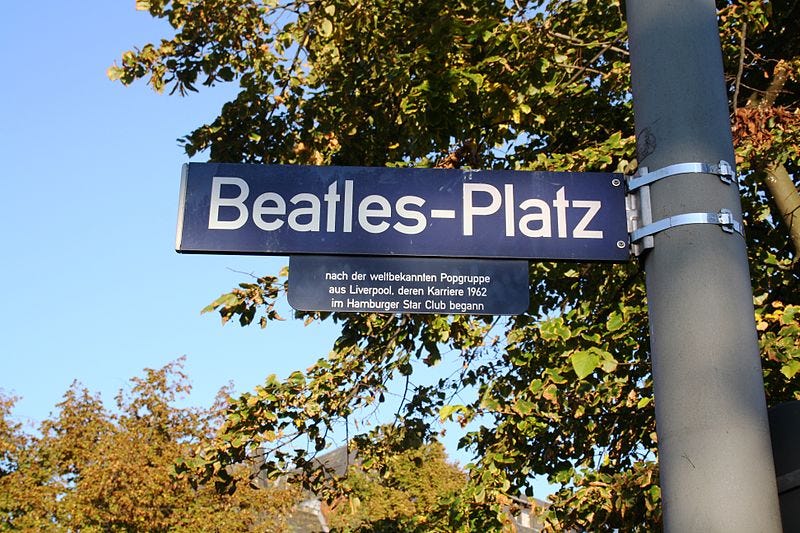
The Beatles learned to create music by playing to a real audience, night after night.
What does this mean for you? As a creator, consider the skill you want to develop, then go and do that. If you’re a visual artist, go paint pieces for a gallery. If you’re a marketer, start a marketing campaign. If you want to write, publish your work. In the digital age, the principle of directness is easier than ever for creatives to follow — you can access an audience at close to zero cost.
What if you don’t yet have art to share? That’s where the second principle comes in.
Principle 2: Just Start
If you want to create like The Beatles, then stop thinking about creating. Just get started. There are no ideal conditions. There’s no one to do it for you. Only you can create your art. As John Lennon said:
“It’s quite possible to do anything, but… don’t expect Jimmy Carter or Ronald Reagan or John Lennon or Yoko Ono or Bob Dylan or Jesus Christ to come and do it for you. You have to do it yourself.”
According to Paul McCartney, once you begin creating, you’ll find it difficult to stop:
“I think people who create and write, it actually does flow — just flows from their head, into their hand, and they write it down. It’s simple.”
McCartney’s “flow” is a creative state that has since been explored in research. Psychologist Mihaly Csikszentmihalyi describes flow as:
“Being completely involved in an activity for its own sake. The ego falls away. Time flies. Every action, movement, and thought follows inevitably from the previous one, like playing jazz. Your whole being is involved, and you’re using your skills to the utmost.”
For creatives, flow means being filled with sparks of insight. When you’re in flow, you access your inner well of creativity.
As a creative myself, I’ve found it works exactly as McCartney says. The more I get on and create, the more I enter a state of flow.
And the more ideas flow through me, the more I learn about myself. Which leads nicely into the third principle.
Principle 3: Let Creating Be Your Therapy
“Writing a song is like going to confession,” George Harrison wrote in his autobiography I, Me, Mine. He added that songwriting “helps to get rid of some subconscious burden.”
Paul McCartney agreed. He said:
“Music is like a psychiatrist. You can tell your guitar things that you can’t tell people. And it will answer you with things people can’t tell you.”
The Beatles used their creativity in a therapeutic way, to explore their own questions and problems. This approach is also used by bestselling author Paulo Coelho, who has sold more than 350 million copies of his novels. Coelho calls himself a “self-problem writer” in contrast to the self-help industry. He writes not to help others, but as a way of exploring what bothers him.
Going through a therapeutic process — whether that’s by being creative or in talking therapy — typically leads to a greater sense of self-worth and self-love. For John Lennon, this self-love is what brings out our full creative expression. Lennon said:
“We need to learn to love ourselves first, in all our glory and our imperfections. If we cannot love ourselves, we cannot fully open to our ability to love others or our potential to create.”
By accepting yourself, you put yourself in a position to express yourself through your creativity.
Principle 4: Be Yourself
“I used to think anyone doing anything weird was weird. Now I know that it is the people that call others weird that are weird.” — Paul McCartney
In other words, as a creative, don’t stress over what others think of you. No matter if people think of you as weird or an outcast. That’s their issue, not yours. John Lennon put it this way:
“You don’t need anybody to tell you who you are or what you are. You are what you are!”
If you create to impress others — stop that. When you’re following in the path of The Beatles, you create to be yourself. You create because you enjoy creating. That’s all there is to it. John Lennon advised creatives to be like the sun, which shares its “beautiful spectacle” of sunrise first thing in the morning while most people are still asleep.
When you create, you’re sharing what the world and your life looks like from your perspective. Your aim is to reflect back the human condition to others — and that’s what connects people with your art. John Lennon said expressing how we feel is “any artist’s role”.
Make art because that’s who you are, not because of what you want others to think of you.
Principle 5: Channel Your Ambition
The Beatles encouraged creators to bring their full selves to their art. This includes bringing your ambitions to your art. Aim big!
Ambition drove The Beatles to keep creating even after they’d achieved incredible fame.
“Of course I’m ambitious,” Ringo Starr said. “What’s wrong with that? Otherwise you sleep all day.”
Paul McCartney confessed that he and John Lennon thought about new songs in terms of how much they’d earn. In McCartney’s words: “John and I literally used to sit down and say, ‘Now, let’s write a swimming pool.’”
Eventually, The Beatles found that no matter what they achieved, they still wanted more. Ultimately fame or money wasn’t enough. George Harrison said:
“I remember thinking… This isn’t it. Fame is not the goal. Money is not the goal. To be able to know how to get peace of mind, how to be happy, is something you don’t just stumble across. You’ve got to search for it.”
Creating art allowed the Beatles to continue that search for peace and love, even after they’d reached the stars.
In a cryptic, Zen koan-like saying, Paul McCartney explained:
“It’s like if you’re an astronaut and you’ve been to the moon, what do you want to do with the rest of your life?”
So, imagine you’ve been to the moon. You’ve achieved your life’s ambition. What do you create next?
Now, go create it. That’s how you find your greatest work.
Takeaways
In summary, here are the five principles of creativity that The Beatles followed to become one of the greatest bands of all time:
- Hone your craft with the principle of directness. Practice the exact skill you want to improve. If that’s performing in front of an audience, then perform in front of an audience.
- Start creating, now. Don’t wait for ideal conditions, or for someone to step in and do it for you. As John Lennon said: “You have to do it yourself.”
- Express your questions, concerns, and problems through your art. Let creating be your therapy. George Harrison said: “Writing a song is like going to confession.”
- Create your art out of the “beautiful spectacle” of who you are. Creativity is about expressing your unique identity.
- Let your ambition drive you. Shoot for the moon with your art. And even after you reach the moon, keep creating.
Additional Sources
The Beatles Anthology (Television Documentary)


.jpg)

