
Quickie: Are You in Love With a Show?
What the connection to your favorite TV shows may really mean
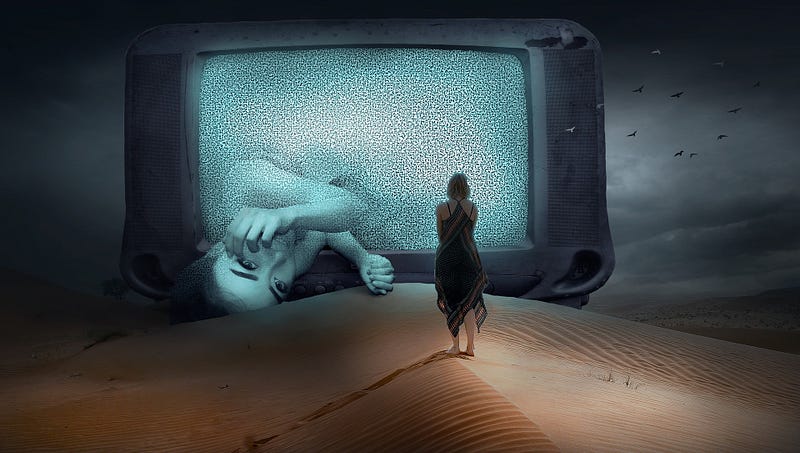
We’ve all been there: You love a show — or another piece of media that you consume regularly — and you feel a strong connection to the people you’re bringing into your home, and your heart, on a regular basis. We absolutely fall in love with them, and we want to catch up with them every week to find out what’s going on in their fictional lives. Our love of these programs may be dismissed as a guilty pleasure, but it actually serves an important purpose: According to research published in the Journal of Experimental Social Psychology, it helps us feel like we belong and can act as a surrogate for social interaction.
“The research provides evidence for the ‘social surrogacy hypothesis,’ which holds that humans can use technologies, like television, to provide the experience of belonging when no real belongingness has been experienced,” said researcher Shira Gabriel. “We also argue that other commonplace technologies such as movies, music or interactive video games, as well as television, can fulfill this need.”
Gabriel and her colleagues, Jaye L. Derrick and Kurt Hugenberg, studied the extent to which our favorite media can alleviate feelings of loneliness and fulfill our social needs. After a series of experiments, they found that participants who had been rejected by their friends or family members felt less lonely when they watched, or discussed, their favorite television shows.
“For those who have difficulty experiencing social interaction because of physical or environmental constraints, technologically induced belongingness may offer comfort.”
Although it may sound like fun to lock yourself up with reruns of your favorite shows and some popcorn, that doesn’t mean media is a viable substitution for social needs on a long-term basis.
“Turning one’s back on family and friends for the solace of television may be maladaptive and leave a person with fewer resources over time,” said Derrick. “But for those who have difficulty experiencing social interaction because of physical or environmental constraints, technologically induced belongingness may offer comfort.”
More from Kiki Wellington:
Source:
Donovan, P. (2009, April 22). A Warm TV Can Drive Away Feelings of Loneliness and Rejection. University at Buffalo. http://www.buffalo.edu/news/fast-execute.cgi/article-page.html?article=100630009


