
Tegmen
This has nothing to do with Teg, or her men
Today’s New York Times Spelling Bee letters:
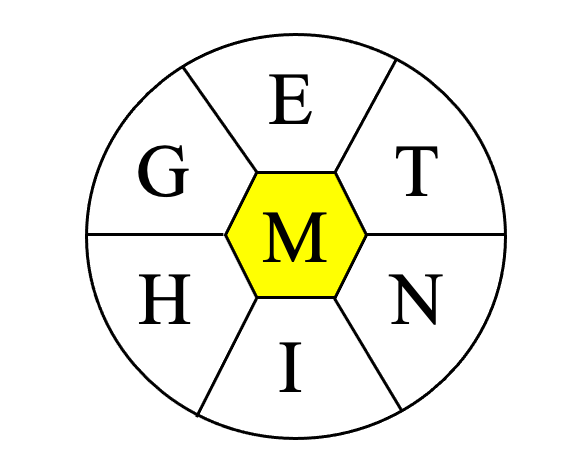
E, G, H, I, N, T, and center M (all words must include M)
Merriam-Webster says…
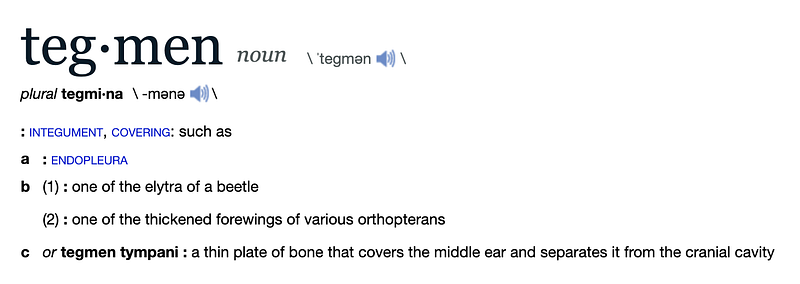
Silly little dictionary! Don’t you know that tegmen can’t possibly be a word if The New York Times says it ain’t?
For further fascinating facts, check out the Spelling Bee Master.
What’s your favorite dord* from today’s puzzle?
My Two Cents
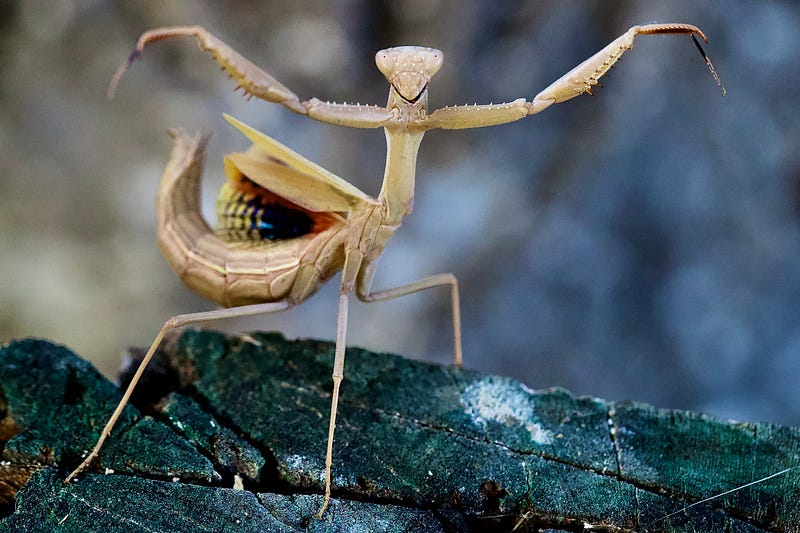
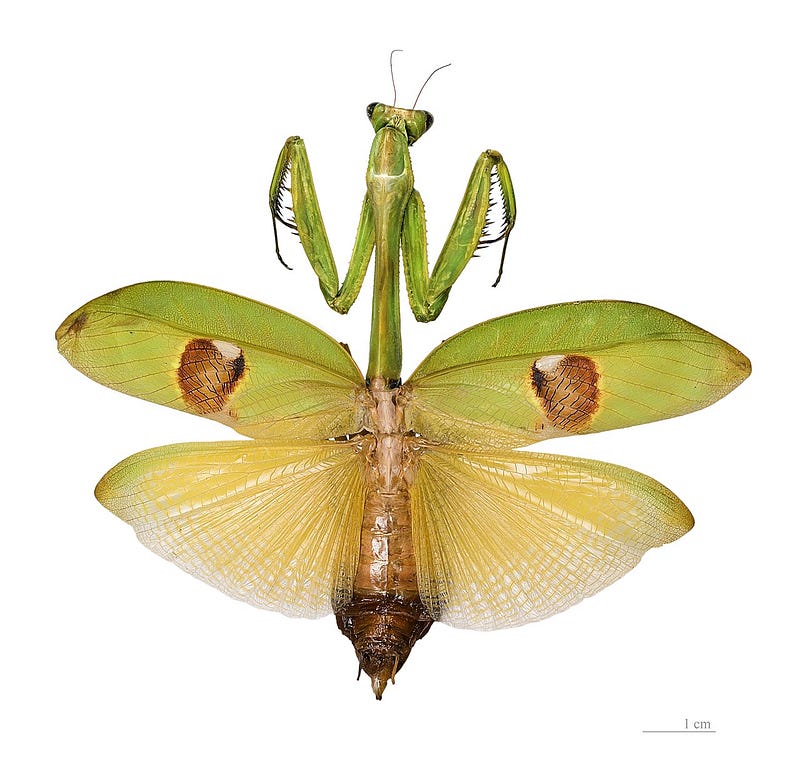
If I’m ever walking around a park or wooded area and happen to run into the praying mantis in the photo above, I’ll immediately spin 180 degrees and head back in the opposite direction. I mean, that mantis looks badass! No wonder there is not one, but two martial art styles named after it.
Today’s list of rejected words includes a handful that end with -men: hetmen, tinmen, and titmen. So I thought tegmen referred to some type of men who did some type of activity… or perhaps guys who supported Teg, whomever she might be. Turns it out, in that word the suffix -men is not a suffix at all.
So what does tegmen have to do with a praying mantis ninja? Read on to find out!
Insects
Our friends at Merriam-Webster tell us tegumen is a New Latin word that originated from the Latin tegmen, tegumen, meaning “covering” or “cover”, from tegere (to cover). Which makes sense considering that the principal function of tegmina (the plural of tegmen) is to protect the hindwings of certain insects, when said hindwings are folded.
As the dictionary mentions, tegmen is a common feature of insects belonging to the order Orthoptera, which formerly used to encompass cockroaches, mantises, grasshoppers and crickets, stick insects, and even the earwigs. Today that order excludes the roaches, mantises, stick insects, and earwigs. (Earwigs, by the way, may have received that name because their wings resemble the shape of human ears, and not because they crawl inside ear canals to lay their eggs.)
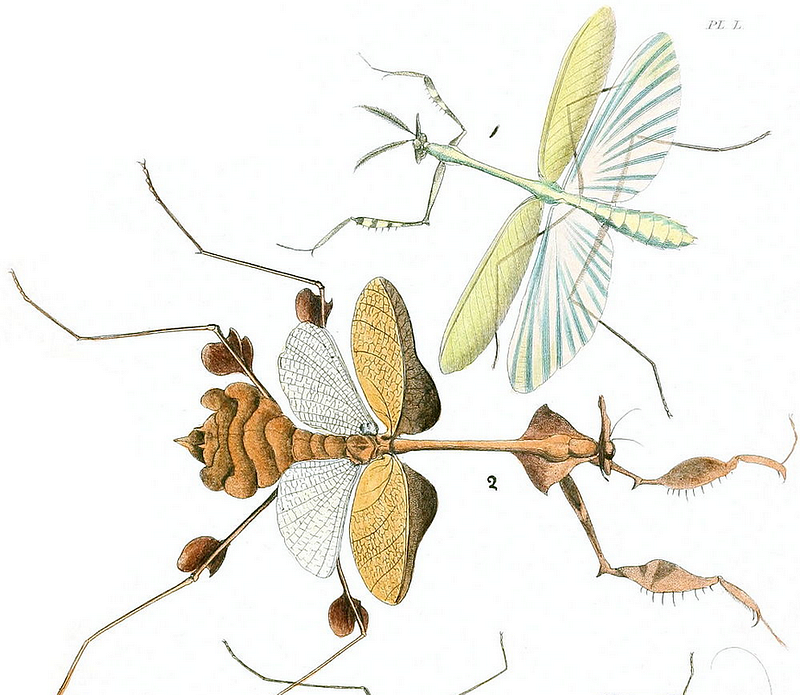
Although in some locusts the tegmina play an aerodynamic role during flight, in most insects they do not flap like the wings. When spread out, they can also provide camouflage, as in the case of the mantis in the bottom part of this illustration:
In other cases, they may have markings that scare of possible predators, as in the case of this mantis:
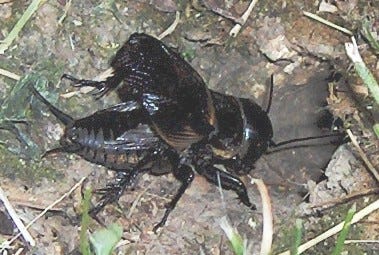
And still other insects, like crickets, use their tegmina as a sounding board for their chirping. As in the case of this field cricket with its raised tegmina:
Other living things
The first definition given for tegmen by the dictionary is endopleura, which is “the inner coating or integument of a seed”. I had a hard time finding good pictures of this, but I did find this illustration:
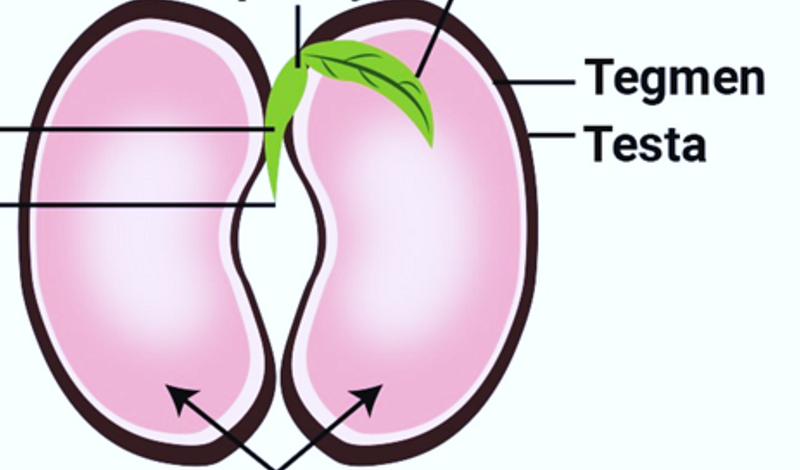
In the above example of a bean seed, the tegmen is the inner portion of the covering is the tegmen, while the outside part of the same covering receives a different name: testa.
Crinoids, according to Merriam-Webster, are:
A large class of chiefly tropical or fossil echinoderms that have a more or less cup-shaped body provided with five or more feathery arms commonly bifurcated or many-branched and bearing pinnules, a mouth lying between the arms on the concave upper surface, and opposite the mouth usually a long jointed stalk fixed to the base of the body and having its opposite end divided into rhizoid processes that anchor the animal to the sea bottom.
(Other echinoderms include starfish, sea urchins and sea cucumbers.)
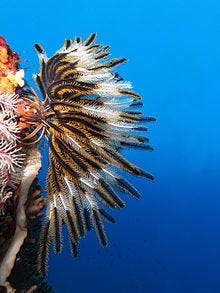
Turns out these weird sea creatures have something called a tegmen, too. Right where those feathery arms join is the theca, which contains both the mouth and the anus (yuck!) of the crinoid. The upper surface of the theca has a membranous disc, and that is the tegmen.
Humans also have a tegmen. It’s really part of our skull, above the middle ear. I had to resort to my old anatomy books (in Spanish) to find and mark the tegmen for you, circled in red below.
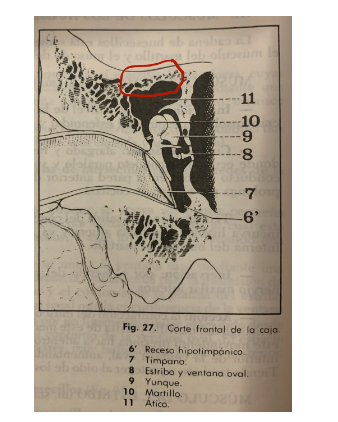
To give you a better idea of what’s going on the lousy photo that Iva Reztok took, the structure labeled with the number 7 is the eardrum, while structures 9, 10, and 11 are the three tiny bones inside your middle ear (malleus, incus, and stapes):
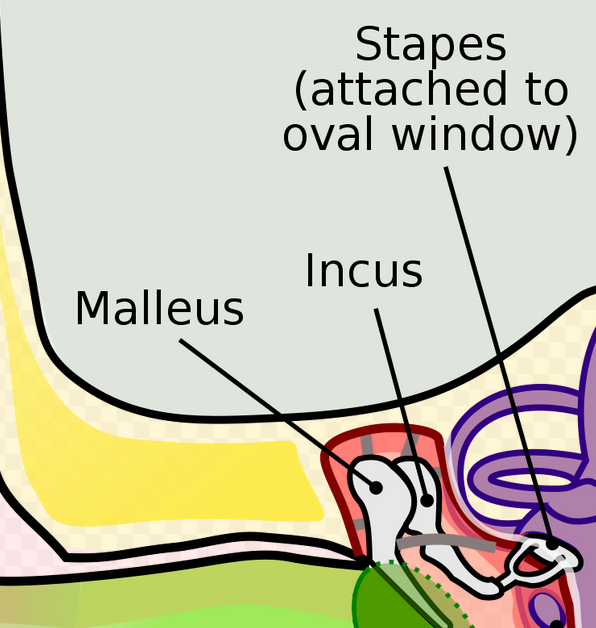
You see that area colored red above the malleus and incus bones? Well, that thin, cream-colored section right above that red area is the tegmen.
Please don’t try to stick your finger up your ear to fell it, though. Trust me, it’s there.
That’s it for today. Fewer than 1,000 words, and several pictures that are worth more than that each.
Now you know. Next time your’e out with a friend and you run into a ninja mantis that displays its tegmen to you, you can explain to your buddy exactly what that is. They’ll probably just say it’s nonsense, and that the mantis simply has an extra eye on its wing… because the editors of the Spelling Bee decided that tegmen is a dord*.
You can check out my previous entry on another dord* here:
*What the heck is a dord, you ask? Here’s the answer:


