
Cymoid
Like cyma or cyme… take your pick
Today’s New York Times Spelling Bee letters:
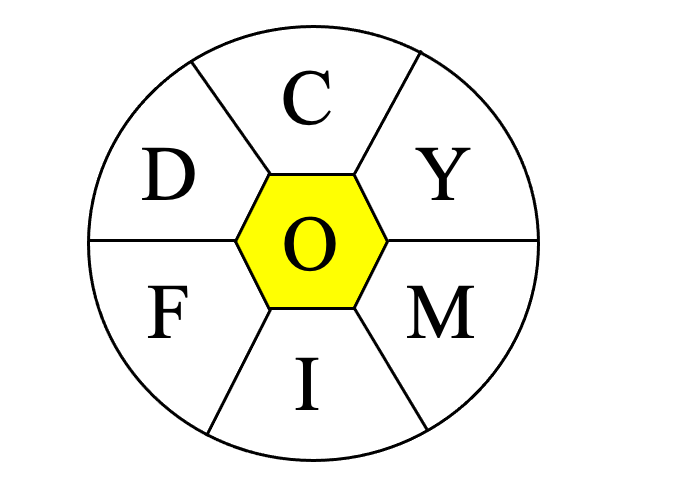
C, D, F, I, M, Y, and center O (all words must include O)
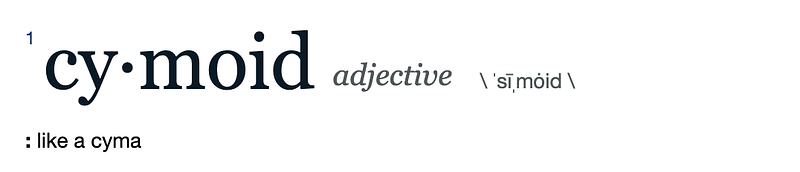
Merriam-Webster says…
…and…
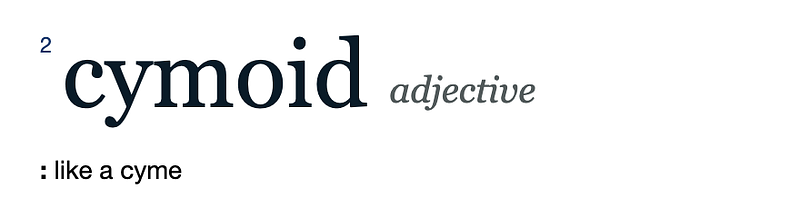
Silly little dictionary! Don’t you know that cymoid can’t possibly be a word if The New York Times says it ain’t?
For further fascinating facts, check out the Spelling Bee Master.
What’s your favorite dord* from today’s puzzle?
My Two Cents
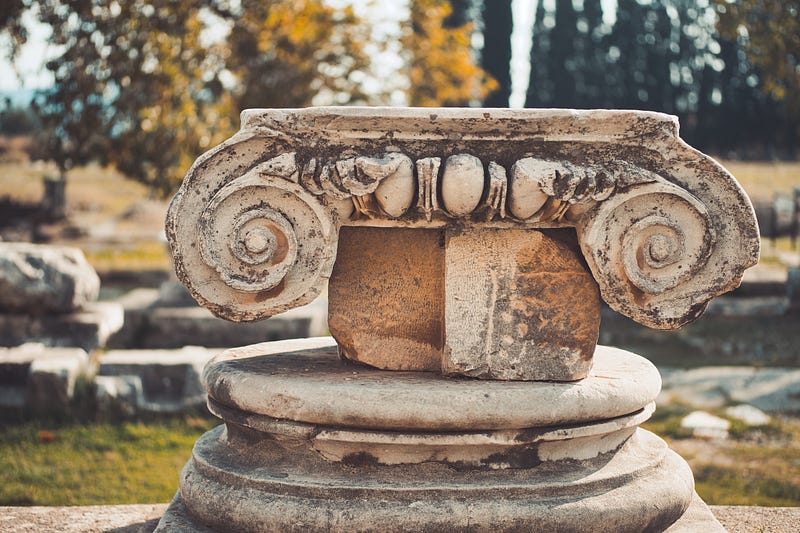
I want to thank Yusuf Dündar for the taking the photo at the top of today’s column. And that’s because it kills two birds with one stone for me. (Disclaimer: We here at Silly Little Dictionary! do not endorse or approve of killing any birds with any amount of stones.) The picture came up when I typed in “ionic”, which is a type of canonic order in classical architecture. Ionic orders sometimes include cymas, which is one of the nouns from which the adjective form cymoid comes. The other noun is cyme, one of the ways in which flowers can arrange themselves on a plant.
Yusuf’s picture shows the capital (top) of an ionic column surrounded by nature. So I’m going to assume that the column had a cymoid molding atop at some point in its life, and I’m also going to assume that there’s a plant somewhere in that blurry background with its flowers in a cymoid disposition.
So, thank you, Yusuf Dündar, for providing me with an image that shows both definitions of our daily dord*.
Cymoid 1
Our friends at Merriam-Webster tell us that cyma (with an “a”) is “a projecting molding whose profile is a double curve”. That double curve can have two patterns, depending on how the concave and convex elements are arranged.
- In a cyma recta (literally, “straight cyma”), the upper part is concave while the lower part is convex.
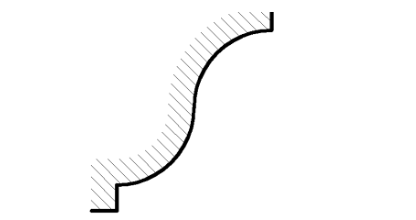
- In a cyma reversa (literally, “reversed cyma”), the concave and convex parts are, well… reversed:
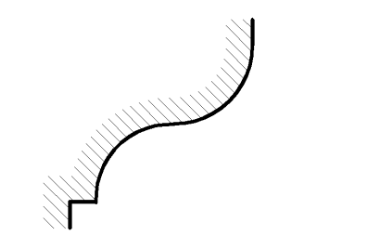
The dictionary also explains that cyma comes from the Greek kyma, meaning “wave”. A cyma is a type of crown molding in classic architecture. Wikipedia describes it using the following long and convoluted paragraph:
Cymatium, the uppermost molding at the top of the cornice in the classical order, is made of the s-shaped cyma molding (either cyma recta or cyma reversa), combining a concave cavetto with a convex ovolo. It is characteristic of Ionic columns and can appear as part of the entablature, the epistyle or architrave, which is the lintel or beam that rests on the capitals of columns, and the capital itself. Often the cymatium is decorated with a palmette or egg-and-dart ornament on the surface of the molding.
My eagle-eyed readers will have noticed that I left the more than dozen links active. That’s because we want to encourage their curiosity. Also, it’s late and we don’t feel like explaining each and every one of those terms, most of which we don’t fully understand anyway.
Cymoid 2
The other cymoid means “like a cyme” ––with an “e” at the end. And the dictionary tells us that this refers to “an inflorescence in which the main and secondary axes always terminate in a single flower whether one flower is produced (as in the wood anemone) or the inflorescence is continued by secondary and tertiary axes (as in the buttercup)” or any plant that has said type of inflorescence.
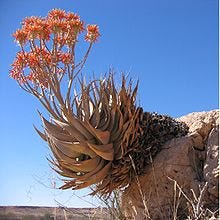
An inflorescence is the way flowers cluster on an axis, or stem. For example, this African aloe shows a branched peduncle, or stalk.
There are two basic forms in which plants flower.
- In monopodial (or racemose) growth, the bud keeps growing and forming flowers laterally. A true terminal flower never pops up, although often the last flower formed by the top bud might appear to be the terminal flower if it grows straight up. Monopodial flower growth is also known as indeterminate inflorescence.
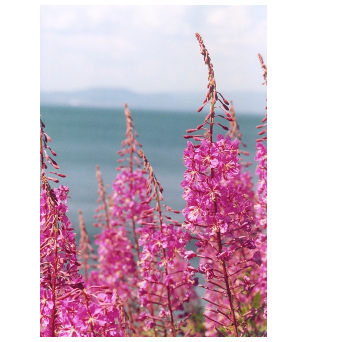
The above is an example of a raceme in a fireweed plant.
- In sympodial (or cymose) growth, the terminal bud forms a terminal flower and then dies out. Other flowers then grow from lateral buds. Sympodial flower growth is also called determinate inflorescence.
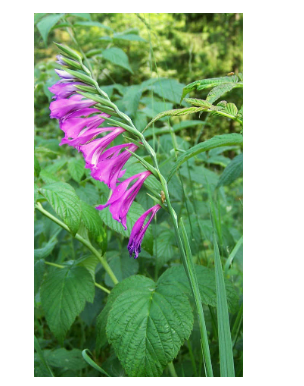
The above is an example of a drepanium disposition in a Gladiolus plant.
My eagle-eyed readers surely noticed that the synonym of sympodial mentioned earlier is cymose and not cymoid. Well, the Spelling Bee never includes the letter “s”, so I had to take what the game gave me and go with cymoid. And that’s that.
Now you know. Next time you’re touring Athens (the Greek one, not the one in Georgia) and you a double-curved thingamajig at the top of a ruin, you can show off your knowledge by pointing at it and telling everyone that its a great example of a cymoid shape. Your tour will probably just get upset and ask you stop making things up… because the editors of the Spelling Bee decided that cymoid is a dord*.
You can check out my previous entry on another dord* here:
*What the heck is a dord, you ask? Here’s the answer: