avatarAvi Kotzer

Free AI web copilot to create summaries, insights and extended knowledge, download it at here

4862

Abstract

face my childhood fears and conquer them. And at the price the therapist charges, I might as well do as they say. Although these images show the <i>clegs</i> much larger than they are, in real life some of these flies do grow up to an inch (2.54 cm) in length and have wing spans that reach 2.4 inches (6 cm).</p><p id="f919">As happens with mosquitos, it is the female <i>cleg</i> the one that bites and sucks blood from horses, cattle, and other mammals ––including humans. With very good reason: she needs a blood meal in order to reproduce effectively and lay her eggs. But unlike mosquitos, <i>clegs</i> do not have an anesthetic in their saliva. And their feeding mechanism is much more brutal, too. Which means horse-fly bites are painful and irritating to the victim, who will quickly brush or shake off the <i>cleg</i>. So the flies have to feed on several hosts to obtain the necessary blood to reproduce. In turn, this means that they may carry disease-causing organisms from one animal to another.</p><p id="4f65">Here is a close up of the mouthparts of a cleg. The sharp parts that bore into your skin are on the right, while the softer part in the middle is the one used to lap your blood.</p><figure id="a909"><img src="https://cdn-images-1.readmedium.com/v2/resize:fit:800/0*VmCM2NxA6gVU2QX_.jpg"><figcaption>Photo by Alan R Walker</figcaption></figure><p id="6c36">If you’re curious like I am, or also trying to face your fears, you can watch a really cool and well-shot five-minute <a href="https://www.youtube.com/watch?v=mbyM2mDDRBk">video</a> of a <i>Hybomitra</i> feeding on someone’s hand. Bonus footage at the end includes a regular fly popping in to do some “clean-up work”. But I’m giving a trigger warning for those who are grossed out by close ups of blood and gore.</p><p id="424c">Another way to distinguish female and male <i>clegs</i> is their eyes. Females have them set wider apart. Male compound eyes almost touch each other in the middle, which means this 17th-century drawing by <a href="https://en.wikipedia.org/wiki/Robert_Hooke">Robert Hooke</a> was likely done using a male model:</p><figure id="4f24"><img src="https://cdn-images-1.readmedium.com/v2/resize:fit:800/0*0_8C3QmmzviXqU7z.png"><figcaption>Art by… Robert Hooke. Duh! Pay attention!</figcaption></figure><p id="02c1">This level of detail in this illustration rivals Albrecht Dürer’s <a href="https://en.wikipedia.org/wiki/Albrecht_D%C3%BCrer#/media/File:Albrecht_D%C3%BCrer_-_Hare,_1502_-_Google_Art_Project.jpg">hare</a>, which is much more famous probably because fuzzy rabbits are way cuter than blood-sucking horse flies.</p><h2 id="0d6e">Uppercase C</h2><p id="0b10">As usual, we here at Silly Little Dictionary love to reference uppercase versions of lowercase words, even though we know that proper nouns are a big no-no according to the Spelling Bee rules. Here is where the movies and music come in, by the way.</p><p id="5f27"><b>§ <i>Clegg </i></b>is a 1970 British crime film directed by Lindsay Shonteff. It featured Gilbert Wynne, in his first starring role, as a private detective named Harry Clegg. The film was released under several different names: <i>Clegg Private Eye</i>, <i>Harry and the Hookers, </i>and <a href="https://www.imdb.com/title/tt0064171/"><i>The Bullet Machine</i></a><i>.</i> The latter title, which is probably the best one, was used in the U.S. I’d go a see movie with that name, wouldn’t you? Especially if I saw this poster:</p><figure id="647b"><img src="https://cdn-images-1.readmedium.com/v2/resize:fit:800/1*_wJWCOv5Hn0Mpqi2CdOFzA.png"><figcaption>Credit: imdb, fair use</figcaption></figure><p id="e4c5"><b>§ <i>Captain Clegg</i></b> is a 1962 British adventure-slash-horror film directed by Peter Graham Scott. Based on the <a href="https://en.wikipedia.org/wiki/Doctor_Syn">Doctor Syn novels</a>, it featured a plethora of well-known actors like Peter Cushing, Yvonne Romain, Oliver Reed. This movie was also released with a different name in the U.S.: <b><i>Night Creatures</i></b>.</p><p id="afd3">One of the characters is simply known as “Mulatto” and was played by <b>Milton Rutherford Reid.</b> If that name doesn’t ring a bell, maybe his wrestling stage name, “The Mighty Chang”, might. And if that doesn’t help, here is his photo:</p><figure id="01b6"><img src="https://cdn-images-1.readmedium.com/v2/resize:fit:800/0*JF-joOn8Kv6dol2r.gif"><figcaption>Credit: wearysloth.com, fair use</figcaption></figure><p id="92aa">Reid was born in India, the son of a Scottish-born father and an Indian mother. He appeared in three separate Bond films: <i>Dr. No</i>, the 1967 <i>Casino Royale</i> spoof with David Niven, and 1977’s <i>The Spy Who Loved Me</i>. In that last movie, he fought Roger Moore on a rooftop and lost… in dramatic fashion.</p> <figure id="19b8"> <div> <div>

Options

            <img class="ratio" src="http://placehold.it/16x9">
            <iframe class="" src="https://cdn.embedly.com/widgets/media.html?src=https%3A%2F%2Fwww.youtube.com%2Fembed%2FkcWMYwPCIXk%3Ffeature%3Doembed&amp;display_name=YouTube&amp;url=https%3A%2F%2Fwww.youtube.com%2Fwatch%3Fv%3DkcWMYwPCIXk&amp;image=https%3A%2F%2Fi.ytimg.com%2Fvi%2FkcWMYwPCIXk%2Fhqdefault.jpg&amp;key=a19fcc184b9711e1b4764040d3dc5c07&amp;type=text%2Fhtml&amp;schema=youtube" allowfullscreen="" frameborder="0" height="480" width="854">
          </div>
        </div>
    </figure></iframe></div></div></figure><p id="9912">Reid might also have been known as <b>Oddball</b> in the Bond film <i>Goldfinger</i> had producers not ended up selecting American <b>Harold Sakata </b>(silver medalist in weightlifting at the 1948 London Olympics!) for the iconic role. According to IMDB, Reid challenged Sakata to a wrestling match in order to decide who would play Oddball. However, because Reid had already appeared as a henchman in <i>Dr. No</i>, Sakata was picked and no wrestling match happened. Shame, though…</p><p id="c729"><b>§ Jonathan Paul Clegg</b>, known as Johnny Clegg, was an amazing South African musician, singer-songwriter, dancer, anthropologist, and anti-apartheid activist… whom I just found about today. Of Jewish descent, he was born in England, lived in Zimbabwe (known as Rhodesia back then) and Israel as a child, but grew up mostly in South Africa.</p><p id="c201">Clegg spent a lot of time with the Zulu migrant workers, learning their language and music. One of his main influences was Charlie Mzila, who cleaned apartments by day and gigged as a musician by night. Johnny was often arrested for spending time with black musicians because this went against the <a href="https://en.wikipedia.org/wiki/Group_Areas_Act"><b>Group Areas Act</b></a> South Africa had in place. His first arrest was at the age of 15 for congregating with “different races” after curfew.</p><p id="114d">Clegg’s experiences as a youngster made him a strong anti-apartheid activist, while his musical work was heavily influences by indigenous South African peoples. In 1969 he formed the band <a href="https://www.discogs.com/artist/369369-Juluka">Jukula</a> (“sweat” in Zulu) with musician <b>Sipho Mchuno</b>. Over the years, Jukula became closely associated with the mass movement against apartheid. Clegg passed away in 2019 at the relatively young age of 66 from pancreatic cancer. Here is video of Clegg on stage honoring Nelson Mandela.</p>
    <figure id="12f3">
        <div>
          <div>
            <img class="ratio" src="http://placehold.it/16x9">
            <iframe class="" src="https://cdn.embedly.com/widgets/media.html?src=https%3A%2F%2Fwww.youtube.com%2Fembed%2FBGS7SpI7obY%3Ffeature%3Doembed&amp;display_name=YouTube&amp;url=https%3A%2F%2Fwww.youtube.com%2Fwatch%3Fv%3DBGS7SpI7obY&amp;image=https%3A%2F%2Fi.ytimg.com%2Fvi%2FBGS7SpI7obY%2Fhqdefault.jpg&amp;key=a19fcc184b9711e1b4764040d3dc5c07&amp;type=text%2Fhtml&amp;schema=youtube" allowfullscreen="" frameborder="0" height="480" width="640">
          </div>
        </div>
    </figure></iframe></div></div></figure><p id="38d9">Now you know. Next time you’re on a horse farm and you feel a painful bite on your arm, you can tell your friends you were attacked by a <i>cleg</i>. They’ll probably say it was just a large mosquito, though… because the editors of the Spelling Bee decided that <i>cleg(g) </i>is a dord*.</p><p id="4fbc">You can check out my previous entry on another <b>dord* </b>here:</p><div id="fa48" class="link-block">
      <a href="https://readmedium.com/pitta-7b66d970dc3d">
        <div>
          <div>
            <h2>Pitta</h2>
            <div><h3>The bird, not the bread</h3></div>
            <div><p>medium.com</p></div>
          </div>
          <div>
            <div style="background-image: url(https://miro.readmedium.com/v2/resize:fit:320/0*Z7wsk_kbm-NYdOuX)"></div>
          </div>
        </div>
      </a>
    </div><p id="e6b1">*What the heck is a <b>dord, </b>you ask? Here’s the answer:</p><div id="d8d8" class="link-block">
      <a href="https://www.merriam-webster.com/words-at-play/dord-a-ghost-word">
        <div>
          <div>
            <h2>'Dord': A Ghost Word</h2>
            <div><h3>One of the questions people like to ask lexicographers is this: Can you sneak something into the dictionary? Can you…</h3></div>
            <div><p>www.merriam-webster.com</p></div>
          </div>
          <div>
            <div style="background-image: url(https://miro.readmedium.com/v2/resize:fit:320/0*SQOgdhETqv6OQ-JH)"></div>
          </div>
        </div>
      </a>
    </div></article></body>

Cleg(g)

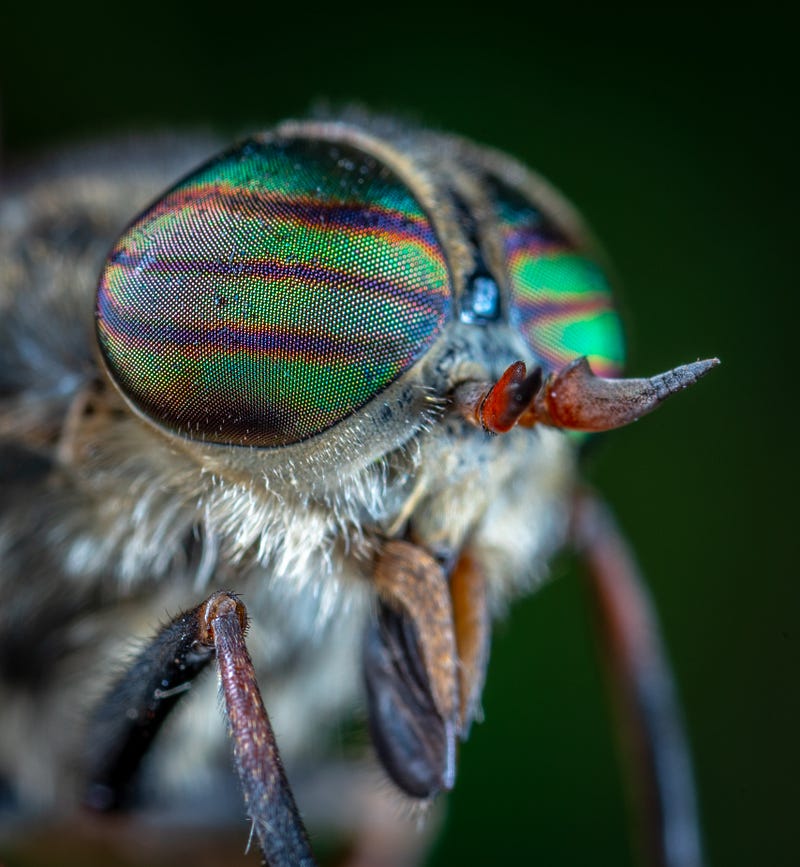
Gad! Fly!

Photo by Егор Камелев on Unsplash

Today’s New York Times Spelling Bee letters:
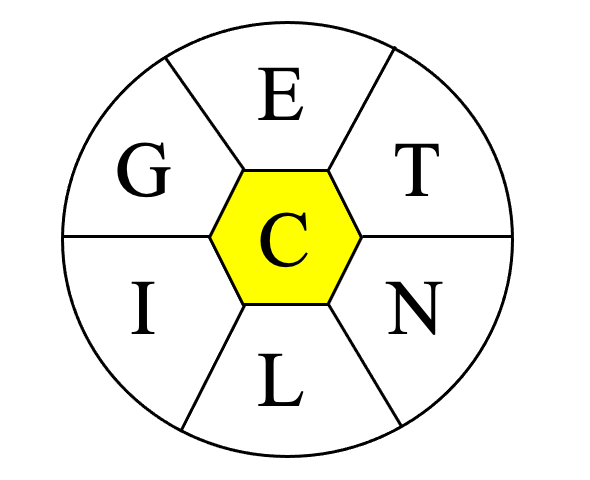
Art: Iva Reztok

E, G, I, L, N, T, and center C (all words must include C)

Merriam-Webster says…
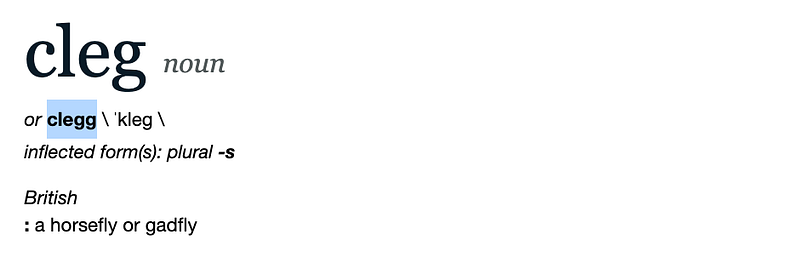
Credit: merriam-webster.com

Silly little dictionary! Don’t you know that cleg(g) can’t possibly be a word if The New York Times says it ain’t?

For further fascinating facts, check out the Spelling Bee Master.

What’s your favorite dord* from today’s puzzle?

My Two Cents

It’s Friday, which often means we find a way to discuss animals, music, or film. Today we get a little bit of each! Plus, I’m hoping this article will be short and sweet… which is the exact opposite of a cleg’s bite, as you shall soon see.

I grew up in Venezuela, where these flies were called matacaballos. In case your Spanish is rusty, that term literally translates as “horse killer”. I lived in the capital city of Caracas, which was quite urban and had regular house flies, not clegs. And even on the few occasions that I went camping, horseback riding, or visited farms, I don’t remember encountering these beast-like insects. Nevertheless, I was terrified of them, simply based on their Venezuelan nickname. (I think matacaballos is also used as a moniker for certain types of boa constrictors in parts of Venezuela and Colombia.) Killer bees and spontaneous combustion were interchangeably numbers one and two on my fear list, but the matacaballos was likely in the top five.

You can imagine, then, how pleasant it is for me to write the next section in today’s column.

lowercase c

Our friends at Merriam-Webster tell us that cleg comes from the Middle English word, itself from Old Norse kleggi; akin to Norwegian klegg, meaning “burr”, Old English clǣg (clay). In the U.S., this insect is usually called horsefly (either because it bites horses or because it’s so effin’ big) and gadfly, from gad (meaning “spear” or “spike”)+ fly, because of its painful bites. Other common names are “stout” (referring to their wide bodies); “dun-flies”, due to their dark colors; and “deer-flies”, “buffalo-flies”, “moose-flies” and “elephant-flies” depending on what animals are available for these animals to feed on.

Insects of the family Tabanidae are currently divided into three subfamilies, based on a 2015 genetic study:

  • Subfamily Chrysopsinae, known as deer flies or banded horse-flies. Some of these insects –– like the splayed deer fly (or Scotch cleg) below–– have colorful compound eyes.
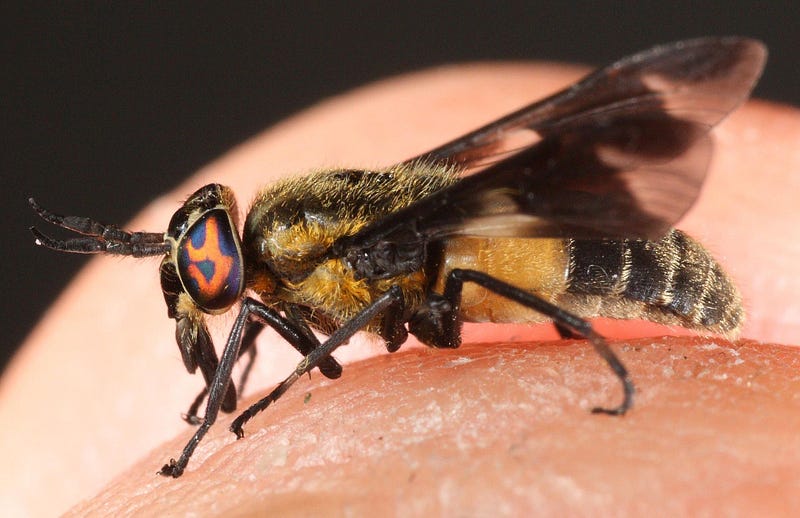
Photo by Magne Flåten
  • Subfamily Pangoniinae, or long-tongued horse-flies. Yeah, these are even scarier-looking. Thank goodness I’m finding out about them only now, and not when I was a kid. I mean, look at that effin’ spear! But don’t worry, these clegs use that never-ending proboscis to extract nectar from flowers, not pierce through your entire thigh.
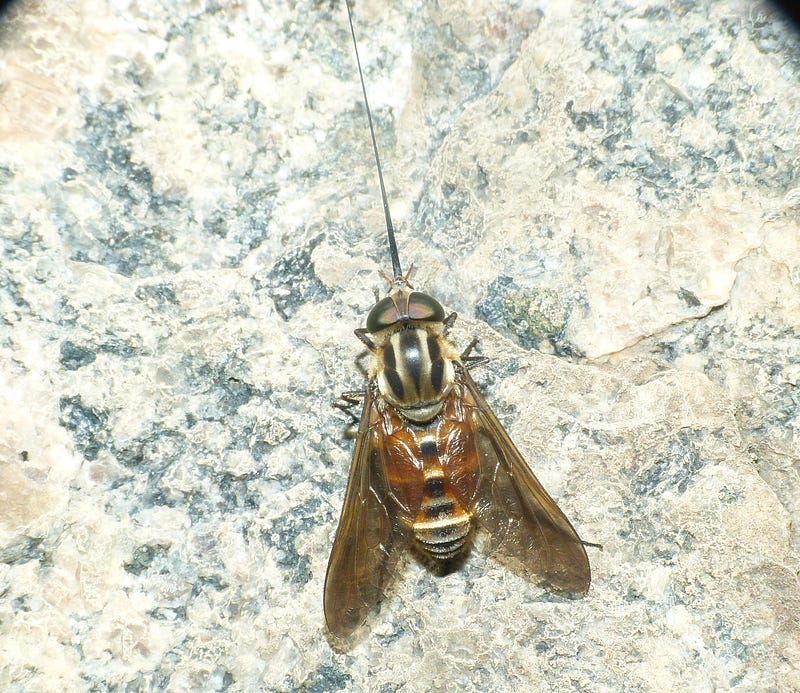
Photo by L. Shyamal
  • Subfamily Tabaninae, also called simply “horse-flies”. Here is one from the genus Hybomitra.
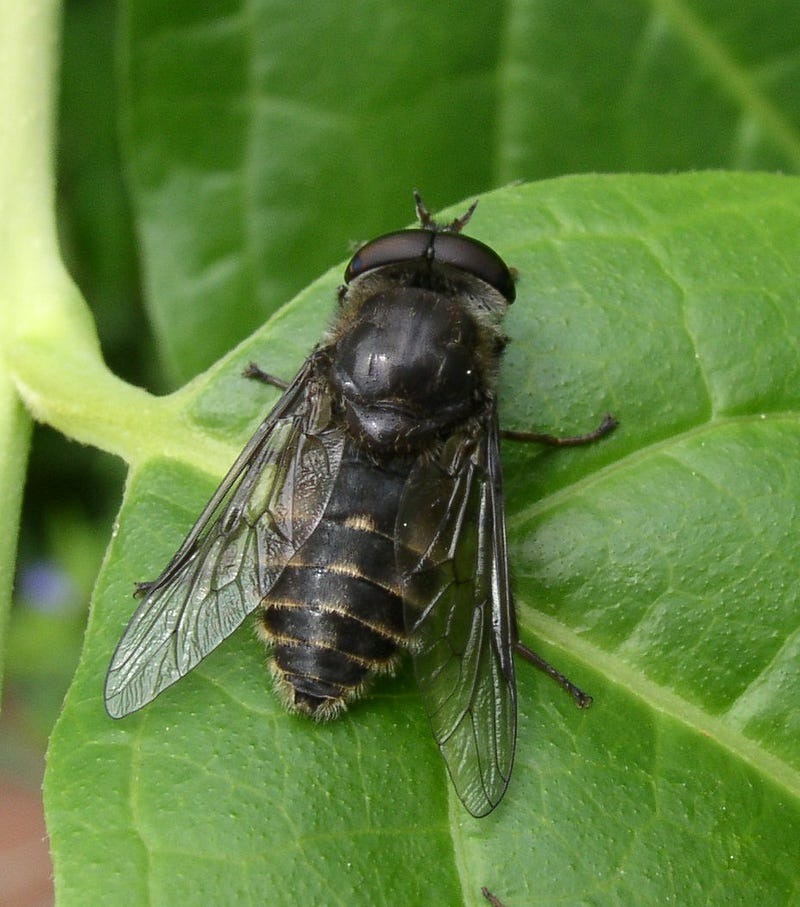
Photo by Beatriz Moisset

Yeah, I’m posting pictures of these not-so-tiny insects in a not-so-tiny format because my therapist said I need to face my childhood fears and conquer them. And at the price the therapist charges, I might as well do as they say. Although these images show the clegs much larger than they are, in real life some of these flies do grow up to an inch (2.54 cm) in length and have wing spans that reach 2.4 inches (6 cm).

As happens with mosquitos, it is the female cleg the one that bites and sucks blood from horses, cattle, and other mammals ––including humans. With very good reason: she needs a blood meal in order to reproduce effectively and lay her eggs. But unlike mosquitos, clegs do not have an anesthetic in their saliva. And their feeding mechanism is much more brutal, too. Which means horse-fly bites are painful and irritating to the victim, who will quickly brush or shake off the cleg. So the flies have to feed on several hosts to obtain the necessary blood to reproduce. In turn, this means that they may carry disease-causing organisms from one animal to another.

Here is a close up of the mouthparts of a cleg. The sharp parts that bore into your skin are on the right, while the softer part in the middle is the one used to lap your blood.
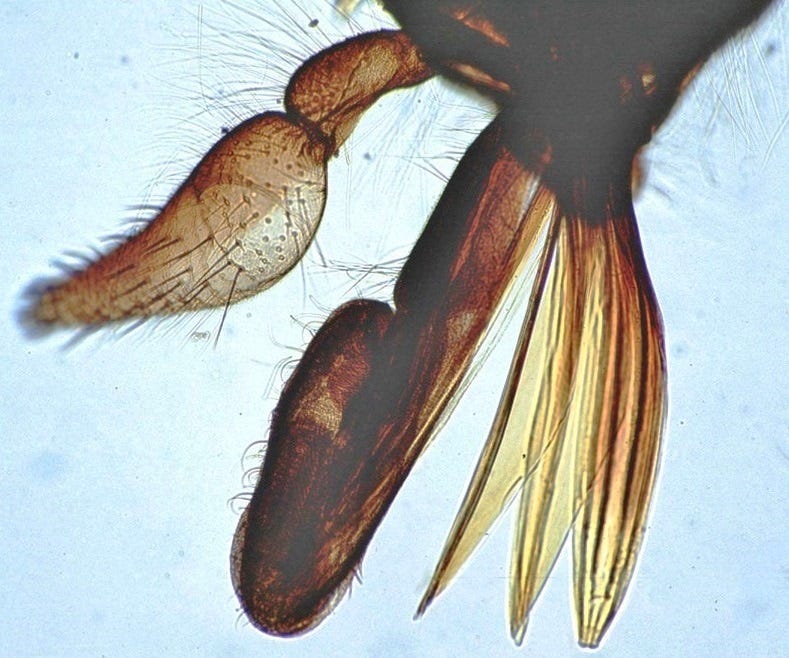
Photo by Alan R Walker

If you’re curious like I am, or also trying to face your fears, you can watch a really cool and well-shot five-minute video of a Hybomitra feeding on someone’s hand. Bonus footage at the end includes a regular fly popping in to do some “clean-up work”. But I’m giving a trigger warning for those who are grossed out by close ups of blood and gore.

Another way to distinguish female and male clegs is their eyes. Females have them set wider apart. Male compound eyes almost touch each other in the middle, which means this 17th-century drawing by Robert Hooke was likely done using a male model:
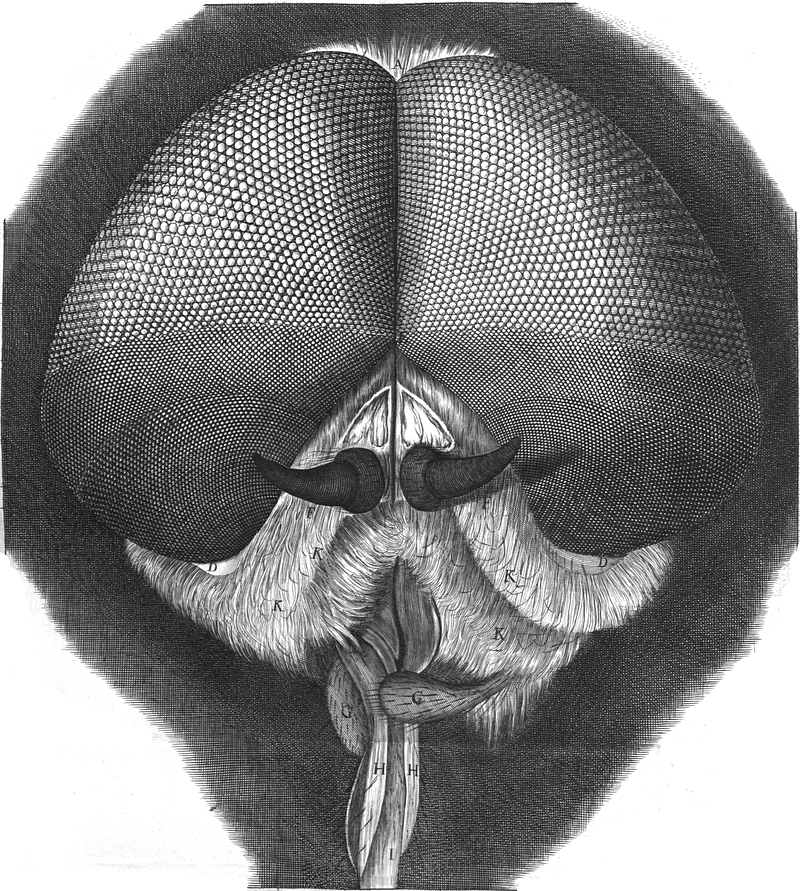
Art by… Robert Hooke. Duh! Pay attention!

This level of detail in this illustration rivals Albrecht Dürer’s hare, which is much more famous probably because fuzzy rabbits are way cuter than blood-sucking horse flies.

Uppercase C

As usual, we here at Silly Little Dictionary love to reference uppercase versions of lowercase words, even though we know that proper nouns are a big no-no according to the Spelling Bee rules. Here is where the movies and music come in, by the way.

§ Clegg is a 1970 British crime film directed by Lindsay Shonteff. It featured Gilbert Wynne, in his first starring role, as a private detective named Harry Clegg. The film was released under several different names: Clegg Private Eye, Harry and the Hookers, and The Bullet Machine. The latter title, which is probably the best one, was used in the U.S. I’d go a see movie with that name, wouldn’t you? Especially if I saw this poster:
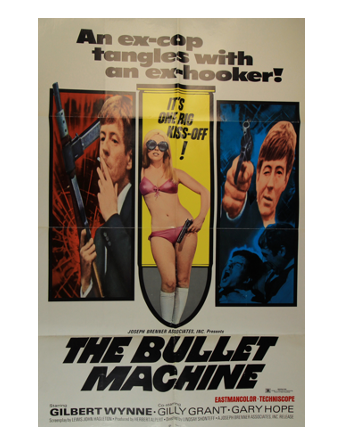
Credit: imdb, fair use

§ Captain Clegg is a 1962 British adventure-slash-horror film directed by Peter Graham Scott. Based on the Doctor Syn novels, it featured a plethora of well-known actors like Peter Cushing, Yvonne Romain, Oliver Reed. This movie was also released with a different name in the U.S.: Night Creatures.

One of the characters is simply known as “Mulatto” and was played by Milton Rutherford Reid. If that name doesn’t ring a bell, maybe his wrestling stage name, “The Mighty Chang”, might. And if that doesn’t help, here is his photo:
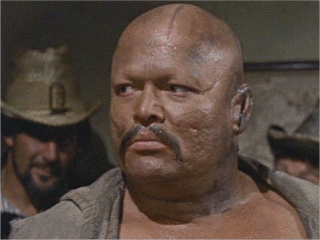
Credit: wearysloth.com, fair use

Reid was born in India, the son of a Scottish-born father and an Indian mother. He appeared in three separate Bond films: Dr. No, the 1967 Casino Royale spoof with David Niven, and 1977’s The Spy Who Loved Me. In that last movie, he fought Roger Moore on a rooftop and lost… in dramatic fashion.

Reid might also have been known as Oddball in the Bond film Goldfinger had producers not ended up selecting American Harold Sakata (silver medalist in weightlifting at the 1948 London Olympics!) for the iconic role. According to IMDB, Reid challenged Sakata to a wrestling match in order to decide who would play Oddball. However, because Reid had already appeared as a henchman in Dr. No, Sakata was picked and no wrestling match happened. Shame, though…

§ Jonathan Paul Clegg, known as Johnny Clegg, was an amazing South African musician, singer-songwriter, dancer, anthropologist, and anti-apartheid activist… whom I just found about today. Of Jewish descent, he was born in England, lived in Zimbabwe (known as Rhodesia back then) and Israel as a child, but grew up mostly in South Africa.

Clegg spent a lot of time with the Zulu migrant workers, learning their language and music. One of his main influences was Charlie Mzila, who cleaned apartments by day and gigged as a musician by night. Johnny was often arrested for spending time with black musicians because this went against the Group Areas Act South Africa had in place. His first arrest was at the age of 15 for congregating with “different races” after curfew.

Clegg’s experiences as a youngster made him a strong anti-apartheid activist, while his musical work was heavily influences by indigenous South African peoples. In 1969 he formed the band Jukula (“sweat” in Zulu) with musician Sipho Mchuno. Over the years, Jukula became closely associated with the mass movement against apartheid. Clegg passed away in 2019 at the relatively young age of 66 from pancreatic cancer. Here is video of Clegg on stage honoring Nelson Mandela.

Now you know. Next time you’re on a horse farm and you feel a painful bite on your arm, you can tell your friends you were attacked by a cleg. They’ll probably say it was just a large mosquito, though… because the editors of the Spelling Bee decided that cleg(g) is a dord*.

You can check out my previous entry on another dord* here:

*What the heck is a dord, you ask? Here’s the answer:

Spelling Bee
Language
Flies
Film
Music
Recommended from ReadMedium