
Teff
Eating this grass won’t make you high
Today’s New York Times Spelling Bee letters:
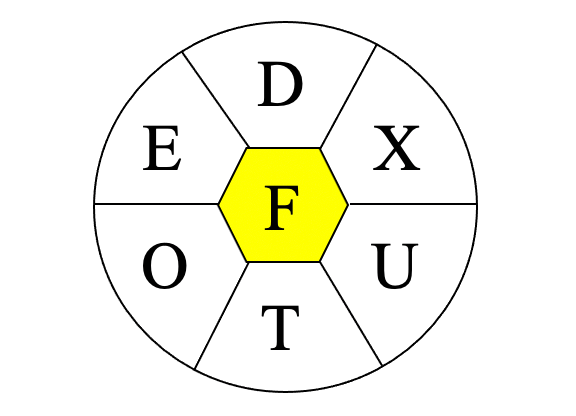
D, E, O, T, U, X, and center F (all words must include F)
Merriam-Webster says…
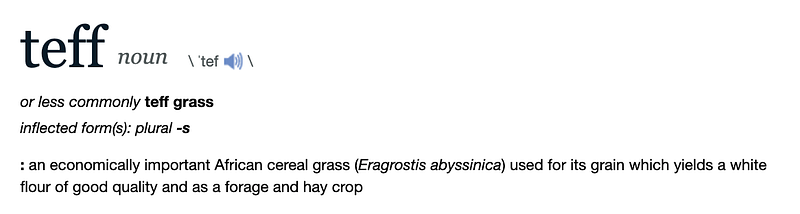
Silly little dictionary! Don’t you know teff can’t possibly be a word if the New York Times says it ain’t?
For further fascinating facts, check out the Spelling Bee Master.
What’s your favorite dord* from today’s puzzle?
My Two Cents
Shouldn’t teff be a word the New York Times considers not obscure? After all, less than six years ago their blog was wondering if it was the next super grain. Quinoa had become quite popular by that time in the U.S., as I recall. But where had quinoa been ten years earlier? On the tip of everyone’s tongue? Certainly not! So there is still hope for teff to become both a popular food staple and a word that’s not rejected by the Spelling Bee game.
Seeds of grass
Our friends at Merriam-Webster don’t give much of an explanation for the origin of the word teff, except to say it comes from the Amharic ṭef. Amharic is a Semitic language of Ethiopia, and still currently an official one in that country. It’s believed the word tef means “lost” in Amharic, perhaps because of the edible seed’s tiny size––similar in size to a caraway seed and barely a millimeter or so in diameter.
Here is a photo of teff seeds next to seeds of sorghum, for size comparison.
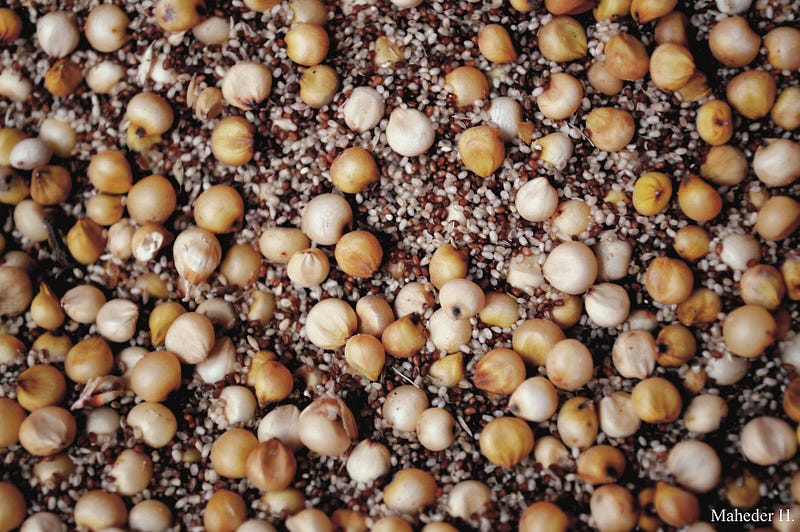
Teff (Eragrostis tef) is native the the Horn of Africa and one of the oldest plants to have been domesticated and grown as a crop. It’s a species of lovegrass, of which most are used for livestock feed. It’s seeds, also known as teff, are the main ingredient of the traditional injera bread of Ethiopian cuisine. One of the advantages of this bread and the seeds is that they are gluten free.
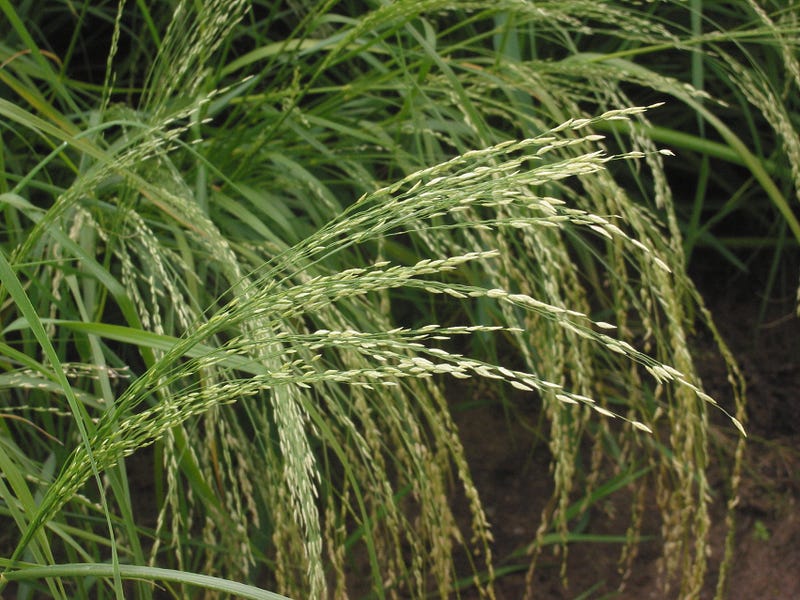
As the Times article I mentioned earlier explains, long distance runners in Ethiopia swear by this grain because of its high mineral content. Olympic gold medalist Haile Gebrselassie calls teff the “secret to the success of Ethiopian runners.” Furthermore…
The growing interest in teff is part of an increasing consumer desire for so-called ancient grains like farro, quinoa, spelt, amaranth and millet. Health-conscious consumers have been gravitating to these grains because they’re nutrient dense and have not been genetically modified.
Teff helps Ethiopians get some two-third of their daily protein intake; besides being the main ingredient in traditional bread, it is also used to make a porridge, a spirit known as arak’e and a beer called t’ella. Teff grains come in three shades: white, mixed or red. The straw from the plant can be used for reinforcing mud to plaster wood walls of buildings, and for feeding livestock.
Bread, tablecloth, and cutlery all in one
Injera is a sour fermented flatbread that possesses a slightly spongy texture; it’s a staple food of Ethiopia, Eritrea, and even some parts of Sudan.
The traditional recipe involves just two ingredients ––flour made of teff and water–– that are mixed into a soupy batter and allowed to ferment for three days. The fermentation is triggered by adding ersho, a clear, yellow, yeasty liquid that has been collected from previous fermentations of teff batter. This fermentation process is key to the bread’s flavor and texture.
In Ethiopia the mixture is poured in a circular motion into a concave griddle made of clay or metal (called a mitad), which has been placed over a wood fire. Today, however, many restaurants use large round electric frying pans.
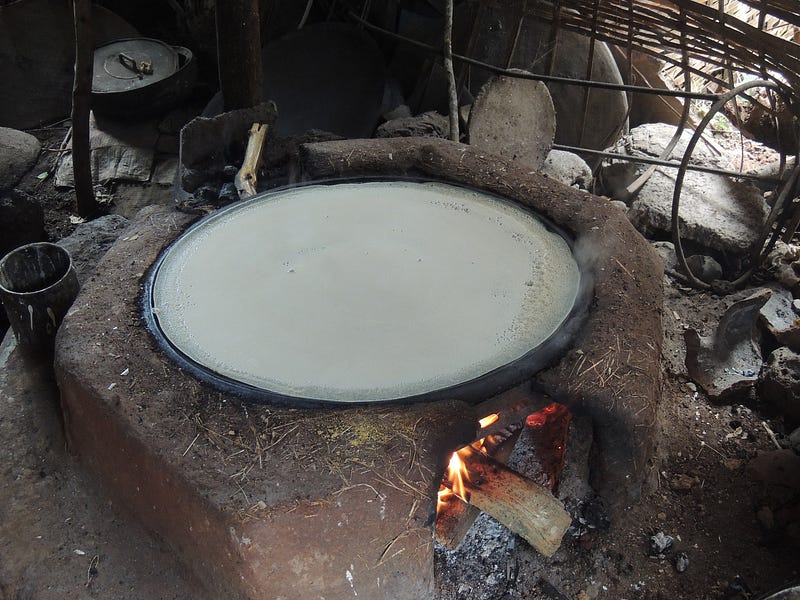
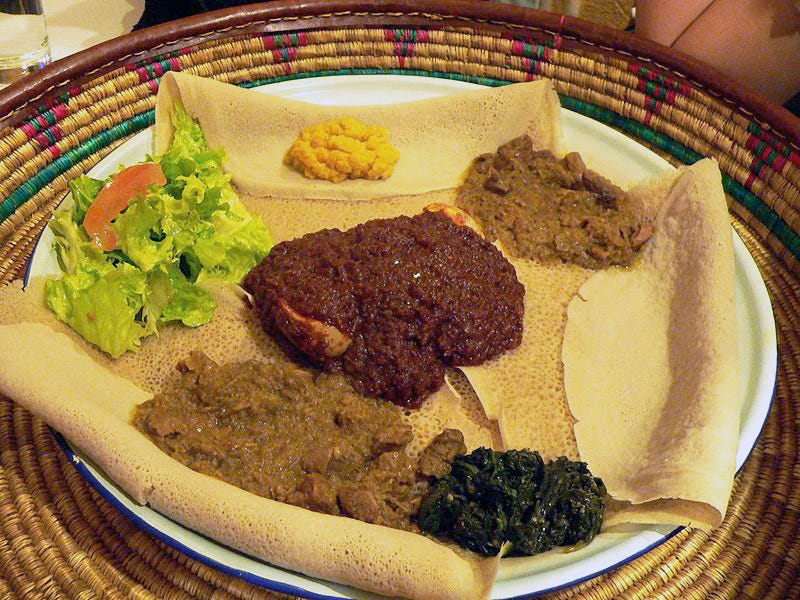
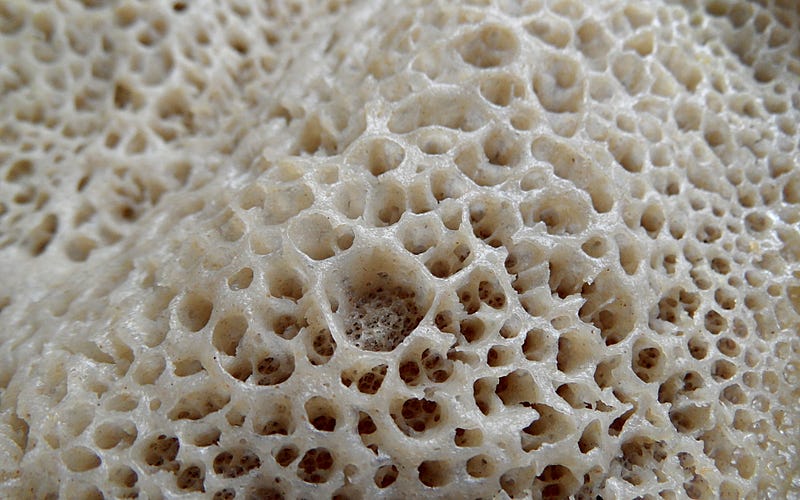
he bottom part of the injera, the one that touches the heating surface, ends up with a relatively smooth texture, The top part, however, is quite porous. This porousness makes injera really useful for scooping up sauces and food. Some of the more popular dishes eaten with injera include the ayib (homemade cottage cheese), gomen (greens), misir (spiced lentils), doro wat (chicken stew), kitfo (steak tartare), key wot (beef stew), and shiro (stew made from ground chickpeas and spices).
Here is a close-up photo of injera, showing details of its sponginess.
The interesting thing about injera bread is how essential it is to Ethiopian meals, so much so that it serves a threefold purpose: plate, cutlery, and food. The entire meal consisting of different stews, salads, and small platters can be served on a large, flat piece of injera, with additional smaller chunks of bread on top. These smaller pieces of injera are used to grasp the food; people usually eat communally and it’s customary for diners to feed each other. Finally, the “plate” of injera is eaten at the end, signalling that the meal is over.
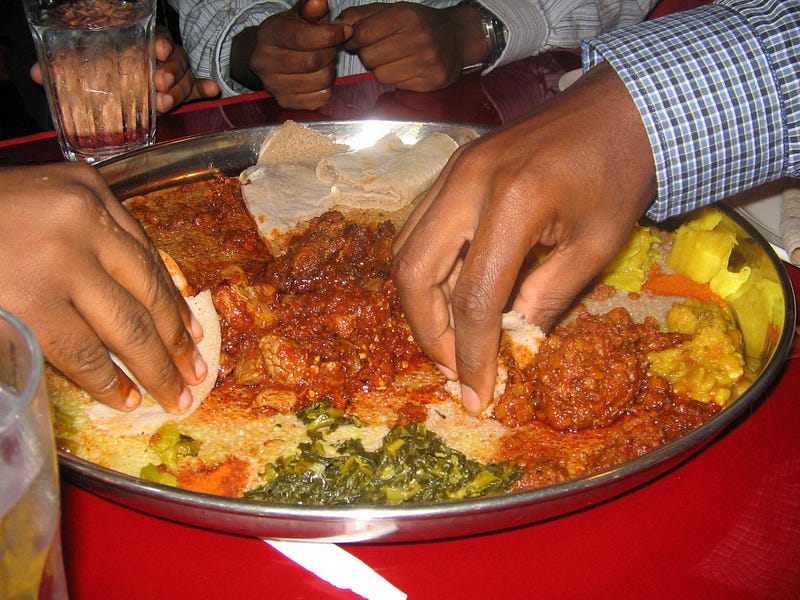
In her article “How to Eat: Ethiopian cuisine is hands-on”, Aparita Bhandari explains some of the main rules.
The №1 rule, according to Hagos? “No licking your fingers. That’s just self-explanatory. You don’t double dip. And we use our right hand to eat because the left hand is considered unclean.” (Traditionally, the left hand is used to aid in bodily functions such as cleaning your backside.)
I have great memories of going to dinner at an Ethiopian restaurant in New York with close friends, and the meal was just like I described before. We didn’t sit at tables, but low to the ground on cushions, in a circle. The injera bread with all the delicacies was brought to us and placed in the center, and we all partook of the delicious dinner. I had already experienced a similar way of eating by using bread as the utensil in Venezuela, where I grew up. This was sometimes done with the casabe (indigenous flatbread made from the cassava root), which is much sturdier than injera and therefore easier to use. However, the experience at that Ethiopian restaurant was awesome and new to me. I thoroughly enjoyed both the food, the ambience, and, of course, the company of wonderful people.
After writing today’s column, I’ve really developed a hankering for some injera. I’m gonna have to find an Ethiopian restaurant near my neighborhood here in Spain. You too should try Ethiopian food if you haven’t already. Just be careful ordering anything made with teff… because the editors of the Spelling Bee decided that teff is a dord*.
You can check out my previous entry on another dord* here:
*What the heck is a dord, you ask? Here’s the answer: