
Ted Bundy didn’t kill people because of porn
Evangelicals tell a lie about a serial killer
Every day, Evangelicals like to say that watching porn leads to all kinds of horrors—like serial killing. The proof? An interview with Ted Bundy himself.
A clip from a 1989 interview with Bundy, done the day before he was executed, is a staple of social media. What the religion doesn’t tell you is everything.
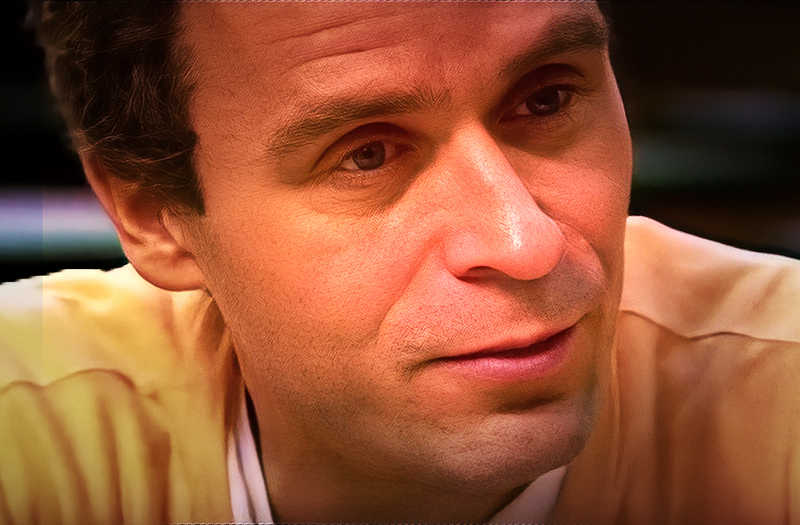
When Evangelicals present the moment, Bundy seems to be giving a final confession to a cleric.
To help the illusion along, the interviewer, James Dobson, is often called the Reverend Dr. James Dobson.
Never a cleric, Dobson was once a child psychologist, and had become an Evangelical spokesman on “family” issues—then from 1985 on, he was a Republican activist. That was his basic status in 1989.
A biography of Dobson, Family Man: The Biography of Dr. James Dobson by Dale Buss, notes that Dobson was cozy with the Reagan administration, and trying to move public opinion to restrict porn.
He’d noticed that FBI literature had linked porn and serial killers.
An FBI “profiler” named John E. Douglas had mused about a connection. When Dobson summarized Douglas’ views, he had the ‘expert’ saying that male porn viewers:
“…got hooked on hard-core porn through the doorway of soft-core porn and walked through that progressive experience leading to harder and harder, more violent material and eventually coming to a place where they crossed the line from fantasy to reality.”
Alerted to Dobson’s use of his ideas. Douglas clarified that he did not view ordinary porn viewing as leading to violent crime, but only that those “prone to that sort of thinking” might “get some of their ideas from it.”
Ted Bundy noticed James Dobson.
In August 1987, the serial killer was thinking about a privilege he was allowed by Florida law for inmates on Death Row. He could do an interview with the media, which could only be released after his death. He offered to talk with Dobson about pornography.
As Dale Buss reports, Dobson felt “honored.” And so, on January 24th, 1989, the day before Bundy was scheduled to be executed in the Florida State Prison, the cameras were rolling.
Bundy went on about growing up a “normal person,” but as a boy he’d found some porn in a dumpster. His life went to hell from there.
Viewers might not notice some legal details.
In her 1994 memoir, Defending the Devil, Bundy’s lawyer, Polly Nelson, discusses the interview. There was still hope in their minds that Florida’s governor would stay the execution. She prepped Bundy beforehand, telling him not to discuss any Florida crimes.
Dobson asked Bundy about Kimberly Leach, the 12-year-old girl who had been Bundy’s last victim. Bundy stopped. “I can’t really talk about that right now,” he said. “That’s…”
Dobson thought that Bundy was overcome with feeling—and supplied it himself. “That’s too painful,” Dobson said.
As Polly Nelson notes, this was a Florida crime, and Bundy wasn’t discussing it so as not to interrupt any process of staying his execution.
The interview had been a performance for one man.
The Republican governor of Florida, Bob Martinez, was a famous Catholic campaigner against ‘obscenity’. (In 1990, the group 2 Live Crew recorded a track about him, “Fuck Martinez.”)
Bundy, who had worked in Republican politics, was playing the game.
That was the view of his next interviewer, Al Carlisle, the psychologist who knew Bundy well. Carlisle challenged him, saying the Dobson interview had just been an “attempt to get a stay of execution.”
Bundy didn’t dispute that, but launched into some religious talk of how killing people made him feel godlike. He adds:
“I have found a sense of peace. I still don’t know if I believe in a literal God but, if there is one, I hope that he will have mercy on me.”
As his execution upon him, Bundy was offered a clerical visit.
Rev. Fred Lawrence was interviewed for David Von Drehle’s Among the Lowest of the Dead. He and Bundy, he recalled, had talked quite a while.
“I don’t think he knew how many he killed or why he killed them,” Lawrence says. “That was my impression, my strong impression.”
For all Bundy’s maneuverings, Governor Bob Martinez didn’t halt the execution. Ted Budy, after all, hadn’t even shown repentance for his crimes, and had blamed everything from his family to his own victims.
Days later, the Dobson interview was released.
Criminologists were asked about it. One named William Wilbanks was quoted in news reports explaining the interview could not be taken at face value. He says:
“By placing the blame on porn, Bundy absolved himself of personal responsibility and portrayed himself as a victim of porn. His suggestion that he was not trying to avoid responsibility was either a self-deception or a final ‘con’ on the public he so despises.”
In period news reports, Bundy biographer Stephen Michaud dismissed it completely. “Look,” he said:
“…the last time Bundy was caught, you know what he had in his car? A stack of well-thumbed pamphlets for cheerleader training schools. He was into cheerleader pamphlets, and he wasn’t using them for scratch paper. He also got off on his college physiology text, which had diagrams of female genitalia.”
But Evangelicals were convinced.
The interview was a phenomenon, as Dobson sold VHS copies for $25 a copy. Within a year his organization had made a million dollars off the product, and his anti-pornography crusade was dramatically strengthened.
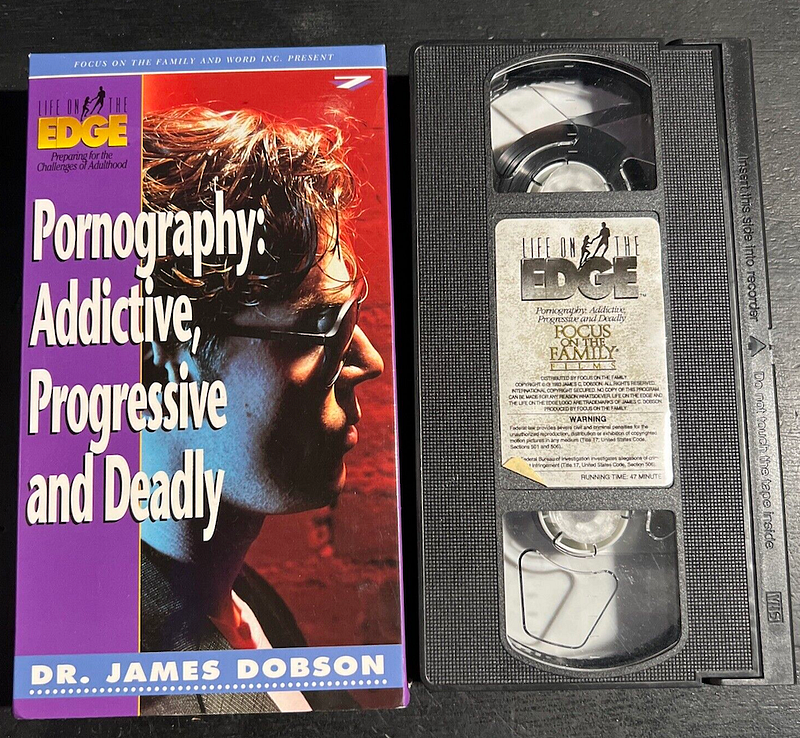
Nobody who knew anything about Bundy seemed to think porn had led to his murders.
John E. Douglas dismissed the Dobson interview:
“This is just one more manifestation of guys like Bundy trying to shove blame for their actions onto something or someone else.”
Bundy biographers continued to totally repudiate the interview as a real statement of Bundy’s motivations. Ann Rule, who had known Bundy, has a treatment of the matter in her classic true-crime book The Stranger Beside Me. She notes that Bundy had talked with Dobson about being warped by not just porn, but by detective magazines. She quoted a letter Bundy wrote her in 1977 saying he had never looked at such a magazine.
She assesses the Dobson interview very grimly:
“I don’t think pornography caused Ted Bundy to kill thirty-six or one hundred or three hundred women. I think he became addicted to the power his crimes gave him. And I think he wanted to leave us talking about him, debating the wisdom of his words. In that, Ted succeeded magnificently.”
To this day, Dobson the supposed psychologist has not admitted that there is no evidence of porn leading to violent sex crime. 🔶


