
Casey’s Reviews
Tears of the Kingdom: First Impressions
The Legend of Zelda just got a whole lot bigger
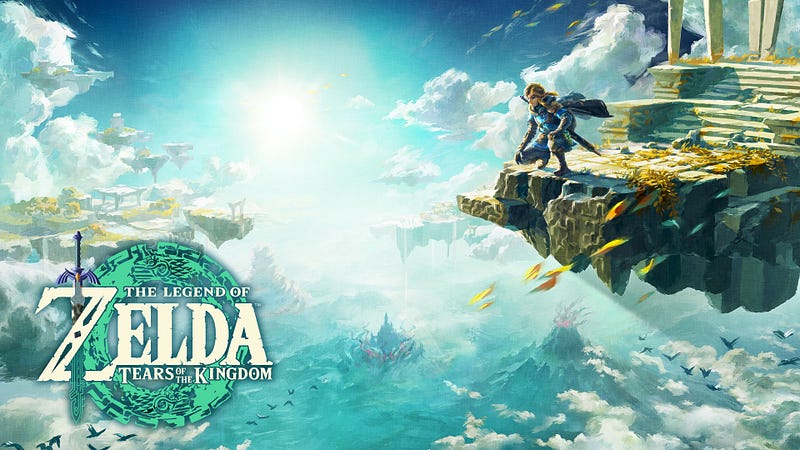
Like all my fellow gamer-nerd brethren, I’ve been playing the new Legend of Zelda Switch game, Tears of the Kingdom, pretty much nonstop since it arrived a couple weeks ago.
The long-awaited sequel expands the open world of Hyrule in three dimensions, inherently changes fundamental game mechanics, and tugs on every heartstring to positively vibrate with nostalgia.
For fans of Breath of the Wild, TotK had a lot to live up to. Although I’ve not come close to finishing the plot or uncovering all the secrets of the new game, my first impressions are that it accomplishes that — and more.
(Minor spoilers to follow.)
As Above, So Below
One of the coolest aspects of BotW was the gigantic open world to explore. Hyrule, having been taken over by monsters during a 100-year reign of terror known as the Calamity, is a study of how nature reclaims civilization after an apocalypse.
Wild animals and plants overgrow the ruins of a once-prosperous kingdom in BotW. The wilderness encroaches from all sides on the small remaining pockets of humanity, cutting off the various fantasy races — Hylians, Zora, Gerudo, Rito, Gorons, and Sheikah — from each other and the hero who will unite them in the fight against Ganon.
The events of the first game change the landscape, and that result is seriously compounded in TotK. Not only does Hyrule fundamentally change after the events of the Upheaval (TotK’s version of the Calamity, a new threat), but TotK added two new maps to explore: the Sky Islands, the remains of the Zonai people of ancient lore, and the Depths, a pitch-black underground map accessed by jumping into the gigantic chasms opened in the landscape after the Upheaval.
The two maps overlay the main map of Hyrule, creating extensive vertical range to an already massive open world. Ground-level Hyrule also has new places to explore, with pieces of the Sky Islands having crashed into the world (adding more climbable sections and ruins) and a new underground system, separate from the Depths, accessed by caves and wells.
I never felt like BotW was “flat” until I started playing TotK, but by comparison…
While playing BotW, I climbed so many mountains, spending ages inching up sheer cliffs and eating energizing meals to refill my stamina bar. Now I just head to a nearby tower to launch myself above the clouds, or use the Recall power to hop aboard a rock falling from the Sky Islands, or Ascend to travel through solid material to reach a flat space above. These powers are not only huge time-savers, but give players a feeling of having solved a puzzle every time they avoid the grind of ascending a cliff by finding a workaround.
That’s not to say the game is easy — far from it. The puzzles are difficult, the monsters and bosses incredibly tough (especially when you have low health at the start), and the new mechanics not only take some getting used to, but require far more creativity, ingenuity, and resourcefulness than BotW.
Build It, and They Will Come
Following the defeat of Ganon in the first game, Hyrule has began a serious rebuilding program. The world itself is full of materials, half-built and rebuilt structures, and new and expanded settlements (including Tarrey Town, the multicultural hub Link helps build in BotW). If the focus in BotW was on scavenging (old weapons stuck in the mud, lost relics of a bygone age, ancient tech from a fallen civilization), TotK shifts focus to building (although there’s still some scavenging to do).
Two of the new powers, ultrahand and fuse, give players opportunities to create new things from the raw materials left out conveniently by Hudson or from natural sources, like mining gems from caves.
After Zelda and Link release an ancient evil in the opening cutscene, all tools and weapons from Hyrule become decayed — their effectiveness is cut down substantially.
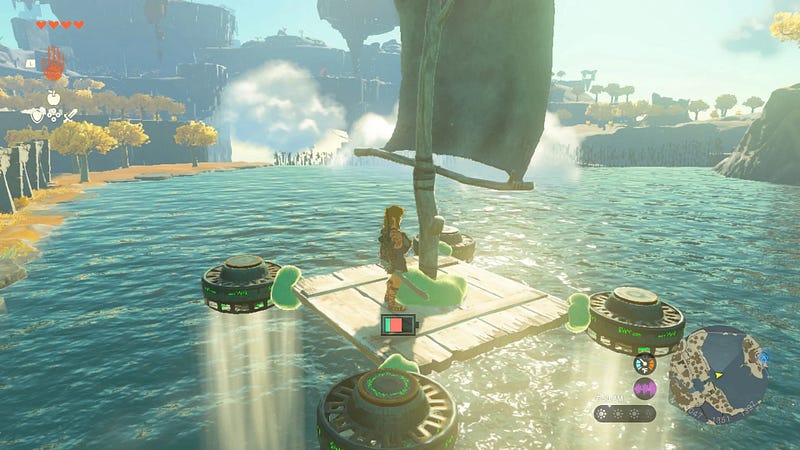
Rather than relying on finding tools, in TotK, you need to make your own: Add a rock to a stick to make a hammer or an axe. Combine wheels and boards to build a wagon. Customize your house out of prefabricated blocks from Hudson Construction.
The new build tools and powers offer a ton more creativity and flexibility than BotW.
Let’s take ultrahand for example. At first, the shrine quests are deceptively easy as you get used to these tools: I need to get across some freezing water? Oh, here are some logs, a sail, and a mast. I need to build a boat, duh. But suddenly you’re tasked with building a racecar to Grand Theft Auto stunt-drive around obstacles and run over some hostile robots, or creating a fan-powered zipline that can make jumps over missing rails, or designing a functional Rube Goldberg machine that accomplishes several tasks in a specific order, all triggered with a single ball dropping from a tube.
I don’t play Roblox or Minecraft, but I assume this scratches the same itch.
The fuse power similarly builds in complexity as you go from adding exploding bombfuit to an arrow (no more premade bomb-arrows, you’ve got to build your own) to discovering all kinds of magical properties, like that fusing a ruby to a weapon will do fire damage or adding monster horns to decayed weapons will greatly increase their effectiveness.
Give Me More Mushrooms, or Give Me Death
As an Animal Crossing girlie, I appreciate a lot of the new features of TotK. For example, that they kept the mushroom-gathering vibes, low-stakes side-quests, and intricate social stories of the game. Since it takes place a few years later, couples you set up in BotW have kids now; kids from the first game are rebellious tweens; friends you made remember you. Eugh, the feels.
I still love the aesthetic and art style, which carries over from the first game. I love that you can build your own custom house — although I wish there were more options (like painting walls and changing décor), but maybe that’s something that could come in an update.
I especially love the mushroom-themed fashion trend sweeping the nation of Hyrule. In the screenshot below taken by @scorchedprince on Twitter, you can see the trend even extends to Goddess statues in Hateno.
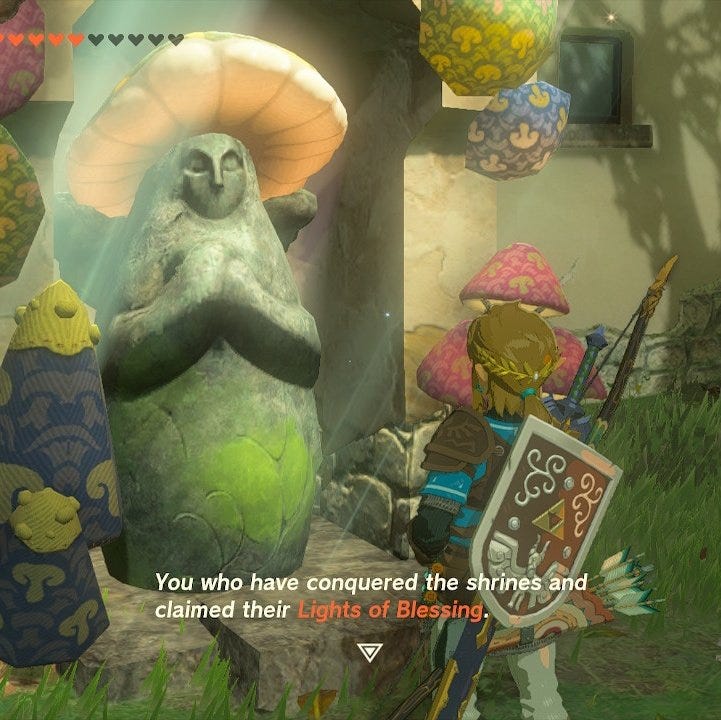
I’ve changed out my paraglider fabric for a mushroom pattern, but I really want one of those hats. I don’t think it’s currently a wearable asset, but I hope someone clues in over at Nintendo and adds it in an update. Seriously, just let me buy Cece fashion like the NPCs. Her weird-ass fashion hat and pink wig are not a substitute.
But I can add a mushroom to a stick to make a “bouncy” weapon, which is dope. Mushrooms, mushrooms, mushrooms.
One last thing I like about this game so far is that Link loses an arm in the opening scenes and gets a prosthetic arm (or possibly an arm-transplant? unclear) from the Zonai. I don’t know if that was intended to be disability representation, but I do love it. Also, the variety of skin tones and body sizes for NPCs (among the humanoid races) seems to have increased, which is appreciated.
I’m nowhere near finished any of the main quests and may review the game later in time with a fuller picture, but my initial impressions of The Legend of Zelda: Tears of the Kingdom are overwhelmingly positive. Anyone complaining that TotK is “basically DLC” for BotW and therefore not worth the price of a full game clearly hasn’t played it, because the amount of new content is extensive and well worth it.
Reviewsday Tuesday is run by yours truly, Casey Lawrence. Running a publication is a time-consuming volunteer activity. If you’re enjoying my content, consider showing your support by buying me a coffee. If you sign up using my referral link to get unlimited access to all of Medium, I receive a small commission at no extra cost to you.
If you would like to write for Reviewsday Tuesday, check out the submission guidelines. I am eagerly accepting new writers at this time. Follow the publication here on Medium and also on Twitter.