s%3A%2F%2Fi.ytimg.com%2Fvi%2FRe66qOiso28%2Fhqdefault.jpg&key=a19fcc184b9711e1b4764040d3dc5c07&type=text%2Fhtml&schema=youtube" allowfullscreen="" frameborder="0" height="480" width="854">
</div>
</div>
</figure></iframe></div></div></figure><p id="b68b"><b>Step 5:</b> Your goal is to be able to drop food on the ground and ask your dog to leave it. Start by dropping the treat from a very low height to make it easier for your dog, then very gradually increase the height from which you drop it. The treat will bounce, making it ever so enticing to chase!</p><figure id="03cb"><img src="https://cdn-images-1.readmedium.com/v2/resize:fit:800/0*ECI8d0OwtI9rQt32.jpg"><figcaption>Chase, from Homeward Bound, a Disney video</figcaption></figure><p id="7528">If your dog does try to go for it, just cover it up, then try again with a lower value item. When you can drop the treat without your dog trying to get it, click and give him something even better from your pocket or treat pouch. This simulates a scenario wherein you are opening or using something potentially unsafe for your dog and accidentally drop it on the floor. If you drop a pill on the floor, you want your dog to listen to “leave it” and then you reward him with a dog treat, or something safe for him to eat and enjoy.</p><p id="6a97"><b>Step 6: </b>Your goal is to be able to have enticing food on the ground as you are walking and ask your dog to leave it and continue walking. You may want to do this exercise after a walk when your dog is relaxed and already has his leash on, this way you can walk past something tempting and ask your dog to leave it while still having control of his movements in case he tries to go for it.</p><p id="559b">If your dog does try to go for it, just cheerfully say “<i>oops</i>” (or “ <i>let’s go</i> “) and happily go in another direction so that he is eager to follow you away from the treat, then try again with a lower value item. When you can walk past the treat on the ground without your dog trying to get it, click and give him something even better from your pocket or treat pouch.</p><p id="e4f1">With step six you want to simulate being out for a walk and passing something on the ground that your dog is curious about and may try to eat. You ask him to “leave it” and then give him a treat from your pocket so that he doesn’t eat something off the ground that could potentially be unsafe.</p><p id="beb6"><b>Step 7: </b>Once your dog is walking past the treat without looking longingly at it, drop the leash and drop treats on the floor, asking him to leave it. Remember, when you increase the difficulty, you have the lower the bar for your dog. Now that you’re combining both dropping the treat and walking past it, you want to back up and start with dropping lower-value treats from a very low height and then gradually increasing the difficulty again.</p><p id="f520">If he does get them, just back up a step and keep practicing with a lower value treat. Do not correct your dog for taking the treat, he simply needs more practice, and taking readily available food is an important and natural behaviour for dogs.</p><p id="50a1">If he does not take them, click or use a verbal marker, then pick each treat up and feed them directly to him one by one. This is a <b>very</b> difficult task for a dog, moving/falling food is even more enticing than stationary food, so be patient with your dog as he learns this new behaviour.</p><p id="77a4"><b>When he gets it right, reward him heavily so that waiting and leaving it really pays off!</b></p><figure id="bb42"><img src="https://cdn-images-1.readmedium.com/v2/resize:fit:800/0*dFWfxryZe8kzdMCe.png"><figcaption></figcaption></figure><p id="def4">If you prefer a visual demonstration and/or prefer a video, KikoPup recently uploaded a great <a href="https://youtu.be/PLuKnrVYmQs">tutorial video</a> on You Tube:</p>
<figure id="256d">
<div>
<div>
Options
<img class="ratio" src="http://placehold.it/16x9">
<iframe class="" src="https://cdn.embedly.com/widgets/media.html?src=https%3A%2F%2Fwww.youtube.com%2Fembed%2FPLuKnrVYmQs%3Ffeature%3Doembed&display_name=YouTube&url=https%3A%2F%2Fwww.youtube.com%2Fwatch%3Fv%3DPLuKnrVYmQs&image=https%3A%2F%2Fi.ytimg.com%2Fvi%2FPLuKnrVYmQs%2Fhqdefault.jpg&key=a19fcc184b9711e1b4764040d3dc5c07&type=text%2Fhtml&schema=youtube" allowfullscreen="" frameborder="0" height="480" width="854">
</div>
</div>
</figure></iframe></div></div></figure><h1 id="a5b9">Related Stories</h1><div id="ac6a" class="link-block">
<a href="https://readmedium.com/reduce-jumping-up-6238a8776365">
<div>
<div>
<h2>Reduce Jumping Up</h2>
<div><h3>Expert Tips to Prevent Your Dog from Jumping Up</h3></div>
<div><p>medium.com</p></div>
</div>
<div>
<div style="background-image: url(https://miro.readmedium.com/v2/resize:fit:320/1*RpuxbcVLw_t6q0YE5p80wg.jpeg)"></div>
</div>
</div>
</a>
</div><div id="65a3" class="link-block">
<a href="https://readmedium.com/puppy-nipping-chewing-d23b3af475c0">
<div>
<div>
<h2>Puppy Nipping & Chewing</h2>
<div><h3>Bite Inhibition: Teaching your dog to have a gentle mouth</h3></div>
<div><p>medium.com</p></div>
</div>
<div>
<div style="background-image: url(https://miro.readmedium.com/v2/resize:fit:320/1*cMxnUu0ljh_968gti0byNg.jpeg)"></div>
</div>
</div>
</a>
</div><div id="733f" class="link-block">
<a href="https://readmedium.com/5-tips-for-barking-in-the-home-27a843c7c4b0">
<div>
<div>
<h2>5 Tips for Barking in the Home</h2>
<div><h3>Our expert advice to reduce unwanted barking</h3></div>
<div><p>medium.com</p></div>
</div>
<div>
<div style="background-image: url(https://miro.readmedium.com/v2/resize:fit:320/1*7TW7bkUgwVoePN1Cx-KB5g.jpeg)"></div>
</div>
</div>
</a>
</div><figure id="af51"><img src="https://cdn-images-1.readmedium.com/v2/resize:fit:800/1*NyJZ1BTVGMVW6GBCyP9TCg.png"><figcaption></figcaption></figure><h1 id="9587">About the Trainer</h1><p id="fa74">Jillian is a fear-free certified and CPDT-KA certified animal behaviour specialist and has been working in the animal care and behaviour field since 2009. For more information, please <a href="https://pawsitivecare.ca/about-the-owner">visit our website</a>.</p><h1 id="000a">Join Medium</h1><p id="d96d">If you <a href="https://medium.com/@pawsitivepetcare/membership">join medium</a>, as a member you’ll get access to unlimited reads for only $5 each month. If you use my <a href="https://medium.com/@pawsitivepetcare/membership">referral link</a>, I’ll earn a very small commission.</p><div id="f7c1" class="link-block">
<a href="https://medium.com/@pawsitivepetcare/membership">
<div>
<div>
<h2>Join Medium with my referral link - Pawsitive Pet Care</h2>
<div><h3>As a Medium member, a portion of your membership fee goes to writers you read, and you get full access to every story…</h3></div>
<div><p>medium.com</p></div>
</div>
<div>
<div style="background-image: url(https://miro.readmedium.com/v2/resize:fit:320/0*J9ZgHLf5Ze8qLEhS)"></div>
</div>
</div>
</a>
</div><p id="e413"><i>Originally published at <a href="http://pawsitivepooch.blogspot.com/2020/09/">pawsitivepooch.blogspot.com</a> </i>on September 8, 2020<i>.</i></p></article></body>
Teaching “Leave It”
An excellent behaviour to enhance your pet’s safety
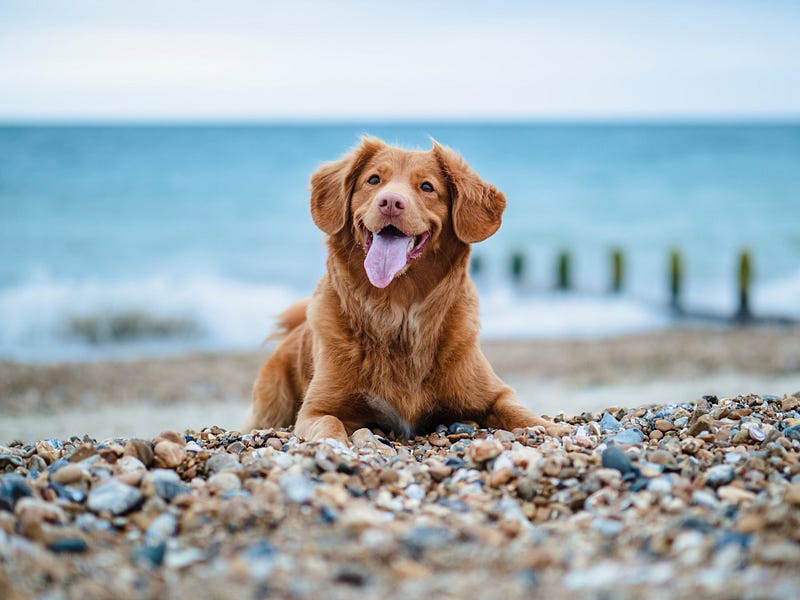
Goal: Your dog learns not to take an item (particularly delicious food) until it is given to him, whether it is in your hand or dropped on the floor.
Step 1: Place a treat in your hand and close your hand around the treat. Your dog will sniff, lick, paw, and he may even gently nibble at your hand. Don’t move your hand or say anything, just wait quietly until he stops, even for just a second. It’s not helpful to use a cue (or command) yet, because your dog hasn’t learned the behaviour, so the word won’t have any meaning to him.
When your dog leaves your hand alone momentarily, click (or use a verbal marker, such as “yes”) and give him the treat. It’s important to give the treat directly to him so he learns he only takes the treat when it’s given to him and not when it’s dropped.
Variation: If your dog is struggling to get the hang of step one, you can use a lower value item in your hand with a higher value item as his reward. For example, have a small piece of carrot in your hand for him to leave, but behind your back in a treat pouch is freeze dried liver or diced chicken or something he really likes. When he leaves the carrot, click and give him a piece of meat instead. That way he learns that leaving it when asked results in receiving something even better.
Practice this a number of times in various locations until he stops licking or nosing at your hand altogether.
Once you have added a name, you will need to go back and practice steps 1 and 2 again with a verbal cue to give your dog a chance to learn the word(s) before moving on to step 4. Whenever you increase the criteria (or make harder) one aspect of a behaviour, you need to relax your criteria on other aspects, so don’t want long before you click and reward.
Step 4: Now you can place the treat on the floor. Tell your dog to leave it and have your foot ready to cover it up in case he goes for it, or sit on the floor and be ready to cover the treat with your hand if needed. When he leaves it (moves away, looks away, backs up, sits, anything but trying to get the treat), click, pick the treat up off the floor, and give it directly to your dog.
Remember: It’s important to pick the food up and give it directly to him. You don’t want your dog to learn that he can scoop food off the floor in case one day you drop something that could make him sick, or something you really don’t want him to have. Practice step four a number of times in various locations to allow your dog to generalize the behaviour and get really skilled at it. Don’t be in a hurry to move to the next step, as always, be patient and set your dog up for success.
Step 5: Your goal is to be able to drop food on the ground and ask your dog to leave it. Start by dropping the treat from a very low height to make it easier for your dog, then very gradually increase the height from which you drop it. The treat will bounce, making it ever so enticing to chase!
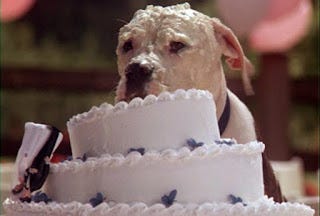
Chase, from Homeward Bound, a Disney video
If your dog does try to go for it, just cover it up, then try again with a lower value item. When you can drop the treat without your dog trying to get it, click and give him something even better from your pocket or treat pouch. This simulates a scenario wherein you are opening or using something potentially unsafe for your dog and accidentally drop it on the floor. If you drop a pill on the floor, you want your dog to listen to “leave it” and then you reward him with a dog treat, or something safe for him to eat and enjoy.
Step 6: Your goal is to be able to have enticing food on the ground as you are walking and ask your dog to leave it and continue walking. You may want to do this exercise after a walk when your dog is relaxed and already has his leash on, this way you can walk past something tempting and ask your dog to leave it while still having control of his movements in case he tries to go for it.
If your dog does try to go for it, just cheerfully say “oops” (or “ let’s go “) and happily go in another direction so that he is eager to follow you away from the treat, then try again with a lower value item. When you can walk past the treat on the ground without your dog trying to get it, click and give him something even better from your pocket or treat pouch.
With step six you want to simulate being out for a walk and passing something on the ground that your dog is curious about and may try to eat. You ask him to “leave it” and then give him a treat from your pocket so that he doesn’t eat something off the ground that could potentially be unsafe.
Step 7: Once your dog is walking past the treat without looking longingly at it, drop the leash and drop treats on the floor, asking him to leave it. Remember, when you increase the difficulty, you have the lower the bar for your dog. Now that you’re combining both dropping the treat and walking past it, you want to back up and start with dropping lower-value treats from a very low height and then gradually increasing the difficulty again.
If he does get them, just back up a step and keep practicing with a lower value treat. Do not correct your dog for taking the treat, he simply needs more practice, and taking readily available food is an important and natural behaviour for dogs.
If he does not take them, click or use a verbal marker, then pick each treat up and feed them directly to him one by one. This is a very difficult task for a dog, moving/falling food is even more enticing than stationary food, so be patient with your dog as he learns this new behaviour.
When he gets it right, reward him heavily so that waiting and leaving it really pays off!
If you prefer a visual demonstration and/or prefer a video, KikoPup recently uploaded a great tutorial video on You Tube:
Jillian is a fear-free certified and CPDT-KA certified animal behaviour specialist and has been working in the animal care and behaviour field since 2009. For more information, please visit our website.
Join Medium
If you join medium, as a member you’ll get access to unlimited reads for only $5 each month. If you use my referral link, I’ll earn a very small commission.