avatarJenny Justice

Free AI web copilot to create summaries, insights and extended knowledge, download it at here

5224

Abstract

m/@omarlopez1?utm_source=medium&utm_medium=referral">Omar Lopez</a> on <a href="https://unsplash.com?utm_source=medium&amp;utm_medium=referral">Unsplash</a></figcaption></figure><p id="efb6"><b><i>Gender</i></b></p><p id="454a">Students come to the classroom with their own experiences and are often ready to share them if given the right support. One way to access and highlight issues of gender, sexism, and homophobia is to ask students about their own childhood experiences. Another way is to assign a trip to a department store toy aisle. Students might know this information already but seeing it with fresh eyes in the form of a detailed assignment always brings new light to the pinks and blues of children’s playthings.</p><p id="113f">Resources I use to integrate the voices and experiences of women and LGBT people into my course include essays from Audre Lorde’s<a href="https://www.penguinrandomhouse.com/books/198292/sister-outsider-by-audre-lorde/9781580911863/"> Sister Outsider,</a> stories and poems from The Poetry Foundation, and insights gained from social media as issues arise throughout the semester. Memes speak volumes to students. So do short YouTube videos that break down current events.</p><p id="4500">The important part about inclusion is to make it part of the norm. To make it current and flowing. As you are teaching your class, issues in the media, government, global affairs, will arise. Bring these into the classroom with a focus on seeing sexism and misogyny and using an analysis of gender and power. Students in the classroom sometimes think the issues brought up in class are something that exist only in that space. By bringing in the real world and asking your students to explore issues in the real world, this connects the dots of critical thinking when it comes to truly seeing diversity and oppression at work.</p><p id="515c"><b><i>Class</i></b></p><p id="0d25">I grew up working class. I went to college working class. I went to graduate school working class. I teach as an adjunct instructor and am working class.</p><p id="a394">It is astonishing how little attention class gets at all, even in Sociology. Talking about money, socio-economic status, structural inequality needs to be included on a level that is tangible and real to our students. To start with, as instructors, if we have academic freedom, we need to use it to ensure our books and resources are as close to free and if not free, affordable, as we can make them. We have to have books at the library that are put on reserve for students to check out for a few hours and return. We have to utilize the internet as much as possible. And we have to use official textbooks less and less.</p><figure id="b958"><img src="https://cdn-images-1.readmedium.com/v2/resize:fit:800/0*CGQuUBjWskx1gq_2"><figcaption>Photo by <a href="https://unsplash.com/@nicolehoneywill_sincerelymedia?utm_source=medium&amp;utm_medium=referral">Nicole Honeywill / Sincerely Media</a> on <a href="https://unsplash.com?utm_source=medium&amp;utm_medium=referral">Unsplash</a></figcaption></figure><p id="304b">I have found that using actual books works way better than requiring a textbook. Readable, paperback, even often, mainstream books about our subject matter can open up worlds of both affordability for all of our students and simultaneously show them that our discipline is out there in the real world, not just here in a textbook that most will probably sell or return after the semester is over.</p><p id="befd">In addition to making things accessible for all students regardless of economic ability, we have to of course, integrate and include their voices. Talk about labor history, talk about the working poor, and assign readings not just about people in this income brackets, but by them, about their own lives.</p><p id="2f87">One way I have done this in the past is to find and play traditional labor songs. YouTube has a nice collection. I have assigned students the task of listening to three different songs from the Labor Movement such as <a href="https://www.youtube.com/watch?v=pCnEAH5wCzo">Solidarity Forever </a>or <a href="https://www.youtube.com/watch?v=tMraYdklSOE">Pie in the Sky</a>. I ask them to find ways to update these songs so that young people today might find them, like them, and the stories might be passed down. It is an eye-opening and fun assignment.</p><p id="e2f7"><b><i>Reflection: Intersectionality and Social Change</i></b></p><p id="4afa">A book that I always assign is called <a href="https://www.tcpress.com/is-everyone-really-equal-9780807758618"><i>Is Everyone Really Equal: An Introduction to Key Concepts in Social Justice Education</i></a> by Ozlem Sensoy and Robin DiAngelo. This book covers absolutely everything about diversity, prejudice, discrimination, oppression, and social justice work in America. It is short, affordable, easy to read and it comes with questions for reflection, assignments and activities. It details the differences between prejudice, discrimination, and oppression and also highlights examples of privilege with examples and clarity.</p><p id="6724">In addition to the resources above, I have also led students through an activity called <a href="

Options

https://edge.psu.edu/workshops/mc/power/privilegewalk.shtml"><i>The Privilege Walk</i></a>. This activity has always worked well in my Sociology 101 classes. Students begin to grasp the idea and concept of privilege in society and to build empathy and understanding as well.</p><figure id="028a"><img src="https://cdn-images-1.readmedium.com/v2/resize:fit:800/0*Pglq6-7ecmV-o4Oy"><figcaption>Photo by <a href="https://unsplash.com/@nate_dumlao?utm_source=medium&amp;utm_medium=referral">Nathan Dumlao</a> on <a href="https://unsplash.com?utm_source=medium&amp;utm_medium=referral">Unsplash</a></figcaption></figure><p id="14ad">To conclude, I leave you with Audre Lorde’s words:</p><p id="a08a">“You do not have to be me in order for us to fight alongside each other. I do not have to be you to recognize that our wars are the same. What we must do is commit ourselves to some future that can include each other and to work toward that future with the particular strengths of our individual identities. And in order for us to do this, we must allow each other our differences at the same time as we recognize our sameness” (Lorde, 1984).</p><p id="6b3b">In the classroom we have a responsibility as teachers to present an honest and accurate picture of the world as it is to our students.</p><p id="d047">We also have a calling to share with students bits and pieces of ourselves, our own stories, and the stories of others who have existed as sparks of light in the fight for greater equality, inclusion, and social justice.</p><p id="d1dc">We must do as Audre said and allow differences to shine through all while working towards ways to simultaneously value and build upon our similarities.</p><p id="f4a3"><b><i>Jenny Justice</i></b><i> is a poet mom who longs to bring poetry to life in ways that spark empathy, connection, joy, and feeling. She loves writing<a href="https://psiloveyou.xyz/center-52927449220c"> love poems</a>, <a href="https://psiloveyou.xyz/love-in-the-time-of-climate-change-11a88bb642f4">climate change</a> awareness poems, <a href="https://readmedium.com/you-can-write-a-poem-c5663d17c48d?sk=50930fec528fcd31d3fc6dffe7b77407">poems for kids</a>, and of course,<a href="https://readmedium.com/your-voice-on-the-page-19ab8993ed8e"> poems about poetry </a>and poets. You can follow her on <a href="https://medium.com/@jennyjustice">Medium</a> and at <a href="https://www.facebook.com/jennyjusticewriter/">Jenny Justice, Writer</a>. You can follow her poetry at<a href="https://medium.com/justice-poetic"> Justice Poetic.</a></i></p><div id="efe4" class="link-block"> <a href="https://readmedium.com/what-the-sociology-of-consumption-and-critical-theory-can-teach-us-about-failures-in-resistance-b76e4c552bcf"> <div> <div> <h2>What the Sociology of Consumption and Critical Theory can Teach us about Failures in Resistance</h2> <div><h3>So You Want to Learn about Critical Sociology, #2.</h3></div> <div><p>medium.com</p></div> </div> <div> <div style="background-image: url(https://miro.readmedium.com/v2/resize:fit:320/0*QVyyWDu8L_VnO9ie)"></div> </div> </div> </a> </div><div id="d326" class="link-block"> <a href="https://readmedium.com/the-important-difference-between-prejudice-discrimination-and-oppression-ae028ffd550c"> <div> <div> <h2>The Important Difference(s) Between Prejudice, Discrimination, and Oppression</h2> <div><h3>a brief lesson in Sociology, Critical Race Theory, Critical Social Justice Theory, and How Things Actually Are in…</h3></div> <div><p>medium.com</p></div> </div> <div> <div style="background-image: url(https://miro.readmedium.com/v2/resize:fit:320/0*84IN7Ba-kreyS-81)"></div> </div> </div> </a> </div><div id="18a0" class="link-block"> <a href="https://link.medium.com/yFHCe4BYdY"> <div> <div> <h2>How to Avoid Assimilation: Navigating Elitist Spaces to Dismantle The Master's House</h2> <div><h3>How to Avoid Assimilation: Navigating Elitist Spaces To Dismantle The Master's House</h3></div> <div><p>link.medium.com</p></div> </div> <div> <div style="background-image: url(https://miro.readmedium.com/v2/resize:fit:320/0*JaN9arY-UtNbdbzR)"></div> </div> </div> </a> </div><p id="e810">and, don’t forget to please support poetry!</p><div id="598a" class="link-block"> <a href="https://link.medium.com/RTh8s09XdY"> <div> <div> <h2>Adjunct</h2> <div><h3>Adjunct</h3></div> <div><p> Adjunctlink.medium.com</p></div> </div> <div> <div style="background-image: url(https://miro.readmedium.com/v2/resize:fit:320/0*9VL1woO42CHrVZNG)"></div> </div> </div> </a> </div></article></body>

Teaching Inclusion and Justice

Race, Gender, Class, and Teaching Social Change

Photo by Jon Tyson on Unsplash

For college instructors seeking to address issues of justice and inclusion in their classrooms, the possibilities are endless. But for many getting started can seem overwhelming. And some disciplines might lend themselves to more creativity and freedom than others.

For example, as a Sociology instructor I am more able to easily include and address issues of inequality, oppression, and social change than say a math instructor. However, I hold that it can be done and should be done in all disciplines. And we can do it in ways that have integration and flow.

When we talk about being inclusive and diverse this does not simply mean to showcase and move on. Look at the history of your discipline. Provide your students with information, readings, or biographies of important scholars within your discipline who have been marginalized because of their gender, race, class, or sexual orientation.

Talk about the ways in which this marginalization has happened. Be honest and clear. If this process is still happening, ask students questions about why they think this might be. Additionally, provide students with up to date information on progress and movements for justice within or driven by your discipline.

Photo by Agence Olloweb on Unsplash

Some examples from Sociology include focusing on the women Sociologists and Sociologists of color who have always been present in the discipline. We explore the work of Harriet Martineau and W.E.B DuBois throughout the course from the start.

I ensure inclusion and representation in the weeks we talk about the Founding of Sociology, Sociological Theory, and Research Methods. It’s not just something we talk about during the weeks we focus on Race, Class, or Gender. The goal is not to tokenize but to fully integrate and illustrate the reality that diversity has always been here, but so has marginalization and oppression.

Here are some tips, insights and resources for building your syllabus for justice and inclusion.

Race and Ethnicity

Look for ways to get diverse and mean it. Draw upon the history of your field and on the history of the location in which you teach. Students are diverse. They should always have both a window — something to look out from, to see the world differently, to observe and form empathy; and a mirror — something to look into, to see themselves reflected, to feel seen and provided with a sense of belonging. Every single student should be simultaneously challenged and represented. In many classes incorporating poetry, art, music, or other forms of creative expression, can speak to the realities within which students live. Students can bring in their own creations, or share that of their favorite authors, poets, musicians, artists.

Some of my favorite and most deeply impactful readings that highlight the issues of race, ethnicity, and racism in our history and structure to present date include Growing Up Ethnic in America: Contemporary Fiction about Learning to Be American, edited by Maria Mazziotti Gillan and Jennifer Gillan, and utilizing the free resources about Poetry and the Civil Rights Movement found on Poetry Foundation’s website.

I also have used clips or the full version of the classic 1994 documentary, The Color of Fear. This documentary moves students every single time, without fail.

Additionally ensure your syllabus has readings and resources that hit hard when it comes to hitting home about the issues of race, racism, oppression, and difference in our society. You can assign a James Baldwin essay in an English class, History class, Sociology class, and an LGBT Studies/Gender Studies class.
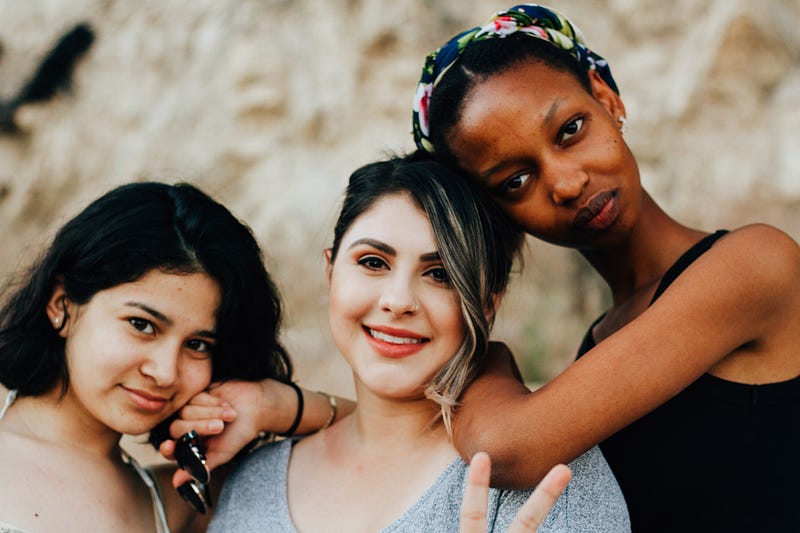
Photo by Omar Lopez on Unsplash

Gender

Students come to the classroom with their own experiences and are often ready to share them if given the right support. One way to access and highlight issues of gender, sexism, and homophobia is to ask students about their own childhood experiences. Another way is to assign a trip to a department store toy aisle. Students might know this information already but seeing it with fresh eyes in the form of a detailed assignment always brings new light to the pinks and blues of children’s playthings.

Resources I use to integrate the voices and experiences of women and LGBT people into my course include essays from Audre Lorde’s Sister Outsider, stories and poems from The Poetry Foundation, and insights gained from social media as issues arise throughout the semester. Memes speak volumes to students. So do short YouTube videos that break down current events.

The important part about inclusion is to make it part of the norm. To make it current and flowing. As you are teaching your class, issues in the media, government, global affairs, will arise. Bring these into the classroom with a focus on seeing sexism and misogyny and using an analysis of gender and power. Students in the classroom sometimes think the issues brought up in class are something that exist only in that space. By bringing in the real world and asking your students to explore issues in the real world, this connects the dots of critical thinking when it comes to truly seeing diversity and oppression at work.

Class

I grew up working class. I went to college working class. I went to graduate school working class. I teach as an adjunct instructor and am working class.

It is astonishing how little attention class gets at all, even in Sociology. Talking about money, socio-economic status, structural inequality needs to be included on a level that is tangible and real to our students. To start with, as instructors, if we have academic freedom, we need to use it to ensure our books and resources are as close to free and if not free, affordable, as we can make them. We have to have books at the library that are put on reserve for students to check out for a few hours and return. We have to utilize the internet as much as possible. And we have to use official textbooks less and less.

Photo by Nicole Honeywill / Sincerely Media on Unsplash

I have found that using actual books works way better than requiring a textbook. Readable, paperback, even often, mainstream books about our subject matter can open up worlds of both affordability for all of our students and simultaneously show them that our discipline is out there in the real world, not just here in a textbook that most will probably sell or return after the semester is over.

In addition to making things accessible for all students regardless of economic ability, we have to of course, integrate and include their voices. Talk about labor history, talk about the working poor, and assign readings not just about people in this income brackets, but by them, about their own lives.

One way I have done this in the past is to find and play traditional labor songs. YouTube has a nice collection. I have assigned students the task of listening to three different songs from the Labor Movement such as Solidarity Forever or Pie in the Sky. I ask them to find ways to update these songs so that young people today might find them, like them, and the stories might be passed down. It is an eye-opening and fun assignment.

Reflection: Intersectionality and Social Change

A book that I always assign is called Is Everyone Really Equal: An Introduction to Key Concepts in Social Justice Education by Ozlem Sensoy and Robin DiAngelo. This book covers absolutely everything about diversity, prejudice, discrimination, oppression, and social justice work in America. It is short, affordable, easy to read and it comes with questions for reflection, assignments and activities. It details the differences between prejudice, discrimination, and oppression and also highlights examples of privilege with examples and clarity.

In addition to the resources above, I have also led students through an activity called The Privilege Walk. This activity has always worked well in my Sociology 101 classes. Students begin to grasp the idea and concept of privilege in society and to build empathy and understanding as well.

Photo by Nathan Dumlao on Unsplash

To conclude, I leave you with Audre Lorde’s words:

“You do not have to be me in order for us to fight alongside each other. I do not have to be you to recognize that our wars are the same. What we must do is commit ourselves to some future that can include each other and to work toward that future with the particular strengths of our individual identities. And in order for us to do this, we must allow each other our differences at the same time as we recognize our sameness” (Lorde, 1984).

In the classroom we have a responsibility as teachers to present an honest and accurate picture of the world as it is to our students.

We also have a calling to share with students bits and pieces of ourselves, our own stories, and the stories of others who have existed as sparks of light in the fight for greater equality, inclusion, and social justice.

We must do as Audre said and allow differences to shine through all while working towards ways to simultaneously value and build upon our similarities.

Jenny Justice is a poet mom who longs to bring poetry to life in ways that spark empathy, connection, joy, and feeling. She loves writing love poems, climate change awareness poems, poems for kids, and of course, poems about poetry and poets. You can follow her on Medium and at Jenny Justice, Writer. You can follow her poetry at Justice Poetic.

and, don’t forget to please support poetry!

BlackLivesMatter
Sociology
Teaching
Education
Social Justice
Recommended from ReadMedium