
The Important Difference(s) Between Prejudice, Discrimination, and Oppression
a brief lesson in Sociology, Critical Race Theory, Critical Social Justice Theory, and How Things Actually Are in American Society

Photo Credit: UnSplash
Prejudice, discrimination, and oppression are three different concepts and realities. Whenever I mention this in any article I get comments. When I teach this in my Sociology classes I get some grumbles. When I get into Facebook arguments with strangers about this,..oh, yeah, I don’t do that anymore. Thankfully!
The thing is, it’s simple. And like all truth, it can hurt and some folks might not like it or want to hear it. Because they do not want it to be true. But it is. It just is. And dealing with this, getting to the bottom of this, accepting this, is the only way to truly work towards viable, actual, real social change and social justice in this society.
So, let’s get to accepting, learning and doing because we really do not have much time.
We have three basic, fundamental, root level systems that drive and shape and contain and constrain all forms of action and context in our society. These root level structures are:
- White Supremacy
- Capitalism
- Patriarchy
Three massive, giant, horrific systems of stratification and exploitation. In every one of these areas, someone wins, or benefits, and someone loses, or is oppressed. Oppression means to trample, to hold down. Well, someone is standing or walking or running over those that are held down.
These three structures sit at the base of all social problems. Every single one. Name a social problem. Now, follow it back through history, through time, through place. I can guarantee that you have hit one or more of these root systems.
No, it’s not magic, I’m not a magician. I’m a sociologist. It’s social science.
Brief Introduction to Our Root Structures
These root causes, root structures go way back and always move forward. They intertwine and lock together. They hit some people once, some people twice, and some people three times. They branch out into other areas (sexuality, sexual orientation, parenting, education) shapeshifting a bit here and there, to ensure they remain strong, protected, almost immovable.
White Supremacy is a structure, a racial system that prioritizes and gives dominance and assumed superiority/natural-ness to the experiences, bodies, histories, cultures, ideologies, and other aspects of social living of people in the socially constructed category of whiteness over all other socially constructed racial/ethnic categories.
The oppression(s) that correspond to White Supremacy are called Racism and Internalized Racism.
Capitalism is a structure, an economic system that prioritizes private ownership of the means of production and profit. Capitalism gives superiority and dominance to those in social class positions that are in control of the means of production, the rich and the wealthy, in our time, and in most times, this is the 1% . Capitalism as a system that values profit above all also exploits and disadvantages all other class categories using material and ideological means of social and economic control.
The oppression(s) that correspond to Capitalism are called Classism and Internalized Classism.
Patriarchy is a structure, a sex-gender system that prioritizes and rewards and assumes as superior and normal/neutral the bodies, needs, wants, experiences, histories, desires, ideologies, stories, words, feelings, of those culturally constructed as male, masculine, men over those of people culturally constructed as female, feminine, women.
The oppression(s) that correspond to Patriarchy are called Sexism/Misogyny and Internalized Sexism/Misogyny.
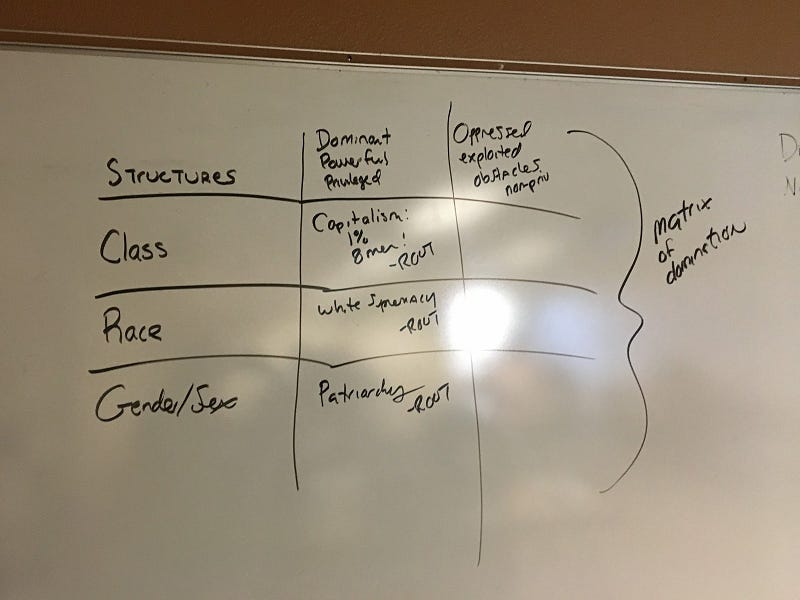
Photo Credit: Author’s Soc 101 lecture
Oppression Means Historical and Institutional Dominance and Power
Now, knowing this it is time to really grasp the issues at hand. Oppression is about historical and institutional power.
Stratification is structured inequality. It is hierarchy and ranking that are rooted in structural and socially constructed (aka not biological, not innate, not natural) categories of race, class, and gender.
These core structural foundations and roots in our society are always at work, always lurking, always in every issue we face or come up against. They are either working for us and with us, or against us and to thwart us.
These categories are at the root but they have also changed and morphed over time. For example
- the version of capitalism we have now is not the same form of capitalism that we had in the 1930s.
- The set up of our racial inequality system now looks different than it did in the 1800s.
- Our sex/gender system of stratification is different at first glance from that of the 1950s.
However, each system is just as strong as ever. They simply morphed into new forms.
Some argue, these new forms are much worse because they have the added protection of a society that thinks they no longer exist, that racism ended with the Civil Rights Movement. That sexism ended with the Feminist Movement of the 1970’s. That Capitalism is inevitable and normal and actually good for us all.
For more on this I recommend reading The New Jim Crow: Mass Incarceration in the Age of Colorblindness , Sisterhood Interrupted: From Radical Women to Grrls Gone Wild, and Naomi Klein’s Shock Doctrine: The Rise of Disaster Capitalism, and also her most recent book, This Changes Everything: Capitalism vs. Climate.
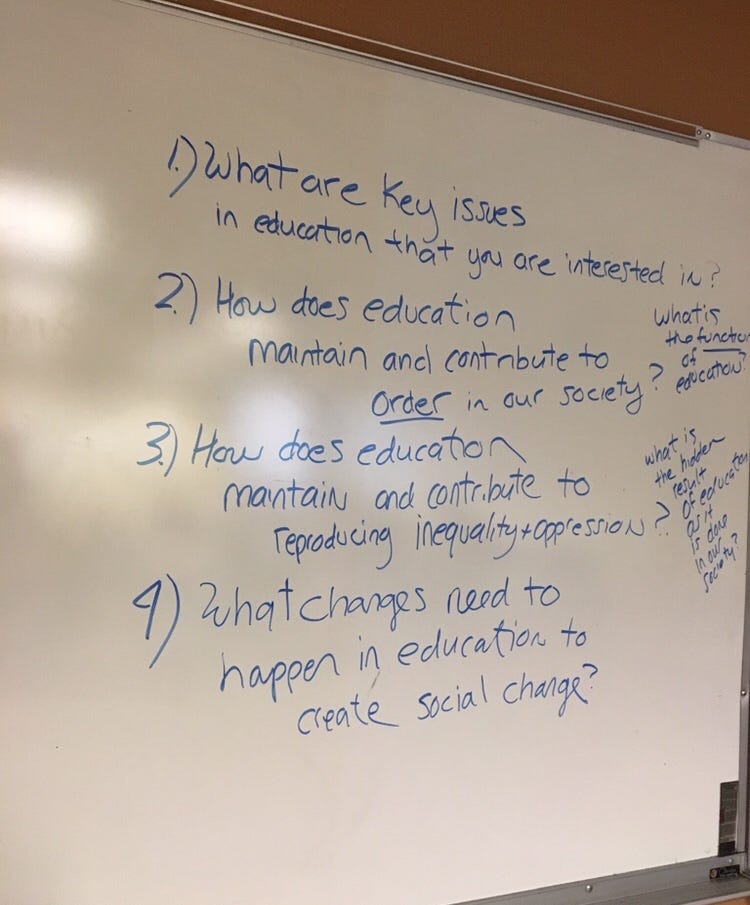
Photo Credit: Author’s Soc 101 Lecture
Prejudice, Discrimination, Oppression, a brief Primer on Using the Right Words, Please:
Not all people, not all groups, can oppress all other groups.
It is not a free for all.
It is not random.
And it is not about feeling hurt or slighted.
It is a system, a structure. It is a power dynamic.
It has direction that only goes one way: from the dominant group to the non-dominant group. From the oppressor to the oppressed.
Our culture has conflated and intentionally confused the terms prejudice, discrimination, and oppression. By doing so our society has ensured that we will never effectively end oppression. How can we, when naming it is an uphill battle in and of itself?
We need to get the naming part clear and agreed upon, over and done with, as soon as possible.
We can do this by always ensuring we use the correct words and place the cause of the problem right where it belongs: with oppression.
Let’s get started with the important definitions and differences between prejudice, discrimination, and oppression.
Prejudice is something all people have, we aren’t born with it, but we learn it via socialization and it gets internalized into us through our culture. Prejudice is attitudes and feelings. It is a learned prejudgment about members of a group to which we do not belong. It’s based on limited contact and limited knowledge of this “other” group.
Prejudice relies on and builds stereotypes.
Examples of prejudice include having a positive opinion of women nurses and a negative opinion of male nurses, thinking older people are bad drivers, or believing that people who are more attractive are nicer than people who are less attractive.
All humans have prejudice. Prejudice can be unlearned and not acted upon.
Discrimination is action that comes from prejudice. It’s making choices based upon stereotypes and prejudgments. It’s avoiding certain people or places.
All humans can discriminate. Discrimination can be unlearned and not enacted.
Oppression is:
Prejudice and Discrimination + Institutional and Historical Power = Oppression
Oppression means to “hold down” a group of people and depends upon harnessing prejudice and discrimination within ideological, legal, social, and day to day contexts that are rooted in historical, institutional, ideological, and structural forms of power.
Not all people can oppress. Only those who benefit from historical and institutional power can oppress
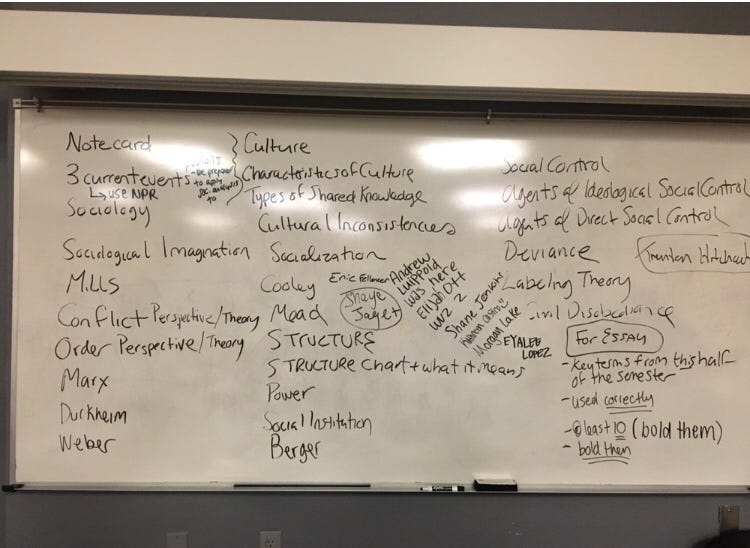
Photo Credit: Author’s Soc 101 Lecture
Oppression is Different from Prejudice and Discrimination
Now for the hard part for some people. If oppression is a structure rooted in historical and institutional power, the group that has always and who continues to benefit from this historical and institutional power is the group that can and does oppress. This group is the dominant group in the power dynamic. And this only goes one way.
So, connect the dots, put two and two together, breathe deeply because here it is:
The dominant group in our society in the category of White Supremacy are white people. Hence, only white people can and do oppress or benefit from oppression. Hence only white people can truly be and enforce and benefit from the oppression of Racism.
The dominant group in our society in the category of Capitalism is the upper class, the 1%, the corporate, the wealthy, the bourgeoisie. Hence only they can oppress and benefit from the oppression of the poor, the working poor, the working class, the middle class. Hence only wealthy people can truly be and enforce and benefit from the oppression of Classism.
The dominant group in our society in the category of Patriarchy are males, men, and the presentation of socially constructed masculinity. Hence only men, males, and toxic forms of masculinity can oppress and benefit from the exploitation and oppression of females, women, girls, and femininity. Hence, again, only men can truly be and enforce the oppression of Sexism.
Examples?
It is well known that a core tactic of oppression is dehumanization, which makes it easier to justify oppression and violence, which then justifies the dehumanizing efforts. This is ongoing. This is happening now. This is America, 2019 24/7.
This happens to women every day. Dehumanization in the form of porn videos, sex trafficking, commodification of our bodies, trivializing of our lives and concerns, mansplaining. Men do not have to endure these things in the same way.
This happens to poor people every day. Dehumanization in the form of living in poverty that is so deep and encompassing that even healthcare is a privilege, even food is construed as a luxury. And in the form of media that ignore, blame, shame, and belittle the lives of the poor and working poor in our nation. The wealthy do not have to endure these things in the same way.
This happens to people of color every day. Dehumanization in the form of concentration camps at the border, lives deemed worthless by police and courts, words from the President’s mouth or twitter feed demanding women of color go back to where they came from, and on and on and on. White people do not have to endure these things in the same way.
Racism is a power dynamic. It’s not individual actions or choices. It’s not about you being a bad or good person. It’s a root structure of our contemporary society and it is playing out in ways that are often predictable, in patterns, cycles and that have a history.
It is not about numbers either. This needs to be cleared up. The terms minority and majority are misnomers, and intentionally so.
There have always been more oppressed people in America than there have been members of the dominant group. Women make up over 51% of the population so if this were a simple issue of which group has more people that justifies the power and oppression, then by this language, women should be benefiting from the system right now. Instead it is the exact opposite by design.
These are categories of oppression and power, of dominance and control. So, when I teach I make sure my students know not to use the term “minority” in our class because it implies somehow that this is a numbers game and that’s the reason for the oppression. Instead we use terms like the oppressed, or members of the non-dominant group, or “minoritized” group which implies ongoing action to ensure minority status in terms of power and representation.
As Audre Lorde said, “There are no new ideas, only new ways to make them felt.” This goes for both great and lovely ideas like art and culture and for pretty awful ideas like methods and tactics of oppression and domination.
Internalized Oppression, in brief.
Other key terms that relate to this and are helpful in understanding the power of language includes terms that relate to internalized oppression. Internalized oppression benefits the oppressor and upholds the system and structure. There is no other way to put this.
So, when women act in ways that Patriarchy has said men should like women to act, — when we watch porn, laugh at rape jokes, support ‘raunch culture’ we are telling the system that it is ok to oppress us, we love it!
When people of color treat each other with insults and scapegoating, this only benefits white people because white people can say, “They do it to each other! So racism is everywhere!”
When poor people and the working poor believe they are one lotto ticket away from being rich and so, alienate and isolate themselves from other poor and working poor people, this perpetuates the system of capitalism as the only way, and also thwarts any hope of solidarity and revolution.
Internalized Oppression: when members of an oppressed group are socialized into accepting and perpetuating their own oppression via beliefs, attitudes, actions, and behaviors that prop up the oppressive system while making it seem like it is justified and right.
Internalized Racism: when people of color identify with and believe and perpetuate the lies and stereotypes told about them by the dominant culture in ways that prop up and serve to justify, excuse and normalize white supremacy and inequality between racial groups.
Internalized Classism: when poor people, the working poor, the lower-middle class, the have-nots, identify with and believe the lies and stereotypes told about them by the dominant culture in ways that prop up and serve to justify and excuse, and normalize, the system of capitalism and inequality between the rich and poor.
Internalized Misogyny: when women, girls, and feminine people identify with and believe the lies and stereotypes told about them by the dominant culture in ways that prop up and serve to justify and excuse, and normalize, the system of patriarchy and inequality between men and women.
Conclusion: Structural, not Individual Solutions to Structural Problems is Key
Key for sociology in looking at these issues is to get our attention focused on where it needs to be. To focus on the structures and systems of oppression. To name and confront white supremacy, capitalism, and patriarchy.
When we focus on the actual structures, we can avoid individualizing that which is rooted in structural stratification. This is often an uphill battle in a society where individual “personal responsibility” is touted as the only thing that causes anything, for better or for worse. It is an uphill battle in a society that does not want people to connect the dots, think critically, address structures, or truly see the complexities and realities of oppression.
The solutions or causes of structural problems and macro level patterns of inequity are not found in individual actions or behaviors; they require exposing at the structural root and then utilizing solutions that directly attack and remedy that root.
Going to the root will automatically inspire us, demand of us, to come up with solutions that are collective and wide scale, whose force of organization and focus of attack are as grand and deep as the structure itself.
For example, paper straws are nice but they don’t make a dent in the structural global earth wide problem of global warming that is driven and created by the structural system of capitalism and that is caused by a handful of nations and a handful of massive corporations.
And yet, most media or political or #trending ideas for solutions frame the issues in such steep ideological social control and false consciousness that all we can see are individual causes and responses to social problems that are rooted in structural sources.
The system is very successful at putting the blame and responsibility on individuals. This serves to obfuscate and shelter the actual causes and erase the responsibility of corporations and governments who have made it their number one job to consistently benefit from and devotedly protect the root systems of oppression.
In every case, the power to change the world and stop the oppression lies with the group doing the oppressing. Those who benefit from the systems of oppression are the only ones who can stop the systems of oppression.
This means only white folks can end Racism by being actively anti-racist.
It means only the rich can end classism by being actively anti-classist, though I hold and many scholars hold class is an area where revolution from below is what it may take to get true class equality. More on this later.
It means only men can end Sexism and misogyny by ending locker room talk and calling out their guy friends, giving up misogynistic porn culture, and enacting new ways of being men and better forms of masculinity that are based in equity and justice.
We can do better, hit harder, and trace things back to where they belong.
We can join forces and use words correctly.
We can name the source of the problem to better organize for, fight for, demand, and implement the right solutions that effectively attack the roots of white supremacy, capitalism, and patriarchy where they live.
Stay tuned for more articles, personal essays, poems, and mini-Sociology lessons on issues of oppression, internalized oppression, intersectionality, critical sociology and critical social justice theory, and how to organize and form solidarity for social change to the root causes of our social problems.
Jenny Justice is a mom, Sociology instructor, and writer. You can follow her on Medium and at Jenny Justice, Writer, for more insightful articles, essays on empathy and introversion, and all other things nerdy, kind, spiritual, and informative when it comes to education, parenting, kids, culture, poetry, equality, self and social justice. She has been recognized as a top writer on Medium in the categories of parenting, education, reading, and racism.