
Teachers Have an Obligation to Involve Parents in Helping Their Child Learn to Read
Reading aloud is the most important thing parents can do to support literacy

Reading aloud is good for children
Isn’t it amazing when something that is good for you is also fun and easy to do? Not too many things are that way, are they? We usually associate hard things, bad tasting, difficult to implement, or boring (ab crunches, kale, early wake-up calls) as good for us; whereas, the easy-to-do, yummy things are typically bad for us like fast food and candy.
But then there is the read-aloud. It’s fun, it’s easy, it feels good, and it is oh-so-good for children in many, many ways!
When we elevate reading aloud in the life of children, all caretakes involved get in on the opportunity to be a part of a child’s learning-to-read experience. Educators have a great deal of influence on children, but a parent will always be a child’s first and most important teacher. Wrapping parents into the learning-to-read process reminds them of this truth and empowers them to make a tremendous difference in the lives of their children.
“The most important activity for building the knowledge and skills eventually required for reading is that of reading aloud to children.” — Marilyn Adams
We know that some parents need no reminding of this special place they hold in their child’s life and their homes are filled with the wonder and magic of books. We also know that these children come to school better prepared to learn to read.
But this is not always the case, so what can we do to support all readers in the home — especially those who did not come from a print-rich environment? There are many factors that play into why some children enter Kindergarten not ready to learn to read, but getting parents to read aloud to their children can negate many of them.
Parents are often overwhelmed with all the things they need to do to maintain home and health in the family so when we ask them to “get involved” it can feel like one more burden on their shoulders. This is exacerbated for a single parent or one entrenched in poverty. Buying books, or even getting to the library, may not be a reality for these families. It’s critical that educators and school leaders help these parents get access to books for their children.
Consider these findings and statistics taken from Access to Books:
- Sixty-one percent of low-income families have no books at all in their homes for their children. While low-income children have, on average, four children’s books in their homes, a team of researchers concluded that nearly two-thirds of the low-income families they studied owned no books for their children (US Dept. of Education, 1996).
- Children in low-income families lack essential one-on-one reading time. The average child growing up in a middle-class family has been exposed to 1,000 to 1,700 hours of one-on-one picture book reading. The average child growing up in a less economically stable family, in contrast, has only been exposed to 25 hours of one-on-one reading (McQuillan, 1998).
- The most successful way to improve the reading achievement of low-income children is to increase their access to print. Communities ranking high in achievement tests have several factors in common: an abundance of books in public libraries, easy access to books in the community at large, and a large number of textbooks per student (Newman et al., 2000).
- The only behavior measure that correlates significantly with reading scores is the number of books in the home. An analysis of a national data set of nearly 100,000 United States schoolchildren found that access to printed materials — and not poverty — is the “critical variable affecting reading acquisition” (McQuillan, 1998).
Think about this last line for a moment: access to printed materials — and not poverty — is the “critical variable affecting reading acquisition”
Let me illustrate three examples of this
- Ben Carson — a renowned neurosurgeon and published author was raised in a low-income home by a single mom with a 3rd-grade education. When Ben’s mom noticed all the books in the home a professor for whom she cleaned, she realized that books were her sons’ ticket out of poverty. Once Ben and his brother began reading books and writing book reports for their mom, their grades went up and their interest in school skyrocketed. Books changed Ben Carson’s life.
- Jeannette Walls — author of The Glass Castle and Half Broke Horses tells of how, despite some of the worst conditions she was surrounded by in the home, she always had books. Her mother, a teacher by trade, elevated books above school attendance and even before the children were enrolled in school in whatever new town they landed, they went to the library to get library cards. Jeanette’s teachers were always surprised when they found she did not need remedial services even though she often missed many days of school and lived in impoverished conditions.
- Anna LeBaron — the author of The Polygamist’s Daughter, told me that she could think of no greater work than what I do with literacy because “books saved her life”. Despite being raised in a cult, subjected to an itinerant lifestyle, extreme poverty, and erratic school attendance, Anna found salvation in books and learned that her life could be dramatically different from what she knew.
Educators have a powerhouse of resources at our fingertips to get books into the home — the library! And we have almost daily opportunities to remind parents of the potential books have to make a difference in the lives of their children!
Young children who have access to books in the home and who are read aloud to regularly have the best chance of becoming successful readers. — Catherine Snow, Peg Burns, and Susan Griffin, 1998
I’ll never forget when one of my Title I students told me, “Teacher, we don’t have any books at home.” Was it a surprise that he was significantly below grade level in his reading skills? Luckily, I had access to online resources to get books into the hands of this boy in his home.
“For years, educators have thought the strongest predictor of attaining high levels of education was having parents who were highly educated. But, strikingly, this massive study showed that the difference between being raised in a bookless home compared to being raised in a home with a 500-book library has as great an effect on the level of education a child will attain…” — according to a 20-year study led by Mariah Evans, University of Nevada, Reno associate professor of sociology and resource economics.
Make reading a sweet treat
Read-aloud time is what author Mem Fox likens to feeding kids chocolate. My goal is to remind parents and teachers, that even in the midst of busy days and test-prep frenzy, to take time each day — at every grade level and every age— to read aloud to children, to give them something sweet to remember the day.
Read-aloud time is bonding time with books and with the one who reads to the child. I encourage teachers to talk with their parents about the power of the read-aloud and if they want to get kids reading at home, to start with the parents.
“The fire of literacy is created by the emotional sparks between a child, a book, and the person reading. It isn’t achieved by the book alone, nor by the child alone, nor by the adult who’s reading aloud — it’s the relationship winding between all three, bringing them together in easy harmony.” — Mem Fox
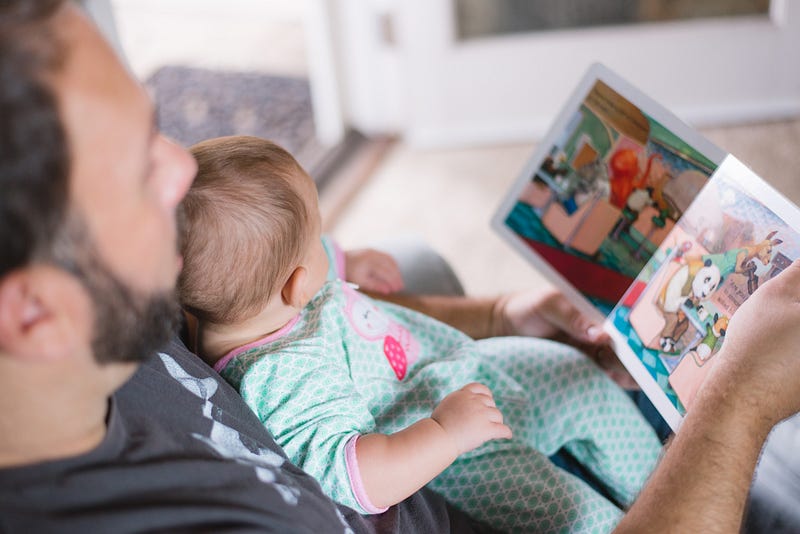
Anyone can do it!
Mem Fox calls reading aloud “reading magic” and for good reason. It is the one thing that every parent can do to help their child become a reader. While it may seem like magic, many important processes are taking place when an adult reads to a child.
If teachers do not see the parent as a critical partner in the reading success of their students, they are missing an opportunity, and in my opinion, an obligation, to support the students fully. Parents can be intimidated by practice, homework, and other activities, but helping them understand that simply reading with their child is the most important thing can alleviate their fears or insecurities.
Tips for teachers
- Don’t assume parents know what to do. Many parents feel unprepared or inadequate and feel that leaving reading to the experts is what they should do. Present reading at home during a back to school night and demonstrate how to read with fluency and engagement.
- Emphasize that books are more important than digital activities and that books are also portable. Encourage parents to create book bags to take with them when out of the home. When waiting for siblings during practices and extra-curricular activities parents can read to their children. Stuck at grandma’s eye doctor appointment? Pull out some books and read!
- Let books at home be about reading and exploring. If teachers attach reading at home to homework and schoolwork students and parents may be less likely to see the value of reading for the sake of reading.
- Make a big deal about reading. From superintendents and principals who host read-aloud time on Facebook to teachers who find extraordinary ways to get books into the hands of students, when the entire school system sends the message that reading matters, parents will understand that reading is something that matters for life.
Connecting reading time in school to reading time at home is a first step in reminding parents and students that reading is a life activity, not just a school subject.
Teachers and school leaders are faced with a barrage of expectations and standards to meet. In the stress of day to day teaching and worries over accountability, educators can forget to harness the power of reading aloud to children and can lose sight of the fact that parents are their partners in teaching children to read. Let’s bring the magic back to reading by promoting read-aloud time any chance we have!
Thanks for reading! I’ve been a reading specialist for a long time and my favorite thing in the world is turning non-readers into readers! Not sure what books your child should be reading? Check out our suggested book list!


