avatarMary Gallagher

Free AI web copilot to create summaries, insights and extended knowledge, download it at here

3576

Abstract

om children to find a book to get lost in.</p><div id="868d" class="link-block"> <a href="https://www.washingtonpost.com/news/answer-sheet/wp/2015/10/17/why-kids-still-need-real-books-to-read-and-time-in-school-to-enjoy-them/"> <div> <div> <h2>Why kids still need 'real books' to read - and time in school to enjoy them</h2> <div><h3>Nancie Atwell is the renowned founder of the Center for Teaching and Learning, an award-winning non-profit independent…</h3></div> <div><p>www.washingtonpost.com</p></div> </div> <div> <div style="background-image: url(https://miro.readmedium.com/v2/resize:fit:320/0*eOaQ17GZ8zp49vAR)"></div> </div> </div> </a> </div><h2 id="b317">Eliminate the distractions at home too</h2><p id="5789">Unfortunately, modern home life doesn’t offer a significantly better chance for children to read. Their minds are inundated with digital noise, media, and schedules that require them to shift quickly from one task to another. Modern-day children are getting to be as stressed out as their parents and the pace of life is stripping away their time to curl up with a good book that they have chosen.</p><p id="3500">Video games, social media, smartphone addictions, and fast-paced television ads contribute to short attention spans. Instant gratification is the norm and books generally don’t provide this.</p><p id="2cbd" type="7">Children need to read books in order to lengthen their attention spans, develop stamina for reading at a sustained pace, and help their imaginations develop so reading makes sense to them.</p><h2 id="b89a">Teaching children to use their minds</h2><p id="789f">A significant aspect of reading instruction includes modeling for students and what is referred to as “think alouds.” This is when the teacher or adult explains what she’s thinking or imagining in her mind. Literally teaching children how to make visual images as they read, make predictions in their mind and confirm those predictions as they read, and other comprehension strategies are taught to children who do not make mental images when they read. Allowing children extended time to read will develop these skills.</p><blockquote id="3e44"><p>We now have a quarter century of studies that document three findings: literacy blooms wherever students have access to books they want to read, permission to choose their own, and time to get lost in them. Enticing collections of literature — interesting books written at levels they can decode with accuracy and comprehend with ease — are key to children becoming skilled, thoughtful, avid readers. — <a href="https://www.washingtonpost.com/news/answer-sheet/wp/2015/10/17/why-kids-still-need-real-books-to-read-and-time-in-school-to-enjoy-them/"><b><i>Why kids still need ‘real books’ to read — and time in school to enjoy them</i></b></a></p></blockquote><p id="1728">The good news is that we can easily support children as they fall in love with books. It’s simple but it may take some tweaking of our habits. But what a worthwhile endeavor, wouldn’t you agree?</p><h2 id="9776">What you can do as a parent</h2><p id="287e"><b>Ease up on the schedules.</b> Reading is like a luxury bubble bath — nobody enjoys being rushed through it. Be intentional about creating long blocks of time for your child to read.</p><p id="ef84"><b>Keep a variety of books handy.</b> Jim Trelease, author of <a href="https://www.amazon.com/Jim-Treleases-Read-A

Options

loud-Handbook-Eighth/dp/0143133799/ref=sr_1_1?crid=AA62BY9WYBY&keywords=the+read+aloud+handbook&qid=1573757089&s=books&sprefix=the+read+aloud%2Cstripbooks%2C398&sr=1-1"><i>The Read-Aloud Handbook</i></a><i> </i>and the writer of the foreword to <a href="https://www.amazon.com/Teach-Child-Childrens-Books-Fourth/dp/0972017321/ref=asc_df_0972017321/?tag=hyprod-20&amp;linkCode=df0&amp;hvadid=334204344421&amp;hvpos=1o1&amp;hvnetw=g&amp;hvrand=1869413010419861459&amp;hvpone=&amp;hvptwo=&amp;hvqmt=&amp;hvdev=c&amp;hvdvcmdl=&amp;hvlocint=&amp;hvlocphy=9028727&amp;hvtargid=aud-801381245258:pla-653195807402&amp;psc=1"><i>Teach a Child to Read with Children’s Books</i> </a>offers practical advice about exposing your children to books in the home. Some of my favorites are to keep books at the kitchen table, a book basket in the bathroom, and let them stay up with reading lights past their bedtime.</p><p id="562b"><b>Model the love of reading.</b> Even if you have to fake it please read so your child can see that reading is what adults do for fun, not just something they have to do for school. I bet if you stick it out I’ll have you falling in love with books too!</p><p id="2d26"><b>Value books.</b> Buy books for gifts, visit the library regularly, choose books over video games, never say no to a book.</p><p id="d7d9"><b>Block out digital and screen-free times in each day.</b> Your child will learn to pick up a book or go out to play (both are fine!)</p><p id="a27c"><b>Talk to your child’s teacher.</b> Ask how much time your child is allowed to just read. Not flashcards, not worksheets, not group reading, or listening to stories…just reading. On her own. At school. You might be surprised how little time that is.</p><p id="aa55"><b>Look into starting programs at school or in your community.</b> You can initiate books on busses or books in the lunchroom. I was in a school with elevators and they had boxes of books on the elevator so children could pick one and take it along with them!</p><p id="3231"><b>Volunteer in your child’s classroom.</b> Read to students or pick up some of the tasks that keep your child’s teacher from creating the type of reading atmosphere she desires to.</p><p id="5a5a"><b>A gift suggestion for your child’s teacher:</b> <a href="https://www.amazon.com/Book-Whisperer-Awakening-Inner-Reader/dp/0470372273/ref=sr_1_3?crid=74UGYTM1N1IU&amp;keywords=the+book+whisperer+by+donalyn+miller&amp;qid=1573757147&amp;s=books&amp;sprefix=the+book+whis%2Cstripbooks%2C174&amp;sr=1-3"><i>The Book Whisperer</i></a> by Donalynn Miller and/or buy her children's books for the classroom. Trust me, I taught first grade: there are only so many mugs and ornaments a person can use!</p><p id="91db">There is no substitute for getting lost in a good book.</p><div id="6f12" class="link-block"> <a href="https://www.nbcnews.com/better/pop-culture/why-getting-lost-book-so-good-you-according-science-ncna893256?icid=related"> <div> <div> <h2>Why 'getting lost' in a good book is the break your brain needs right now</h2> <div><h3>Whether you're the reader who rips through a new book each week or the one still slogging through that bestseller your…</h3></div> <div><p>www.nbcnews.com</p></div> </div> <div> <div style="background-image: url(https://miro.readmedium.com/v2/resize:fit:320/0*Wx3xUneE_m9LYKVd)"></div> </div> </div> </a> </div></article></body>

Why Children Need Uninterrupted Reading Time

It’s time to eliminate the non-essentials in your reading program and give your children time to read!
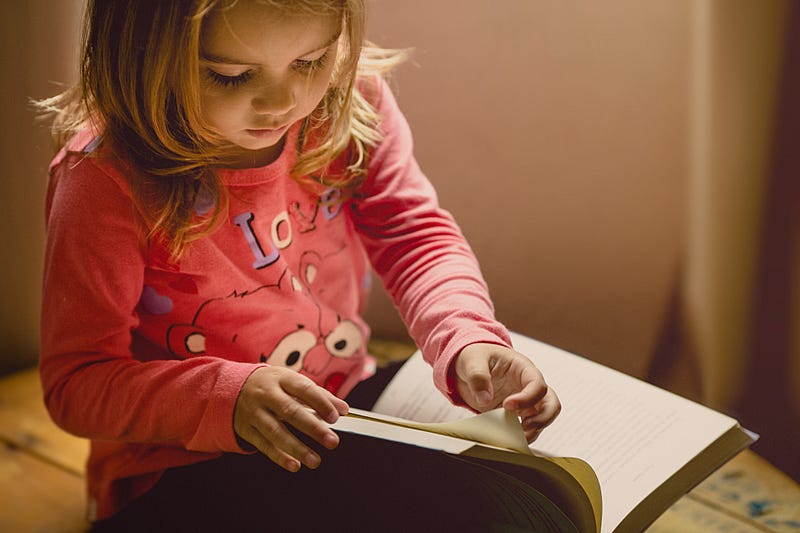
Photo by Jonathan Borba on Unsplash

On the go? You can listen to this article.

Children need to see books as something they choose in order to enter into a world of knowledge and fantasy. Books should not be the side note to reading instruction, but rather, the centerpiece.

Few things made me sadder than when a child groans at the sight of a book or tells me unabashedly, “I hate reading.” I wonder what approach reading instructors have taken with him and what negative experiences that child has encountered regarding reading to elicit such strong emotions toward what many consider the most worthwhile pastime in their lives.

I have found a few reasons during my tenure as a reading specialist, but I won’t proclaim that every child who hates to read was taught by an uncaring adult who made reading taste like medicine, rather than as Mem Fox encourages, chocolate. I know some children deal with dyslexia so severe that reading is incredibly hard for them. No one likes to do something that is hard and makes them feel like a failure.

When reading is no longer about reading, children won’t learn to love it

But let’s set aside those children for now and we still have many, many young children and young adults who have not found out how to fall in love with reading. I believe that one reason for this is they associate reading with a variety of activities that are not actually reading itself.

Boring worksheets, drill-based instruction, and repetitive skill lessons that isolate reading skills from the actual experience of reading make up the majority of reading instruction in the average classroom.

On top of this, our school days are so filled with drills, standards-based instruction, and test-taking prep that there just isn’t enough time for a child to get lost in a book. Heck, in most classrooms, the only reading children do is in a group setting where they read a few sentences or paragraphs from a book chosen and dictated by the teacher and/or curriculum. What doesn't get covered at school is sent home as homework, thereby stealing any time at home from children to find a book to get lost in.

Eliminate the distractions at home too

Unfortunately, modern home life doesn’t offer a significantly better chance for children to read. Their minds are inundated with digital noise, media, and schedules that require them to shift quickly from one task to another. Modern-day children are getting to be as stressed out as their parents and the pace of life is stripping away their time to curl up with a good book that they have chosen.

Video games, social media, smartphone addictions, and fast-paced television ads contribute to short attention spans. Instant gratification is the norm and books generally don’t provide this.

Children need to read books in order to lengthen their attention spans, develop stamina for reading at a sustained pace, and help their imaginations develop so reading makes sense to them.

Teaching children to use their minds

A significant aspect of reading instruction includes modeling for students and what is referred to as “think alouds.” This is when the teacher or adult explains what she’s thinking or imagining in her mind. Literally teaching children how to make visual images as they read, make predictions in their mind and confirm those predictions as they read, and other comprehension strategies are taught to children who do not make mental images when they read. Allowing children extended time to read will develop these skills.

We now have a quarter century of studies that document three findings: literacy blooms wherever students have access to books they want to read, permission to choose their own, and time to get lost in them. Enticing collections of literature — interesting books written at levels they can decode with accuracy and comprehend with ease — are key to children becoming skilled, thoughtful, avid readers. — Why kids still need ‘real books’ to read — and time in school to enjoy them

The good news is that we can easily support children as they fall in love with books. It’s simple but it may take some tweaking of our habits. But what a worthwhile endeavor, wouldn’t you agree?

What you can do as a parent

Ease up on the schedules. Reading is like a luxury bubble bath — nobody enjoys being rushed through it. Be intentional about creating long blocks of time for your child to read.

Keep a variety of books handy. Jim Trelease, author of The Read-Aloud Handbook and the writer of the foreword to Teach a Child to Read with Children’s Books offers practical advice about exposing your children to books in the home. Some of my favorites are to keep books at the kitchen table, a book basket in the bathroom, and let them stay up with reading lights past their bedtime.

Model the love of reading. Even if you have to fake it please read so your child can see that reading is what adults do for fun, not just something they have to do for school. I bet if you stick it out I’ll have you falling in love with books too!

Value books. Buy books for gifts, visit the library regularly, choose books over video games, never say no to a book.

Block out digital and screen-free times in each day. Your child will learn to pick up a book or go out to play (both are fine!)

Talk to your child’s teacher. Ask how much time your child is allowed to just read. Not flashcards, not worksheets, not group reading, or listening to stories…just reading. On her own. At school. You might be surprised how little time that is.

Look into starting programs at school or in your community. You can initiate books on busses or books in the lunchroom. I was in a school with elevators and they had boxes of books on the elevator so children could pick one and take it along with them!

Volunteer in your child’s classroom. Read to students or pick up some of the tasks that keep your child’s teacher from creating the type of reading atmosphere she desires to.

A gift suggestion for your child’s teacher: The Book Whisperer by Donalynn Miller and/or buy her children's books for the classroom. Trust me, I taught first grade: there are only so many mugs and ornaments a person can use!

There is no substitute for getting lost in a good book.

Education
Parenting
Reading
Literacy
Childrens Books
Recommended from ReadMedium