avatarAvi Kotzer

Free AI web copilot to create summaries, insights and extended knowledge, download it at here

4166

Abstract

redit: https://nytbee.com/</figcaption></figure><p id="fc18">(Pangram refers to the fact that there is always at least one word with all seven letters in each puzzle. Sometimes there are more than one. Letters can be repeated as many times as you need to form a word.)</p><p id="06f2">So this combination of letters (<b>A, D, H, N, R, T, Y)</b> has appeared thrice counting today. Which means there are four more occasions on which it can appear in the future: with center letters <b>D, H, T,</b> and <b>Y</b>. That is why I need to save the words <b>rhyta</b> and <b>yantra</b> for the future: they contain three and two letters that haven’t been used in the center yet. Of course, once the center letter changes, there may be other options that I am currently not seeing; still, better safe than sorry.</p><p id="b156">The word <i>tarn</i>, on the other hand, is short and three of its four letters are or have been center letters already. Plus, the letter t is quite common and likely to be in a lot of rejected words once it makes it appearance as the center letter sometime in the near or distant future.</p><p id="5e22">So <i>tarn</i> it is. Now you’ve had a glimpse at part of my thought process when selecting the daily dord*.</p><h2 id="8ab9">Lowercase t</h2><p id="8cc6">Our friends at Merriam-Webster explain that the term tarn comes from the Middle English <i>tarne, terne</i>, of Scandinavian origin; akin to Old Norse <i>tjörn,</i> meaning “small lake”; akin to Sanskrit <i>dara</i>, meaning “hole in the ground” and Old English <i>teran</i>, “to tear”.</p><p id="c779">The Illustrated Glossary of Alpine Glacial Landforms, back when it existed online, further specifies that tarns are glacial lakes produced by scouring. These are often found in <b>cirques</b>. No, not this cirque…</p><figure id="4b0e"><img src="https://cdn-images-1.readmedium.com/v2/resize:fit:800/0*I40gaE13PM6hr4AK"><figcaption>Credit: the circus of the sun</figcaption></figure><p id="f1b7">…but this one:</p><figure id="ae48"><img src="https://cdn-images-1.readmedium.com/v2/resize:fit:800/0*P7Or_oxRkFVuVRXV.jpg"><figcaption>Photo by Dentren</figcaption></figure><p id="531e">In other words, a deep, steep-walled basin located high on a mountain and usually shaped like half a bowl. The cirques in the above photo are filled with semi-permanent snow. If climate change causes the snow to melt away and never return, a lake may form there.</p><p id="93ee">In certain locations, the word <i>tarn</i> is used to describe any lake or small body of water.</p><figure id="3025"><img src="https://cdn-images-1.readmedium.com/v2/resize:fit:800/0*O5i9n2Cia6nRNpmk"><figcaption>Photo by <a href="https://unsplash.com/@benjaminjsuter?utm_source=medium&amp;utm_medium=referral">Benjamin Suter</a> on <a href="https://unsplash.com?utm_source=medium&amp;utm_medium=referral">Unsplash</a></figcaption></figure><p id="bac3">Okay, maybe bodies of water a bit larger than the one above…</p><p id="eeda">Because it’s Sunday, I’m not going to bore you with paragraphs of wordy explanations about how <i>tarns</i> are formed, using technical terms such as <b>headwall, moraine</b>, <b>abrasion</b>, and <b>plucking</b>. Instead, I’ll show you a picture that’s worth a thousand words. Or, in this case, nineteen.</p><figure id="6cae"><img src="https://cdn-images-1.readmedium.com/v2/resize:fit:800/0*DAW0_NsvJn2D7LFV.png"><figcaption>Image by DooFi 14:03</figcaption></figure><p id="cb8f">And I’ll ask my assistant Iva Reztok to carefully select lovely pictures of tarns for your enjoyment.</p><figure id="c553"><img src="https://cdn-images-1.readmedium.com/v2/resize:fit:800/1*lGGr5iMfi6sXfEB8l_cU-g.png"><figcaption>Screenshotted by Iva Reztok</figcaption></figure><p id="5655">Or just take a screenshot of a Wikipedia page. I guess that works, too.</p><h2 id="9c51">Uppercase T</h2><p id="9141">There are several <i>tarns</i> that begin with an uppercase T:</p><p id="903e">§ <a href="https://www.imdb.com/name/nm0850533/">Michael Tarn</a>, a British actor best known for playing Pete in <i>A Clockwork Orange</i></p><p id="8c37">§ <a href="http://minorplanetcenter.net/db_search/show_object?obj

Options

ect_id=13032">13032 Tarn</a>, a main-belt minor planet, named after the Tarn river.</p><p id="db21">§ <a href="http://aventura-terreno.blogspot.com/2006/11/monte-tarn_23.html">Mount Tarn</a>, a summit on the southern part of the Strait of Magellan, Chile</p><p id="dabe">§ <a href="https://en.wikipedia.org/wiki/Tarn_Oil_Field">Tarn Oil Field</a>, an oil field in Alaska, U.S.</p><p id="d040">§ <a href="https://www.visitgreenwich.org.uk/things-to-do/the-tarn-p1368451">The Tarn</a>, a park, nature reserve, and lake in Mottingham, Royal Borough of Greenwich</p><p id="a30c">§ <a href="https://www.tourisme-tarn.com/uk">Tarn</a>, a department in southwest France</p><p id="313a">It is this last Tarn that brings us to the second set of photos I promised earlier. And that’s because the department of Tarn has a light railway known as the the <b>Chemin de Fer Touristique du Tarn. </b>Well, what did you expect? It’s in French because Tarn is in southwest France. Pay attention! That name roughly translates as “tourist trap for suckers who want to see tiny old trains”.</p><figure id="cc98"><img src="https://cdn-images-1.readmedium.com/v2/resize:fit:800/0*sdtc9ncGMhoFRn0x.jpg"><figcaption>Photo by Bertrand Bouret</figcaption></figure><p id="9b24">Okay, maybe they’re not so tiny, these trains.</p><p id="62ec">The CFTT is run as a heritage railway (a railway operated strictly to preserve scenes of the past) by a French association based in Toulouse, the ACOVA (<i>Association pour la Conservation Occitane de Véhicules Anciens</i>). Again, French. And I think this roughly translates as “Association of tourist traps for suckers who want to see tiny old trains”.</p><figure id="d3e3"><img src="https://cdn-images-1.readmedium.com/v2/resize:fit:800/0*d939j3PRGc74sI23.jpg"><figcaption>Credit: www.cftt.org</figcaption></figure><figure id="5c7d"><img src="https://cdn-images-1.readmedium.com/v2/resize:fit:800/0*skyFszAb0LA9obDq.jpg"><figcaption>Credit: www.cftt.org</figcaption></figure><figure id="e1a0"><img src="https://cdn-images-1.readmedium.com/v2/resize:fit:800/0*72hLld8BIZhT2m-f.jpg"><figcaption>Credit: www.cftt.org</figcaption></figure><figure id="3282"><img src="https://cdn-images-1.readmedium.com/v2/resize:fit:800/0*oGXgsPJxRKe7ttrY.jpg"><figcaption>Credit: www.cftt.org</figcaption></figure><p id="5e6c">You gotta admit, these trains look much smaller than the huge one I showed you before. I think the four of them could fit in that barn and there would be room left over for more.</p><p id="2b68">Well, that’s it for today. I showed you beautiful pictures of tiny lakes and trains, just like I promised. After all, we aim to please here at Silly Little Dictionary! Which is more than can be said about the editors of the Spelling Bee, who declared <i>tarn</i> a dord*.</p><p id="43fb">You can check out my previous entry on another <b>dord* </b>here:</p><div id="2620" class="link-block"> <a href="https://readmedium.com/genip-d450d0bd62be"> <div> <div> <h2>Genip</h2> <div><h3>My favorite fruit gets rejected by the New York Times!</h3></div> <div><p>medium.com</p></div> </div> <div> <div style="background-image: url(https://miro.readmedium.com/v2/resize:fit:320/1*8VVWzSnfezSqKYhg56tgeA.png)"></div> </div> </div> </a> </div><p id="d200">*What the heck is a <b>dord, </b>you ask? Here’s the answer:</p><div id="8021" class="link-block"> <a href="https://www.merriam-webster.com/words-at-play/dord-a-ghost-word"> <div> <div> <h2>'Dord': A Ghost Word</h2> <div><h3>One of the questions people like to ask lexicographers is this: Can you sneak something into the dictionary? Can you…</h3></div> <div><p>www.merriam-webster.com</p></div> </div> <div> <div style="background-image: url(https://miro.readmedium.com/v2/resize:fit:320/0*Oqv8pCVJ9CINI_wy)"></div> </div> </div> </a> </div></article></body>

Tarn

Cirque du lake, not du soleil
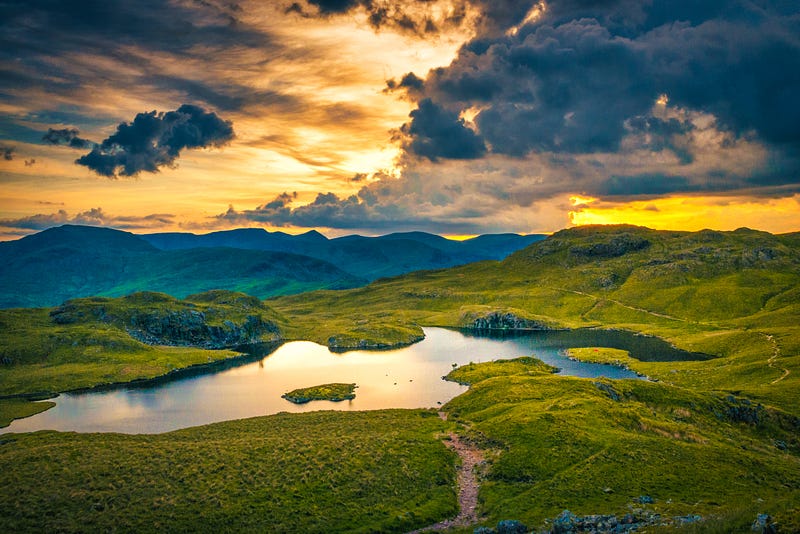
Photo by Jonny Gios on Unsplash

Today’s New York Times Spelling Bee letters:
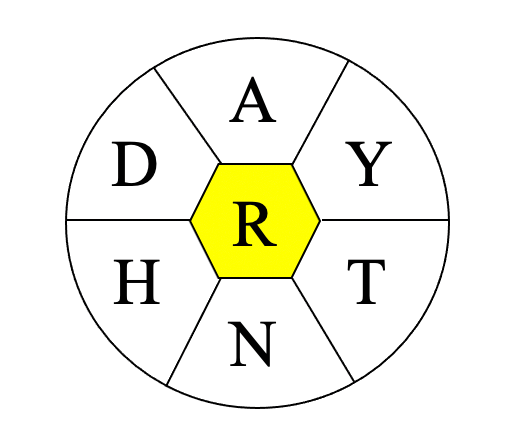
Art: Iva Reztok

A, D, H, N, T, Y, and center R (all words must include R)

Merriam-Webster says…
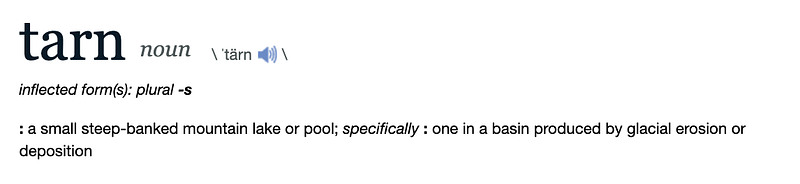
Credit: merriam-webster.com

Silly little dictionary! Don’t you know tarn can’t possibly be a word if the New York Times says it ain’t?

For further fascinating facts, check out the Spelling Bee Master.

What’s your favorite dord* from today’s puzzle?

My Two Cents

Maybe because it’s Sunday, but I wasn’t feeling very inspired when it came to choosing today’s dord* from the list of ghost words that the Spelling Bee game rejected. Sometimes the pickins are slim, but that wasn’t the case today. None of the options got my creative juices going, however. I ended up going with tarn, as at least it well let me showcase some pretty pictures of lakes and trains. And that’s all right for a lazy Sunday afternoon, I guess.

There are a few steps involved in select a word to write about for this column. Planning ahead is one of them. I play the Spelling Bee game every day, and sometimes I run into the rejected words myself. If I can’t find one on my own or I’m not happy with the ones I’ve discovered, I check the Spelling Bee Master. At the bottom of the page there is always a list of “Valid dictionary words not in today’s official answers”. Here is today’s, for example:
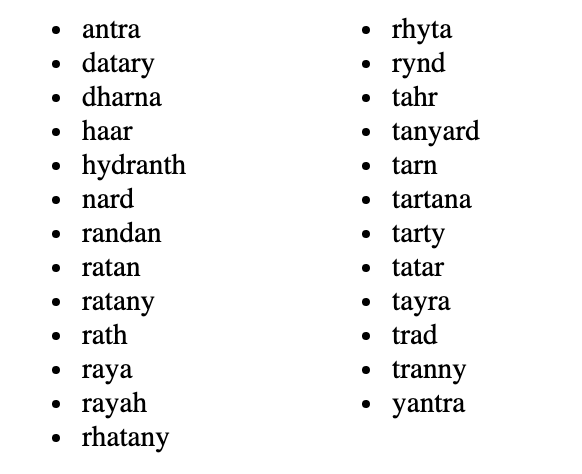
Credit: https://nytbee.com/

You’ll notice all the words have one letter in common: r, which is today’s center letter and must appear in a word in order to be valid, per Spelling Bee rules. Now, I’ve already written an article about tayra, a member of the weasel family. So that word was eliminated.

I thought about picking rhyta (the plural form of rhyton, an ancient drinking horn usually with a base formed as the head of an animal, woman, or mythological creature) because it’s mildly interesting and comes with good imagery.
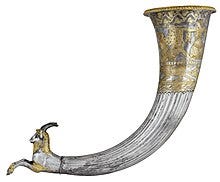
Photo by Gorgonchica

Or I could have gone with yantra, a geometrical diagram used like an icon usually in meditation.
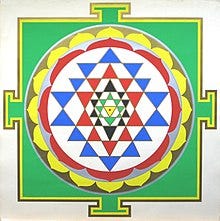
artwork by Daniel Conrad under direction of Harish Johari

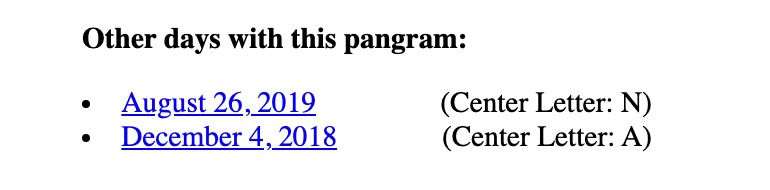
However, I may need to save both words for future iterations of today’s puzzle. The Spelling Bee works with seven letters, one of which has to be used in every word you form; this allows each set of letters to be used seven times, as you can pick a different center letter each time. To wit, at the top of the page, the Spelling Bee Master reminds us that this puzzle appeared twice before:
Credit: https://nytbee.com/

(Pangram refers to the fact that there is always at least one word with all seven letters in each puzzle. Sometimes there are more than one. Letters can be repeated as many times as you need to form a word.)

So this combination of letters (A, D, H, N, R, T, Y) has appeared thrice counting today. Which means there are four more occasions on which it can appear in the future: with center letters D, H, T, and Y. That is why I need to save the words rhyta and yantra for the future: they contain three and two letters that haven’t been used in the center yet. Of course, once the center letter changes, there may be other options that I am currently not seeing; still, better safe than sorry.

The word tarn, on the other hand, is short and three of its four letters are or have been center letters already. Plus, the letter t is quite common and likely to be in a lot of rejected words once it makes it appearance as the center letter sometime in the near or distant future.

So tarn it is. Now you’ve had a glimpse at part of my thought process when selecting the daily dord*.

Lowercase t

Our friends at Merriam-Webster explain that the term tarn comes from the Middle English tarne, terne, of Scandinavian origin; akin to Old Norse tjörn, meaning “small lake”; akin to Sanskrit dara, meaning “hole in the ground” and Old English teran, “to tear”.

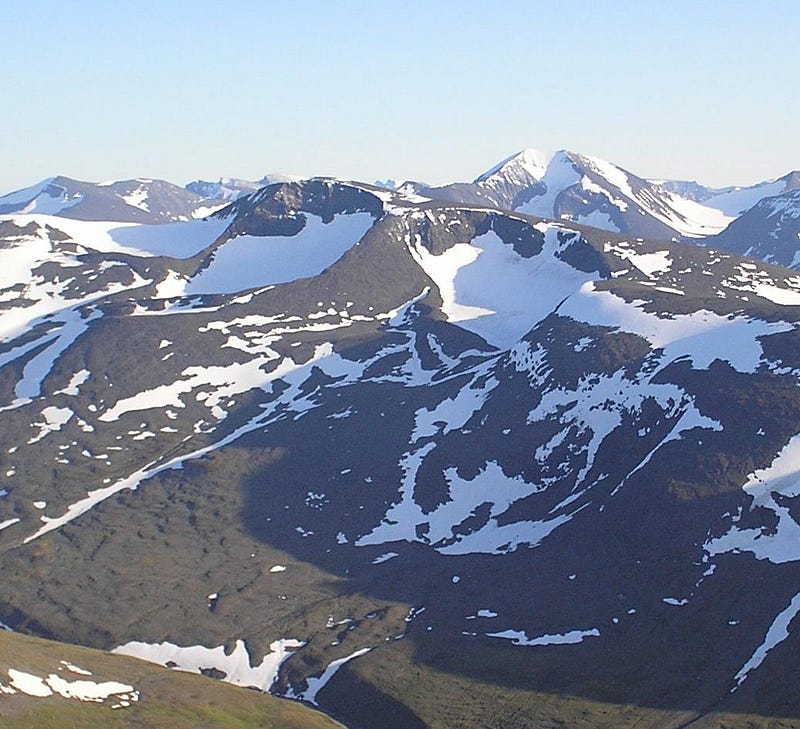
The Illustrated Glossary of Alpine Glacial Landforms, back when it existed online, further specifies that tarns are glacial lakes produced by scouring. These are often found in cirques. No, not this cirque…
Credit: the circus of the sun

…but this one:

Photo by Dentren

In other words, a deep, steep-walled basin located high on a mountain and usually shaped like half a bowl. The cirques in the above photo are filled with semi-permanent snow. If climate change causes the snow to melt away and never return, a lake may form there.

In certain locations, the word tarn is used to describe any lake or small body of water.
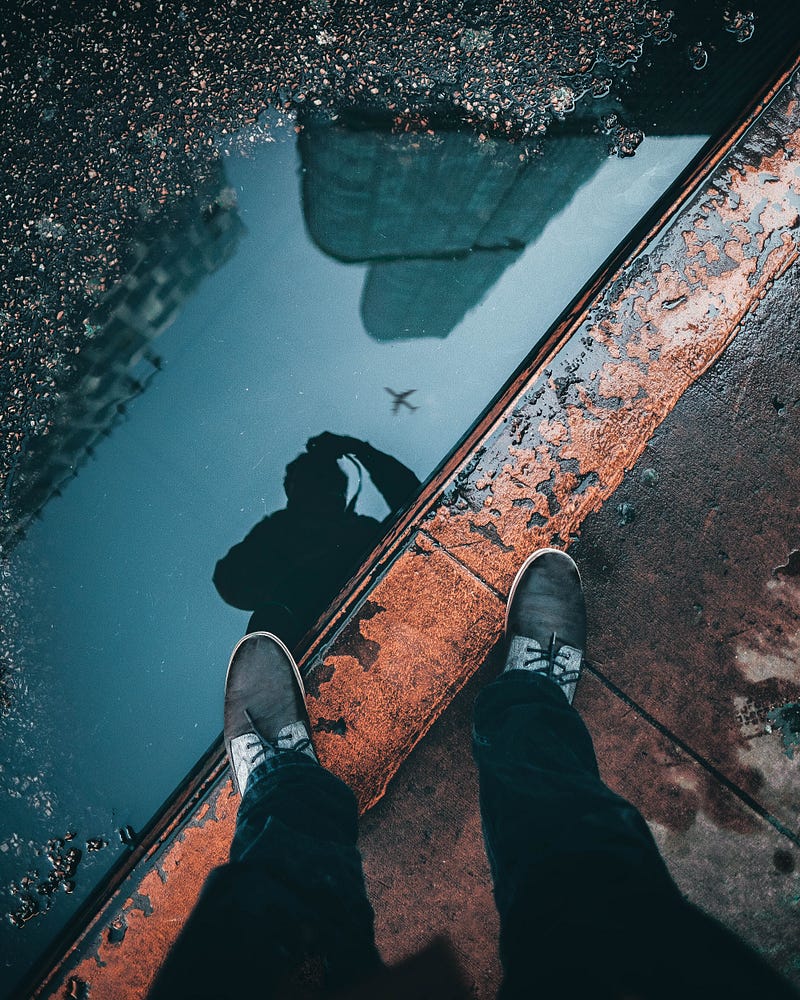
Photo by Benjamin Suter on Unsplash

Okay, maybe bodies of water a bit larger than the one above…

Because it’s Sunday, I’m not going to bore you with paragraphs of wordy explanations about how tarns are formed, using technical terms such as headwall, moraine, abrasion, and plucking. Instead, I’ll show you a picture that’s worth a thousand words. Or, in this case, nineteen.
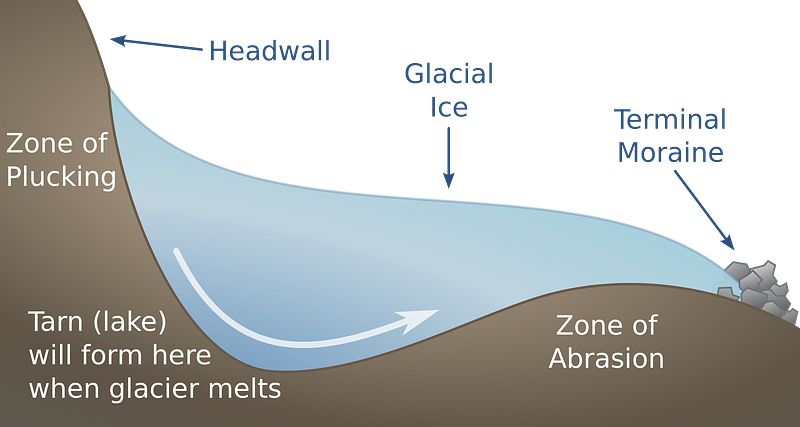
Image by DooFi 14:03

And I’ll ask my assistant Iva Reztok to carefully select lovely pictures of tarns for your enjoyment.

Screenshotted by Iva Reztok

Or just take a screenshot of a Wikipedia page. I guess that works, too.

Uppercase T

There are several tarns that begin with an uppercase T:

§ Michael Tarn, a British actor best known for playing Pete in A Clockwork Orange

§ 13032 Tarn, a main-belt minor planet, named after the Tarn river.

§ Mount Tarn, a summit on the southern part of the Strait of Magellan, Chile

§ Tarn Oil Field, an oil field in Alaska, U.S.

§ The Tarn, a park, nature reserve, and lake in Mottingham, Royal Borough of Greenwich

§ Tarn, a department in southwest France

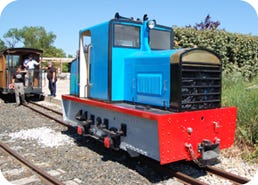
It is this last Tarn that brings us to the second set of photos I promised earlier. And that’s because the department of Tarn has a light railway known as the the Chemin de Fer Touristique du Tarn. Well, what did you expect? It’s in French because Tarn is in southwest France. Pay attention! That name roughly translates as “tourist trap for suckers who want to see tiny old trains”.
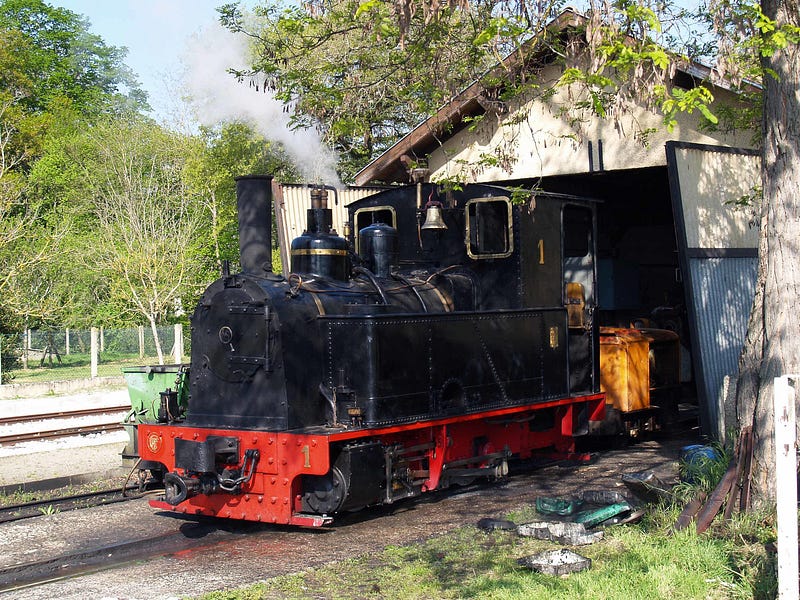
Photo by Bertrand Bouret

Okay, maybe they’re not so tiny, these trains.

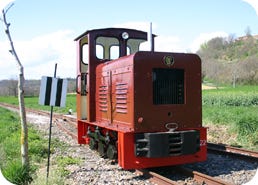
The CFTT is run as a heritage railway (a railway operated strictly to preserve scenes of the past) by a French association based in Toulouse, the ACOVA (Association pour la Conservation Occitane de Véhicules Anciens). Again, French. And I think this roughly translates as “Association of tourist traps for suckers who want to see tiny old trains”.
Credit: www.cftt.org

You gotta admit, these trains look much smaller than the huge one I showed you before. I think the four of them could fit in that barn and there would be room left over for more.

Well, that’s it for today. I showed you beautiful pictures of tiny lakes and trains, just like I promised. After all, we aim to please here at Silly Little Dictionary! Which is more than can be said about the editors of the Spelling Bee, who declared tarn a dord*.

You can check out my previous entry on another dord* here:

*What the heck is a dord, you ask? Here’s the answer:

Spelling Bee
Language
France
Trains
Nature
Recommended from ReadMedium