
Genip
My favorite fruit gets rejected by the New York Times!
Today’s New York Times Spelling Bee letters:
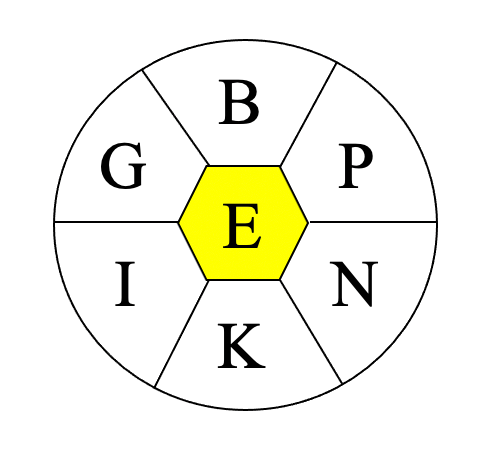
B, G, I, K, N, P, and center E (all words must include E)
Merriam-Webster says…
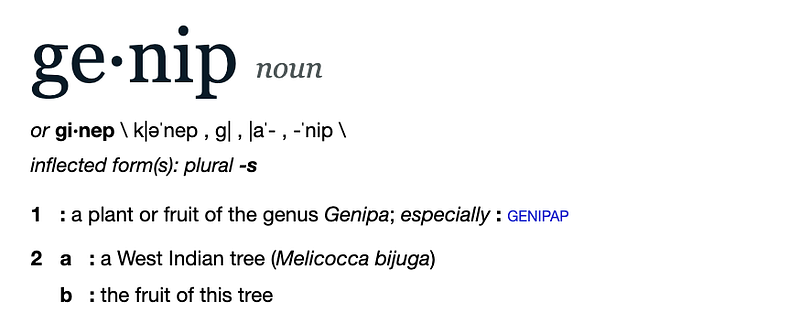
Silly little dictionary! Don’t you know genip can’t possibly be a word if the New York Times says it ain’t?
For further fascinating facts, check out the Spelling Bee Master.
What’s your favorite dord* from today’s puzzle?
My Two Cents
Yes, I know we are discussing fruit two days in a row, but I couldn’t resist. When I saw that today’s letters allowed me to spell genip and ginep, I had to take advantage of the opportunity.
The first dictionary entry mentions the genipap, which, although sounds very similar to the other two names, is not the same thing.
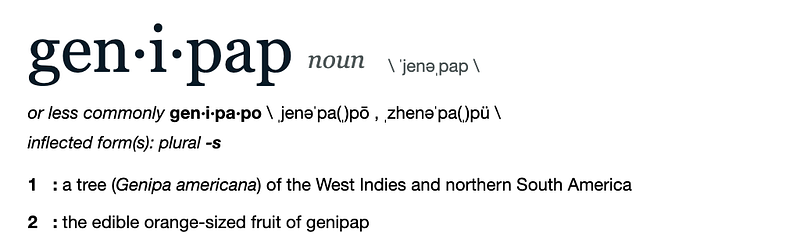
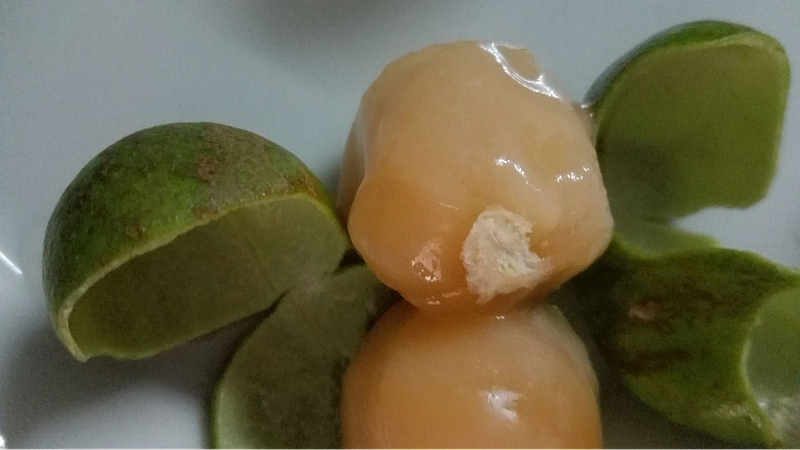
The Genipa americana is a different tree from the Melicocca bijuga. The latter is the one that bears the fruit that today’s column is about. The genipap fruit is much bigger (notice the dictionary says “orange-sized”) than the genip. Which you can’t tell from this photo, unfortunately. Just zoom in until you get a diameter of three or four inches.
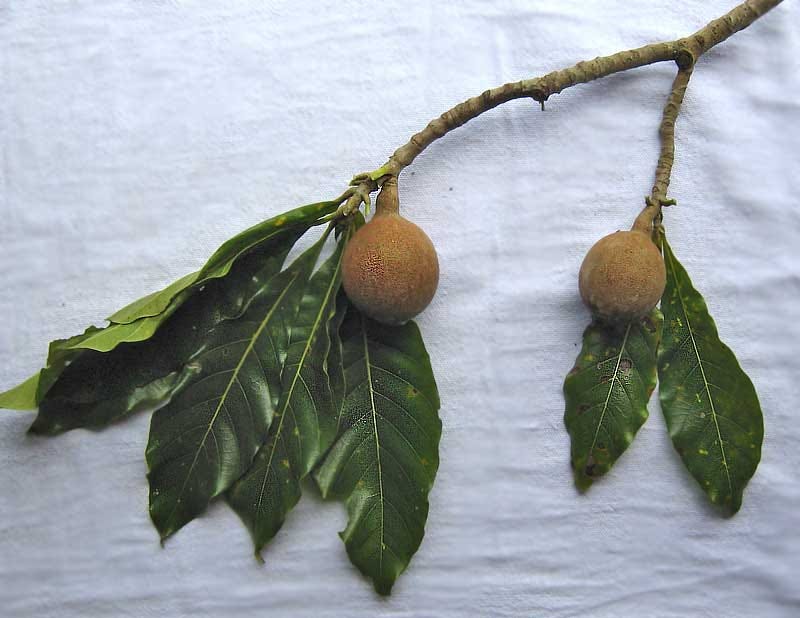
Suck on this!
The tree known botanically as Melicoccus bijugatus belongs to the soapberry family Sapindaceae. It is native or naturalized across the American tropics, including South and Central America, and parts of the Caribbean. Venezuela, where I grew up, is one of the countries where this fruit is very very popular.
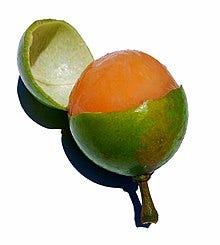
And because the tree belongs to the same family as the ackee , which we discussed yesterday, today I will again quote a fantastic resource I found while writing last night’s column: Fruits of warm climates by Julia F. Morton.
Let’s start with the name variations: genip, ginep, ginepe, guenepa, guinep (Barbados, Jamaica, Bahamas, Puerto Rico, Trinidad and Tobago); grosella de miel (Mexico); guayo (Mexico); honeyberry (Guyana); Jamaica bullace plum, kanappy (Puerto Rico); kenet (French Guiana); knepa (Surinam); knepe (French West Indies); knippa (Surinam); limoncillo (Dominican Republic); macao (Colombia, Venezuela); maco (Venezuela); mamon (Colombia, Venezuela, El Salvador, Nicaragua, Costa Rica, Panama, Argentina); mamon de Cartagena (Costa Rica); marmalade box (Guyana); mauco (Venezuela); muco (Colombia, Venezuela); quenepa (Dominican Republic, Puerto Rico, Colombia); quenepe (Haiti); quenett (French Guiana); sensiboom (Surinam); Spanish lime (Florida); tapaljocote (El Salvador).
Also, believe it or not, it’s known as the ackee in Barbados. Which can be confusing if you want to eat the real ackee.
In Venezuela we always called it mamón, but when I moved to the United States I discovered it was sold under it Dominican/Haitan/Puertorrican name: quenepa.
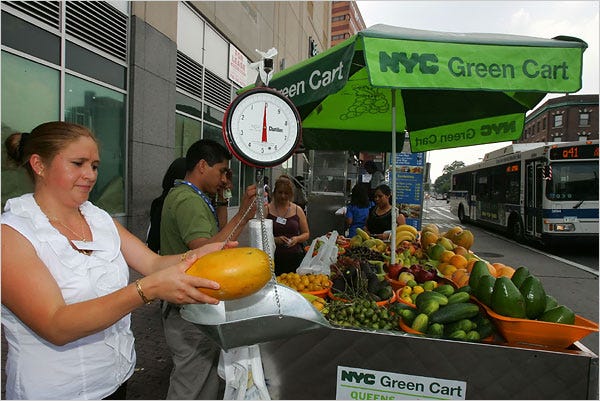
Yeah, the irony is the New York Times really does know about the genip. It’s right there in the cart, bottom left, right above the NYC letters.
It was a pleasant surprise to discover I could be this fruit in the States. Of course, it was only available during the summer, but I would buy around two pounds at the time, which wouldn’t last more than a couple of days. I also loved sharing it with people in the office where I worked, and watch their expressions as they tried it for the first time.
The fruit is a round drupe, about an inch or so (2.5 cm) in diameter, with a thin, green peel. Most of the fruit is the huge whitish seed inside (sometimes there are twin seeds within one peel), enveloped by a gelatinous, orange, juicy pulp. The flavor varies from very sweet to acidic.
If you ever get a chance to try it, please do! You’ll be pleasantly surprised by both the texture and the taste.
Guatire hopeless
As Julia Morton explains:
[The genip] tree is slow-growing, erect, stately, attractive; to 85 ft (25 m) high, with trunk to 5 1/2 ft (1.7 m) thick; smooth, gray bark, and spreading branches. Young branchlets are reddish. The leaves are briefly deciduous, alternate, compound, having 4 opposite, elliptic, sharp-pointed leaflets 2 to 5 in (5–12.5 cm) long and 1 1/4 to 2 1/2 in (3.25–6.25 cm) wide… The flowers… are fragrant, white, 1/5 to 1/3 in (5–8 mm) wide, with 4 petals and 8 stamens. Male and female are usually borne on separate trees but some trees are partly polygamous.
Wow! We’ve got a sexual adventurous tree here! Watch out!
Like mango trees, genip trees grew naturally all over the place in Venezuela. One of those places was the hospital where I did my internship during my last year in medical school. It was officially known as Eugenio P. de Bellard Hospital, but everyone called it Guatire-Guarenas Hospital, because it served the twin cities of Guatire and Guarenas, about 40 minutes drive from Venezuela’s capital city, Caracas.
Here is a photo of the entrance to the hospital. It’s not a very good picture, but that tree you see behind it is, if I’m not mistaken, the genip tree that the hospital had. In our free time, we would go and try to get shake the fruit loose.

Back in the 1990s, when I was in med school, there was a popular American TV show called Chicago Hope. Unfortunately the hospital in Guatire-Guarenas was the polar opposite of what was shown in the TV series, and we nicknamed our hospital “Guatire Hopeless”. We had few resources to work with, and conditions were generally terrible. It felt like a MASH unit more than a hospital most of the time. This had a lot to do with ingrained corruption of the system. One example of this stuck in my mind: the hospital was a flat building with one floor, and no elevators. Yet there were two people who were being paid on a monthly basis as elevator operators. That was their official job title, I’m not kidding you.
Writing this article brought back a lot of memories for me: my life in Venezuela, my time as an intern in a hospital, my years in New York… during all of which I was able to enjoy the genip…despite the editors of the Spelling Bee declaring genip a dord*.
You can check out my previous entry on another dord* here:
*What the heck is a dord, you ask? Here’s the answer: