
Ukraine War
Tanks: Will There be a Face-Off in the Ukraine Spring?
I looked at the British Challenger 2 versus Russian T-90. How do they stack up — and are they ever likely to face each other in Ukraine? Then the story developed…
Then the dam burst as I wrote this story so you will see some evolution as you read it, the numbers going up and up.
I started with a comparison of the Challenger 2 and Russian T-90 tanks but events overtook me.
It grew like topsy and I got diverted as is often the case…
Challengers confirmed
We now know that a squadron — 14 — Challenger 2 main battle tanks are being shipped to the Ukraine by the UK.
President Zelenskyy has been lobbying for 300 tanks from NATO and other countries so that he can launch an assault capable of pushing Russia out of its illegally invaded territories and back to its own recognised borders in 2023.
Time is critical — it is expected that both sides are preparing spring offensives. The prospect of a renewed Russian offensive has shifted the focus to tanks — necessary especially for Ukraine’s ability to fight in open terrain in the east of the country.
Germany has agreed to Leopard 2 tanks being shipped there and Poland is likely to be the first country to send them. It seems that Germany’s own Leopards will not reach Ukraine until late 2024 as they have to be repaired. So much for German efficiency — and defence readiness.
Sending tanks is not straighforward
The US is sending M1 Abrams despite having claimed about the difficulties of maintenance (they are gas-turbine powered) and the level of training required for operation.
The Abrams are hugely complex beasts — to arrive at a firing solution, the fire control computer uses a laser rangefinder, crosswind sensor, a pendulum static cant sensor, data concerning performance and flight characteristics of each specific type of round, tank-specific boresight alignment data, ammunition temperature, air temperature, barometric pressure, a muzzle reference system (MRS) that determines and compensates for barrel drop at the muzzle due to gravitational pull and barrel heating due to firing or sunlight, and target speed determined by tracking rate tachometers in the Gunner’s or Commander’s Controls Handles. (Wikipedia)
That’s a lot of sensors that have to work and be maintained.
Ukraine has to have trained crews, armourers and engineers, spares and special tools along with heavy recovery and rapid re-fuelling vehicles. And even ammunition has to be prepared. Modern weaponry is able to recognise ammunition so that the fire control system works effectively. We have seen recently that Norwegian ammunition for German Gepard AA armour was unusable and had to be recalibrated.
Former British army tank officer David Cornish, now an academic, agrees with that time range. “It is important to bear in mind the Leopard was designed for conscript troops with the presumption that you can train them up quickly on the tank,” he said. “You don’t need that much time to get them going. I think the gunnery systems and all that are quite intuitive, quite modern. I don’t know how long exactly, but I imagine a few weeks of intense training and you’d be up and running,” he added. — Politico.eu
So, sending tanks is not an easy and quick thing to do.
Additionally, Ukraine will have to learn to operate them in synch with their other forces, in combined arms operations.
Challenger 2 versus Russian T-90
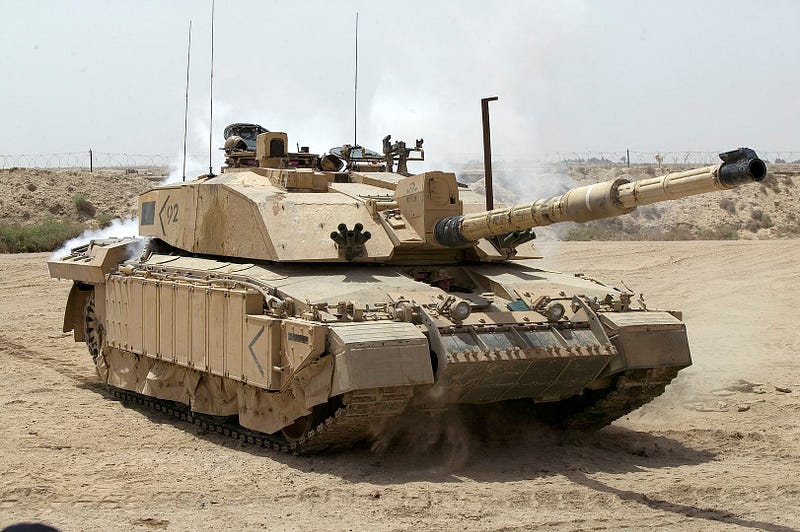
The Challenger 2 is a British main battle tank that has been in service since 1998. Built by BAE Systems at a unit cost of about US$5.5 million, it is known for its advanced Chobham/Dorchester armour and high-quality main gun.
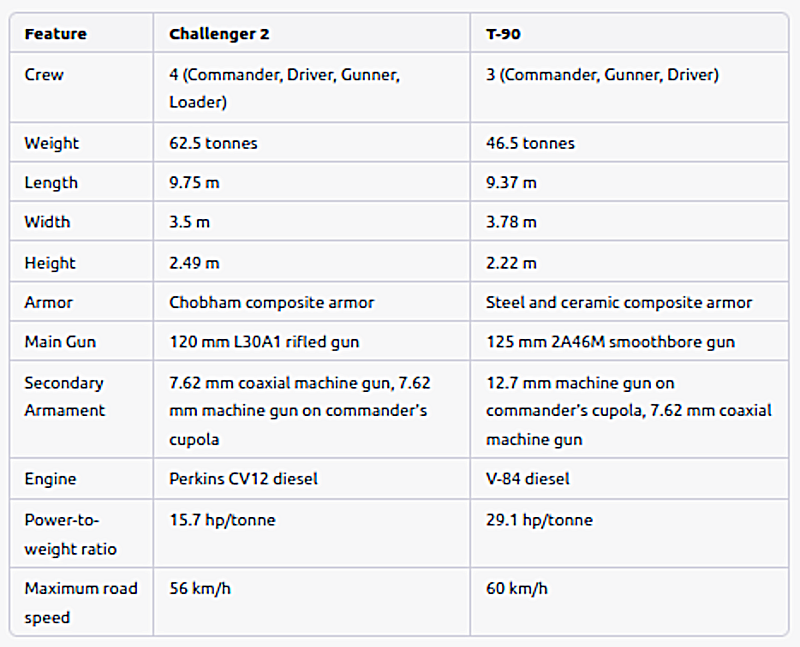
The T-90, on the other hand, is a Russian main battle tank that has been in service since 1992. Built by Uralvagonzavod, it is known for its mobility and firepower. The T-90 has a higher power-to-weight ratio which means it has better mobility compared to Challenger 2.
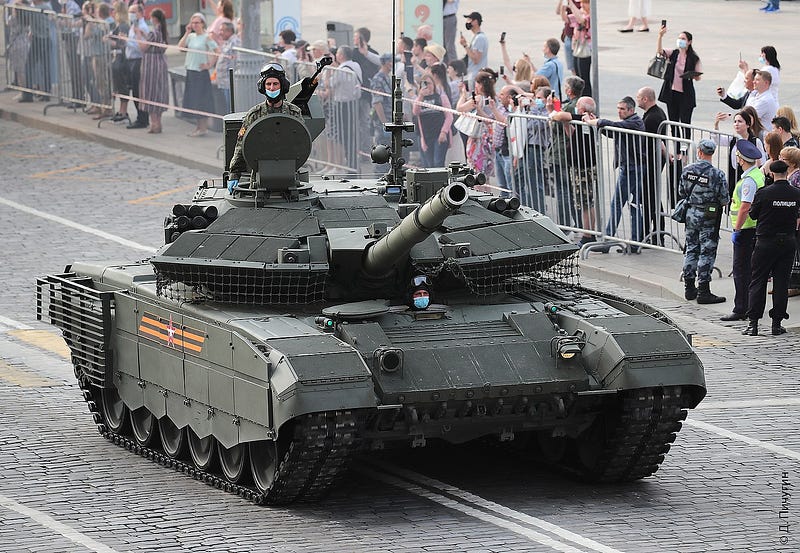
However, the Challenger 2 has better armour protection (reactive armour can also be fitted for extra protection), and its main gun has a higher muzzle velocity.
Both tanks are equipped with advanced fire control systems and are capable of engaging targets at long ranges. The T-90 has a slight advantage in terms of firepower, thanks to its 125 mm smoothbore gun and its ability to fire guided missiles.
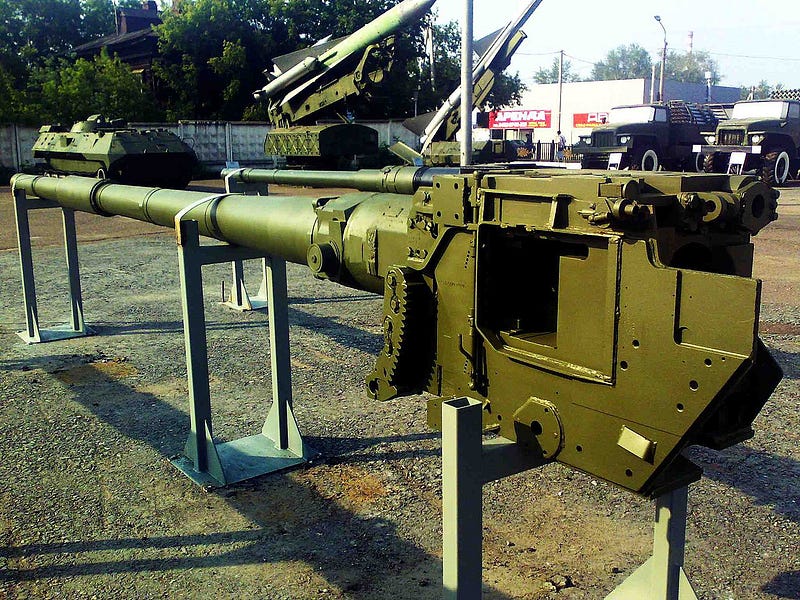
The Challenger 2’s 120 mm rifled gun, however, is known for its accuracy and penetration capabilities. It is capable of firing a wide variety of standard NATO 120 mm tank munitions, loaded manually. Effective range of fire with an armour-piercing round is over 3 000 m. The Challenger gun claims the longest-distance tank kill in history — during the Gulf War it defeated an Iraqi tank at a range of 4 km.
In terms of crew, the Challenger 2 has an extra member, a loader which can help to increase the rate of fire. The T-90 has a smaller crew, which means that the commander is also responsible for loading the main gun.
Both tanks have proven to be highly effective in combat, and it ultimately comes down to the specific needs of a particular military and the environment in which the tank will be operating. It is important to note that the T-90 has been widely exported and has been used in numerous conflicts around the world, while the Challenger 2 has seen less action.
Will they meet head on?
Large scale tank battles were refined in the Second World War, on the Eastern Front and in North Africa, but warfare has changed since the concept of a massed face-off on the plains of Northern Germany ended with the USSR in 1991.
Extensive tank battles also took place in the 6 Day and Yom Kippur wars, and in the Gulf Wars.
Tanks are too valuable an asset to be thrown into a head to head battle without reasonable levels of air support.
Strategy and numbers
It is possible that the Russian military is still locked into the mentality of WWII with large scale tank manouevres and battles led by the likes of Georgy Zhukov. But they seriously screwed up when they tried to send them south from Belarus to Kyiv in February 2022. That was no planned manouevring, it was a sitting duck convoy.
It appears that Russia now has no effective air cover over Ukraine given the UAF’s high strike rate against intruding aircraft (fixed and rotary wing) and the heavy losses reportedly inflicted.
Depending on which source you look at, Russia may have lost as many as 3,160 tanks so far (Ukraine government). Oryx reports 1,600 or so, 44 of which were T-90s (Oryx, possibly outdated) and 898 T-72s, (as of 24 January 2023)
The UAF have been using a variety of anti-tank weapons to huge effect, from Western supplied NLAWs as well as their own ex-Soviet anti-tank systems. Add in drones and Russia will surely be cautious with its tank deployment without reasonable air cover.
Russia has built up to 1,000 T-90s for its own forces. How many does it have available for deployment in a spring offensive? How many T-72s?
25,000 T-72s have been built, many of which have been exported — including to Ukraine and to other former USSR states. Many were lost in Afghanistan and Chechnya. Poland has donated over 200 T-72M1/M1R tanks to Ukraine (Oryx reports Ukraine’s tank losses — as 449 destroyed or captured).
It now seems that Ukraine will be able to field Challengers, Leopards and Abrams in the near future, but in nowhere near the number of 300 that Ukraine has requested.
There are about 2,000 Leopard tanks in Europe.
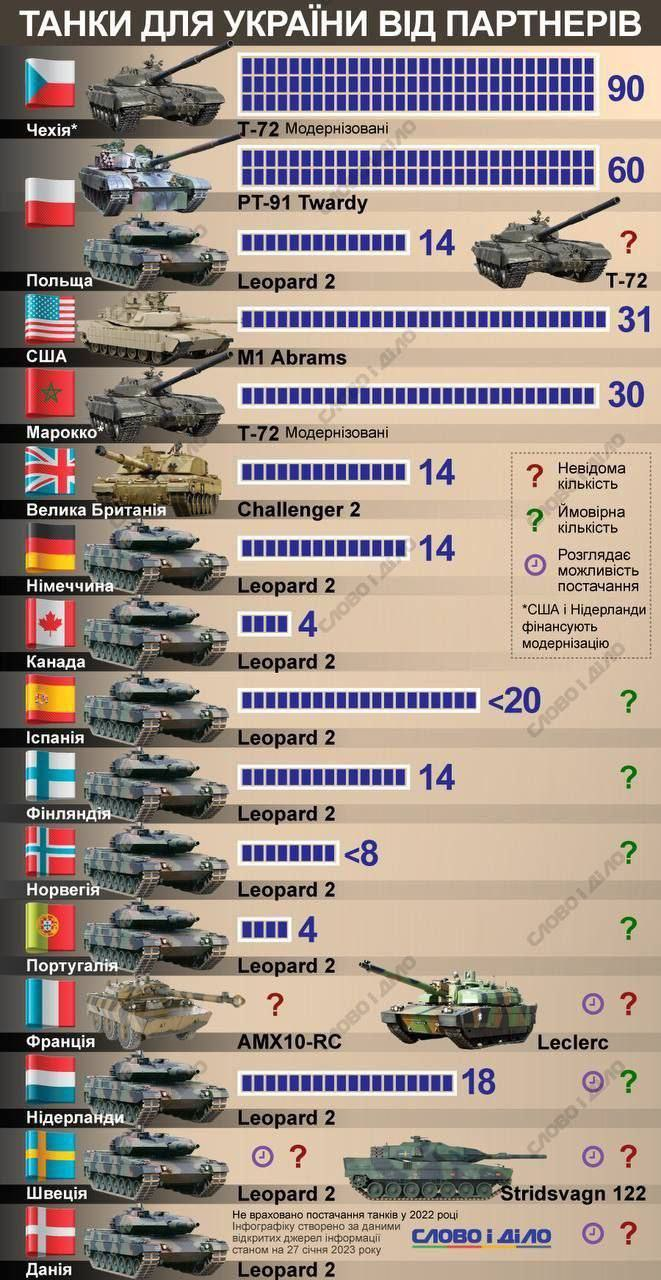
The US has committed 31 Abrams (a Ukraine battalion is 31 tanks), Germany 19 Leopards the UK 14 Challenger 2s and there will be several tens of Leopards from the likes of Poland, Spain and other NATO countries.
Overview of tank deliveries to Ukraine right now:
Confirmed: 🇬🇧 14 Challenger 2 🇵🇱 14 Leopard 2A4 🇩🇪 14 Leopard 2A6
Pending full confirmation: 🇵🇹 4 Leopard 2A6 🇪🇸 20–53 Leopard 2A4 🇺🇸 30 Abrams M1 🇳🇴 8 Leopard 2A4 🇫🇮 14 Leopard 2A4/6
Discussion: 🇳🇱 18 Leopard 2A6 🇩🇰 6 Leopard 2A5/7
Former Austrian Defense Minister Werner Fasslabend said that the total number of Western tanks transferred to Ukraine will reach 250 units.
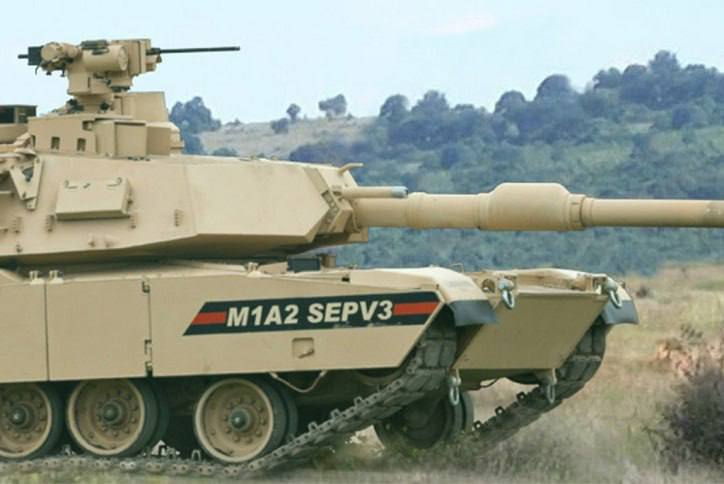
Ukraine will receive advanced Abrams M1A2 from the US, but without secret armor, — Politico
The A2 version has improved optics and a control system that allows crew commanders to quickly track friendly equipment, identify enemy positions and independently scan targets in all weather and combat conditions.
The control mechanisms of the tanks of the new version were digitized, the information system, which allows tank crews to continuously and automatically exchange information, underwent the biggest changes.
At the same time, the tanks supplied to Ukraine will not have armor packages made using a secret technology using depleted uranium.
American laws prohibit the export of tanks with secret technologies to third countries. — source : https://t.me/United24media/3833
Poland ups the ante:
Poland developed the PT-91 Twardy based on the Soviet T-72M. The tank has additional armor on underside of the hull and under the driver’s seat. The PT-91 Twardy is also equipped with active armor protection of Polish design and development.
And Spain ups its offered Leopards from 5 to 53:
Ukraine will also have the more nimble French AMX10-RC wheeled tanks (and others).
It’s an interesting situation for Russia. They appear to have no credible air cover for tanks, and a seeming shortage of ammunition for their usual huge artillery-led assaults. But they have plenty of bodies to throw forward. Or will have as they extend conscription.
I don’t know quite how Russia will plan to launch a major offensive given these constraints, but Ukraine may be better placed to do so with an armour-led offensive in the flat plains in the east.
But a head-to-head tank battle?
The jury’s out for me.
Meanwhile, all this talk of tanks is exciting the nitwit Russian media:
Those people are laughable. And very sad.
I’d better get on an publish this as I’m losing objectivity…
Recommended read:
Author’s note: The concept, structure, style and creative content in this story are all my own and I hope that is obvious to a reader. I do not employ third party writers. However, I do occasionally use an AI assistant to research and present small sections of factual content and data. All facts are checked where possible and sources quoted.
About me: If you follow me I guarantee variety in your inbox with some unusual perspectives! I write on a wide range of topics including humor, tech, space, geopolitics and travel, together with daily news events and the minutiae of my daily life living on a boat. Yes, I really do live on a boat (some readers don’t believe that). I also write about…
…fast moving tank stories
If you appreciate stories like these and want to support other writers and me, consider signing up to become a Medium member. It’s only $5 a month, giving you unlimited access to incredible stories on Medium. If you sign up using my link below, I’ll earn a small commission at no extra cost to you.
Or maybe just buy me a coffee? and tell me what you liked reading (or not)…

James Marinero’s techno thrillers are available at his Gumroad bookstore. Also at Amazon and Apple