Ukraine War
Ukraine: Gepard — An Efficient Drone Killer is Operational
Not a headline weapon system in the Ukraine war, but surprisingly efficient as a drone buster
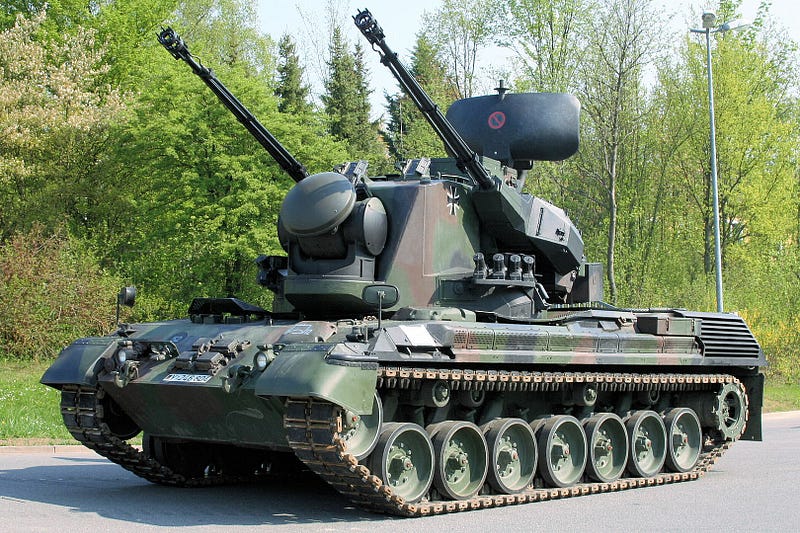
According to Ukrainian officials and advisers to Kyiv who spoke to Politico, the German-made Gepard system can claim many downed drones in recent weeks.
Berlin sent 30 Gepard vehicles to Ukraine in 2022, with seven more on the way in 2023.
But ammunition is a problem.
Gepard Capabilities
The Flakpanzer Gepard) is an all-weather-capable German self-propelled anti-aircraft gun (SPAAG). Gepard = cheetah. It was developed in the 1960s, fielded in the 1970s, and has been upgraded several times with the latest electronics. It has been a cornerstone of the air defence of the German Army (Bundeswehr) and a number of other NATO countries although the German Army replaced it in 2010 with the Wiesel Ozelot which is much lighter and is air-transportable — the Gepard weighs in at 38 tons.
The concept is simple: Local medium-range radar control and 2 × 35 mm Oerlikon GDF autocannon, mounted on a Leopard tank chassis including the complete drive unit with a 37.4-liter 10-cylinder multi-fuel engine. A Daimler-Benz OM314 multi-fuel engine drives five generators to produce systems power in various supply specifications for turret rotation, gun elevation, radar, aircon, electronics and so on.
With a fuel capacity of nearly 1000 litres it is capable of 48 hrs operation without re-supply, depending on action profiles.
It carries smoke grenade launchers and is heavily armoured. Stinger missile options were developed but not productionised.
It can also be networked in to a wider C3 battle management system.
The radar
The German-supplied Gepard in Ukraine is equipped with independent search and tracking radars, the search radar (S band) installed at the front rear of the turret, and the tracking radar (Ku) on the rear front of the turret.
The radars provide 360° scanning with simultaneous target tracking and ‘search on the move’.
Target acquisition range is 16 km (10 miles). A laser rangefinder is available although it’s not known whether these are on the version supplied to Ukraine.
Fire control
The Gepard is equipped with a digital fire control computer supplied by EADS (DASA). The miniaturised digital computer is linked to a command, control and communications (C3) interface. All data handled by the fire control system is related to the fixed vehicle coordinate system.
This is believed to integrate with Ukraine’s big data battle management system.
The autocannon
The 90 calibre Oerlikon GDF autocannon each with 320 rounds anti-aircraft ammunition (plus some armour piercing round for self-defence) have an effective range of 5.5 km (3.4 miles).
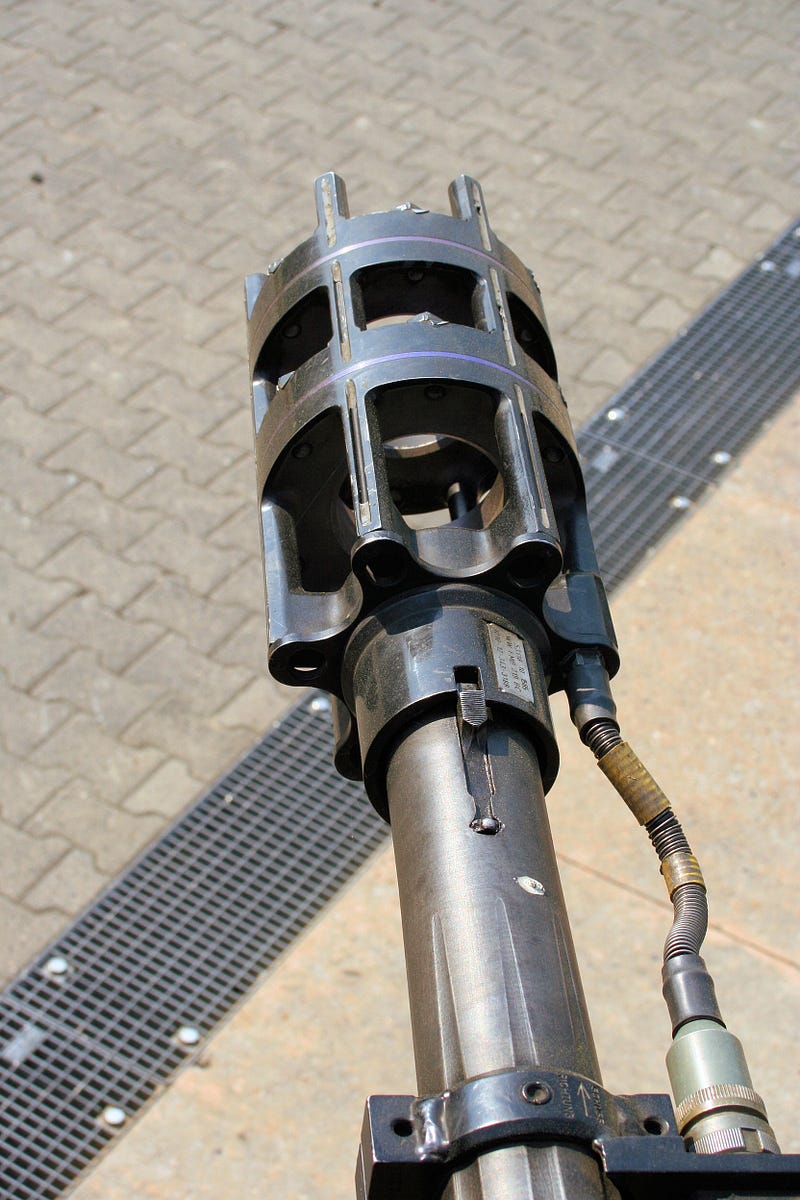
Each gun has a firing rate of 550 rounds/min. The combined rate of fire is 1,100 rounds/min, which — in unlimited mode — gives a continuous fire time of 35 seconds before running out of ammunition (with 640 AA rounds for both guns). It is standard to fire bursts against air targets, 24 rounds per gun for a total of 48 in limited mode and 48 rounds per gun for a total of 96 in normal mode. (Wikipedia). Smaller bursts are being used against drones…
Effectiveness
The Gepards in Ukraine have been very effective against Shahed-136 drones; the radar can detect them 16 km away and it is reported that it takes just 6 rounds to shoot them down. Apparently one of the Gepards downed 10 drones in a single engagement. That delivers tremendous value for money, 35mm ammunition being so much cheaper and plentiful than missiles (but see Issues). It also demonstrates a high degree of accuracy even though the Shaheds are slow flyers at 185 kph (115 mph).
MANPAD teams may deploy with the Gepards to utilise their 16 km radar range and provide early warning. The German Army developed this approach but it is not known whether the Ukraine Armed Forces have adopted it.
Since September, Ukrainian air defenses have destroyed 540 Iranian kamikaze drones, according to Yurii Ihnat, the spokesperson for the Ukrainian air force. The Gepard “is effective against these UAVs, as well as against cruise missiles,” he added, “but this weaponry, which is intended for air defense of the Ground Forces, is not enough.” — Politico
Note that Vadym Skibitskyi of Ukraine’s Defence Intelligence unit said:
Russians launch a large number of drones to break through our air defense. If you launch a small number — 5–10 — there will be no effect.With the aim of overwhelming the Ukraine air defence, mass drone attacks make easy targets for the Gepard — rapid firing, 6 shots a drone. Ducks in a gallery.
Issues
Germany promised the Gepards early in the war then took a long time to deliver them, initially stopping KMW from sending them directly while the politicians debated the issue for a few months.
Politico (ibid.) reports that some batches of rounds for the Gepard’s two guns were manufactured in Switzerland, and the government there has refused to allow Germany to re-export those rounds to Ukraine, citing its neutral status. It seems that Germany had only 23,000 rounds of Gepard ammunition in stock. At 1100 rounds per minute…well you can do the math. Of course at 6 rounds per drone…
Ukraine received Norwegian-made ammunition some time ago to be used by the German-made Gepard SPAAG, also delivered in Ukraine. The reason: Germany did not have 35mm ammunition available for its Gepard SPAAGs and was forced to look abroad. Berlin even held talks with countries that have purchased this air defense system, such as Qatar and Brazil. Norway responded by saying it could produce them.
Now it turns out that the Norwegian ammunition already delivered to Ukraine is not recognized by the weapon system and it cannot fire them. Sources claim that joint tests of Gepard SPAAG ammunition and anti-aircraft self-propelled guns took place in Germany. According to them, new tests will be conducted in August after the ammunition is upgraded. — Bulgarianmilitary.com
Norway was a founding member of NATO and this surprised me. I thought one of the foundations of NATO was integration and standardisation of weapons systems. I guess that would be too obvious.
Anyway, the problem of the Norwegian ammunition not being recognised by the Gepard’s fire control system during testing was a technical issue and has now been resolved. Probably a software problem — it usually is with modern weaponry.
Nevertheless, a German production line is being set up by Rheinmetall, the Gepard’s manufacturer and is expected to be online early in 2023.
And there is news that Germany is seeking more Gepards and ammunition from other countries.
But it all takes time.
This is a recurrent theme across almost all NATO countries as warehouse stocks run down when manufacturing capacity has been reduced in peacetime. All matériel inventories are under pressure. It’s a strategic issue now as the war drags on and intensifies, maybe even spreading.
Can NATO out-produce Russia and its friends in Iran and North Korea while China is standing on the sidelines?
About me: If you follow me I guarantee variety in your inbox with some unusual perspectives! I write on a wide range of topics including humor, tech, space, geopolitics and travel, together with daily news events and the minutiae of my daily life living on a boat. Yes, I really do live on a boat (some readers don’t believe that). I also write about…
…duck shooting
If you appreciate stories like these and want to support other writers and me, consider signing up to become a Medium member. It’s only $5 a month, giving you unlimited access to incredible stories on Medium. If you sign up using my link below, I’ll earn a small commission at no extra cost to you.
Or maybe just buy me a coffee? and tell me what you liked reading (or not)…