as a tool for local communities when they seek to incite movements for change. For the first time it will allow individuals to record their own version of events that agree with the communities perspective, rather than the publishing authority.*</p><h2 id="4469">UPDATE 1/2020: Data collection for sexual harassment claims in the workplace</h2><div id="6684" class="link-block">
<a href="https://readmedium.com/the-politics-of-sexual-harassment-data-8265203e6fd9">
<div>
<div>
<h2>The Politics of Sexual Harassment Data</h2>
<div><h3>The BLS was tasked by congress to obtain sexual harassment data from employers. Doesn’t it make more sense to obtain…</h3></div>
<div><p>medium.com</p></div>
</div>
<div>
<div style="background-image: url(https://miro.readmedium.com/v2/resize:fit:320/1*tgOqm9Yun_CH4pMRoiU1wg.png)"></div>
</div>
</div>
</a>
</div><h2 id="9791">TandaPay gives communities the power to record history</h2><figure id="e002"><img src="https://cdn-images-1.readmedium.com/v2/resize:fit:800/1*Fh1-qCDvyUl5ulYPFv25Mw.png"><figcaption></figcaption></figure><p id="32c3">TandaPay can be used to address societal issues where minority voices are being suppressed. It can amplify the speech of individuals within a marginalized community. TandaPay can help people to coordinate, allowing them to form and organize their own movements.</p><p id="4943"><a href="https://readmedium.com/tandapay-cannot-be-regulated-1-8f5a0935f8e4">TandaPay is not insurance. TandaPay is speech</a>. The goal of TandaPay’s social agenda is to provide communities an authoritative publishing platform to combat harm by authorities who have habitually misrepresented their history. TandaPay gives these communities the ability to create their own record of events. Giving communities their right to speak in an authoritative way is the first step to combating class inequality and social injustice.</p><p id="7b3a">Considering that there is no available data published about police brutality, <b>maybe we should consider giving communities the power to publish their own data</b>:</p>
<figure id="4461">
<div>
<div>
<img class="ratio" src="http://placehold.it/16x9">
<iframe class="" src="https://cdn.embedly.com/widgets/media.html?src=https%3A%2F%2Fwww.youtube.com%2Fembed%2FzaD84DTGULo%3Fstart%3D253%26feature%3Doembed%26start%3D253&url=http%3A%2F%2Fwww.youtube.com%2Fwatch%3Fv%3DzaD84DTGULo&image=https%3A%2F%2Fi.ytimg.com%2Fvi%2FzaD84DTGULo%2Fhqdefault.jpg&key=a19fcc184b9711e1b4764040d3dc5c07&type=text%2Fhtml&schema=youtube" allowfullscreen="" frameborder="0" height="480" width="854">
</div>
</div>
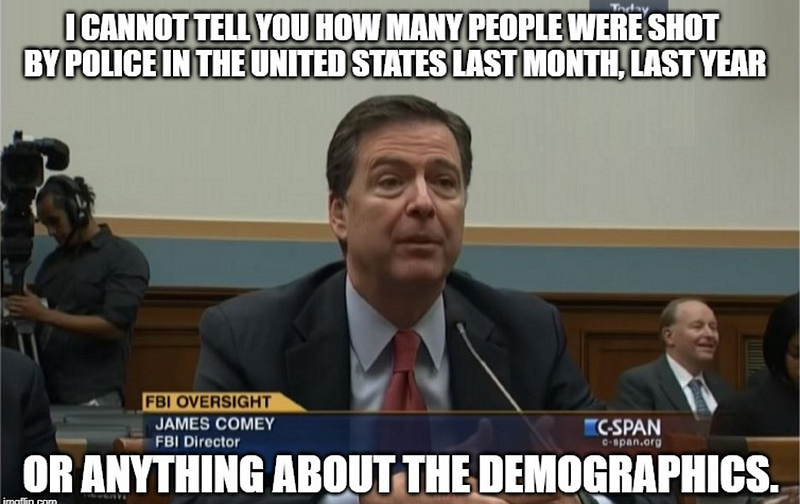
</figure></iframe></div></div></figure><blockquote id="fdb0"><p>There are nearly 18,000 different police departments in America and they are not great about reporting or sharing data. Even some surprisingly basic questions are hard to answer as the head of the FBI admits.</p></blockquote><p id="31d0" type="7">“We can’t have an informed discussion because we don’t have data. People have data about who went to a movie last weekend, or how many books were sold, or how many cases of the flu walked into an emergency room. I cannot tell you how many people were shot by police in the United States last month, last year, or anything about the demographics.” — James Comey</p><blockquote id="3d3c"><p>The best numbers on police misconduct come from a researcher named Philip Stinson. Sinson accumulated over a decade’s worth of data by setting up 48 google alerts in 2005. His stats are truly chilling. Out of thousands of fatal police shooting since 2005
Options
only 77 officers have been charged with murder or manslaughter and to date only 26 have been convicted. While the truth is many police shootings are justified 26 seems suspiciously low.</p></blockquote><p id="2cfe">TandaPay allows communities to publish their own definitive record of history. This record is tamper-proof and permanent. By giving marginalized communities this ability, we can guarantee that present and future narratives of history will not be monopolized by those with political power, social status, or financial wealth. This makes TandaPay relevant to solving real problems in the real world. Since we don’t currently have any cryptocurrency apps that provide useful services to average people, I think that this makes TandaPay very valuable.</p><h1 id="f991">Update 1/2020:</h1><p id="ac8e">TandaPay is a protocol for coordinating groups to collectively hold money. Some groups require a lot of coordination while others don’t. In the past I’ve focused on groups holding funds for ideological purposes, but the protocol can also cover paid sick leave. See the below posts for to better understand how this works:</p><div id="0eaf" class="link-block">
<a href="https://readmedium.com/groups-can-now-easily-hold-funds-bc91f9b51d45">
<div>
<div>
<h2>Groups Need an Easier Way to Hold Funds</h2>
<div><h3>The Internet has enabled individuals to share their ideas. Smart Contract networks enable groups to share their funds.</h3></div>
<div><p>medium.com</p></div>
</div>
<div>
<div style="background-image: url(https://miro.readmedium.com/v2/resize:fit:320/1*NCc1yLtrbyZU6ngvAyAOFA.jpeg)"></div>
</div>
</div>
</a>
</div><div id="38dc" class="link-block">
<a href="https://readmedium.com/a-new-technology-that-can-save-lives-5f9edc612445">
<div>
<div>
<h2>A New Technology that Can Save Lives</h2>
<div><h3>2019-nCoV may cause thousands in this country to get sick and hundreds to die but providing 100% of the population with…</h3></div>
<div><p>medium.com</p></div>
</div>
<div>
<div style="background-image: url(https://miro.readmedium.com/v2/resize:fit:320/1*YD5oRCKZk3hBg-fYloh1qA.png)"></div>
</div>
</div>
</a>
</div><p id="8268">* The Ethereum miners who produce blocks with TandaPay transactions may be ideologically opposed to the views of the individual participants who are using the Ethereum protocol. Their opposition however does not permit them to censure the economic activity of TandaPay communities. If you want to better understand how the protocol guarantees censorship resistance try reading <a href="https://coincentral.com/bitcoin-censorship-resistance/">this article from Coin Central</a>. Blockchain technology enables a new revolution where the ideology of the publishing authority is not required to match the ideology of the network’s participants. Even if TandaPay groups were able to organize themselves as discretionary mutuals within the world of traditional financial networks it wouldn’t work. This is because <a href="https://perma.cc/ZYV9-7GT8">banks cannot be trusted to process every transaction</a>. A group’s bank account could be frozen or closed if the bank disagreed with their views. This is why <a href="https://blog.goodaudience.com/what-problems-does-blockchain-technology-actually-solve-in-insurance-8416652d5642">my work on Unity</a> focused on providing <a href="https://readmedium.com/does-cannabis-insurance-on-the-blockchain-make-sense-b272dd1f3087">coverage to cannabis growers and dispensaries</a>.</p></article></body>
TandaPay is a Weak Insurance Protocol
It’s a powerful coordination protocol for galvanizing movements

Previously I have written about how TandaPay allows for small communities to insure against the cost associated with the $500 auto insurance deductible. There are downsides to marketing TandaPay purely as an insurance protocol for covering the cost of a deductible. TandaPay is a very time intensive protocol relative to how much time people currently take to pay for auto insurance. I spend about 10 to 20 minutes every six months to renew my auto insurance policy on Progressive’s website. In the best case scenario TandaPay will require policyholders to spend 1 to 2 hours (on average) every month to coordinate. If TandaPay only provides coverage for deductibles this would be a big problem.
Fortunately, TandaPay is also a protocol for coordinating groups on ideological grounds. Previous posts I’ve written highlight use cases such as police brutality insurance, campus sexual assault insurance or workers’ compensation insurance. These types of policies cannot even be thought of as insurance in a typical sense. No institutional provider would even dare to consider providing these types of policies. Stop to consider why providers and consumers would view these types of products as nonviable. Is it that consumers do not want to purchase these types of products? Your answer speaks more about who you are as a citizen than it does about the viability of the products themselves.
If you are white and are an authority then you trust that your views are well represented by other authorities. In which case these types of policies have no value to you. But if you are a minority and feel that this coverage would be of value, how likely would you be to trust a traditional provider to see the world from your perspective? Providers and consumers see these products as nonviable not because they have no value. They see these products as nonviable because they cannot trust each other when it comes to purchasing coverage associated with ideological issues.
If you take issue with the #MeToo movement how can you possibly provide coverage for sexual assault to those who identify with it? Do you believe that people associated with the #BlackLivesMatter movement are treating “isolated incidents” as if they were signs of systemic corruption? Would you then be qualified to determine the validity of a claim for police brutality given that you yourself have never experienced discrimination? Only a local community with a shared ideology is qualified evaluate claims that are fundamentally ideological in nature. This is why TandaPay is indispensable as a tool for local communities when they seek to incite movements for change. For the first time it will allow individuals to record their own version of events that agree with the communities perspective, rather than the publishing authority.*
UPDATE 1/2020: Data collection for sexual harassment claims in the workplace
TandaPay gives communities the power to record history
TandaPay can be used to address societal issues where minority voices are being suppressed. It can amplify the speech of individuals within a marginalized community. TandaPay can help people to coordinate, allowing them to form and organize their own movements.
TandaPay is not insurance. TandaPay is speech. The goal of TandaPay’s social agenda is to provide communities an authoritative publishing platform to combat harm by authorities who have habitually misrepresented their history. TandaPay gives these communities the ability to create their own record of events. Giving communities their right to speak in an authoritative way is the first step to combating class inequality and social injustice.
Considering that there is no available data published about police brutality, maybe we should consider giving communities the power to publish their own data:
There are nearly 18,000 different police departments in America and they are not great about reporting or sharing data. Even some surprisingly basic questions are hard to answer as the head of the FBI admits.
“We can’t have an informed discussion because we don’t have data. People have data about who went to a movie last weekend, or how many books were sold, or how many cases of the flu walked into an emergency room. I cannot tell you how many people were shot by police in the United States last month, last year, or anything about the demographics.” — James Comey
The best numbers on police misconduct come from a researcher named Philip Stinson. Sinson accumulated over a decade’s worth of data by setting up 48 google alerts in 2005. His stats are truly chilling. Out of thousands of fatal police shooting since 2005 only 77 officers have been charged with murder or manslaughter and to date only 26 have been convicted. While the truth is many police shootings are justified 26 seems suspiciously low.
TandaPay allows communities to publish their own definitive record of history. This record is tamper-proof and permanent. By giving marginalized communities this ability, we can guarantee that present and future narratives of history will not be monopolized by those with political power, social status, or financial wealth. This makes TandaPay relevant to solving real problems in the real world. Since we don’t currently have any cryptocurrency apps that provide useful services to average people, I think that this makes TandaPay very valuable.
Update 1/2020:
TandaPay is a protocol for coordinating groups to collectively hold money. Some groups require a lot of coordination while others don’t. In the past I’ve focused on groups holding funds for ideological purposes, but the protocol can also cover paid sick leave. See the below posts for to better understand how this works:
* The Ethereum miners who produce blocks with TandaPay transactions may be ideologically opposed to the views of the individual participants who are using the Ethereum protocol. Their opposition however does not permit them to censure the economic activity of TandaPay communities. If you want to better understand how the protocol guarantees censorship resistance try reading this article from Coin Central. Blockchain technology enables a new revolution where the ideology of the publishing authority is not required to match the ideology of the network’s participants. Even if TandaPay groups were able to organize themselves as discretionary mutuals within the world of traditional financial networks it wouldn’t work. This is because banks cannot be trusted to process every transaction. A group’s bank account could be frozen or closed if the bank disagreed with their views. This is why my work on Unity focused on providing coverage to cannabis growers and dispensaries.