
Tales from our Lockdown Table
A Journal of the Plague Year, Day 53
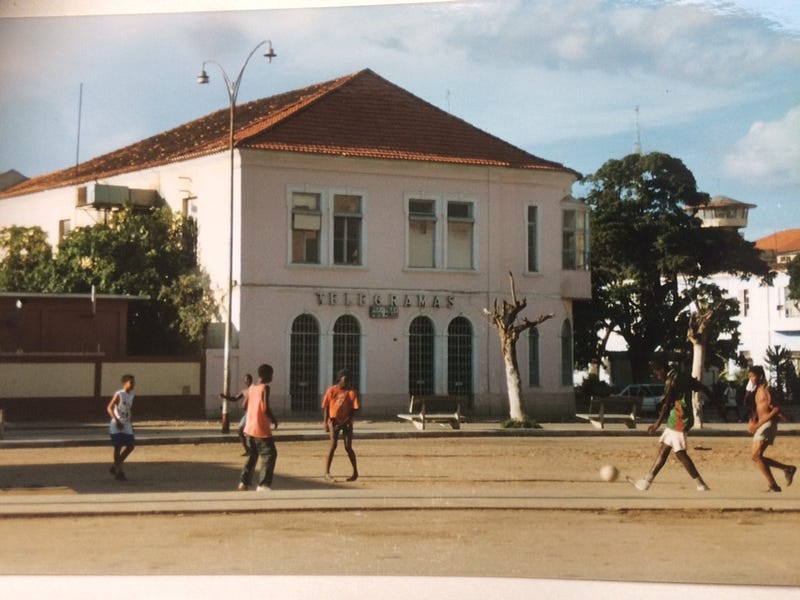
Stories are what make us human. How we navigate, decode and convey our lives. In our small corner of the Covid world, lockdown is creating unexpected space for stories.
They come in the form of hefty book boxsets, swaddled in cardboard and dropped on the doorstep by Amazon, to fuel daughter’s astonishing new book a day habit. (Thanks to Stephanie Meyer and Cassandra Clare).
They come, at a remove, from stepdaughter turned frontline carer, who recounts that within a week she’s learned — by dint of their disappearing from her rota — that three of those she’s been attending in their homes have died.
They come, down the phone, from my father (doggedly rejecting any form of skype/zoom/facetime) whose main recollection of a four year old’s VE day is how bloody boring rationing was and how very long it lasted. “They actually policed how many eggs our chickens laid!”
And they come, mostly at our kitchen table, from deep wells of memory that my husband normally keeps slammed firmly shut.
In those “normal”, frenetic pre Covid days that I, for one, do not want to return to, we generally ate lunch as a family once a week, on a Sunday. I relentlessly enforce the Sunday roast tradition passed down from my mother, “three puddings Margaret”. The other six lunchtimes were spent at school or work or dancing. But now we sit, break bread, and talk together. Every day. And all sorts of unexpected stories have bubbled up into this new stillness, mostly it seems from husband trying to convey to daughter how lucky she is, in spite of this odd time of confinement. Here are a few of the last week’s startling selection:
On Thursday, over pizza, while discussing the eating of bats in China:
“When I arrived in Lubumbashi (as a refugee from Angola’s civil war) I was sitting with some people in front of their house when a car drove past and ran over a cat. Nobody cleared it away. I asked why not. They said that as soon as night fell someone would rush out to scrape it up and take it home to cook. When I was in Liberia (as an aid worker) one of my staff told me that they also eat cats. That’s the closest I’ve ever come to turning vegetarian!”
On Sunday, contemplating a possible return to school. Over roast chicken and a kind of donut bread and butter pudding, concocted to salvage a packet of dessicated donuts found languishing at the back of the cupboard:
“When I was your age (11) our school ran in two shifts. My younger brother went in the morning and came home at 12.30, and I started at 1pm. We only had one pair of shoes between us. We had to share them, swapping them over at lunchtime. For a while I didn’t have a shirt to wear, so I had to borrow my elder sister’s blouse. Once my dad bought me a smart pair of new sandals. I was so proud. The very first day I wore them to play football on a bit of land behind a friend’s house. I lost one of the sandals. I had to creep home and confess to my father. After giving me a good beating he marched round to the owner of the land, dragging me behind him, and demanded my sandal back.”
And on Monday, over spaghetti carbonara, out of nowhere:
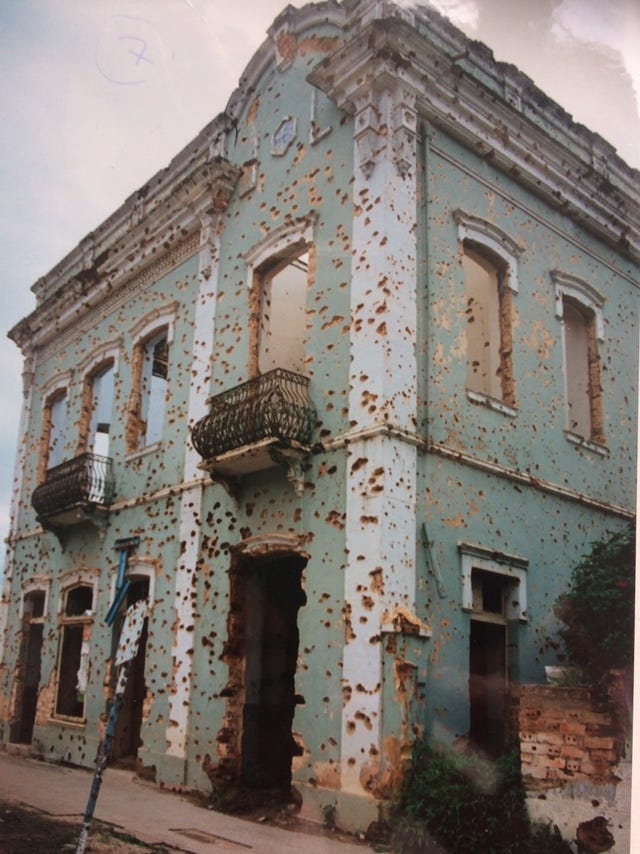
“In 1977 there was an attempted coup against Angola’s MPLA government. The security forces rounded up and massacred thousands of people suspected of supporting the coup. I was 10. I was in Luanda. I had to jump over dead bodies near to Kinaxixe market. Later, they dug a mass grave in the football stadium — like you see them doing in Brazil and New York now. They lined up rows of rebels and shot them on the pitch. They made us watch.”
These accounts tumble out in a jumble of English, Portuguese and, occasionally, French or Kimbundu or Lingala, depending on the setting of the story and its protagonists. He doesn’t realise he’s mixing languages in this way, he’s fixed solely on the meaning and the memory, the words are incidental. I have to translate the bits that daughter can’t understand, without interrupting the flow. “What’s he saying? What’s a coup?” At stories of massacres and mass graves her fork freezes in front of her of mouth, strands of spaghetti dangling.
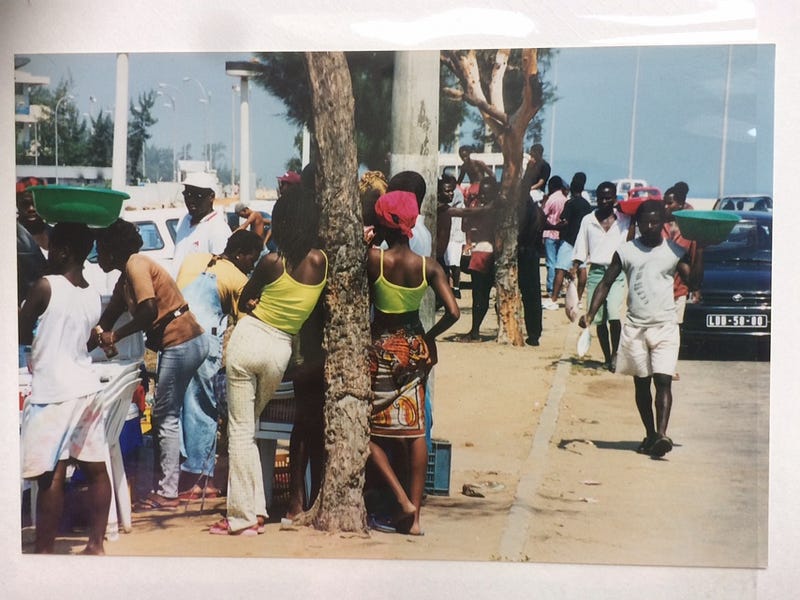
“Years later I was eating with my friend’s uncle, Tio Joao, at a food stand by the beach south of Luanda. There was another man eating at the next table. Tio Joao kept snatching glances at him. After a while he called out to him,
“My friend, do I know you from somewhere?”
“I don’t know, where are you from?”
“I’m from Malange.”
“I was in Malange for a while…. During the coup.”
And then Tio Joao’s eyes bulged.
“Aren’t you the one I was stuck down the well with?”
Turns out they were both thrown into a well by the security forces as a lazy way of killing them. They didn’t die. They managed to hide down there, clinging onto slots cut into the sides, for an entire week, until it was safe to climb back out again.”
He’s laughing heartily as he dredges up these stories, rocking on an antique wooden chair in our kitchen extension, framed by the lush spring garden behind him, the dog sprawled at his feet. Snapshots of a life and time thankfully beyond the imagination of an 11 year old raised in England. Even pandemic hit England. But they are stories that have shaped her life, even at such a remove, because they have moulded her father. I hope that this period of unearthing and sharing will help to knit them closer together. Will help her to decode and navigate his sometimes baffling reactions and reflexes. May even help him to heal a little. That by voicing these stories he can begin to control them, and thereby leave them behind.
After our lunches she generally retreats back to her fat books of vampires and demons. My one story-related regret is that lockdown seems, after a decade, to have marked the end of my reading to her at bedtime. She hasn’t needed me to do this for a long time, but I have persevered. And in spite of herself, she secretly likes it. The nightly ritual of story sharing, cocooned in a darkened room as we travel together to Hogwarts or Lyra’s Oxford or Narnia or Kensuke’s Kingdom, has been our way of reconnecting after the rush of the day. But now she doesn’t need or want me to interrupt her voracious flow. And I’ve lost any ability to enforce bedtime in this strange, soupy time. I resent Covid-19 for depriving me of our storytimes. But perhaps I should take comfort from the fact that I do seem to have infected her with her own love of stories.
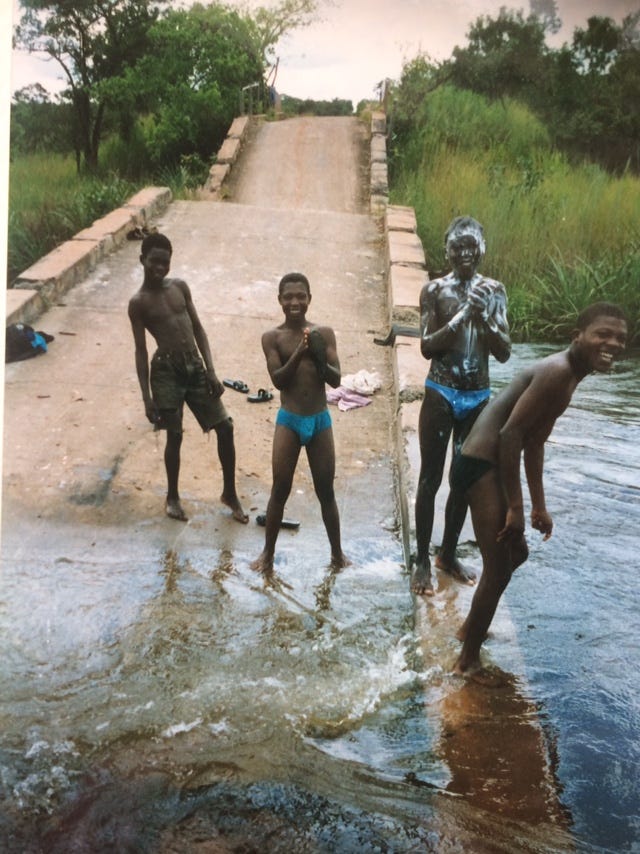
Post script: Daughter came and looked over my shoulder while I was flicking through old albums looking for photos for this piece. Street children, land mine victims, boys washing in rivers, bullet scarred buildings.
“Thank God I was born here. I feel really bad for them.”
Not sure she yet realises that them, is him.
For the next instalment, click here:


