
Taking Mom and Dad to a Gay Cowboy Romance in Bush Country
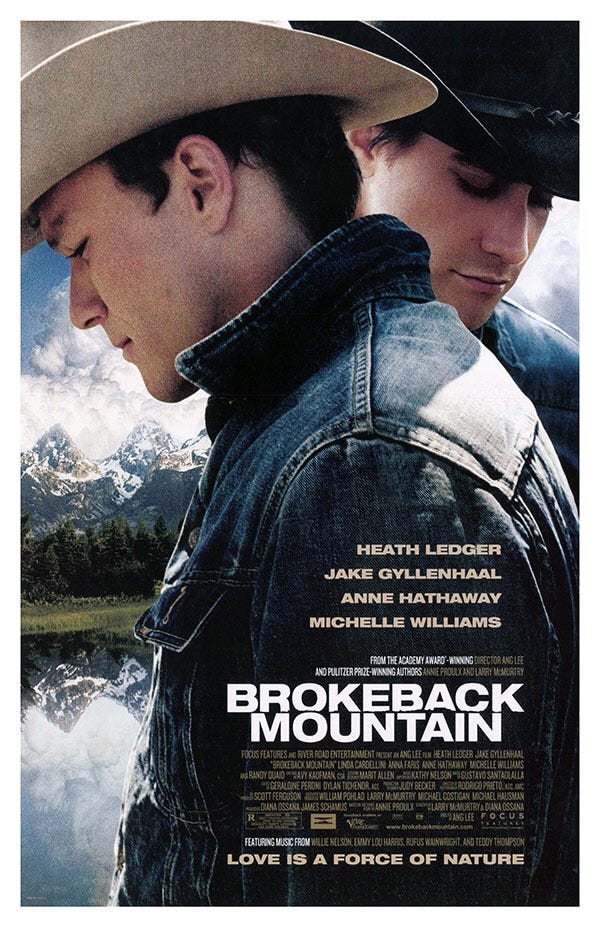
In January 2006, I drove over 50 miles in the snow with my parents to find a theater that was playing Brokeback Mountain. It was a defining moment during a messy period in my identity development; a period that I only recently have become willing to talk about.
***
In the story of my life thus far, my identity as a gay man is divided into three time periods.
There is the period from birth to age 19, where I knew I was “different” but didn’t know what made me so. I was teased for being friends with the girls instead of the boys, for loving pop music over video games, and for picking academics and drama club over sports. I was extremely uncomfortable around my male peers, which I chalked up to the biologically-driven longing to be accepted. During this period, my internal world was mostly a secret; a fortress that was not penetrated by anyone, no matter how loving and supportive. This period is easy to talk about because I was an innocent at the time; a young kid confused by his identity and the victim of a world that was heteronormative at best, homophobic at worst.
Then there is the period from age 25 to the present. This period began when I met my now husband, a man whose clear and uncomplicated love for me ushered in years of growing self-compassion, self-esteem, and self-confidence for me. This period is easy to talk about because it fits the traditional narrative. I found my “soul mate,” got married, adopted a dog, and bought a house. People get it regardless of their sexual orientation, gender identity, or any other construct that arbitrarily divides us.
It’s the period from 19 to 25 that I have trouble talking about — and honestly, trouble remembering entirely clearly at times. It began with a therapy session with a psychologist I had been seeing at college because I was feeling depressed. (Actually, it probably began several months earlier during my first day of school when a confident, beautiful, and openly gay fellow freshman asked my bewildered, stammering self out on a date.) My therapist compassionately but firmly confronted me about whether many of the issues I was bringing into therapy could be related to a repressed sexual identity. That was something to reflect on over the summer break, she said. I sure did.
When I returned to college for my sophomore year, I came out for the first time to one of my best friends, a straight male who I sensed would give me the level of unconditional love and acceptance I needed. It went beautifully, as did virtually all of my subsequent coming out experiences, to high school and college friends, my family, and my professors.
I went to a small liberal arts school that in 2003 was only beginning to figure out how to serve the needs of its LGBT students. I became heavily involved in this culture shift and before long had become the poster boy for LGBT initiatives on campus. During my sophomore year, I went from deep in the back of the closet to the president of the Rainbow Alliance.
My activism and community involvement belied my profound insecurity, as did my large network of wonderful friends. I was increasingly fine with embracing the identity of a gay man, but I carried deep shame and fear about experiencing the intimate life of a gay man. I was scared of flirting, of dating, of sex. My discomfort around men had not been shed during my coming out party.
Although I look back and think of that six year period as being one excruciatingly deprived of romance, I now realize how wildly inaccurate that was. Those six years weren’t lacking in romantic connection, they were just lacking in any fulfilling or healthy connection. My experience was dominated by a relationship that wasn’t on-again, off-again in the traditional sense, but one that repeatedly came to the point of fruition and then subsequently withered on the vine. I knew he was attracted to me emotionally and intellectually, but by his own words he wasn’t sure he was into me physically. I remember the stabbing pain of having my worst fears about myself seemingly confirmed by someone I so desperately wanted to want me.
There were high points for sure. Among them was when a remarkably assured and kind fraternity member took me as his date to a fraternity formal; a rare occurrence on our college campus. I arrived at the formal naturally concerned about what the reaction from his fraternity brothers would be. Their reaction fell into two camps. One camp saw me as a man in their fraternity house and I was treated accordingly — I was immediately offered a spot at the beer pong table. The other camp saw me as a the date of one of their brothers and I was treated with deference and gentlemanliness. Neither camp rejected me and that was a profoundly corrective learning experience for me about what I could expect from straight men.
After college, I moved from Upstate New York to Boston, where I lived for 2 years. Then it was off to Los Angeles for graduate school (where I remain). During my undergraduate years in the farmlands, I told myself that everything would be fixed when I lived in a big city and had a broader dating pool to choose from. That was hardly the case. For 3 years it was an endless succession of awkward online flirting and awful first dates.
***
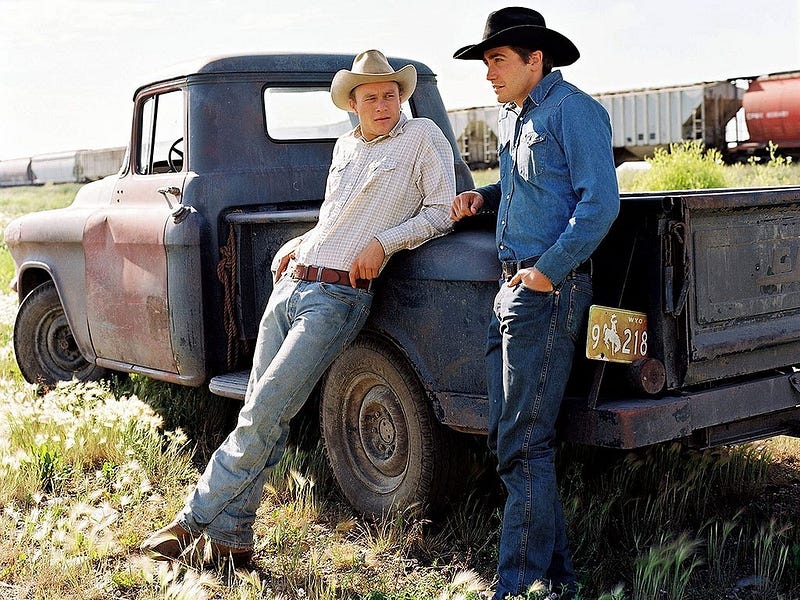
Right in the middle of this messy and often miserable journey, a pop culture milestone was occurring that hugely impacted me. A gay romance was getting a wide release in theaters and a huge Oscar push. The film was an adaptation of Pulitzer Prize- and National Book Award-winning author Annie Proulx’s short story about the remarkably complex, decades long relationship between two men in the American West. It was directed by acclaimed director Ang Lee (who had won an Oscar a few years earlier for the groundbreaking Couching Tiger, Hidden Dragon) and cast with a quartet of hot up-and-comers — Heath Ledger, Jake Gyllenhaal, Michelle Williams, and Anne Hathaway. It had astounded critics at the Venice International Film Festival and was already getting the conservative media up in arms about Hollywood’s virulent “Gay Agenda.”
Starting around age 13, I became a passionate cinephile and by age 18 I was always making a point of seeing films that were highly critically acclaimed, deemed culturally significant, and/or endorsed by the Academy. Living in rural Upstate New York I often had to wait for a home video release or travel far to an actual city that would be showing the types of films I was interested in. I decided that Brokeback Mountain was worth the drive.
Even at its widest release, the closest place the film was playing to me was over 50 miles away. I was determined to go on my winter break from college and naturally assumed I would go alone. After all, I lived in a George W. Bush-loving and heavily Christian area where white straight people made up well over 95% of the population. Who would be willing to drive 50 Miles through sleet and snow to go with me to a gay cowboy romance? It turns out, my parents would. Even though my taste in films often didn’t overlap with theirs, they had long encouraged my interest in the medium and accompanied me to films outside of their interests, and occasionally outside of their comfort zone.
I distinctly remember how nervous I felt about seeing the movie alongside my parents. What if there were graphic sex scenes and my parents walked out? (Or perhaps worse, what if they stayed and I had to uncomfortably watch it alongside them?) What if they hated the movie? (I’ve always taken on far too much responsibility for the contentment of others, and this trait was arguably at its most intense around that time.) And my biggest fear — what if it struck a nerve so deep in me that I was deeply, visibly moved? What if my tears flowed so strongly that I inadvertently let my parents into my private world of shame and confusion and pain that I tried so hard to hide?
Thankfully for me, the sex scenes were tame, the movie was brilliant, and I didn’t entirely emotionally deconstruct during the screening. As we walked out of the theater, I remember asking my parents what they thought of it. They acknowledged it was very well-made, but slow at times. But they were atypically quiet about their thoughts. Upon reflection, I now realize that they knew that what they thought of the film was irrelevant. Going to see it with me was about supporting me and getting a small glimpse of the culture I was immersed in and a hint of my interior emotional life. As I am often reminded, at the most important and foundational levels, my mother and father understand what parenting is truly about.
***
Brokeback Mountain continues to be a much-discussed film over a dozen years after its release. People still talk about its shocking loss of the Best Picture Oscar to Crash, despite the fact that Brokeback had infinitely more critical acclaim, much higher box office, and had won nearly every precursor Best Picture award in existence. The possible role of rampant homophobia in the Academy for this upset is of particular relevance now as the Academy seeks to rapidly diversify its membership in response to the #TimesUp movement.
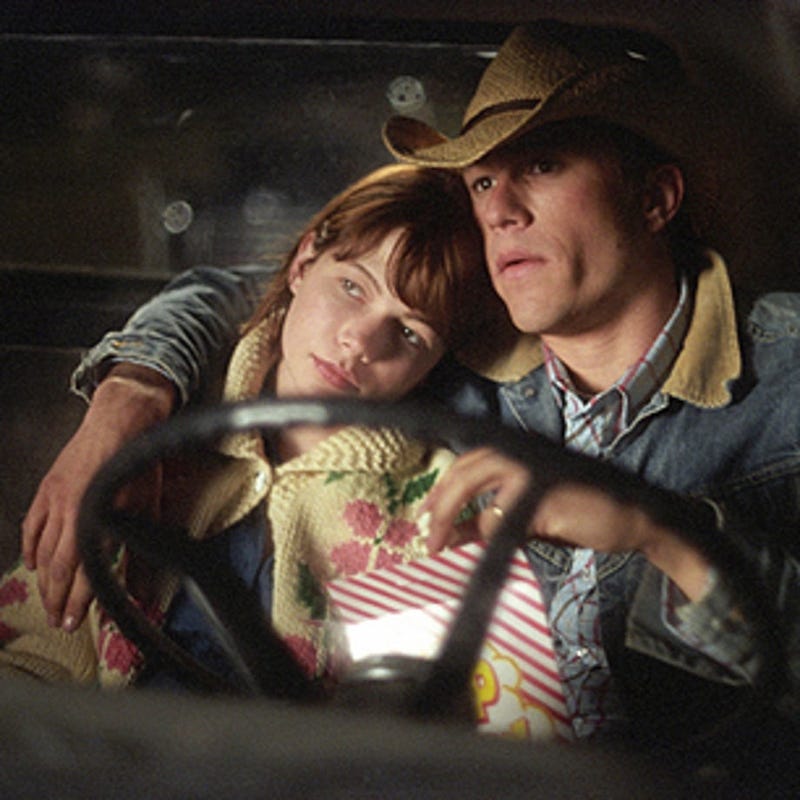
Outside of the film’s subject matter, it was also notable for how it transformed four young stars not only into a new level of stardom but also into the ranks of formidably talented dramatic actors. Prior to Brokeback, Ledger was best known for the teen romance 10 Things I Hate About You, Gyllenhaal for the minor cult classic Donnie Darko, Michelle Williams for primetime teen soap Dawson’s Creek, and Anne Hathaway for the lighthearted Disney comedy The Princess Diaries. Few saw the raw power of their performances coming and each went on to fantastic success in Hollywood. Of course, in the case of Ledger this success was cut short by his tragic death just over 2 years after Brokeback’s release — another factor that has entrenched the film in Hollywood history.
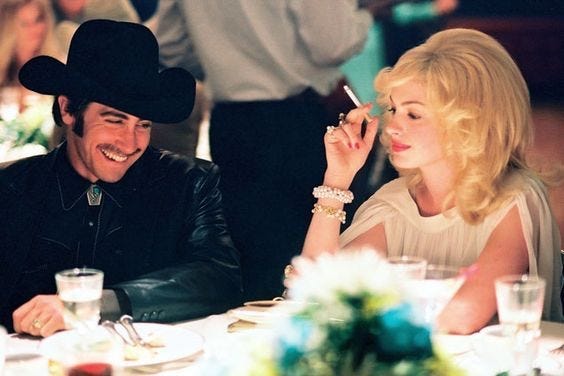
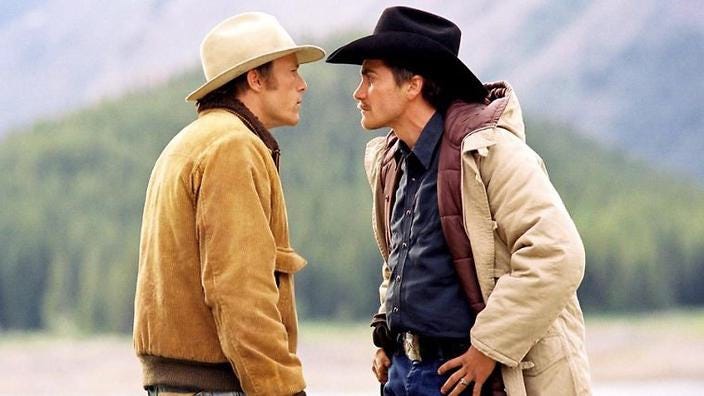
But ultimately the most important thing about Brokeback comes down to the story they were telling. The first breakout gay romance on the big screen was not a romantic comedy about two trendy interior designers on the Upper West Side; it was a carefully observed and painfully nuanced drama about two quintessentially masculine men who have no idea what to do with their romantic yearnings given the hostile world they live in as well as the family obligations they have taken on in response to society’s demands. It challenged stereotypes, provoked difficult discussions, and gave LGBT people a tragic big screen romance on their own.
Many have noted that Brokeback Mountain is yet another example of the unfortunate trend of movies with LGBT protagonists ending in tragedy. This point is not inaccurate, but it is hardly a reason to discount the dramatic power and cultural importance of the film. Despite the fact that I grew up decades after the film took place, am a far more prototypical gay man than Ennis Del Mar or Jack Twist, and never had to face most of the choices that their characters did, most of the film nevertheless resonated with me. The suppressed desire. The internalized shame. The furtive glances. And, most importantly, the profound courage of pursuing love even when the world doesn’t accept it or understand it.
Brokeback Mountain’s story is a messy, complicated, and tragic one and the film came at a time in my life that was exceedingly messy and complicated (but not tragic, despite my frequent beliefs that it was at the time.) In many ways, it helped me realize that the closeted youth that was behind me and the domestic bliss that (I hoped) was in front of me were not the only parts of my story that were worth sharing or having pride in.
***
This is my third article in a series about LGBT representation in media. Click here to read the first two about the recent release of Love, Simon and the coming out episode of Ellen.


