
Fulfillment, meet adventure.
Take a Hike. It Changes Everything.
Go backpacking and you’ll never look back
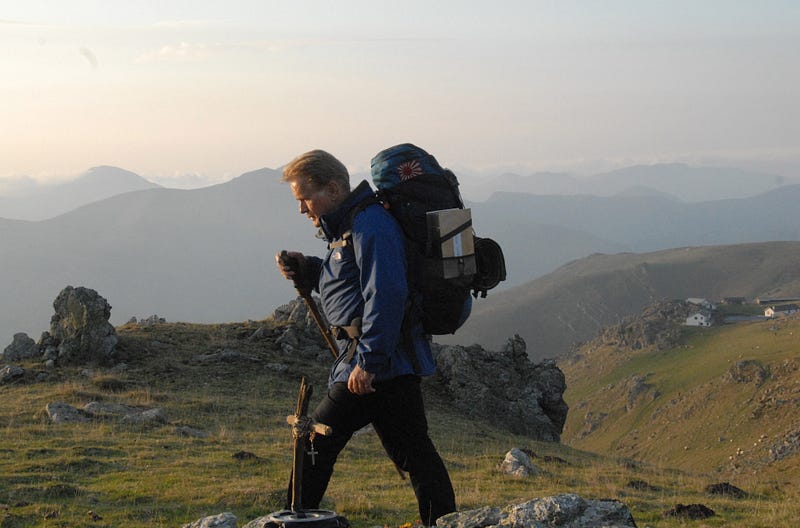
In 2010, Emilio Estevez’s ‘The Way’ graced our screens for the first time. As expected for a film that follows a disenchanted father ruefully reflecting on the relationship with his recently deceased son, spiritual undertones sprinkle the well-worn path. The film portrays Martin Sheen’s character Tom walking from A to B in the hope of understanding his son’s life choices and indeed, his own journey. All things considered — what, given that it’s a little predictable, bookmarked with character stereotypes, and heavily romanticises the subject matter — you could argue it exceeded expectations by notching 83% on the all-too-often cynical circle jerk that is Rotten Tomatoes.
It’s also one of my favourite films and up until now, by far and away the most impactful. Immediately after watching it in 2013, then aged 20, and upon learning about the Camino de Santiago for the first time, I booked my flights. So began my first solo trip and long-distance walk — or hike — whichever way you’d like to define it. Now looking back, it’s funny (not in a lol sense) how I can trace major life decisions directly back to this one time-filling Netflix session some 8 years ago. In Spain, with 2 weeks at my disposal, I squeezed in 150 miles of the 500-mile journey. I was hooked. It has since guided me to many more miles, smiles, and lots in between.
Why? Just like the film, I romanticise life a little. I’ve been afforded the privilege to do so. I grew up in Ireland to a middle-class family where education and comforts were readily available. I don’t take it for granted. Hard work has followed and jobs have been enjoyed but I drift forward, rather aimlessly, peering at life through a rose-tinted lens. ‘Adulting’ is (un)comfortably yet consciously parked in my blind spot while hypothetical happiness leads the way. That’s to say, many decisions that I hope will deliver me happiness are anchored largely in my imagination rather than being rooted in rationale. If you looked up Netflix’s target viewer for the film, you’d find my fat head.
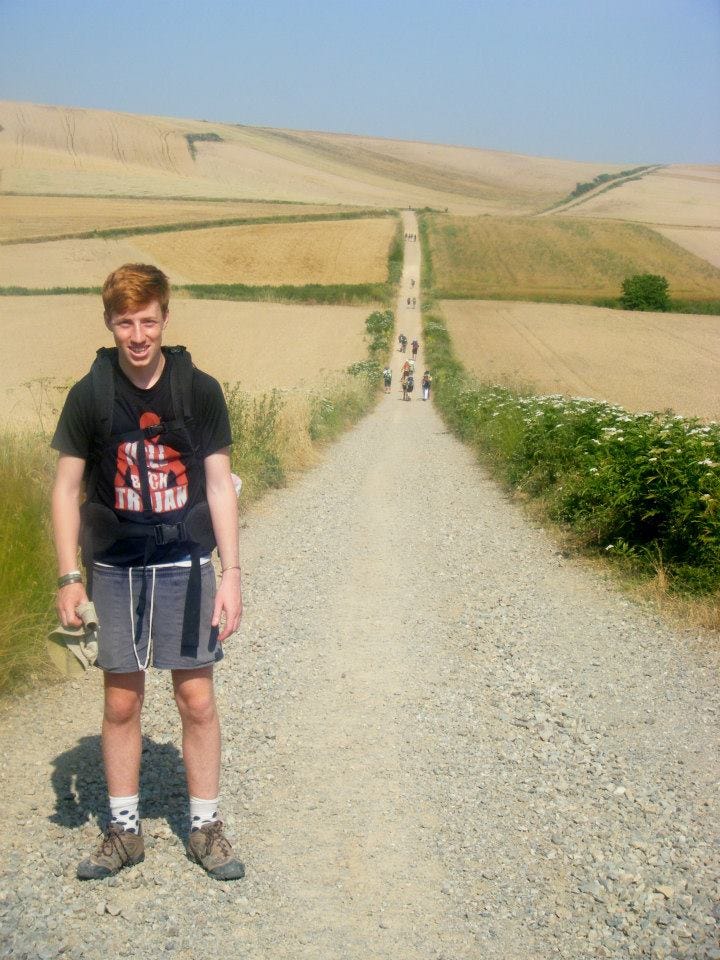
Though when it comes to hiking and backpacking, a passion that I’ve exercised frequently since, I’m wary that the very thing that may have drawn me in — its romanticism — often filters out the reality of what’s involved. This can then result in disappointment or, on occasion, even danger. Films such as ‘The Way’, ‘Wild’ and ‘Into the Wild’ have popularised the thought that there’s a direct correlation between threadbare boots and finding oneself. That rounding up the final switchback to a seemingly never-ending summit will be a one-way ticket to Nirvana. Narrator: he still hasn’t found himself. As we’ll see, it’s those masked out moments — the ugly truths and rotten blisters — that make hiking and backpacking so unforgettable.
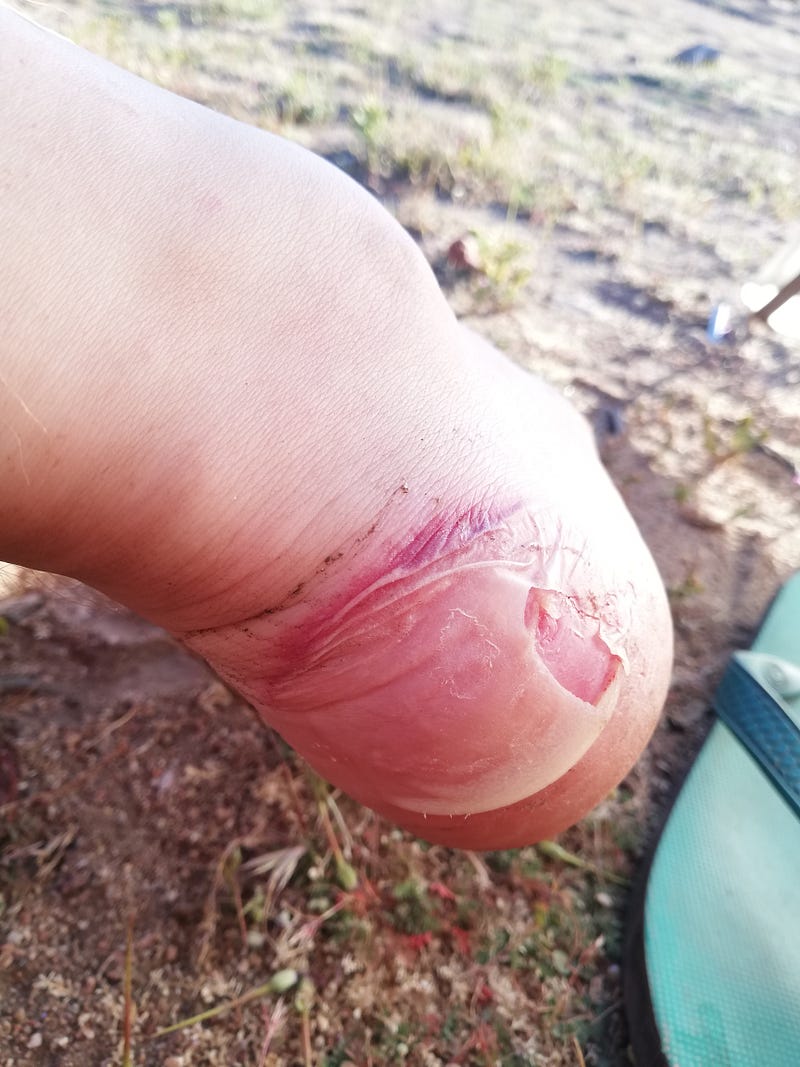
What’s more likely is that, while trudging up the aforementioned switchback, you’ll be scouring for shade, swearing for ‘fun’, and sweating from pores you didn’t know existed. That’s what I do, anyway. Often questioning why I decided to spend precious holiday time and hard-earned cash climbing a mountain that could, conceivably, project a better view from the bottom.
So why hike? I can only speak for myself but that I’ll do. Cue groans from the crowd. What prompted this piece was a low-key love for the outdoors and a hope that maybe, after reading this, someone will say ‘ah, why not’ and lace up their boots for the first time. It’s an attempt to convert a few ‘whys’ into a ‘when?’, or, a ‘where?’. An obvious answer to my question, and one that would eliminate you from Pointless, is that it helps you reconnect with nature. This goes without saying. It’s so very refreshing to swap the surroundings we’re familiar with — whether that’s the bleak business district, or even a leafy green canal — for something less…noisy? For a new, richly layered, and lush environment that’s simultaneously completely stripped back. I speak as a city dweller of course. On the trail, we can disconnect from what we’re used to and parade into a new colour palette full of fresh sights and unusual sounds. Sure, the pack is protruding into your spine but the path ahead is a palate cleanser. A sorbet for all the senses. Did I just say that? Yes. Did you just vomit? Most likely.
Another no-brainer is the health benefits. There’s the obvious like how it helps you slim down or slowly build muscle. I lost 10kg over 2.5 months in the States and that was while I gorged myself on high-calorie foods day in, day out. As for the muscle, well, I did say it builds slowly. Clearly, hiking also harbours countless mental health benefits. Kyoto University researchers found the phytoncides of pine, fir, cedar, and cypress trees decrease our stress levels for example.
As we grow more comfortable with the outdoors, day hikes develop into longer treks — spanning days, weeks, or even months — and it’s this territory that I really hope to highlight and encourage for anyone curious. Here, with long-distance hiking, the experience blossoms into a genuinely accessible adventure even if the body occasionally buckles. In the case of these extended hikes, we plod ourselves that tiny bit closer to the extreme sports category. Please bear with me. And no, it’s nothing to do with bears. Well, maybe. Depends on the trail. But it’s in this territory where freshness often wanes under physical and sometimes mental fragility. Yet the rewards become richer, memories come thick and fast and a zest for life joins you on your journey.
I see your raised eyebrows and I raise my pleading hands. Of course, you’re still ambling along at the pace of Father Sensini at the Annual, All-Priests, Five-a-Side, Over-75’s Indoor Challenge and that’s a far cry from what you’d see on GoPro’s YouTube channel. (That reference may be lost on some. It’s to do with an Irish TV show about 3 priests on a rural island.) But at the end of the day, long-distance hiking pushes our physical capabilities and causes some suffering all the while putting you up against an (albeit more muted) element of risk. The questions asked (after ‘why?’, naturally) become more numerous and carry more weight:
“Are you physically ready? Mentally prepared? Do you have the right gear?”
Look, I couldn’t run a marathon and I’d struggle to squeeze into a wetsuit but whether you’re fastening your goggles or tightening your rucksack, there is at least one similarity: these sports, hobbies, or pastimes all involve some self-inflicted struggles.
That’s why the single, leading question bobs its head once again. The question of ‘why’?. Why hike? Especially such a long distance? Using your precious annual leave days? Why would you bother if the one thing that’s guaranteed is this suffering? Maybe it is as simple as being back in nature and I’m all for that. Or maybe it’s to simply get moving. That’s great, too. But there are others reasons. One answer, often quipped from an unruly comment section, has its target set on masochism. Take, for example, Brian O’Connor’s Irish Times 2019 piece titled: Extreme Sports — where self-absorbed masochism dresses itself up as sport. I’ll caveat this again by clearing my name. I like a hike and occasionally a very long one, but I am clearly no ultra runner, iron man or adventurer. Far from it. My wiry frame and post-5km whining provide ample evidence. I do, however, appreciate and understand the importance of the physical and mental battles that come with tough terrain and a final climb. At the peak of an ascent, and as the scales begin to tip and you begin to descend, a weight is lifted and you hit new highs. Beauty surrounds you, and fulfils you. There’s a reason they chose Cloud 9 for that idiom.
One commenter below that Irish Times piece remarked on trail runners: “They’re trying to justify their own existence. The question is why?”. If that’s the case, so be it. Though I’d argue the question is ‘how?’, not ‘why?’. Shouldn’t we be justifying our existence? Not to please others, but to be our best selves? I think so. Finding out how to best do that makes sense to me.
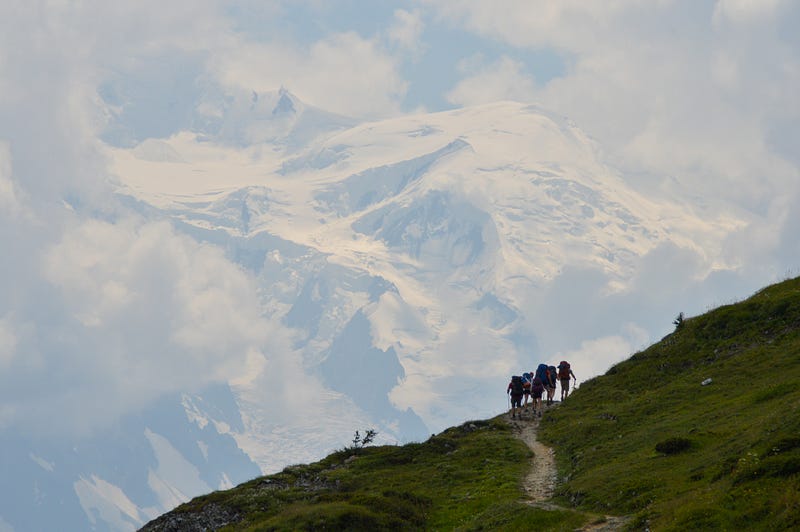
Claims are often made that athletes or hobbyists who physically push themselves are seeking some kind of inner enlightenment. For many, it could be. Or maybe it’s just a case of detaching ourselves from our regular lives. To simply travel from point A to point B with some carefully chosen belongings gleefully clinging to your back. Beyond the sweat and sores, it’s a wonderfully calming and gratifying sensation. It takes you out of your routine and plops you somewhere a bit more remote — in both body, and in mind — whether you’re in Kerry, Colorado, or Courmayeur.
Many might ask where is the enjoyment in the (frankly) unnecessary physical hardships of hiking up and down mountains, day after day? Does the sweet relief and happiness only arrive in short bursts? When you wearily lay down your rucksack to rest? Or hunker down to fill up your water bottle? Or finally shut your eyes in a cosy but cramped tent? Yeah, it may peak there but that’s far from the full story.
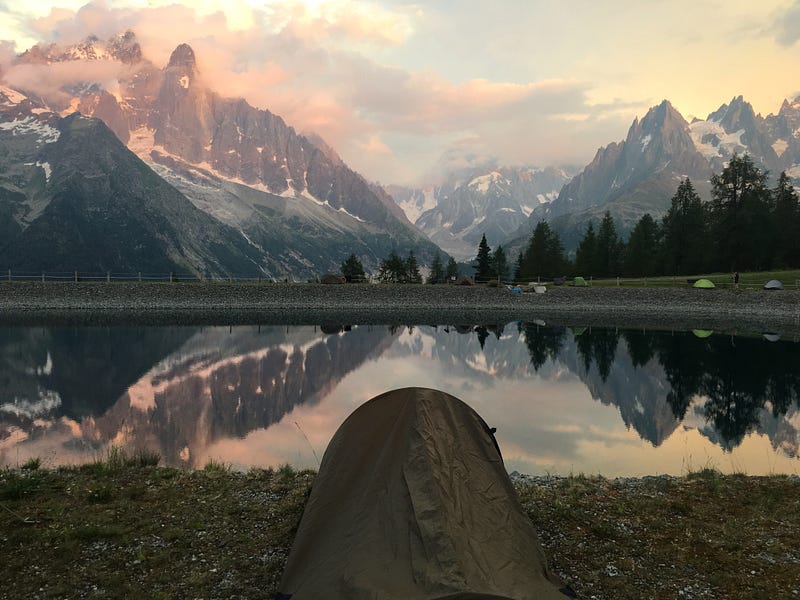
There’s the mental side of the mountain too. The discouraging realisation is that although you’ve hiked 10 miles before lunch, you may have 15 more to go. In a sense, that’s exactly why I left the Pacific Crest Trail prematurely. Just shy of 1,000 miles, I started to do the maths. I needed to reach Canada before mid-September. The border lay 1,450 miles to the north and it was mid-July. I was discouraged. Physically I was fine but mentally, my mind was thinking and struggling miles ahead. A mistake was made and I should’ve focused on short-term, daily goals. I should’ve chatted to someone. I’ll forever regret making that decision and for months I looked back at the PCT with resentment. How sad. (Not to be read in Trump’s voice) But I’ve learned my lesson. Now, like with my other multi-day / week hikes, I of course reflect with a clearer vision and with no filter. The highs and lows. Just very conscious and aware of a multitude of microscopic moments that come together to form the most memorable adventure I’ve had the pleasure of living.
So why would we hike if the only outlet for joy are these fleeting moments in an otherwise sweaty, dusty, and tiring daily slog? Because it’s anything but that. And while we’re all different, I’ve always found that, compared to my other trips, these highs and lows continue to remain intense and vivid long after I return home. The obvious reason, of course, is that this type of trip is more distant from my usual Monday — Friday routine.
A hiking trip, short or long, reigns back everything from the skin on our feet (sorry) to our comforts and our fears. It sets a new base level for many emotions, feelings, and capabilities — sometimes higher, sometimes lower. Like your threshold for dealing with hot temperatures may rise, or you may (regrettably) now take future vistas for granted. While nursing a hot spot on your heel, you might be met by a curious hummingbird. 10 minutes on from cursing how dehydrated you are, you’ll drink from a crystal clear spring. Climbing up towards a summit, fatigue and frustration will call the mountain stupid before its ridgeline, mere minutes later, invites you to a view of euphoria and elation. Whatever you want to call it, these are hyper-sensitive moments and supremely special experiences which I think to change you little by little.
While trampling along a trail is different from my day-to-day life, it’s not a try-hard attempt at being different; though, laughably, that accusation was levelled at me once before. But holding that thought, there was likely, at first, an underlying urge on which I wanted to prove a point. My sister, Steph, had been fearless in her travels and my older brother, Pete, has all the practical know-how inherited from my dad, a former scout leader. I missed the boat on that one. Camping in both Iceland and along the Tour du Mont Blanc are prime examples of said shortcomings. With the former, I didn’t realise I needed a sleeping pad and with the latter, it was pointed out to me halfway through that I had been pitching my tent wrong. That’s not a metaphor. Just me being a moron.
And last year I was with my best mates in Bundoran where, while playing a variant of Mr & Mrs, I was unanimously voted the least courageous of the group in a split-second decision. I joke about it with them and I obviously don’t harbour any ill feelings but yeah, so much for not caring what others think.
Whatever the motivations are behind my love for longer hikes, whether it’s a crack at finding the coveted inner-enlightenment, an attempt to prove a point, or a way to prescribe myself goals that aren’t inextricably linked to an unclear career path, what I love most is the trail’s simplicity. It’s an opportunity to declutter your mind and sieve out the negatives that had sought (uninvited) companionship with your thought process. As these thoughts begin to drift away, positive and evergreen memories pour in.
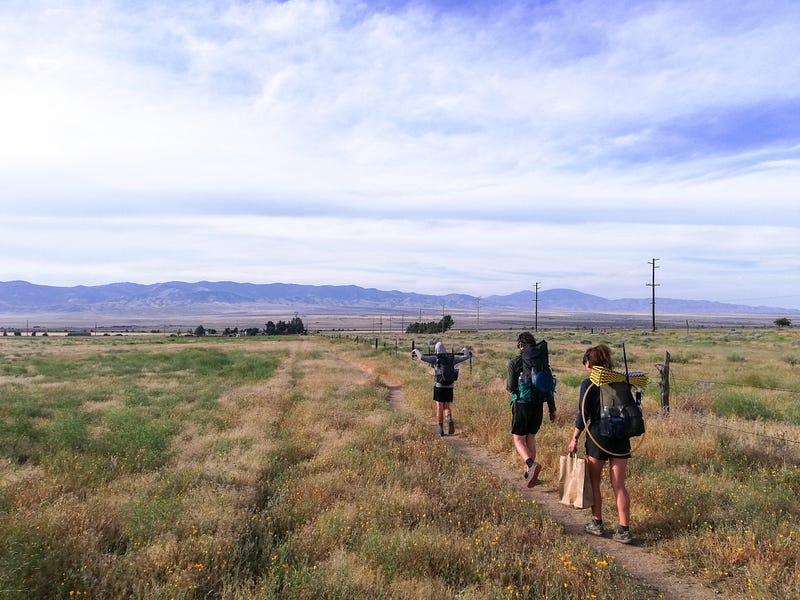
Wherever in the world you are, trails can be found and tents can be borrowed. It’s simply a matter of packing up your gear and making a beeline for another spot. As the old cliché proudly hollers from the walls of Pinterest, it’s not about the destination. It’s about the sweaty, dirty, fatiguing, and often frustrating journey. One that is nearly certainly going to be beautiful, jaw-dropping, and out of this world wherever you find yourself on this planet.
So if you’re weighing up your options for your first trip post-Covid, you could do a lot worse than a multi-day hiking trip and dip your toe somewhere new. Sure, there’s a ‘why?’ here and there, but with every flowing stream, welcomed shade, lush meadows, mashed pop tarts, and a lingering ray of golden hour sunshine resting against a mountain’s peak, there’s a why not.
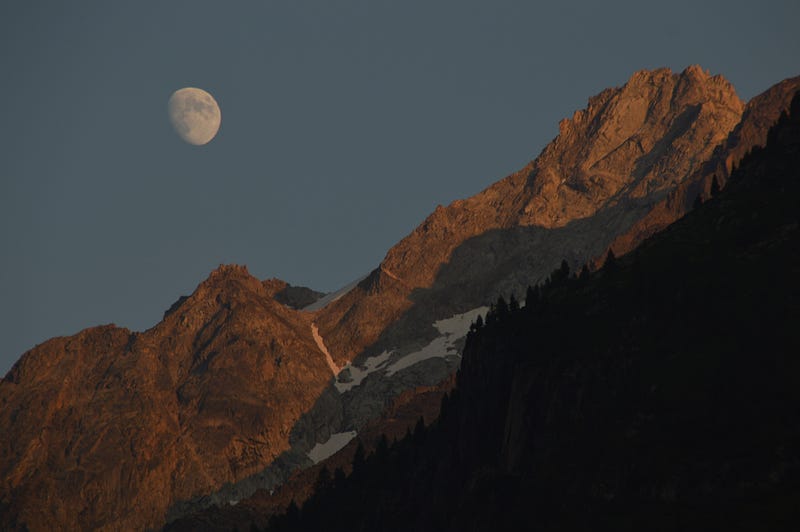
I’m by no means an expert but as I’ve said, I love hiking and I’ve been lucky enough to stomp (my stride is not elegant) trails such as the Pacific Crest Trail, Nepal’s Annapurna Circuit, France’s Tour du Mont Blanc and a good few more. If you’re interested, I’ve compiled a list of hikes varying in difficulty, terrain, and length, which may just be the perfect next feat for your two feet.
Edit: here’s the list.
Cheers.
Note: this piece was first published on my personal site.