
Syntheism and the Prospect of a Spiritual Atheistic Religion
Should we revere or resent nature in co-creating with the universe?

Is naturalism, the philosophy that says nature is all there is, compatible with spirituality, or must naturalists succumb to nihilism because the God of the monotheists died with the progressive revolutions of modernity that began in fifteenth-century Europe?
There have been numerous attempts to spiritualize nature, or to establish an explicitly atheistic religion in the West. Baruch Spinoza identified God with nature, as did Arthur Schopenhauer, echoing the longstanding pantheistic tendencies of Eastern religions. The positivist Auguste Comte pioneered secular humanism with his Religion of Humanity. Friedrich Nietzsche rhapsodized about the artistic achievements of the transhumans to come, of the Übermenschen who would be unafraid to co-create with nature.
The historian Peter Watson’s book The Age of Atheists is full of spiritual explorations by atheistic philosophers and artists.
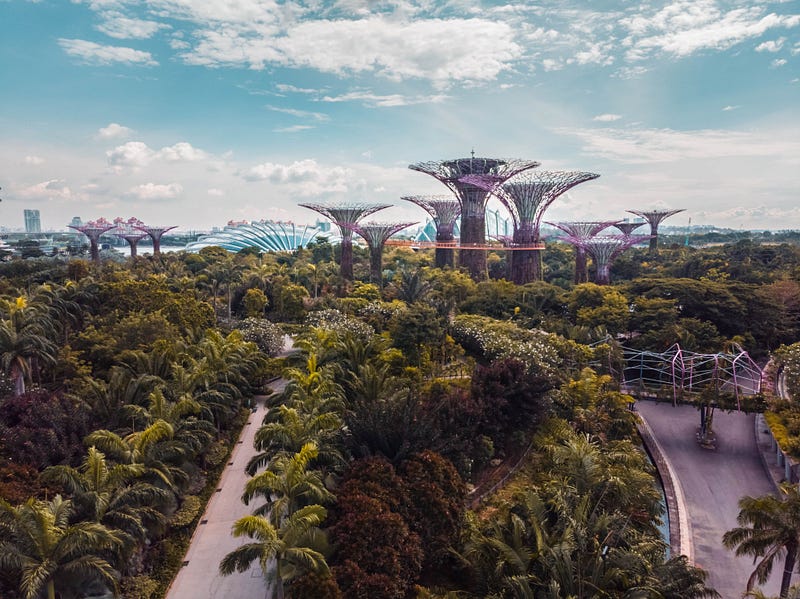
The naturalistic spirituality of Syntheism
A more recent example is Syntheism, a religious movement cofounded by Alexander Bard. Bard combines process theology (from Zoroastrianism and Alfred North Whitehead) with science (such as Stuart Kauffman’s theories of emergent creativity, and Karen Barad’s philosophy of quantum mechanics), pantheism, and Burning Man sensibilities.
In a 2014 interview, Bard says that once the atheist duly negates all the fictive gods of the theistic religions,
you end up with a god you cannot escape and that’s the universe itself. All you need to do is insist that God and the Universe are the same thing and then atheism is over — the game’s over — because you cannot deny that the universe exists and that it’s amazing, it just creates and creates and creates. And you have to relate to that anyway and so how can you escape God if God and the universe are the same thing?
Thus, he says,
I think God is always something much bigger than we are and I want to create, together with other people who share that belief with me, I want to create a road out of individualism. Because individualism is exactly what is now killing the planet which makes us exploit everything that’s laying ahead of us because if we’re gonna die soon anyway, we might as well exploit as much as we can before we die. And so we end up with a Cartesian worldview. It was no better than Christianity. And it’s also a false worldview. It’s incredulous, not compatible with science, because science does not say that you, as a human being, are a god. It says that you’re just a human being and that’s it. And I want to be a human being living in a divine world…
Syntheists mean to appreciate the sacredness of how atheists can co-create with nature, without having to fall back on comforting delusions. Specifically, the Syntheist says that atheists can recognize the divinity of nature and can add to that divinity by creating further orders of being.
Bard posits at least four divinities, religious sensibilities, or spiritual projects that are compatible with atheistic naturalism:
One is the No-Self or the Emptiness or what philosophers call the Primordial Void. That is Atheos, the God Who Does Not Exist or The God Who Comes Out of Nonexistence.
The second concept is Pantheos, obviously, the most obvious one — the universe and God are one and the same thing. It means everything that has existence is, in itself, therefore, divine, so the universe is Pantheos.
Then we discovered the third one, and that is this thing of both, interestingly, Taoism and Nietzsche, and that is Entheos, Entheism, that there is difference. And if there is difference of any kind whatsoever, that in itself is miraculous…
But there’s one more interesting thing: future. Utopia. How the world can be different from what it is now. That is also a very important aspect of religion, that religion should also be a social critique. It should also be an ideal. The world we live in is not a good one because it could be much better. Especially if you go more spiritual. And that is the idea of Syntheos, the God of the Future, Utopia, the God that we can actually create.
In other words, there are the miracles of how the natural order emerges from a void rather than from the deed of a personal deity; of how the universe exists as a colossal, majestic entity; of how that entity develops over time and is thus characterized by the difference between its stages; and of the potential for progress in that development, leading to a more ideal future state which living things can help manifest.
God, for a naturalist like Bard, is immanent rather than transcendent:
Transcendence is to always try to escape from the world we live in. I happen to think the world I live in is amazing, fantastic, and I don’t want to be anywhere else. I want to make this world divine, I want to share my spirituality with others, and the strong spiritual experience of that, I want to share them with brothers and sisters who share my beliefs. I want to create a new kind of religious community that celebrates immanence…God is reality, well God is immanence, and immanence is reality. That is where God is and always has been and never anywhere else.
In essence, says Bard, ‘the name “God” is an amazing name for all the dreams of humanity projected into one point. What would you name that? You would name it God. And that is what we need to [do, to] retake the “God” word but just give God proper qualities that we can actually believe in. In that case, Syntheism is the God that we choose to believe in and can believe in. Whatever that means.’
Spirituality in the Information Age
Much of this resonates with me, and Syntheism overlaps with several ideas I’ve explored in my writings. Here I’d like to ponder the prospects of a sustainable, ennobling atheistic religion. A key difference emerges in the lack of existentialism in the Syntheistic framework. Bard would take the existential worries about alienation to be a by-product of the flawed modern ideology of individualism.
But if we turn to Bard’s book, Syntheism — Creating God in the Internet Age, cowritten by Jan Söderqvist, we see the sort of Wired Magazine optimism about technology that’s found also in Bard’s praise for the Burning Man movement.
The book portrays “individualism as a religion” and posits “a reality that is primarily virtual, rather than physical.” In resisting the alienating effects of individualism, the authors mean to “induce passive receivers of the future to become more active participants.”
The internet, then, is almost a symbol of Syntheism, a platform that showcases the nature of divine creativity by empowering us all to connect as nodes in networks and to co-create, whether by commenting on YouTube videos, supporting others with Patreon, or dialoguing with Zoom, among numerous other possibilities.
While the Information Age was indeed inspired by grandiose, sci-fi libertarian ideals, as early computer enthusiasts often saw themselves as wizards who programmed virtual realities, Bard and the other Syntheists are likely aware of the dark side of these technologies.
Jaron Lanier, for example, shows how the internet’s promise has been hamstrung by the early capture of the technology by monopolies such as Google, Apple, and Facebook that have set in stone dehumanizing codes, resulting in the addictive apps that enslave, numb, and alienate the users in service to what Bard might regard as an antiquated business model.
Yet if the internet can empower us to suit Syntheism’s grandiose vision of our role as divine co-creators, it can also degrade us in a way that seems just as consistent with the anti-individualistic model of people as nodes in networks. Wouldn’t nodes rather than autonomous agents have functions, and might one of those functions be to serve big tech companies?
It’s no accident, of course, that the internet has been co-opted by capitalistic institutions, just as it’s no accident that for all its revolutionary impact, modernity perpetuated the age-old oligarchic hierarchies that have typified civilizations all around the world for thousands of years. As liberated as the middle class may be in developed societies, the richest one percent are hundreds of times more liberated. Scientific naturalism may entail that we’re not gods, but there’s no question that modern billionaires are far more godlike than the average users of the internet.
Alienation and natural power dynamics
Syntheistic spirituality, then, is at odds with the dark side of nature itself, and the latter rears its head throughout the history of civilizations, including in their capitalistic and high-technological phases. At least, Bard’s optimism about the internet — which could even inadvertently serve capitalism, by providing propaganda for the tech bros who hog the profits in the gig economy — should be tempered with some unsettling implications of naturalism.
Syntheists pick out four naturalistic deities, but of course there are endless others since these deities are largely in the mind of the beholder. All that’s needed for this spirituality is to learn how to retain the childlike or artistic sense of wonder, so that whatever you encounter seems divine. Artists do this by engrossing themselves in the details of what they observe, hear, or taste. Thus, you could see divinity or a sacred mystery in a leaf, a raindrop, the moon’s shadow, and so on.
But what objectively unites these spiritual impressions is something more structural. We evolved to intuit the priority of mental and social causes. We’re social animals and instinctive agency-detectors, so we expect things to result from the intentions of some mind. What scientific objectification does is present most of the universe as devoid of any such minds or societies. That makes the emergent systems on our planet anomalous — which entails alienation.
Now, the Syntheist wants to overcome that alienation by emphasizing continuities between nature and us. After all, both living and nonliving things are just creating, right? But the mystery of natural “creations” is precisely that they’re mindless, impersonal, asocial, and amoral, according to scientific theories. That is, we inevitably view nature’s productive order as mysterious because it’s inherently alien to ours. We create by having minds which model the environment to deliberately modify it to our advantage. The bulk of the universe doesn’t create in that way.
Atoms, stars, and planets have no such intentions or intelligent designs, according to science. We know that’s so because science is methodically committed to objectification, and to objectify is to disenchant, to reduce apparent mentality to brute causality or to lifeless, formal structure. If science eventually eliminates this dualism by reducing human minds, too, to purely objective elements and processes, this may entail nihilism rather than supporting any religious sensibility.
What makes naturalistic spirituality or existential depth possible, I think, is that science presupposes the duality that generates the mystery, because science itself is a social project, one of conquest of the wilderness. Science is something that curious, ambitious minds do. But by objectifying the environment to tame and to control it, science presents nature as a monstrous mystery. Nature is mostly lifeless, valueless, and rightless, and yet it still creates the wonders of the universe. Nature is supremely creative despite its headlessness.
By disenchanting nature, science monstrifies it, by presenting it as an inhuman abomination, as a wild, zombie-like plenum or fullness that goes through the motions of modifying itself while having no inner life or plan. Again, that’s bound to alienate us in so far as we’re informed by our evolved cognitive proclivities. Nature is supremely creative but also strikingly counterintuitive: we expect minds to be at the root of order since we evolved to flourish in social settings which are governed by fellow minds.

Nature’s impact on civilizations
To return, then, to civilization and to the dark side of human progress, we should observe that oligarchy, too, is a hangover from evolution and thus from nature’s indifference to our welfare. We see dominance hierarchies throughout social species of animals, and they can be both cooperative and inspiring, yet also brutal and savage. The point of life’s evolution wasn’t to create for any aesthetic purpose. No, it was to shuffle the genes forward in time as a purely mechanical, zombie-like venture, to boost the genes’ chance of being transmitted by developing modes of protecting them, such as the body-types of their carriers.
At some evolutionary stage, social structures emerge, and the default social structure takes advantage of something like the Iron Law of Oligarchy. Nature centralizes social power to make the group’s management more efficient. This has the side-effect of tempting the leader to exploit his or her privileges, which often corrupts the leader’s character, or invites unscrupulous individuals to compete for leadership positions.
In the big picture, then, capitalism works like feudalism. Both work within the niche of efficient group management, resulting in monopolies (monarchies or corporations) that tend to be more sociopathic than the average member of the respective groups. The amorality of kings and of CEOs may not be logically necessary but it’s certainly natural. The moral or spiritual reverence for all people could hardly be the guiding light of a government or of a corporation that finds itself in a wilderness, beset by competitors fighting over limited resources.
All of which counts against the likelihood of a digital utopia. The internet may revolutionize capitalism, or nature’s inhumanity may coopt this human product, too, just as nature coopted politics and economics by showing over the courses of life’s evolution and of history how power dynamics work when resources are scarce.
Are organized religions counterproductive?
But this reasoning applies also to religion itself, or more specifically to the difference between cults and religions. Presently, Syntheism might be a cult or perhaps a subculture. We know from the history of religions how morality, intellectual integrity, artistic vision, and spiritual authenticity lose out when a small social movement attempts to upscale its purity.
What inspired the early Jesus movement, for instance, wasn’t what animated the organized religion of Christianity. The early Christian cult was inspired by the charisma of the religion’s founder or at least by the portrayals of him in early Christian writings that combined Judaism with Greco-Roman Mystery religions.
By the time the Roman Empire adopted Christianity, that sense of Jesus’s presence was long gone, and Christians had the new task of running their large organizations. They did so not by appealing to some divine miracle, demonstrating that God was indeed more active in Christian history than anywhere else, but by succumbing to the natural defaults in politics and economics.
The rhetoric and propaganda may have been far-reaching, but the Church’s behaviour was just more totalitarian imperialism. Of course, Christians rationalized this in the Augustinian manner, regarding the world as “fallen” or ruled by demons, but in practice this meant that the so-called demons were stronger or more relevant than Jesus or God.
Couldn’t we expect the same to happen to a naturalistic spiritual movement like Syntheism? The movement is guided by the likes of its well-spoken cofounder Alexander Bard. If the movement should catch on, replacing combative new atheism and secular humanism, how would the organized, upscaled version of Syntheism govern itself without succumbing to the natural default, which would stifle the members’ spiritual or existential motives, introducing rank politics into the proceedings?
Has there been a single large organization that didn’t become more corrupt as it grew from a small movement of dedicated founders to a powerhouse institution? Just one government, corporation, or religion that doesn’t betray its principles to adhere to the Machiavellian reality of social power dynamics? One prophet, philosopher, artist, or inventor who wouldn’t weep when beholding the irony of how his or her initial vision is eventually betrayed by that vision’s very success in capturing the mindsets of a large population?
There’s a paradox here for spiritual atheists, which is that the demand to overcome naturalistic nihilism is real but also perhaps foolish. We might be well-motivated to find meaning in a godless universe, but we shouldn’t be too motivated because all things are self-destructive, owing to that very godlessness.
The more successful the spiritual movement, the more it can be expected to disgrace itself in the long run with political compromises and with other gross failures of integrity, faith, and vision. Nature takes over the management of large societies, and nature is no benevolent deity, but a ruthless, uncompromising, monstrous spawner of countless worlds that dwarf the parameters of our understanding and of our moralities.
Perhaps the existential atheist should rather expect to demonstrate the height of realistic spirituality by humanizing the monstrous wilderness in small, but still heroic ways, to prevent nature’s intrusion into our most inspired creative affairs. Either that or concede that late-modern industry itself is our best, most creative religious endeavour, however tainted its political and economic projects might be and however doomed they are to being overtaken by nature’s fickle search for postapocalyptic novelties.


