
Life Philosophy
Swap Guilt for Gratitude — Advice from Human-Rights Activist and North Korean Defector Yeonmi Park
A defector’s story of rising stronger from unimaginable trauma and thoughts on what makes life worth living

.jpg)
Why swap guilt for gratitude? How can guilt be released with the help of understanding your accountability? Why do we need to understand our history from multiple perspectives?
And a real-life story telling us that love can overcome evil.
After having lived a life filled with harrowing misfortunes, Yeonmi still believes in practicing gratitude. From a young age, she was taught by her father to value life and fight for it with all she had. To be thankful because life was the greatest gift. No matter what. Perhaps this attitude is what helped her create a new life for herself.
Don’t feel guilt or shame for what you have and what you’re born with, practice gratitude instead. And don’t take anything you have for granted. Count your blessings. Make the most of what — few or many — possibilities you have. (Especially the possibility of freedom.)
Your blessings, curses, fortunes, and misfortunes will never be the same as anybody else’s, so focus on what’s possible — for you. What good does it do to compare?
Then (please) help others. But first, be grateful. Life is a gift.
Yeonmi grew up in a country where frozen potatoes and rice were rare luxuries, and the source of protein came only from eating grasshoppers, dragonflies, and other insects. Bathing was done a few times a year in the river in the warmer summer months. Notwithstanding being of ‘middle class’, there was no electricity, gas, or sewerage in her home.
From eight years of age, she was left alone with her sister. Her father had been sent to a prison camp and her mother had to leave to work elsewhere to return with every little scrape of something for them to survive on, to then set off again. Months passed by in-between. The two sisters lived alone like this for more or less three years.
There are no words for stress, anxiety, or depression in the North Korean language. Of course, people couldn’t experience stress or depression in the communist paradise.
During the famine years in the 90s, it was not uncommon to literally see people dying on the streets. (Somewhere between 240,000 to 3.5 million North Koreans died of starvation in the years 1994–98.)
It’s poignant listening to her describe the indifference she experienced at the time and the ensuing guilt for this and the questioning of her own conscience years and years later. How could she utterly emotionless pass by moribund people while her only concern was her own acute hunger and obsessive thoughts about food? she asks herself with a quavering voice while trying to hold back the tears.
Though this state of desensitization is nothing less than survival and self-preservation amid unfathomable — and beyond dreadful — conditions. Furthermore, she was only a child. And this was the common thing: people couldn’t empathize much with one another when everybody was so utterly desperate. It’s hard to understand for us who’ve never experienced anything like it.
This state of feeling-less-ness was then reinforced and ingrained in her when she managed to escape to China only to become a sex slave at 13 years of age. It took her and her mother two years before they could escape this new nightmare. A journey not without life-threatening perils: a route through a freezing Gobi Desert to Mongolia, from where they could finally get to South Korea.
Despite it all, she says nothing is worse than not feeling; it took her until her son was born in 2018 to truly feel something again.
Yet when listening to her it couldn’t be clearer that she has a burning sense of compassion for others, especially the people of her native country still living under the same totalitarian regime. Many/most of which remain living on the breadline — without knowing or understanding their oppression. Emotionless, she is not. The opposite. Her feelings are so real it would be a challenge not to vicariously absorb them through the screen.
(Even if she might need some of the compassion she practices for others also for herself. No one [I hope] could blame her for times of not feeling.)
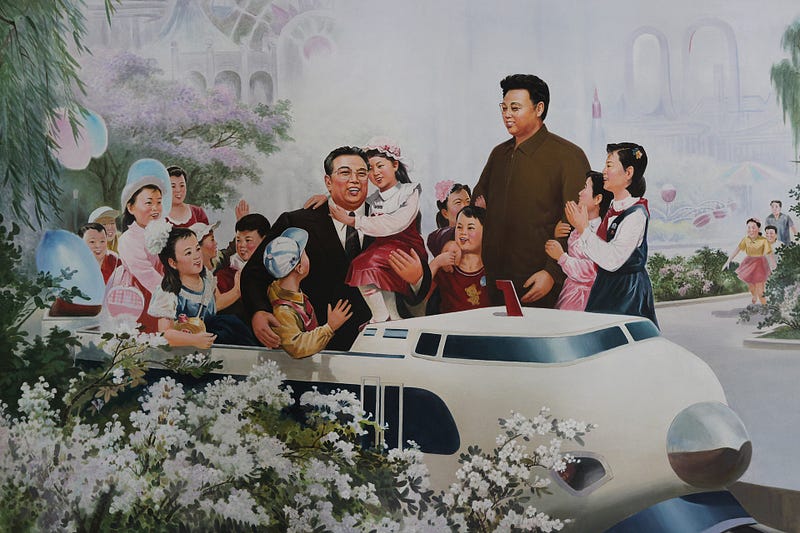
Somehow, listening to Yeonmi is a delight. Despite the unimaginable, horrendous stories — she talks about love. She talks about the complexity of humanity. She’s seen and experienced so much atrociousness, yet she can see shades of goodness in people who’ve dealt her terrible judgments, corruption, deception, and even pure malevolence.
How is it possible?
People who did her terrible harm also helped her. Her previous [sex] ‘owner’ managed to get her father out of North Korea and get them to reunite before he died. He helped to ‘buy back’ her mother, from her ‘owner’, so they could be together again (for the short while it then lasted). Behind the wickedness were also glimpses of good.
Please note that this is no excuse or justification for egregious behaviors, rather an attempt to understand humanity in all its parts and complexities. As it’s understood, it’s also something Yeonmi has been aspiring to do.
She sees human beings as complex. There’s good in the bad; there’s bad in the good. (Think of the simple Taoist wisdom contained in the symbol of yin and yang.) No one is pure evil or pure good. To become better we must understand the bad. Accountability rather than blame is the path to become better: on the individual as well as societal level.
One astute man said,
‘Every saint has a past and every sinner has a future.’
—Oscar Wilde
(If some sinners are beyond redemption or not I do not know. Perhaps only the omniscient can know such.)
Yet Yeonmi doesn’t pretend that evil doesn’t exist or make any excuses for malicious actions.
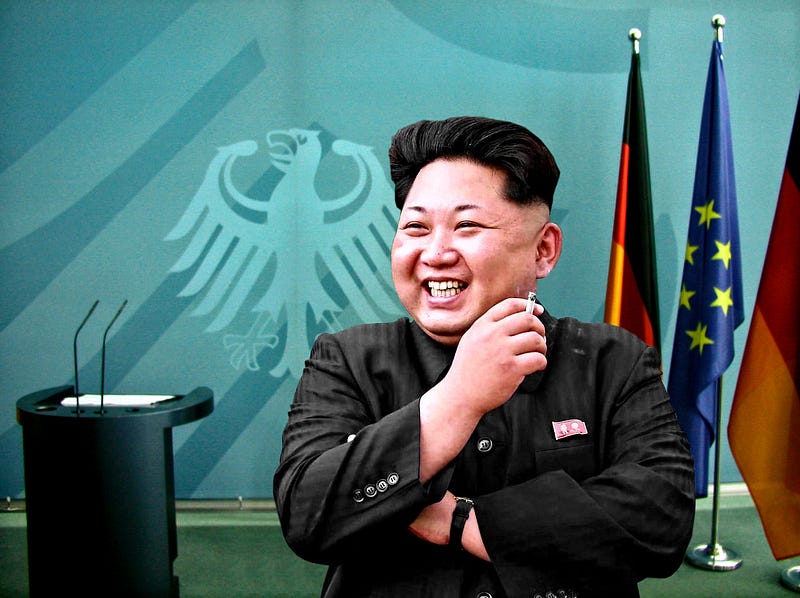
Certainly not for Kim Jong-un and China’s role in the maintenance of this tyrannical governance that allows for oppression and suffering of millions and millions of people. The people for whom she fights. Real human beings, who are born into a surreal propaganda state. Who doesn’t even know there is something called freedom.
She talks about love despite never knowing the concept of love growing up. It’s explained that there are no words for love, liberty, or human rights, in their language. These are simply not concepts they know of. Her mother never said she loved her; this expression did not exist.
Just like the word ‘I’ doesn’t exist; it’s ‘we’, ‘we like food,’ ‘we like our country,’ etc. Nor are there any words for stress, anxiety, or depression in the North Korean language. Of course, people couldn’t experience stress or depression in the communist paradise.
In school she didn’t learn she was Asian; she learned she was of the Kim Il-sung race. She learned her country was the best in the world, and that Americans were evil bastards.
Moments of a delirious sense of pride for her ‘Dear Leader’ were confused with happiness. Still, there were some elusive flashes of real happiness in her childhood—those of laughing with her family.
She has had difficulties in talking about her life in North Korea. In her case, it was less for fear of sharing and more for lacking the language to describe. It was like she was from another planet. The hardest part wasn’t to learn a completely new language with another alphabet but to learn completely new concepts. And to manage to explain and articulate this other reality she comes from with such a disparate conceptual understanding.
Her voracious reading and love for literature and learning was her way of understanding her own [hi-] story as well as her contemporary environment.
The massive amount of literature she devoured inspired her to make her voice heard. Because she learned, from it, from the great authors and thinkers, the price of silence.
What allowed the tyranny to emerge, was the great bulk of people—people like her grandparents—who kept silent even if they intuited something was amiss and that language was being distorted. Now referring to the early Kim Il-sung days, when people had lived through other ‘non-Kims’ regimes (under Japanese rule) and still had some own—non-congenital propagandic—thinking.
The following generations were born into the propaganda, and could thus not even imagine that things could be much different. People like Yeonmi didn’t even know they were oppressed. They didn’t even know the concept of ‘oppression’. (Yeonmi didn’t escape the country searching for freedom—something she didn’t know existed—she did it out of hunger. For the yearning of a bowl of rice.)
That’s why education is vital for a sustainable society. Where the young are taught how to think for themselves and not what to think. So at least some of them can understand, at a yet reversible stage, the need to speak up when necessary. Vigilant, prudent, and intelligent (in a broad interdisciplinary sense) citizens are the vital buffer against (inevitable) corruption in authority and power. When people in power are using distorted language.
Her grandparents’ fear of speaking up was well-founded and understandable: the risk of ostracization and the potential risk of their lives and their family members' lives. But Yeonmi says the alternative is even worse. Everybody [who knew/intuited] contributed to the ‘perfect dictatorship’ that emerged. In a similar manner that the silent people behind the bully reinforce his or her malicious behavior.
Rather than simply blaming the tyrannical leaders or her silent grandparents, she learned from their mistakes. Rather than trying to forget it all, she wanted to remember to be able to make a change. To prevent history from repeating itself. And to fight for the ones still living amid this tyranny. That’s why she became a human rights activist.
Blaming is rarely, if ever, constructive. Blame does not contain compassion or intention to try to understand the circumstances behind our own and others’ [immoral] actions.
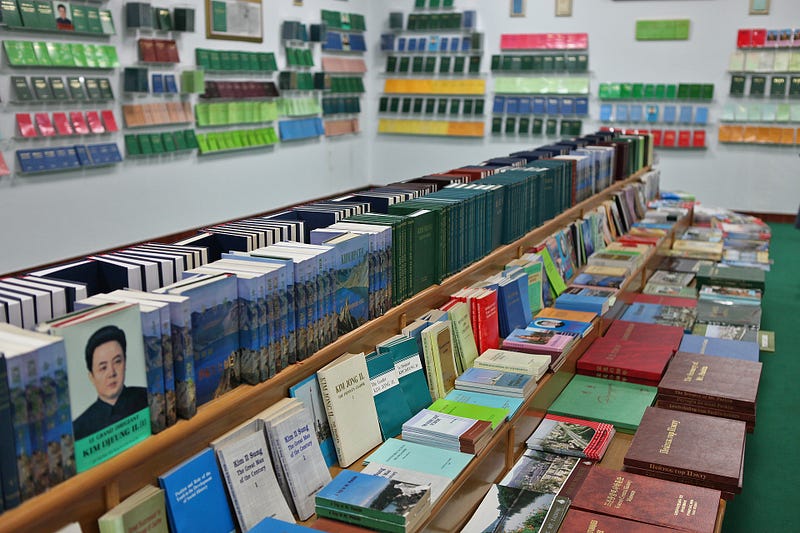
She underscores guilt so strongly because it’s the fundament for making people obedient to an authoritarian regime. Where individual and group (and ancestral) guilt is common practice. E.g., if a person commits a disobedient act towards the regime, not only will he be punished — potentially being sent to one of North Korea’s concentration camps or another ‘less severe’ prison camp — but his whole family and his children and their children for three generations thereafter will also be punished. An effective way of controlling people: this is group guilt taken to its extreme. Guilt and the implicit coercion of ostracization (or worse). It’s a pattern seen in all totalitarian regimes. Though the process there is stepwise. Only the perspicacious can see it early.
Guilt can be an effectful way of manipulating people. In both the small and the large perspective — on the individual and the societal level.
After having looked at the utmost extreme and detrimental societal level: let’s explore also guilt on the individual and seemingly innocuous level. In a myopic perspective, guilt is often also played upon—oftentimes unconsciously—in, for example, intimate and family relationships.
Have you ever felt guilted into doing something to not risk upsetting your partner, friend, parent, etc., or even because of social pressure? For instance, something as trivial as the (implicit) demand for a rapid response to a WhatsApp message.
I can certainly admit to this myself, in relationships and otherwise. Without knowing or understanding, I have been both on the ‘duped’ and the ‘guileful’ side of being guilted or guilting [people] into doing something. (Without any pride I admit!) This is something to be, or become, conscious and observant about — to stop unconstructive behavior. No one is perfect, but we can all improve. And we can kindly help each other improve. Acting wrongly makes us human, not evil. Of course, some things are minuscule and mean almost nothing. (And does not need to be compared with a tyrannical regime!) Then again, small things accumulate and behaviors can slowly escalate. Not acknowledging it is when it can—in a long-term perspective—become insidious.
Complex behaviors tend to become programmed and entangled in our unconscious, making us unaware of when they’re clandestinely driving us.
To hold ourselves accountable for our own actions is not the same as feeling guilty about them. Nonetheless, to feel guilt is human and, really, inevitable, as it’s related to having a conscience. Thus it’s not all bad, but a necessary human quality. The question is how to understand the guilt and where it comes from—so it can be released. In other words, what can and should we be held accountable for, and what can and should we not be held accountable for. Lest we get stuck in guilt or act to alleviate guilt we’re not truly responsible for. Something more perilous than it may seem.
When encumbered with guilt what to do to atone for it is rarely clear-cut, especially if we carry ‘ancestral guilt’ (e.g., having ancestors as slave owners). To guilt and shame ourselves and one another tends to turn into blame (or vice versa). Blaming goes quick and requires little contemplation. Blaming is rarely, if ever, constructive. This is because blame does not contain compassion or intention to try to understand the circumstances behind our own and others’ [immoral] actions.
But it’s possible to understand — without justifying or excusing — those same actions. It’s not only possible but rather crucial: lest we repeat the same mistakes. Our own, others’, and those of our ancestors. Isn’t this why we must study and understand our history? To truly understand, implies looking at our history from different perspectives. ‘Predator vs. victim’ is one inevitable perspective, but not the only one.
Yeonmi’s way of understanding her country’s history and her traumas was attained by studying and consuming literature. Reading Animal Farm by George Orwell was for her life-changing; it helped her disentangle some of the painful knots of confusion. It helped her understand the truth of the history of her country—from more than one perspective. She understood that everyone had some responsibility, it was not only the heinous leaders’ fault, as she previously had thought. To be silent is a passive action. To look the other way is a passive action.
Understanding often means liberation.
When we take accountability for our actions we can lighten our backpack. There is something we can do and we can choose to learn from our mistakes. Thus the guilt can be released. Even if and when we have underlying traumas (which are not our fault) that have ingrained wounds in us—precipitating destructive behaviors. Behaviors causing us to hurt others and make mistakes we sometimes don’t want to own up to — we can own up to and thus put an end to. Understanding our wounds with compassion is the crucial equivalence to accountability.
Taking accountability allows for the negative spiral of generational traumas to come to an end, and possibly even change its direction.
It also means letting go of what we actually cannot change. Understand and let go. Forgive (but not forget) what others have done — to set ourselves free. To forgive does not mean to justify. To understand does not mean to justify. Don’t compare apples and oranges.
Yeonmi Park is the author of the book ‘In Order to Live: A North Korean Girl’s Journey to Freedom’, published in 2015. She’s a human rights activist and public speaker. Several of her podcast interviews have millions of views by themselves. The majority of the material for this essay comes from this interview with Jordan Peterson and this with Lex Friedman: at the end of which she’s asked a question,
‘What advice would you like to give to the young people of today?’
An excerpt of her answer,
‘I don’t want you to do something because you’re guilty; I want you to do something because you’re grateful.’
Both interviews, by the way, are highly recommended.
Thanks for reading.
Author’s Note. The intention of this essay has not been to devalue less severe traumas than those of Yeonmi. Most—if not all—of us carry different traumas in our backpacks that we need to understand with compassion to be able to let go of. Don’t compare to feel guilty. Or, don’t compare at all. (Be inspired if you dare.)
The intention is to release not exacerbate guilt.
Related reading
If you’re new to Medium and want to explore more, consider joining with my affiliation link.