
Sushi Is More Than Raw Fish
Premium Sushi Experience in Japan
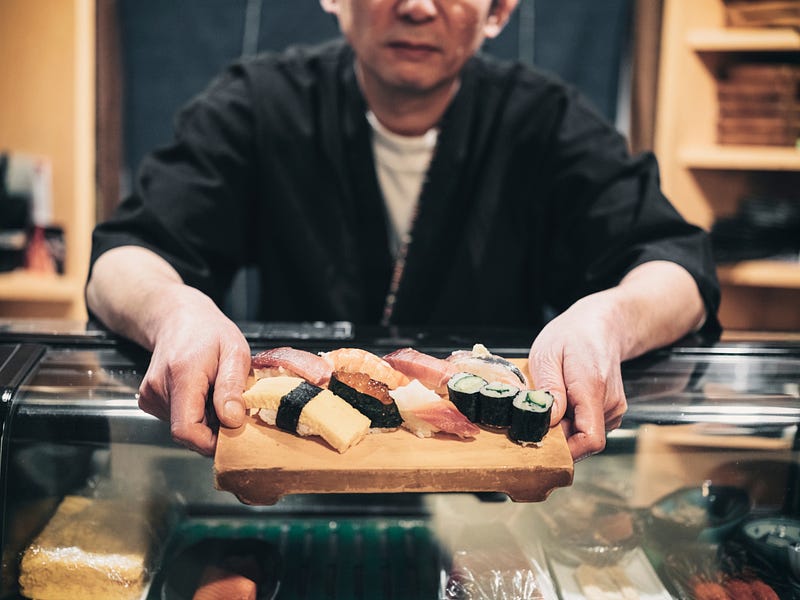
Sushi is much more than raw fish — this delicate rice-based dish has a thousand-year-long tradition as one of Japan’s most popular and healthiest foods. Recently it has been less than a novelty and more of a fashionable/mainstream meal that never ceases to evolve. People across the world are fascinated by how beautiful it looks and how great it tastes.
Before I moved to Japan, I was never into sushi! I couldn’t be convinced that raw fish would be something I would enjoy. Last year, my husband and I decided to step out of our comfort zone and — surprise, surprise — we really enjoyed it! Since then we always seek for this artful and unique dining sushi-perience 😄
This made me realise that despite sushi’s ubiquity, most people know very little about it, especially when it comes to the authentic style which provides an individualistic experience (as opposed to the modern conveyor-belt style). In this short article, I will be listing some interesting facts I learnt along the way, that will hopefully surprise you and make you appreciate this culinary phenomenon even more.
➊. Su-shi
The Japanese word su means vinegar, and shi is from meshi, the Japanese word for rice, hence sushi is vinegared rice, or even better, ‘on a bed of vinegared rice’.
➋. Talk the talk
Nigiri is sushi with fish slices on top. Sashimi are the sliced pieces of raw fish. Uramaki are inside-out rolls. Temaki are hand rolls that look like ice cream cones. Nori is the roasted seaweed that wraps around Maki rolls — which is one of the most versatile types of sushi since the seaweed allows for all kinds of things to be placed in the middle of the rice.
➌. From ordinary to extraordinary
Making sushi rice is such a special skill that traditional Japanese sushi chefs are trained in the process for a couple of years before they graduate onto other ingredients. The rice recipe is in fact a closely guarded secret amongst sushi restaurants. The ability to blend all the pieces in the most delicious way possible before the sushi is laid out gracefully to satiate your hunger, as well as the knife mastery to cut and appropriately clean each fish, can last for up to a decade.
PS: The movie Jiro Dreams of Sushi tells the story of a sushi chef’s dedication to his work and the element of ‘kaizen’ — continuous improvement in Japanese culture. I highly recommend it.
➍. Sushi ‘restaurant’ is an oxymoron
Eating sushi in a bar involves you sitting on a counter where the chef makes the sushi, serves it to you, and then moves on to make the next sushi that they will serve to you. There is no traditional menu, you deal directly with the chef who chooses what is seasonal and fresh (omakase literally means ‘selected by the chef’) and is meticulous about pacing your meal correctly. To fully respect the occasion, once the sushi is served, it becomes a race against time: the sooner you eat it after it has been formed, the better it tastes. When you are full, thank the chef, finish your drink and go home!
➎. Show me the money
This authentic experience makes the meal feel special as each individual sushi is handcrafted and tailored for the patron. Evidently, such a luxury does come at a cost; the cost being time and a much higher price. Omakase averages at $150 per person for an evening meal, but even the award-winning restaurants offer a less punchy lunch menu that accommodates a wider range of budgets. So what you are paying for is the skill and the quality all in one delicate piece of sushi.
📌 Why is Omakase Sushi so expensive?
‣ Limited seating (up to 8 guests at a time)
‣ Curated for you
‣ Personal interaction with the chef in an intimate environment
‣ Chef's time and skill to make the individual pieces
‣ High quality, seasonal fish
Either way, traditional sushi is something that should be experienced to be understood, so do splash the cash if you come to Japan.
➏. There is a lack of diversity in sushi chefs
While sushi bars are everywhere, there is something that these sushi bars seem to be missing: a female chef. Women have warm hands which affect the quality of raw fish, their sense of taste is unreliable at certain times of the month and they cannot work long hours in the evening — just some of the claims from those who believe women cannot be sushi chefs. Gosh! 🙀 Nevertheless, the culinary scene is changing in Japan as more sushi bars are setting out to challenge this gender stereotype and trusting women to become respected sushi chefs.
➐. Your last supper
Fugu sashimi is a delicacy prepared from the lethal pufferfish, which is world-renowned for the poison it contains in its glands and organs, yet again, in Japan, many believe it is a fish to die for! Sushi chefs have to undergo a rigorous certification process to be able to serve fugu. The fish is sliced paper-thin and is elegantly arranged in a circle to resemble a chrysanthemum — a little eerie given that the flower symbolises death in Japanese culture. All its inedible portions are stored in a padlocked metal box destined for the fish market, where its contents are burnt. The remaining expensive feast invites diners to feel as if they are testing fate.
➑. Go easy on the perfume or aftershave
Sushi is a delicate food that should be enjoyed with all five senses. Sushi chefs would argue that the flavour and smell combination is what takes the experience to another level. I kid you not, you will be refused to be seated if your scent is noticeable (good or bad), as it could interfere with the chef’s ability to focus and also bring an unpleasant dining experience to other customers.
➒. Hands-on
Aside from Sashimi which is typically eaten with chopsticks, the traditional way to eat sushi is by lifting a piece between your thumb and middle finger. When eating Nigiri turn the piece upside down, then optionally dip the fish into your soy sauce (but God forbid never let the rice touch the sauce as it will degrade its seasoning and texture), and place it in your mouth so that the fish is against your tongue. Allow your tongue to take in the complex flavours before gulping down the bite. Use the towel provided to clean your hands and feel free to go back to it, as you get into fishier bites.
Traditionally, sushi is made just the right size to be consumed in one perfect mouthful. A sushi master will make portions designed to perfectly fit, without too much effort. No one (including the chef) wants to watch you tear fish and rice apart, which unavoidably looks messy and unappetising.
➓. Finish it off — All of it!
To honour the chef that took the time to serve you a piece of art, you need to finish everything that is put on your plate. It is impolite and wasteful to leave any food at all. — And why would you? 😀
Eating omakase sushi in Japan is a transformative dining experience, that transcends all other restaurant services in ambience, food quality, and chef and customer interactions.
It reminds you of the simple pleasures and joy in the littlest things.
You need to give the meal as much attention as the sushi chef puts into each immaculate piece, and you will genuinely feel the love in each grain of rice…
Thanks for reading! Arigato Gozaimasu! 🙏🏻