
JAPANESE CLASSICAL LITERATURE
Sunset is a Picture of Melancholy
And it’s at its best in autumn — According to Court Lady Sei Shonagon清少納言
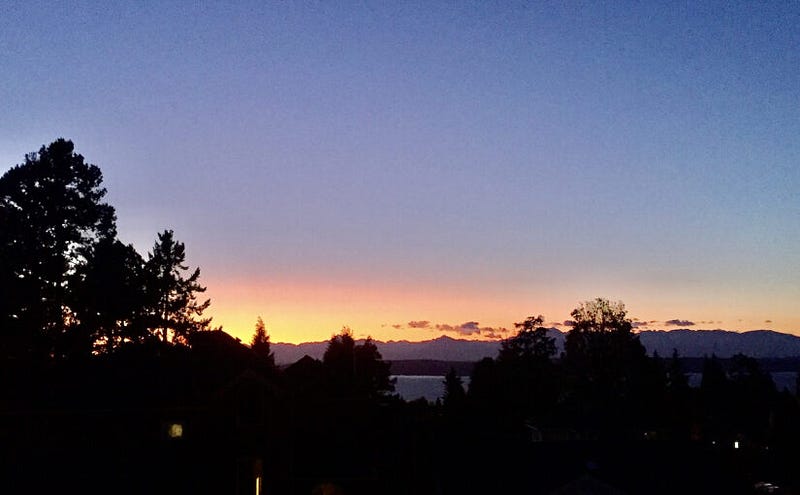
Whenever I see the sunset, I feel as if a tiny part of my heart is taken away. Something is going away, never coming back. Me, left alone here…
In Hyakunin Isshu 百人一首, a classical Japanese anthology of one hundred waka poems by one hundred poets compiled in the 13th century, there are four poems that read about sunset. And they are all poems of autumn.
70/100 良暹法師 by Ryo-zen Hoshi
さびしさに Sabishisa ni 宿を立ちいでてYado wo, tachi-idete ながむれば Nagamureba いづくも同じ Izuku mo onaji 秋の夕暮れ Aki no yūgure.
The following is the English translation by William N. Porter (1909).
THE prospect from my cottage shows No other hut in sight; The solitude depresses me, Like deepening twilight On a chill autumn night.
71/100 大納言 経信 by Dainagon Tsunenobu
夕されば Yūsareba 門田の稲葉 Kado-ta no inaba おとづれて Otozurete あしのまろ屋に Ashi no maroya ni 秋かぜぞ吹く Aki kaze zo fuku.
The following English translation is by Clay MacCauley (1917)
When the evening comes, From the rice leaves at my gate Gentle knocks are heard; And, into my round rush-hut, Autumn’s roaming breeze makes way.
87/100 寂蓮法師 by Jakuren Hoshi
むらさめの Murasame no 露もまだひぬ Tsuyu mo mada hinu まきの葉に Maki no ha ni 霧たちのぼるKiri tachi-noboru 秋の夕暮 Aki no yūgure.
The following is the English translation by William N. Porter (1909).
THE rain, which fell from passing showers, Like drops of dew, still lies Upon the fir-tree needles, and The mists of evening rise Up to the autumn skies.
98/100 従二位 家隆 by Junii Ietaka
風そよぐ Kaze soyogu ならの小川のNara no ogawa no 夕暮は Yūgure wa みそぎぞ夏のMisogi zo natsu no しるしなりけるShirushi nari keru.
The following English translation is by Clay MacCauley (1917)
Lo! at Nara’s brook Evening comes, and rustling winds Stir the oak-trees’ leave; — Not a sign of summer left But the sacred bathing there.
What’s so special about the sunset in autumn, you may ask.
Because, that famous Sei Shonagon 清少納言 had said so in her famous essay Makura no Soshi (The Pillow Book).
In autumn, it is the evenings (that is most beautiful), when the glittering sun sinks close to the edge of the hills and the crows fly back to their nests in threes and fours and twos; more charming still is a file of wild geese, like specks in the distant sky. When the sun has set, one’s heart is moved by the sound of the wind and the hum of the insects.
Source: The Pillow Book of Sei Shonagon, translated by Ivan Morris
All four poems above were written after the days of Sei Shonagon. Once the influential court lady had declared, no poet in Japan’s autocracy would dare refute.
Thank you, Sahil Patel, for the fun prompt.
Here is Allisonn Church’s lovely poem, and even her dog enjoys the sunset!
Do listen to the sunset with CJ McRae!
Originally published at https://akemisagawa.com on May 2, 2023.