
JAPANESE CLASSICAL LITERATURE
Sunrise — Dreadful Time for Lovers
So I was taught at school
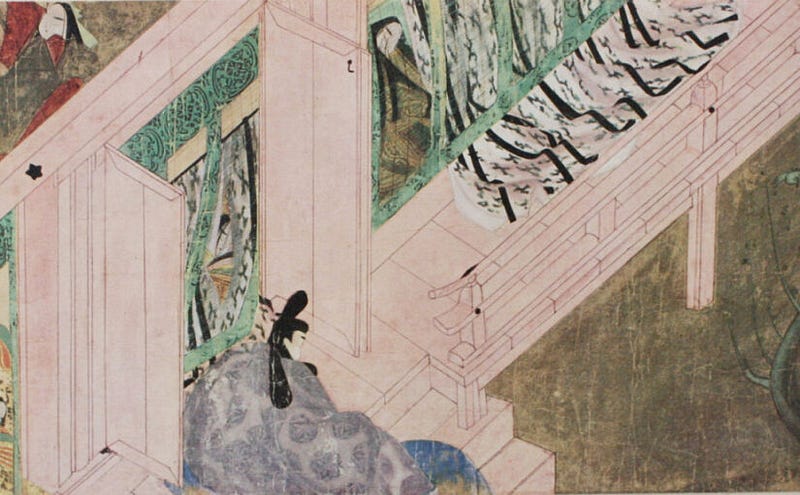

I first learned about Hyakunin Isshu 百人一首, a classical Japanese anthology of one hundred waka poems by one hundred poets compiled in the 13th century, in junior high school. Learning Hyakunin Isshu meant learning about the love (and sex) life of ancient Japanese aristocrats and court ladies.
In ancient Japan,
- virginity was not highly valued by men or women.
- monogamy was not highly valued, either.
- a man visits a woman at her house at night and goes home at dawn.
The sunrise, therefore, was a departing time for lovers. And if a woman makes a poem about sleeping alone at dawn, she must be full of jealousy.
Ever since I learned Hyakunin Isshu, my impression of the sunrise, normally refreshing, was ever contaminated…
The following 5 poems are examples of such love poems in Hyakunin Isshu.
21/100 素性法師 by Sosei Hoshi
今こむと Ima kom to 言ひしばかりにIishi bakari ni 長月の Naga-tsuki no 有明の月を Ariake no tsuki 待ちいでつるかな Wo machi izuru kana.
The following is the English translation by William N. Porter (1909).
THE moon that shone the whole night through This autumn morn I see, As here I wait thy well-known step, For thou didst promise me — ‘I’ll surely come to thee.’
30/100 壬生忠岑 by Mibu no Tadamine
有明の Ariake no つれなく見えしTsurenaku mieshi 別れより Wakare yori 暁ばかりAkatsuki bakari うきものはなしUki-mono wa nashi.
The following is the English translation by William N. Porter (1909).
I HATE the cold unfriendly moon, That shines at early morn; And nothing seems so sad and grey, When I am left forlorn, As day’s returning dawn.
52/100 藤原道信朝臣 By Fujiwara no Michinobu Ason
明けぬれば Akenureba 暮るるものとはKururu mono to wa 知りながら Shiri nagara なほ恨めしきNao urameshiki 朝ぼらけかなAsaborake kana.
The following English translation is by Clay MacCauley (1917)
Like the morning moon, Cold, unpitying was my love. Since that parting hour, Nothing I dislike so much As the breaking light of day
53/100 右大将道綱母 by Udaisho Michitsuna no Haha
歎きつつ Nageki-tsutsu ひとりぬる夜のHitori nuru yo no 明くるまは Akuru ma wa いかに久しきIkani hisashiki ものとかは知るMono to kawa shiru.
The following is the English translation by William N. Porter (1909).
ALL through the long and dreary night I lie awake and moan; How desolate my chamber feels, How weary I have grown Of being left alone!
59/100 赤染衞門 by Akazome Emon
やすらはでYasurawade 寝なましものをNenamashi mono wo 小夜ふけて Sayofukete かたぶくまでのKatabuku made no 月をみしかなTsuki wo mishi kana.
The following is the English translation by William N. Porter (1909).
WAITING and hoping for thy step, Sleepless in bed I lie, All through the night, until the moon, Leaving her post on high, Slips sideways down the sky
Thanks, Sahil Patel, and sorry my story is not quite what you were expecting…
I join Ari Lake’s tribe!
Thank you, Kerrie Gutierrez-Diaz, for the beautiful photos!
Originally published at https://akemisagawa.com on May 9, 2023.