
Summer’s End
Transitions
Toes curled over the lip of the pool, I hover at the edge, muscles tensed, breathing in the dampness of the heated air. Summer, in Southern California, seems to always climax in a blast of heat in early September, and this year was no exception.
Working in my garden earlier in the day, stickiness clung to my skin and rivulets of sweat trickled like small streams down my back. Our new resident, a tiny black and white mosquito who has arrived here from lower latitudes, does not seem to understand that I am the girl who never gets bitten, so I took a few hits while dead heading my Lilies of the Nile. I know that the tormented itching from these nasty little newcomers will attack me tonight.
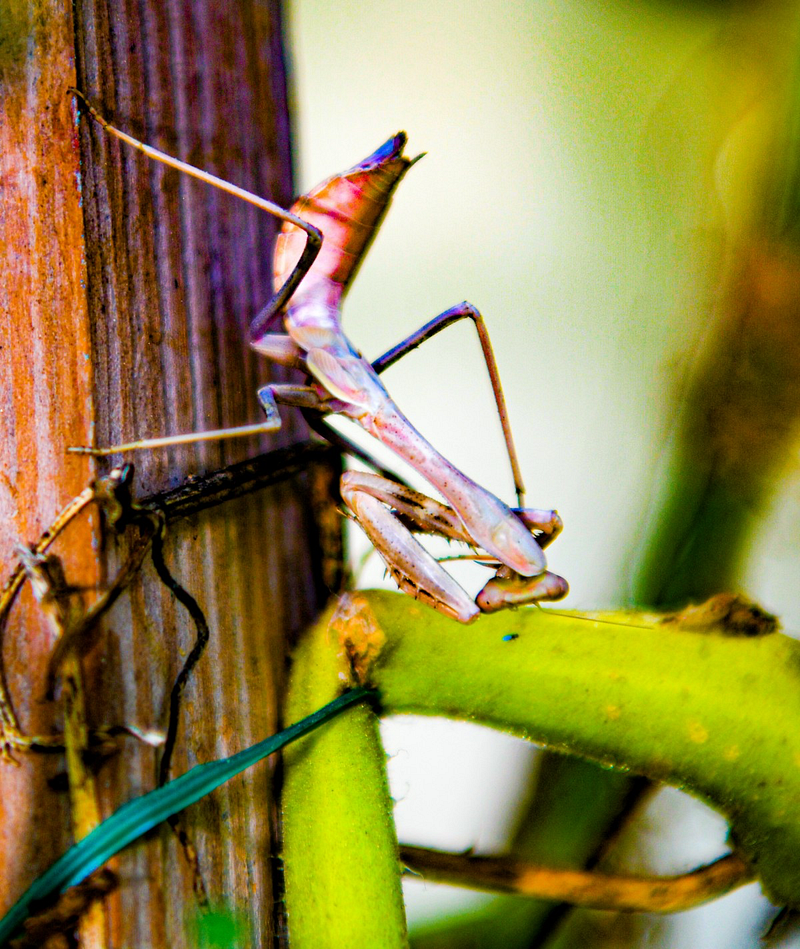
I had intended to rip out the cherry tomato plants today. Their sweet bounty is done for the season, and their leaves have started to curl into brittle tendrils which now hang as limp remnants of their former glorious selves. But I discovered a praying mantis, almost the same color as those browning leaves, perched atop one of the plants, and I did not have the heart to dislodge it from its home.
So, the tomatoes can wait another day or two. But I am anxious to get my lettuce seeds into the earth where the tomatoes now reside.
The pool beckons, and, for a moment, I am airborne before plunging into the silky depths, cool water sliding over my bare skin. I love these nighttime swims this time of year. I glide underwater to the far side, feeling just a tiny burst of burning in my lungs before I reach up to touch the edge and take a breath. Early in the season, my lungs can’t tolerate the time and distance it takes to traverse the bottom of the pool in one breath. But, by now, they are acclimated.
My husband calls my swims my “Mermaid Transition.” I do sometimes wonder what it would be like to be a creature of the water.
I backstroke to the deep end again, gazing up at the pine and Eucalyptus trees framing my view of moon on her way to full bloom. She dances amongst their branches all year long, but the sight of her from the liquidity of the waters seems to add an element of mystery or mysticism. The strings of connections to the Goddesses of the eons tug at me.
The “golden hour” has passed and now a hazy pink fades to violet smoke over the arch of my Giant Bird of Paradise. And, silhouetted in that ephemeral light, three “grand dames” of the spider world have woven masterpiece tapestries, which drift with the breeze and stretch from the notched edge of the leaves to the patio furniture on the deck below.
Their works are marvels to me. I love to watch them spin their webs. There is an art to it. I am certain that they carry a basic pattern in their genes, but they each have a different flair, a slightly different warp and weft.
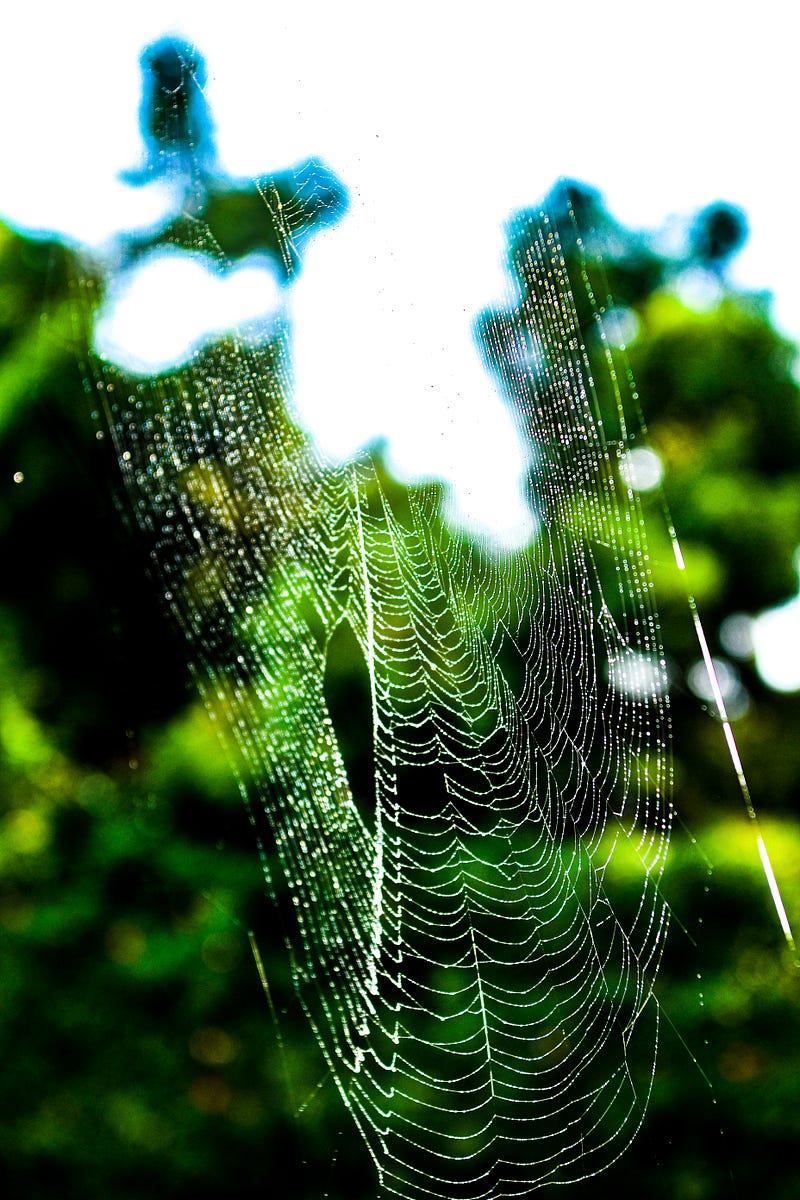
And they seem to know me. I made the mistake the other day of misting one of my favorite spider’s web with a spray bottle (I was trying to capture it in a photo, this photo actually, and thought the dew would be pretty) and she scampered up to the top, looking down at me as if to say “How could you?”
The trust seems to be re-established now though. She re-emerged and has taken once more to her throne in the sky. I am hopeful that she and her friends will capture some of those nasty little mosquitos tonight.
I know that I should probably have kinder thoughts about those mosquitos.
I remember a verse in the Upanishads which mentioned that evil people would be reincarnated as biting insects. I have no idea about the truth of this matter. But I do hope that the little critters are being moved on in the cycle of creation after being eaten by the spider.
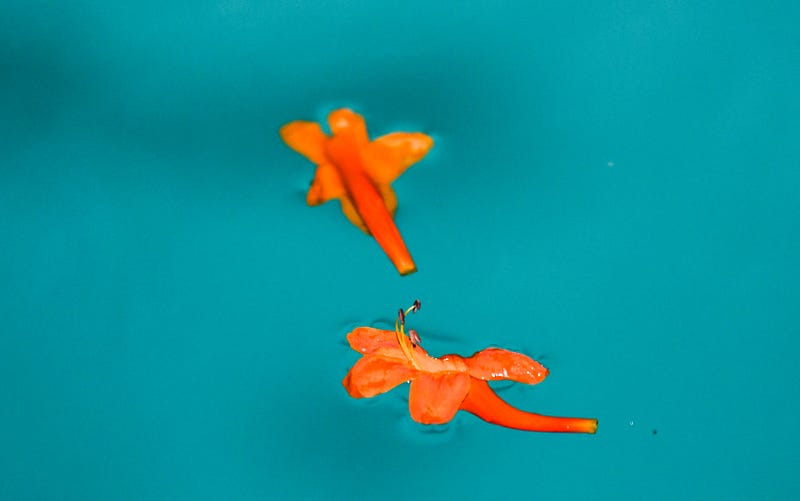
Honeysuckle blooms have fallen from the hedge and bob like little bursts of orange fire all around me in the water. Moonlight shivers in the depths of the pool.
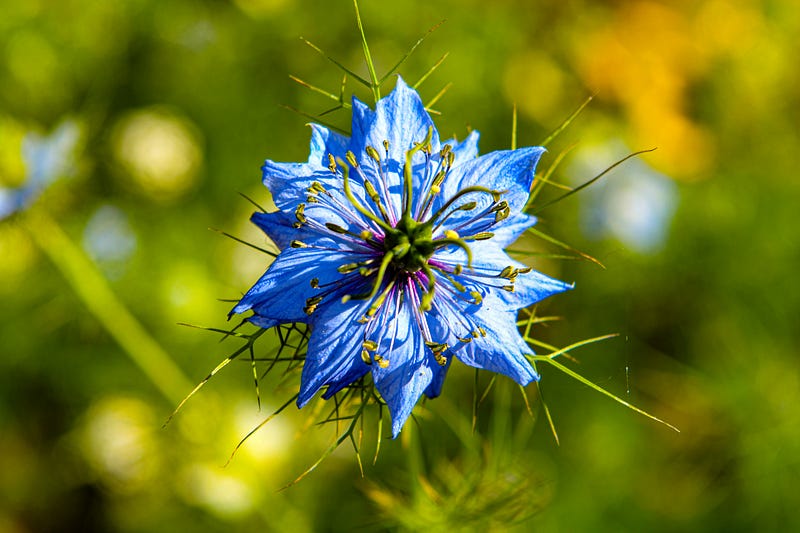
The time of re-seeding has begun. Love-In-A-Mist, delicate purple flowers crowned with green curly-cues, have balanced all summer on slender stalks a couple of feet above the ground. But almost all of them have withdrawn their life force back into purple and green zebra-striped seed pods which brown with the baking heat at the end of summer. I like to collect them after they have dried, break them open and sprinkle the seeds back into the earth. Over the years, they have figured out which parts of the yard they prefer to inhabit.
The Lilies of the Nile are also done. I think my neighbors probably wonder why I don’t cut the stalks off right after the blooms are finished. But I like to wait and let the seed pods dry out before I transport them up the hill to where I am attempting to establish a new patch of the lilies in the dappled sunshine under the pines.
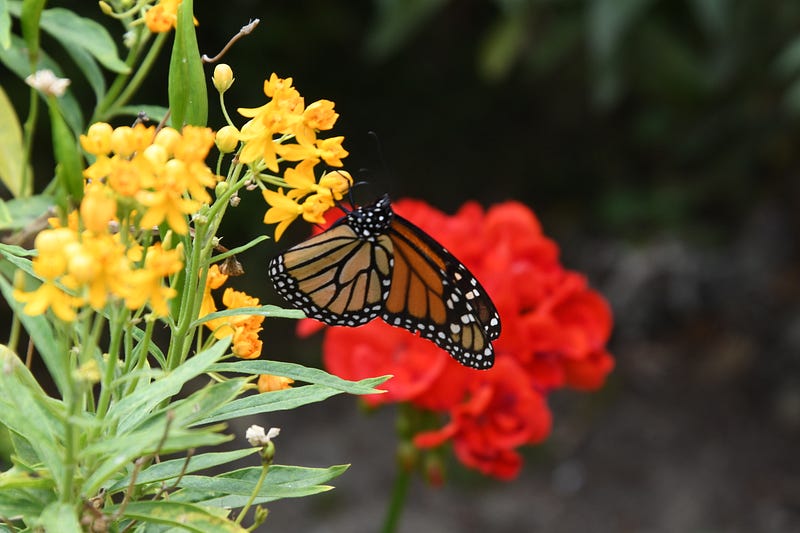
The monarchs are still here. A few of them always over-winter in my yard. This year, I learned that the orange and yellow milkweed that I have always planted for them may be too bitter. So, I found some local native pink milkweed. They have seemed to thrive on the Mexican variety, so I haven’t taken it out. We’ll see which type they prefer…
The hummingbirds have slowed down a little. At the height of summer, I had to refill all six of my jumbo feeders at least once a day. But I think some of the migrating Rufous have flown on to Mexico now. I am down to re-filling the feeders every-other-day.
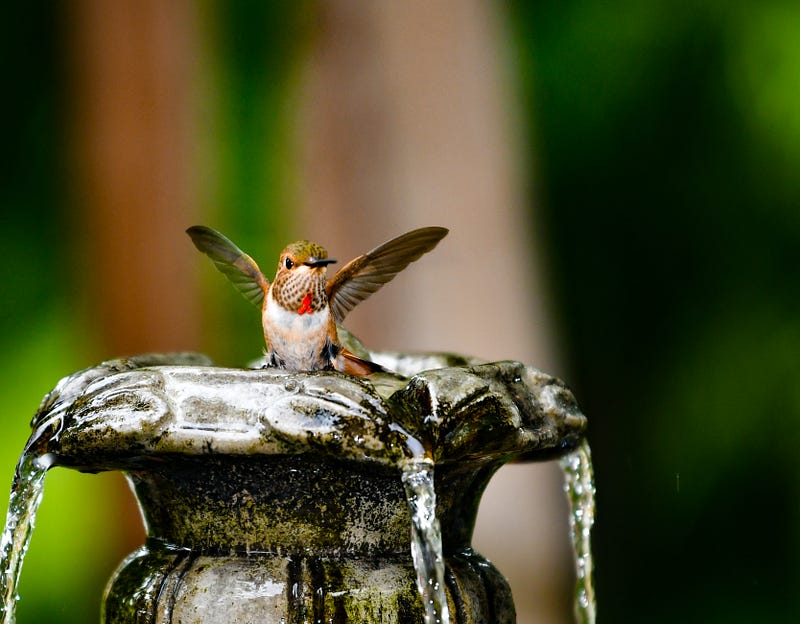
I love to watch them show up when I emerge on the balcony with a newly replenished feeder. I feel like the “Nectar Goddess.” Oftentimes, they will hover, just inches away from me while I stand, still-as-a-statue, pressed up against the French door, waiting for them to come.
Those little wings, which blur into angel halos around them, seem so delicate. And yet, these little birds can migrate two thousand miles each year, from Mexico to the Rockies, or even to Alaska, and back.
The Queen Anne’s Lace, both a memory from childhood in Upstate New York and a present-day force in my garden, unfurls all over my yard this time of year. The rounded baskets, green skeletal ribs cradling nascent flowers, are now opening to flat clouds of tiny buds.
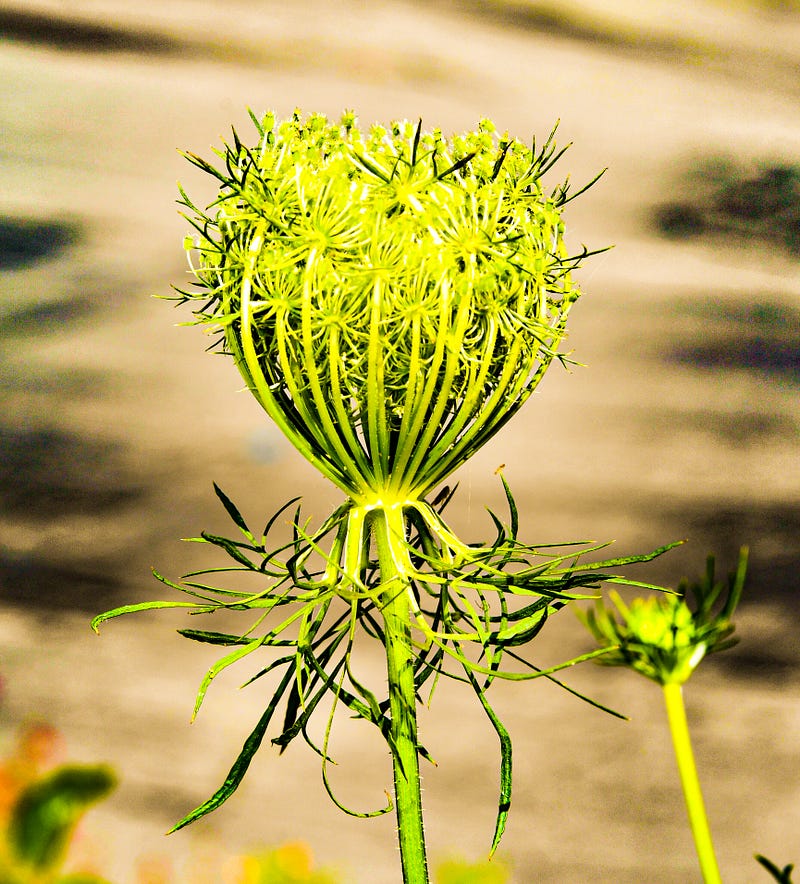
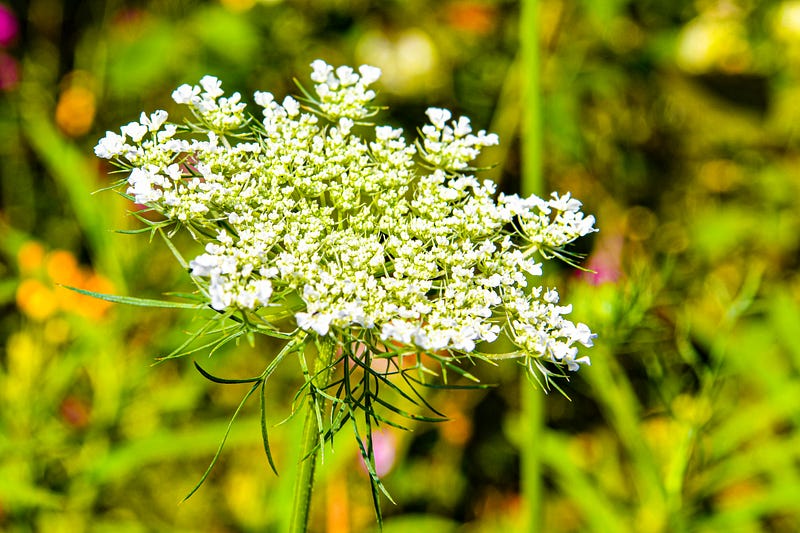
They remind me of visiting Lake Canandaigua with my parents when I was young and the world seemed so new. I had a birthday once, when they brought me into the fields and decorated my cake with wildflowers. My candle was the flaming tree across the valley.
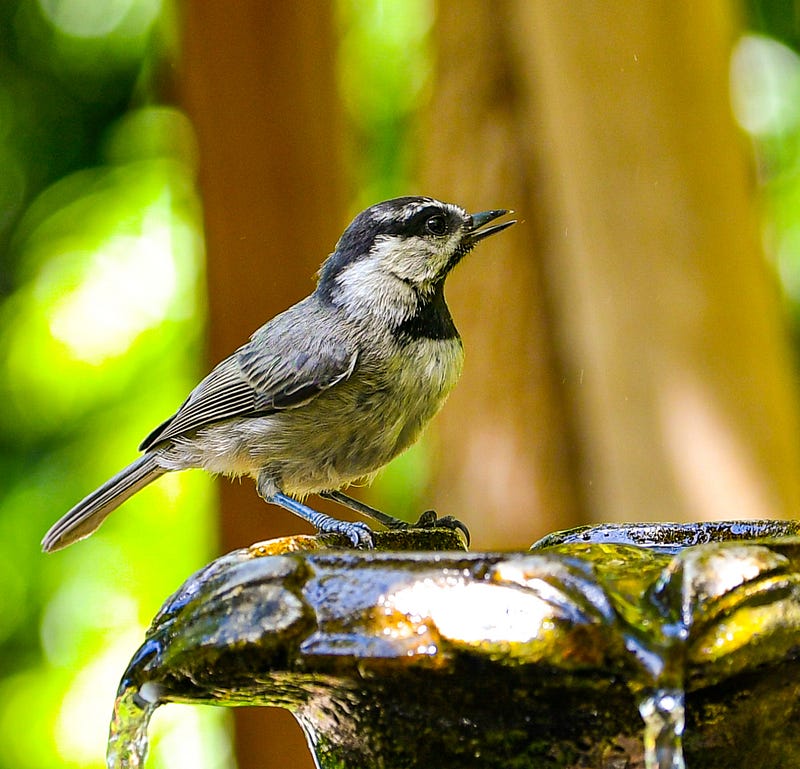
The Mountain Chickadees, round little birds painted with black eyebrow pencil, seem to have departed, for the moment, for the cooler climes of higher elevations. I saw one the other day, just the one, and I wondered if this is my special little friend, whom I rescued from the mouth of my angst-ridden cat, Bisou, who can’t resist the lure of the chase, but never kills (and rarely wounds) the birds he brings me.
If it is the same bird (and I suspect it is), he is the lone strangler who is now awaiting the return of his family members.
This transitional time of early September is not really either summer or fall.
I have not yet put away my summer clothing. It is just too hot. But I see the signals of fall rapidly approaching. The spiders are always the give-away sign. But there are others too — the desiccation of the scabia and the wilting gladiolas.
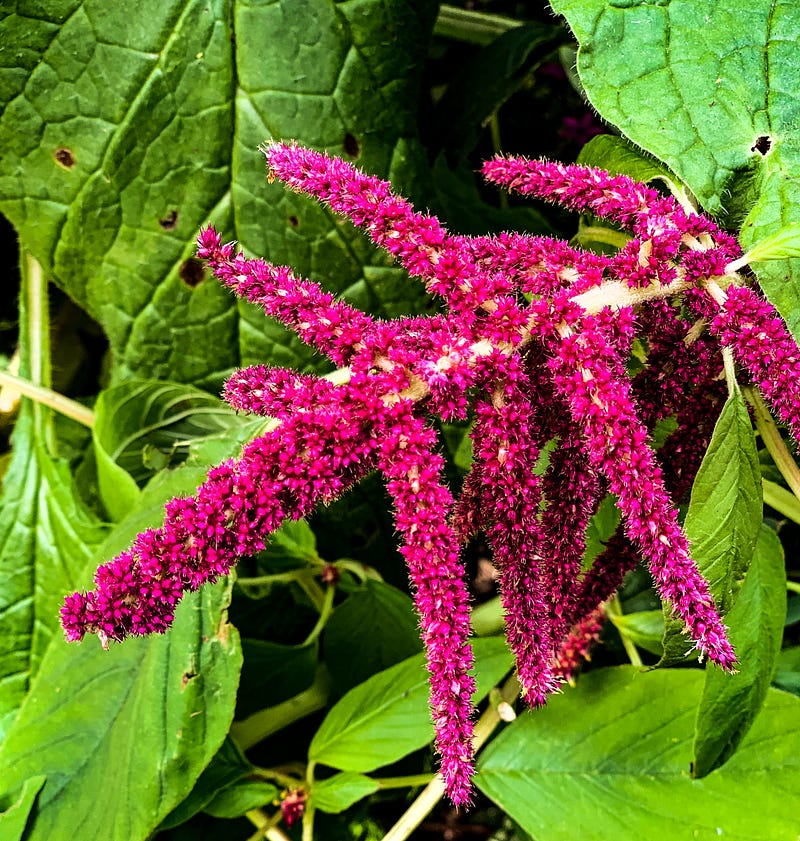
Soon it will be time for some of the fall plants to emerge from the seeds which have been scattered to the earth, waiting patiently for the shorter days. Love Lies Bleeding may be my favorite. An heirloom flower, which I can only purchase in seed packets, trails in scarlet bursts of whispered stories of love-gone-awry across the pin-wheel flowers of Fireworks Gomphrena.
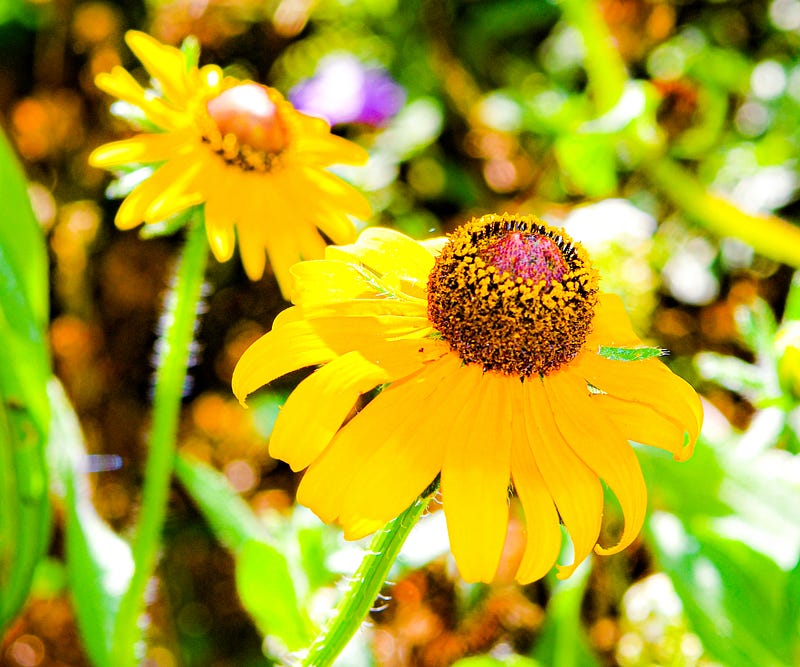
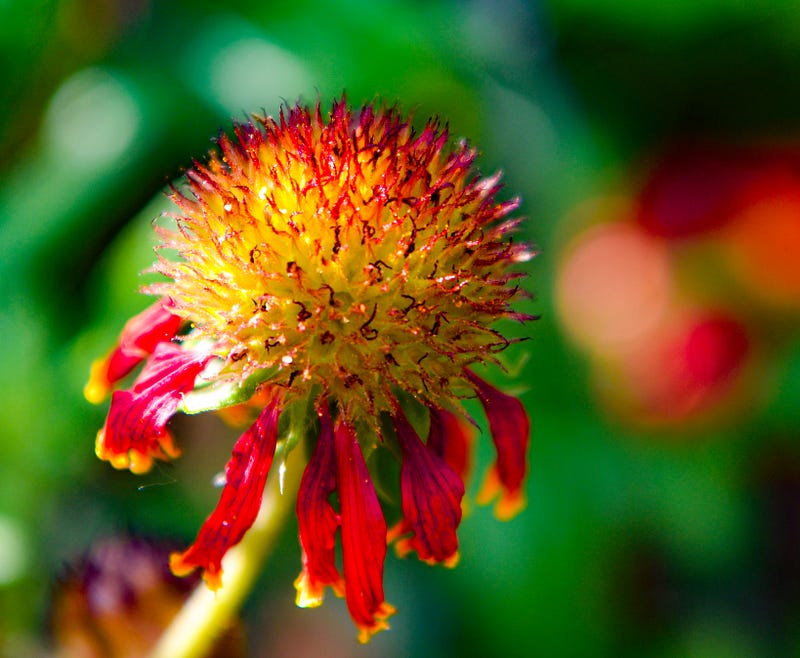
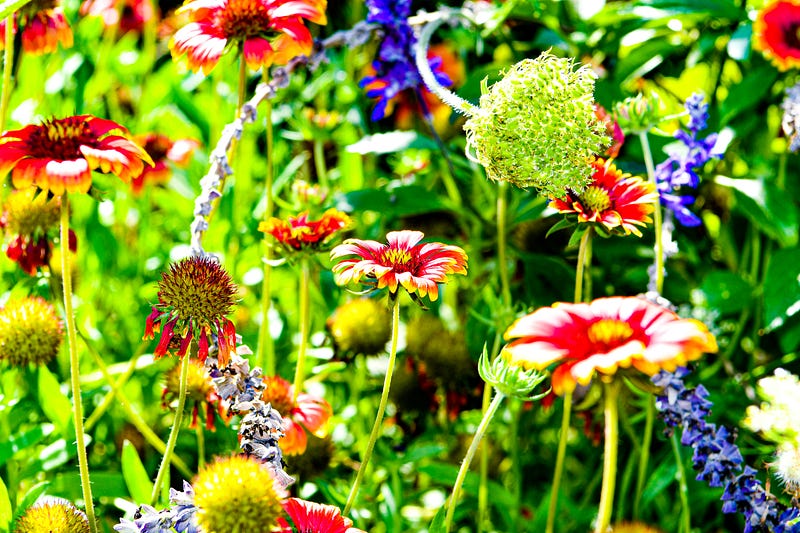
And the Cone Flowers are luxuriously gorgeous at the moment. The bees cannot keep their little feet off of them. Just like the name says, a cone of soft brown fuzz emerges, like a volcano, over scarlet-ringed yellow petals. Once the petals fall off, a round globe almost as pretty as the original flower remains.
I glance again at the moon, and dive to the depths of the pool. The weeks of swimming are waning. Soon, the water will dip down to the night-time air temperatures, and the pool will be too cold for anything other than a quick plunge after a soak in the jacuzzi. But something in my part-Norwegian blood loves that contrast of hot and cold.
The moon has drifted now, over the top of the hill. She is on the rise.
I dive once more, marveling at the skeins of light dancing across the bottom. And, I emerge, breathless, in the shallow end.
I feel the transition of the seasons in my blood and bones. I lament the end of the long summer days. The shadows are already creeping into my garden earlier, and are casting longer images of the summer flowers against the dark earth.
But I also welcome the golden days of fall and the sweeping mists which will envelop the hillsides on the other side of the valley.
It is a time of renewal. It is a time of drawing in. It is a time of creative exploration and a descent into the flickering caves, which house the could-be’s of tomorrow. Each season has its time. But this time is now.
And, I embrace it.
Thank you to Dennett for the prompt:
Erika Burkhalter is a yogi, cat-mom, photographer, and lover of travel and nature, spreading her love and amazement for Mother Earth’s glories, one photo, poem or story at a time. (MS Neuropsychology, MA Yoga Studies).
I hope that you enjoyed this glimpse into a moment in time in a Southern California garden. You might also enjoy this poem about the spiders:
And this one is about the Mountain Chickadee Rescue:
And this is a little story about the goings-on in my yard, with the whole cast of characters (Mr. Squirrel, the raccoons, etc…):
Story and photos ©Erika Burkhalter. All rights reserved.


