
Stunning Waterfalls
… in more ways than one.
Back in the summer of 2017, my wife and I were doing a road trip through western Canada. Marina was scheduled to participate in an international conference in the country, and so we decided to visit friends in Calgary, Alberta and others near Vancouver, British Columbia, and to drive the beautiful roads in between.
The most obvious place to visit along that route is Banff National Park which provides a wide range of fantastic views into the Rocky Mountains, across lakes and rivers, and sometimes even a view of some bears.
But this story, my second for Globetrotters’ monthly challenge in March 2024, is about a waterfall.
Very VERY different from Mosi-oa-Tunya that I wrote about in my first submission, but no less dramatic. For a different reason.
To set the scene, we had driven our rental car up to Lake Louise, where it was tricky to find parking. It’s a very accessible and very popular tourist spot, and the next image explains that to some extent.
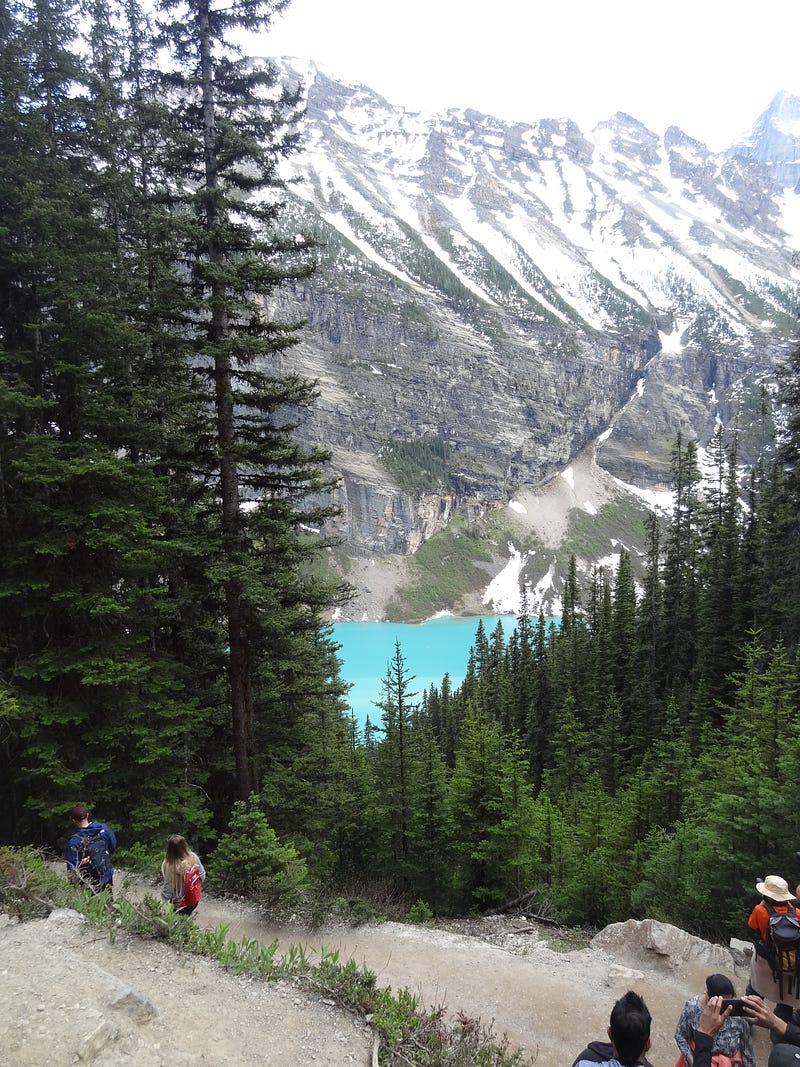
The most obvious feature of the picture is the fantastic colour of the water. It’s a result of the sun’s rays refracting to water, which includes very fine rock dust. The other remarkable feature (at least for a geologist like me) is the alluvial fan of rubble from the mountains that spreads into the opposite side of the lake, partly covered by vegetation, and partly by snow and ice.
Yes, summer comes late to this part of the world.
There were lots of crowds around Lake Louise and we decided to hike the approximately 3,5km up to Lake Agnes.
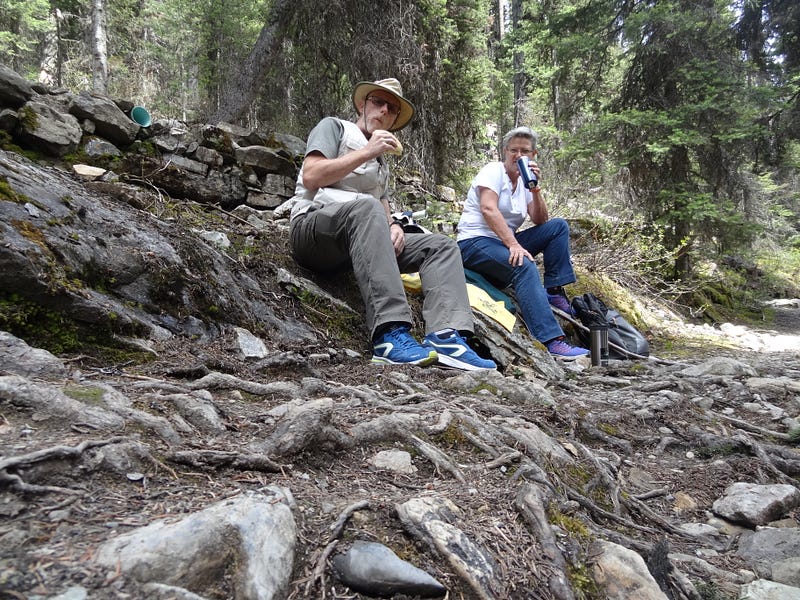
Lake Agnes features a famous and historical tea house, but this was also full of tourists. So we didn’t enter. (It’s funny how we try to avoid other tourists, even if we are the same species ourselves, but that’s a topic for another day.)
I’m still aiming to discuss a waterfall!
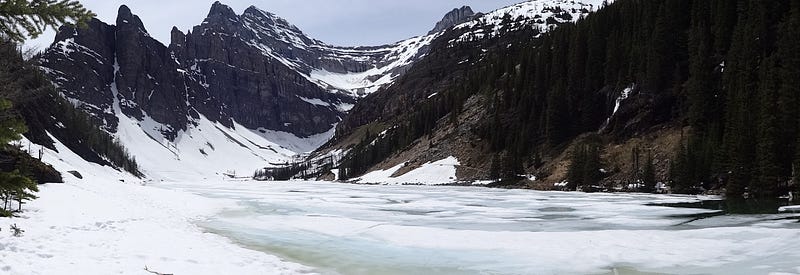
The header image of this story shows Lake Agnes from near the tea house and it was clearly a lot colder than Lake Louise, being quite a bit higher up. Even in the first week of June, the lake was still covered with ice that was slowly melting.
As I was taking that picture, we heard a loud shout from across the lake, and saw something toppling and splashing into the water. I turned to Marina (who is a registered nurse and midwife) to suggest that there might be an accident where she could help, she loves that sort of thing. (Actually, I secretly think that she attracts such situations…)
Anyway, Marina had already departed in a little cloud of dust, towards the location of that commotion. As any good husband should do, I followed. But not too fast, I’m not much use in accident situations.
Anyway, it turns out that an English couple had been strolling along the path along the edge of the lake, when a piece of ice about 1 metre square broke off from somewhere above them, fell onto the grassed slope next to them, and bounced horizontally into the water. Unfortunately, the English lady was occupying the same space at the same time, and she was slammed into the water too!
That should qualify as a waterfall in more ways than one, don’t you think?
Fortunately, the water was shallow but she did fall with her head onto some rocks and her husband jumped in to drag her out.
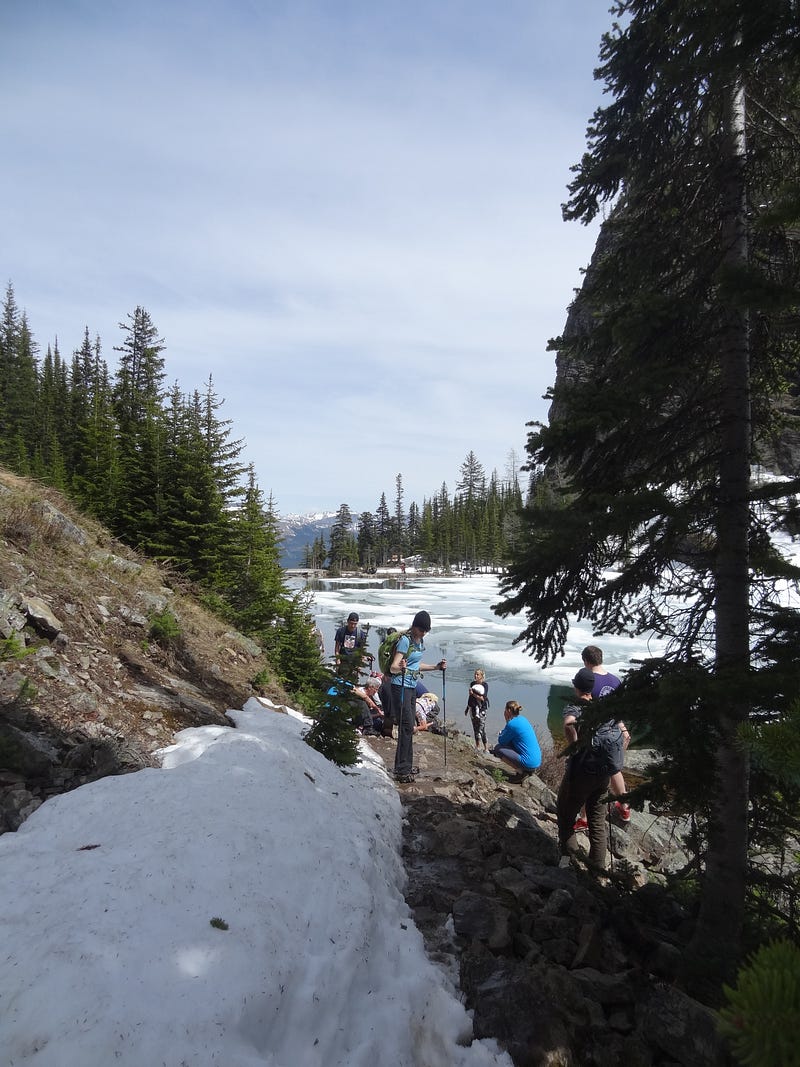
She was quickly helped by Marina (who can cover a few hundred meters in remarkably good time!), by her husband and a group of recently graduated doctors. Also a Swedish policeman, I seem to remember. A helicopter was called from the tea house, and until the paramedics arrived, everybody helped keep the lady warm, and immobilising her neck, in case of injury. Eventually, she was evacuated with the helicopter, flying in a stretcher on a rope along with the paramedic, to the hospital in Banff.
By now you might be thinking that it’s all very interesting, but not technically about a waterfall…?
However, as we started our descent towards Lake Louise, we did pass a quite pretty little waterfall, illustrated below for your viewing pleasure:
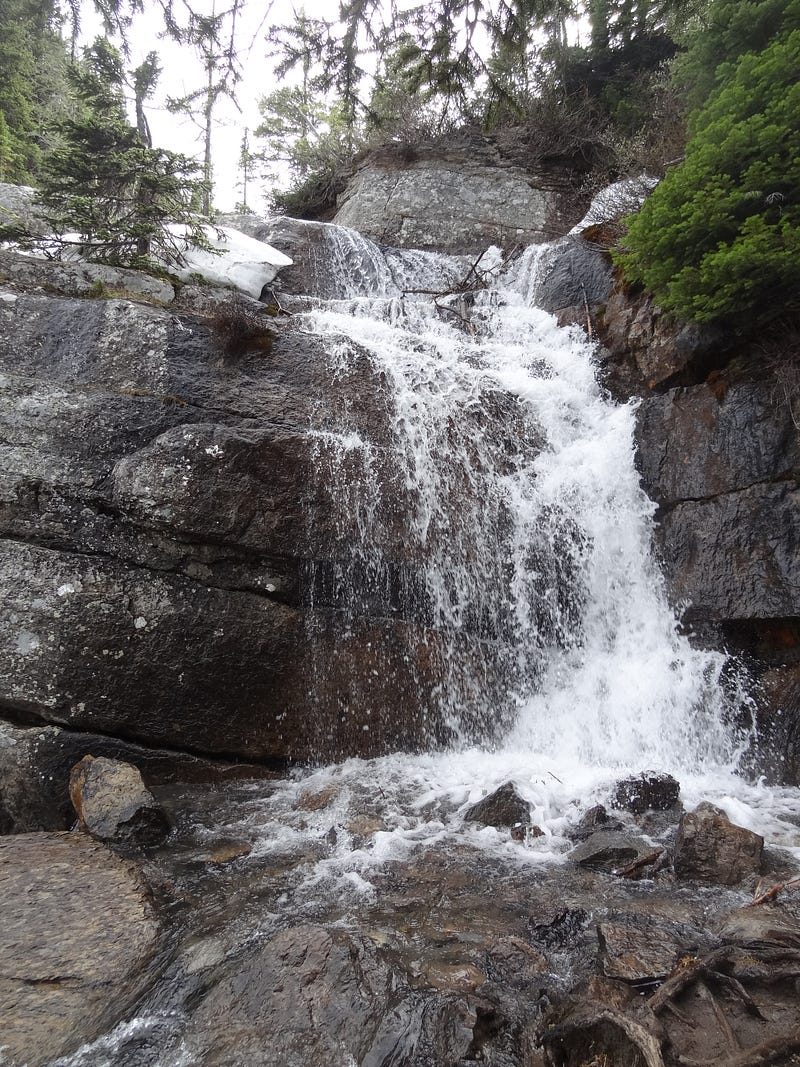
Only a very small waterfall, but it should qualify. It’s strange how the running water, and the sound of it splashing onto the rocks, is mesmerising, almost hypnotic. We could have stood there, enjoying the little view and the fresh, moist breeze for much longer, but we had to continue the clamber down to Lake Louise and the car.
The good news is that the lady who’d been knocked onto the rocks recovered quickly. We tried to visit her in the hospital the next day, but she’d already been discharged. As we stopped for fuel on our way towards Field, the couple pulled into the same filling station alongside our car. The lady had a big white bandage around her head, but they were able to continue their holiday, thank goodness.
I hope you’ve enjoyed this story about a fall of frozen water (and a little waterfall) and I’m sure you agree that waterfalls don’t have to be huge to be beautiful and spectacular. Have a look at these stories from other Globetrotters, proving my point perfectly:
Julia A. Keirns writes about a waterfall in New York State that looks quite small until you see the humans posing next to it:
CosmicDancer introduces us to waterfalls in Norway, tumbling down rocky mountains between very autumny colours, beautiful!


