avatarJeff Hayward

Free AI web copilot to create summaries, insights and extended knowledge, download it at here

2231

Abstract

, and I quickly snap as they pass by me.</p><p id="0901">Sometimes I pan my camera from side to side to create the illusion I’m scanning for an image, and then click when they’re in the frame.</p><figure id="f330"><img src="https://cdn-images-1.readmedium.com/v2/resize:fit:800/1*W6AC5wgcoGXWHMHw-LNsSQ.jpeg"><figcaption>I said hello while walking by this dude, and then snapped a frame when he acknowledged me. Image by author</figcaption></figure><p id="755c">You don’t necessarily have to bring the camera to your eye to use this method at a wide angle. By using auto focus or <a href="https://jamesmaherphotography.com/zone-focusing-street-photography/">zone focus</a>, you can simply click off a frame as they walk by you.</p><h2 id="33ab">2. Shooting from the hip</h2><p id="bc11">This is the practice of holding the camera at your side, with your finger on the trigger. It’s great for vertical compositions — I’ve used when strolling by people on benches or in doorways on the city streets.</p><p id="e146">You can also hold your camera horizontally on your chest/abdomen and snap from there. If it makes you more comfortable, look down at your camera like <a href="https://readmedium.com/midjourney-ai-imagines-street-photography-from-the-greats-913728e7d91e">Vivian Maier</a> used to when while snapping off a frame (basically the opposite of <a href="https://www.newyorker.com/culture/photo-booth/bruce-gilden-gritty-vision-of-a-lost-new-york">Bruce Gilden’s</a> in-your-face approach.) People won’t suspect you’re snapping their photo if your eyes are not on them.</p><figure id="6529"><img src="https://cdn-images-1.readmedium.com/v2/resize:fit:800/1*vqSygP8cCxgorLmNBCPmjA.jpeg"><figcaption>This was shot from the hip, camera trailing a bit behind me. I didn’t know I’d catch him lighting up. Image by author</figcaption></figure><p id="3f56">A wide-angle lens (18–28mm) is more forgiving than a 50mm lens for no-look compositions, as you’re more likely to get the face with some context.</p><p id="e454">When you’re snapping candidly, keep your head pointed forward. This may take some practice to capture a subject without looking. But once you learn the scope of your lens, you should be able to pull this off rat

Options

her easily.</p><h2 id="226d">3. Surprise shooting during a conversation</h2><p id="bd80">I’ve written about how street candids and street portraits <a href="https://readmedium.com/photography-street-candids-vs-street-portraits-1513c6e88775">differ</a>. You can get up close and personal to a subject while engaging them as a hybrid of the two.</p><p id="ff0a">What I mean is, when you see a subject you want to capture, say hi to them. Even ask them if you can snap their photo (tell them you love their style or that they’re photogenic, which they are.)</p><figure id="db6f"><img src="https://cdn-images-1.readmedium.com/v2/resize:fit:800/1*ULGTvf0De5mea8HkKUfM7g.jpeg"><figcaption>I had a brief chat with this guy while shooting from my chest, don’t remember what we talked about. Image by author</figcaption></figure><p id="5abf">However, while you’re waiting for the person to get into “I’m getting my portrait taken mode”, snap off a couple of frames. Oftentimes, even <a href="https://www.wired.com/2014/06/see-outtakes-from-some-of-historys-most-iconic-photos/">the outtakes</a> from a planned/unplanned shoot can be just as powerful.</p><h2 id="41fa">Just shoot and don’t look back</h2><p id="2e54">If you’re a bold shooter that doesn’t give a shit whether people see you snapping them, then just shoot and answer questions later. However, if you like a more incognito approach like I do, remember this rule when using the candid techniques: <b>don’t look back.</b></p><p id="b016">Don’t look over your shoulder to see if they noticed you shooting. They might have, but most people don’t care. They’re just curious. Just keep walking, looking for your next subject.</p><p id="d34a">Remember: If someone <i>does</i> question whether you took their photo, be honest. Show it to them if they want. Delete it if they’re not cool with it. If they are cool, send them a copy.</p><p id="1b6f">Our goal as street shooters is to capture a moment, not get into heated disputes about the legality/ethics of the craft (unless that’s your thing — I personally find these confrontations exhausting and pointless.)</p><p id="cd86">Got any more tips to add about getting closer to subjects? Leave them in the comments!</p></article></body>

Street Photography: Getting Up Close And Personal

How to close the gap between your subject without raising alarm
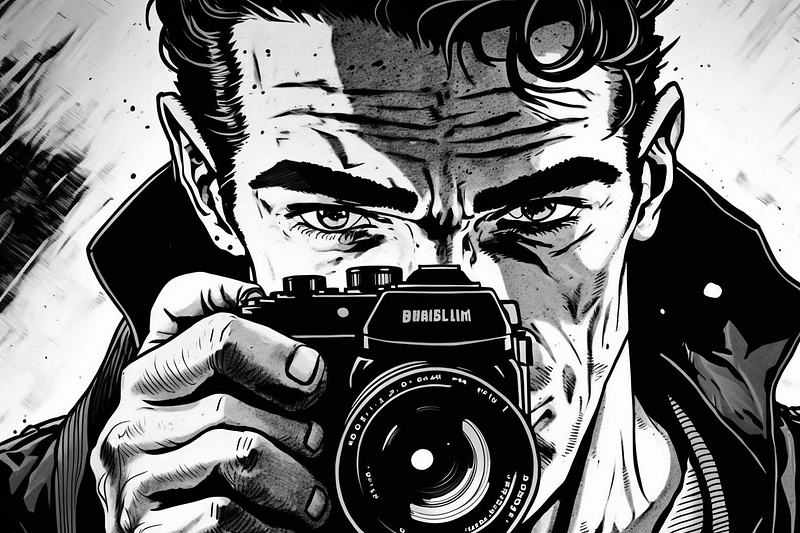
From author using AI. All in-article photos by author.

There’s a quote from famous war photographer Robert Capa: “If your pictures aren’t good enough, you’re not close enough.” While there are many styles of candid photography that can all be striking, he’s mostly right.

It may seem scary to get ultra close to your candid subjects, especially if you’re a rookie photographer or new to the genre. After more than 20 years of street shooting, I’m still sometimes hesitant to pull the trigger, a lingering anxiety which was exacerbated by the pandemic.

Over the past view years, I’ve instead been using figures as mainly the anchor for my urban photos. That way I can incorporate a human component without getting within a stranger’s personal space.

However, many of my favourite candid street shots are using an 18–50mm lens. These focal lengths allow to me to get in closer to the subject (18mm in particular) while still getting most of them in the frame.

While my camera has an audible shutter (as opposed to the newer mirrorless cameras that I can’t afford yet), I use the ambient sounds of the city to mask it at close range. Speaking of cities, few people pay any mind at all when you’re shooting on the streets — there’s so much going on.

Here are a few ways to get in close to a subject without raising their eyebrows:

1. Walk-by shootings

This is a technique I used often pre-pandemic, and 99.7% of the time no one noticed (except the few times I got yelled at.) I see the subject(s) approaching, and I quickly snap as they pass by me.

Sometimes I pan my camera from side to side to create the illusion I’m scanning for an image, and then *click* when they’re in the frame.
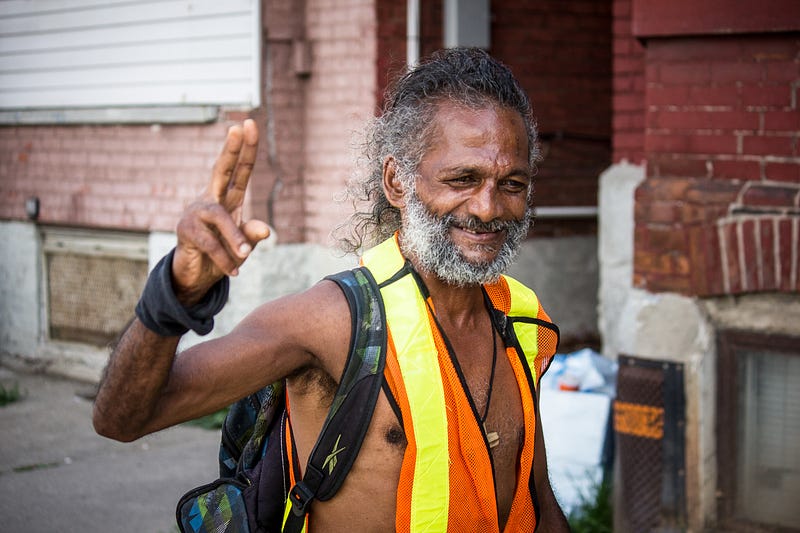
I said hello while walking by this dude, and then snapped a frame when he acknowledged me. Image by author

You don’t necessarily have to bring the camera to your eye to use this method at a wide angle. By using auto focus or zone focus, you can simply click off a frame as they walk by you.

2. Shooting from the hip

This is the practice of holding the camera at your side, with your finger on the trigger. It’s great for vertical compositions — I’ve used when strolling by people on benches or in doorways on the city streets.

You can also hold your camera horizontally on your chest/abdomen and snap from there. If it makes you more comfortable, look down at your camera like Vivian Maier used to when while snapping off a frame (basically the opposite of Bruce Gilden’s in-your-face approach.) People won’t suspect you’re snapping their photo if your eyes are not on them.
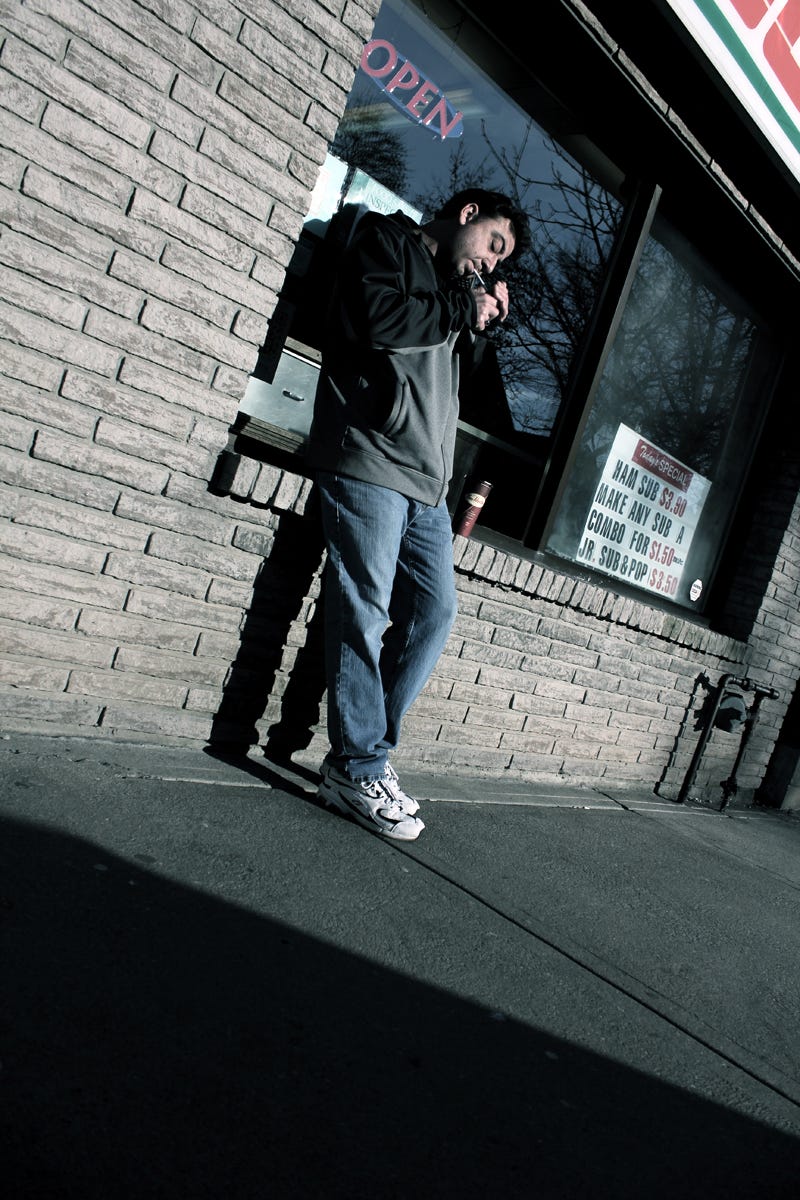
This was shot from the hip, camera trailing a bit behind me. I didn’t know I’d catch him lighting up. Image by author

A wide-angle lens (18–28mm) is more forgiving than a 50mm lens for no-look compositions, as you’re more likely to get the face with some context.

When you’re snapping candidly, keep your head pointed forward. This may take some practice to capture a subject without looking. But once you learn the scope of your lens, you should be able to pull this off rather easily.

3. Surprise shooting during a conversation

I’ve written about how street candids and street portraits differ. You can get up close and personal to a subject while engaging them as a hybrid of the two.

What I mean is, when you see a subject you want to capture, say hi to them. Even ask them if you can snap their photo (tell them you love their style or that they’re photogenic, which they are.)
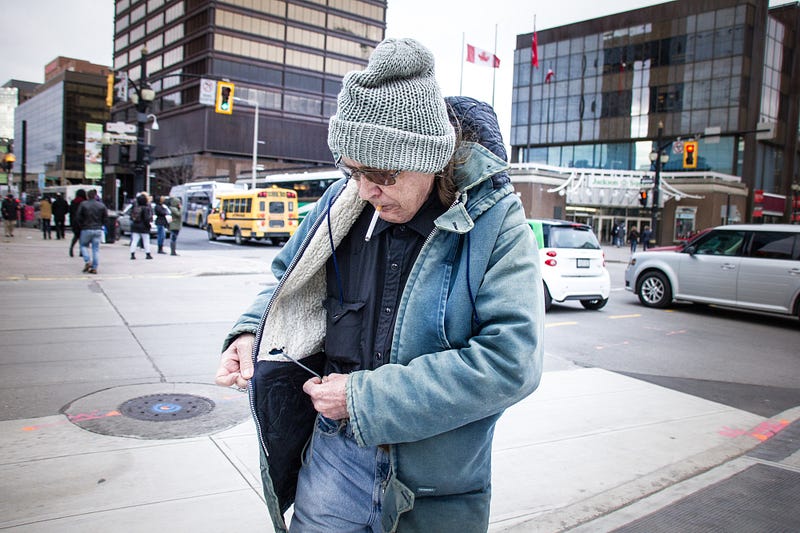
I had a brief chat with this guy while shooting from my chest, don’t remember what we talked about. Image by author

However, while you’re waiting for the person to get into “I’m getting my portrait taken mode”, snap off a couple of frames. Oftentimes, even the outtakes from a planned/unplanned shoot can be just as powerful.

Just shoot and don’t look back

If you’re a bold shooter that doesn’t give a shit whether people see you snapping them, then just shoot and answer questions later. However, if you like a more incognito approach like I do, remember this rule when using the candid techniques: don’t look back.

Don’t look over your shoulder to see if they noticed you shooting. They might have, but most people don’t care. They’re just curious. Just keep walking, looking for your next subject.

Remember: If someone does question whether you took their photo, be honest. Show it to them if they want. Delete it if they’re not cool with it. If they are cool, send them a copy.

Our goal as street shooters is to capture a moment, not get into heated disputes about the legality/ethics of the craft (unless that’s your thing — I personally find these confrontations exhausting and pointless.)

Got any more tips to add about getting closer to subjects? Leave them in the comments!

Photography
Photographer
Street Photography
Tips
Art
Recommended from ReadMedium