
Street Art in McLeod Ganj, India
Globetrotter’s monthly challenge response
McLeod Ganj is a hill station in Himachal Pradesh, India. In 1960, the village became the official residence of the 14th Dalai Lama and the Central Tibetan Administration in exile. Much of the street art around the village is an extension of the Dalai Lama’s presence in the area.
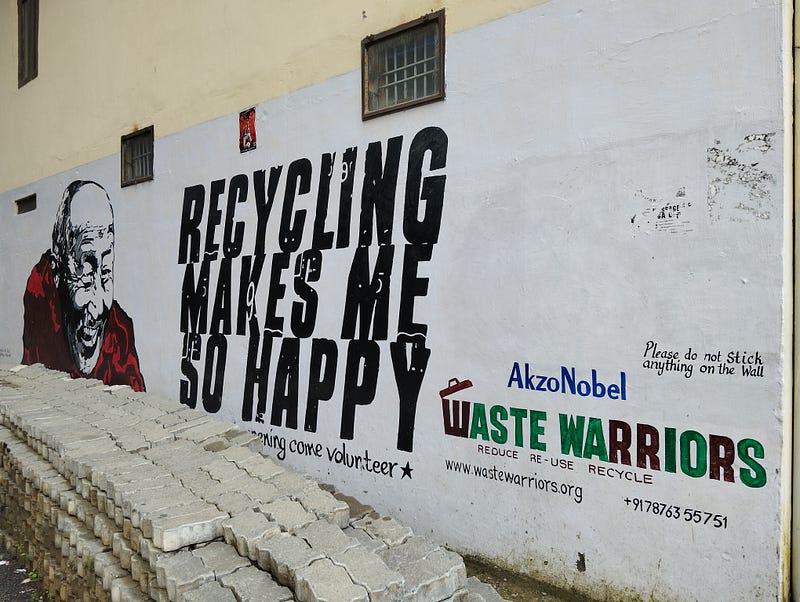
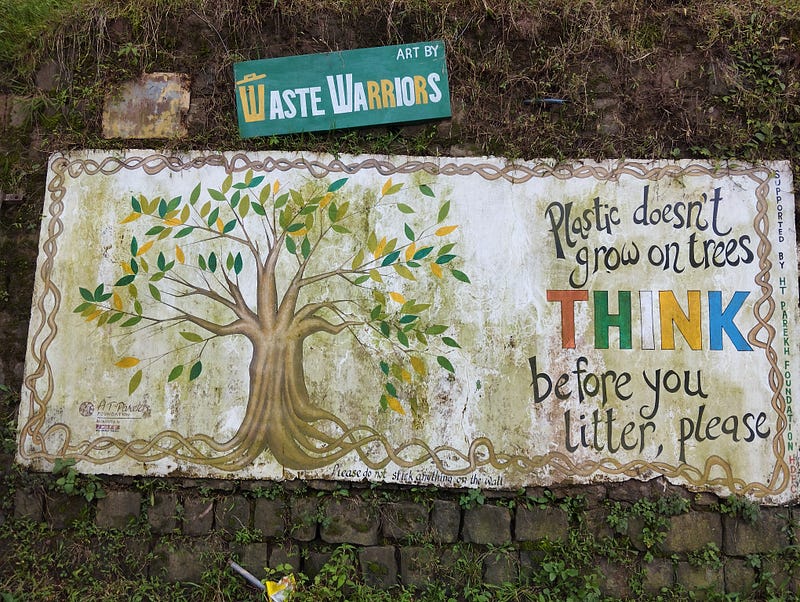
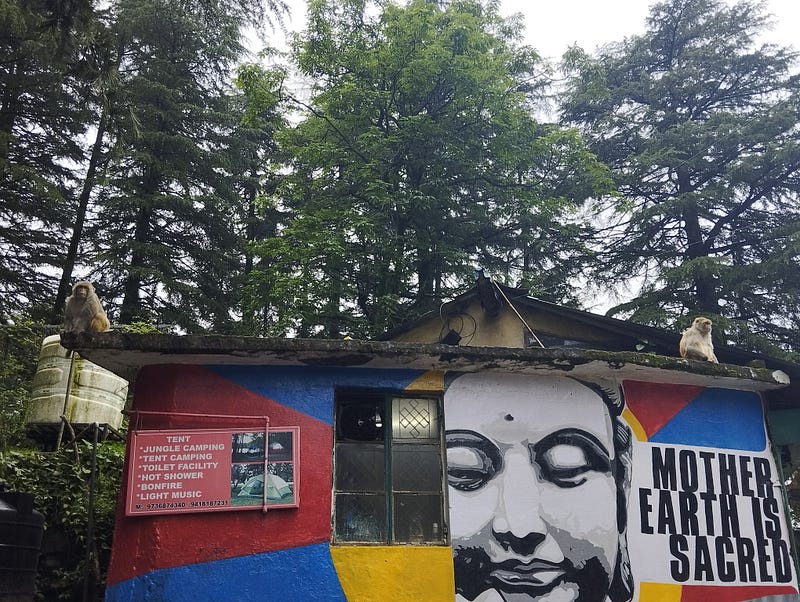
Waste Warriors is an NGO undertaking waste collection and management in McLeod Ganj, Dharamshala, Dehradun, Goa and other parts of India. The first two installations appear on Bhagsu Road and the one declaring “Mother Earth Is Sacred” is on the side of the Himalayan Tea Shop outside the Tushita Meditation Centre.
This video shows the work that Waste Warriors do in the Himalayas:
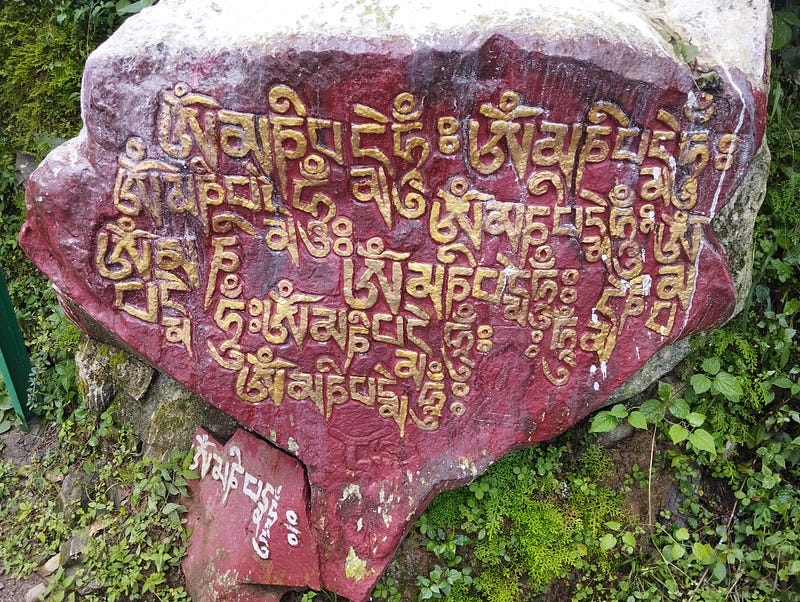
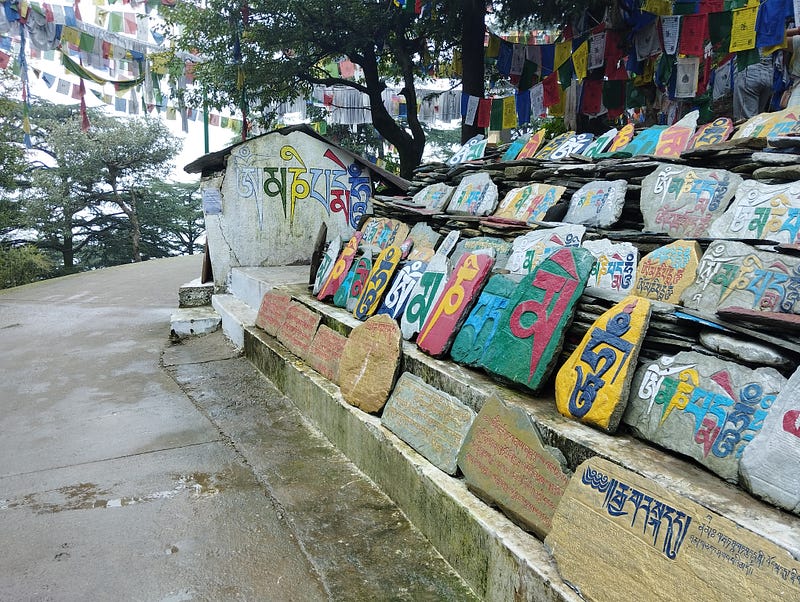
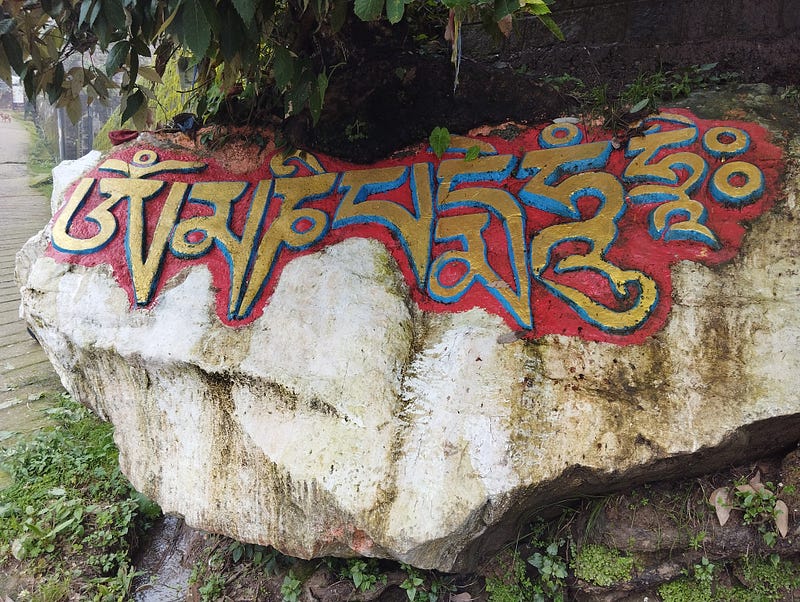
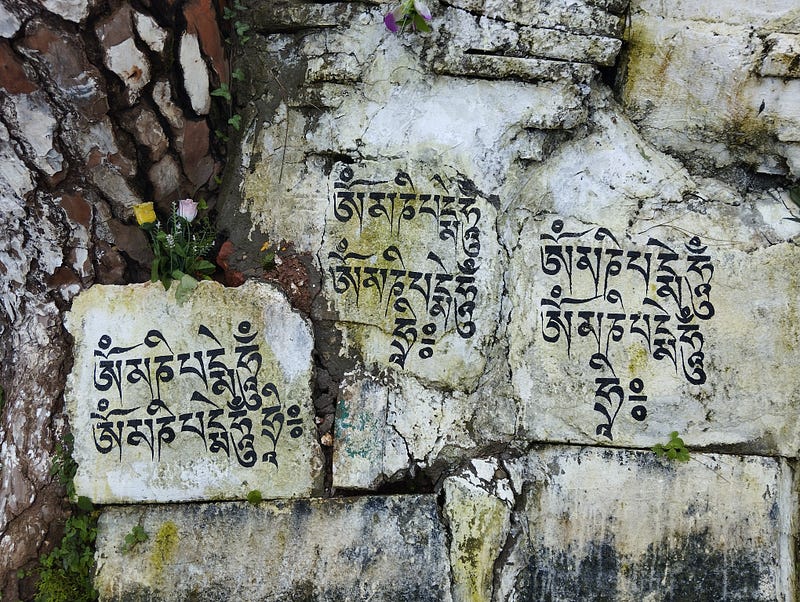
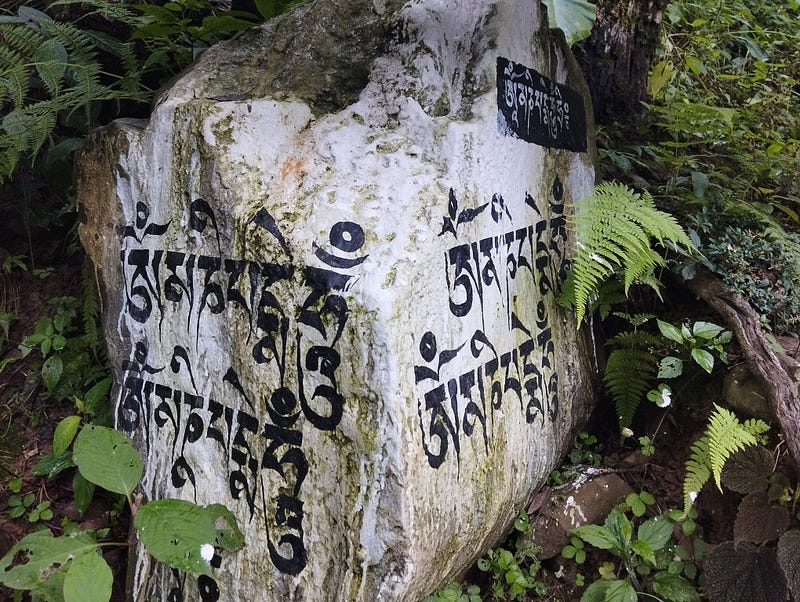
These are prayers painted on slate or stones on the kora walk around the Dalai Lama’s temple. Kora — literally “circumambulation” or “revolution” — is both a type of pilgrimage and a meditative practice in the Tibetan Buddhist tradition. The elegant Tibetan script is of Brahmic origin from the Gupta script and was introduced around the 9th century to facilitate the translation of Buddhist scriptures from India.
Prayer stones like these can be found throughout the Himalayan region in India, Nepal and Tibet.
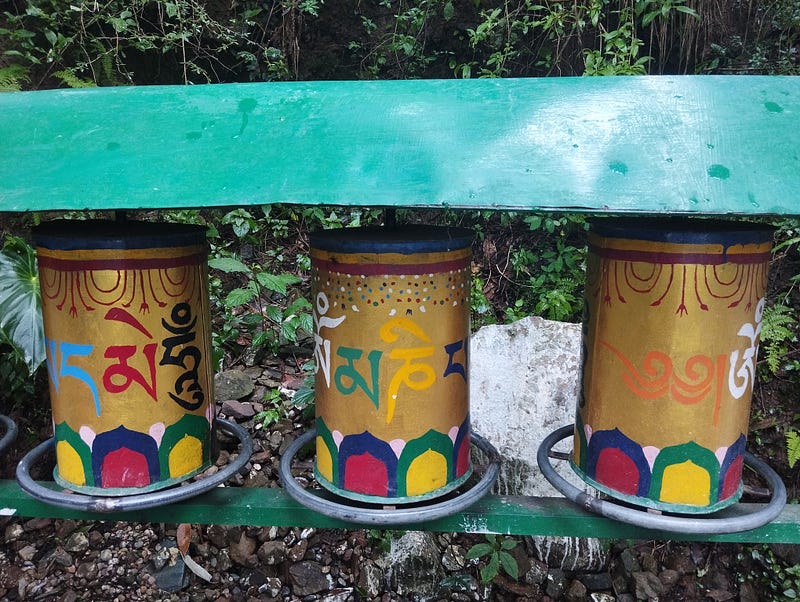
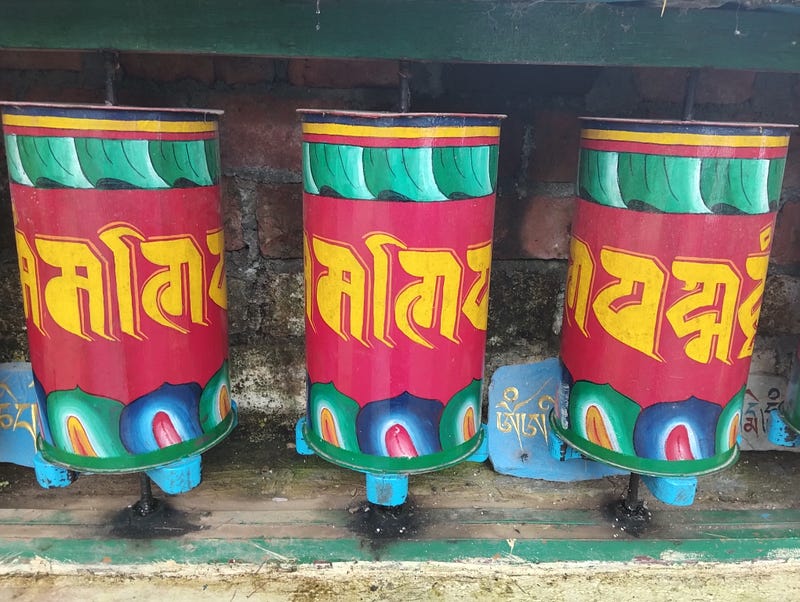
These prayer wheels are on the kora route. They are painted voluntarily by members of the public — this is an example of dharma work, a service towards the maintenance of the Buddha’s teachings. Tibetan Buddhist practitioners believe that spinning the prayer wheels has the same meritorious effect as orally reciting the prayers.
Here is a typical example of a Buddhist prayer:
I take refuge in the Buddha, Dharma, and Sangha Until I attain Enlightenment. By merit accumulations from practicing generosity and the other perfections May I attain Enlightenment, for the benefit of all sentient beings.
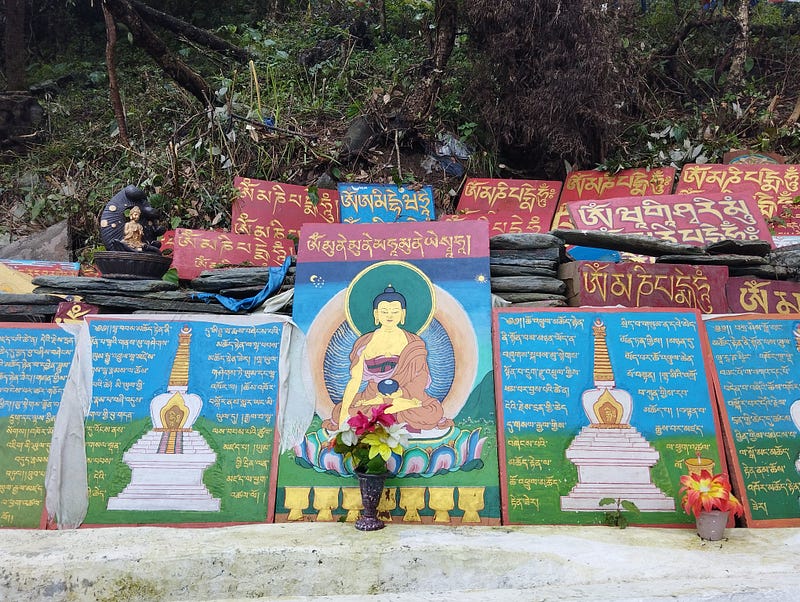
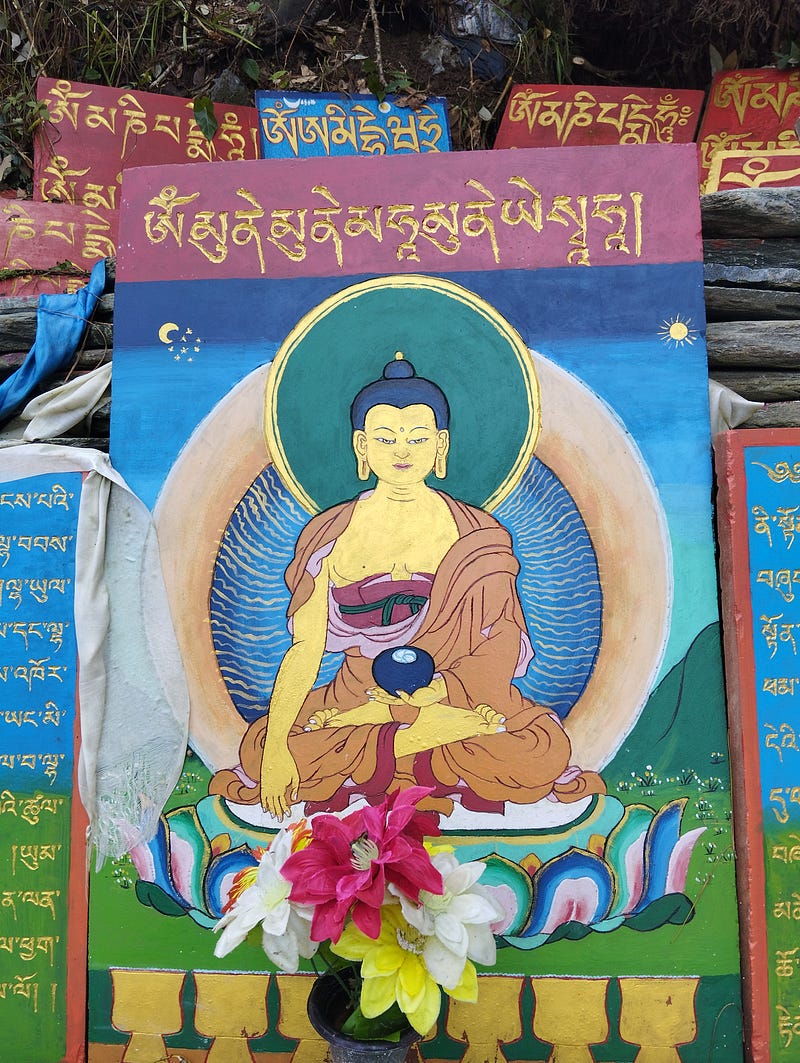
This is a thangka painting of Sakyamuni Buddha. The gesture of the right hand is known as “touching the Earth” — it represents the moment of Buddha’s awakening under the Bodhi tree as he claims the earth as witness of his enlightenment.
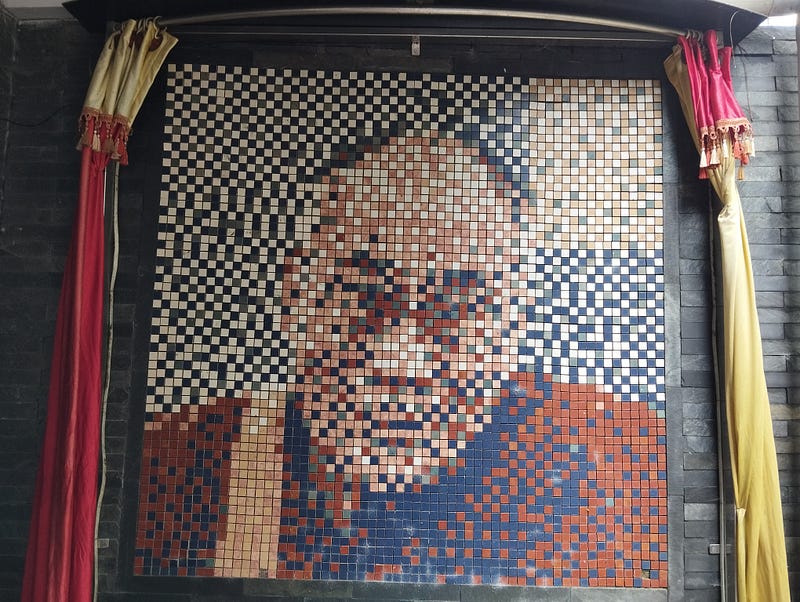
A mosaic of the 14th Dalai Lama can be found on the path that connects Temple road with Jogiwara road. The Dalai Lama is considered to be a manifestation of Bodhisattva Avalokiteshvara, the embodiment of the virtue of compassion.
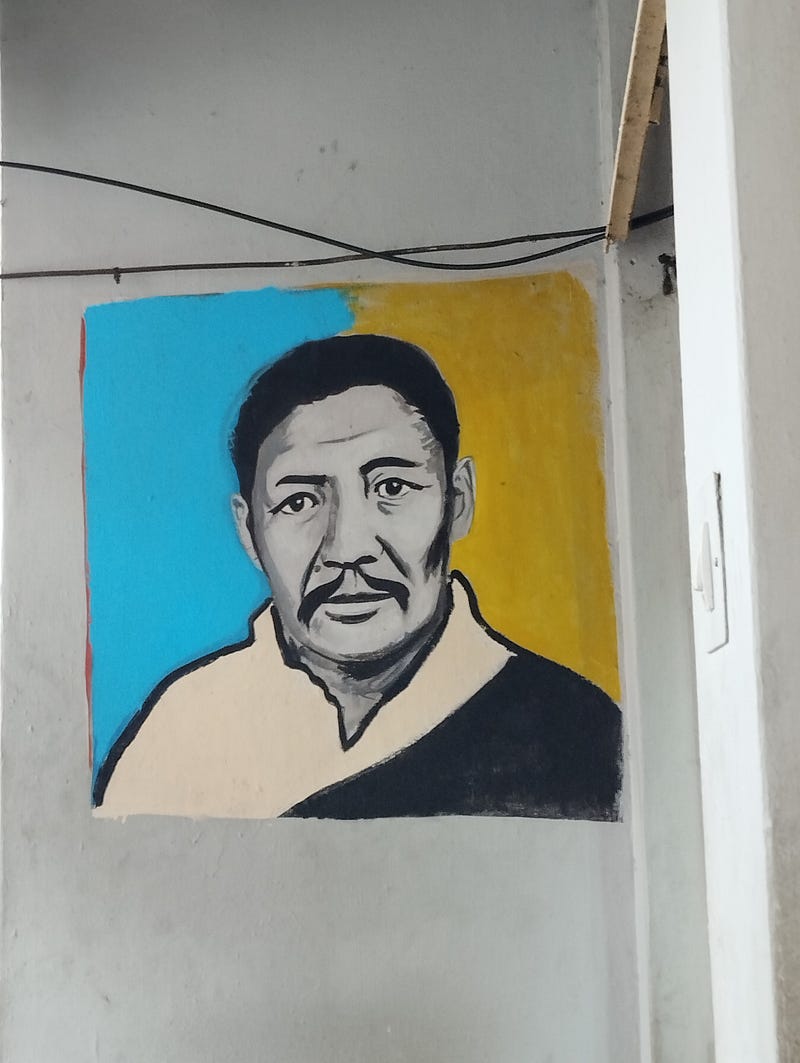
This image of Gompo Tashi Andrugtsang appears on the Jogiwara road outside Rewa Cafe. Gompo Tashi was the founder of Chushi Gangdruk — Four Rivers, Six Ranges — a guerilla force that fought in vain against the occupation of Tibet by China’s People’s Liberation Army between 1956 and 1974.
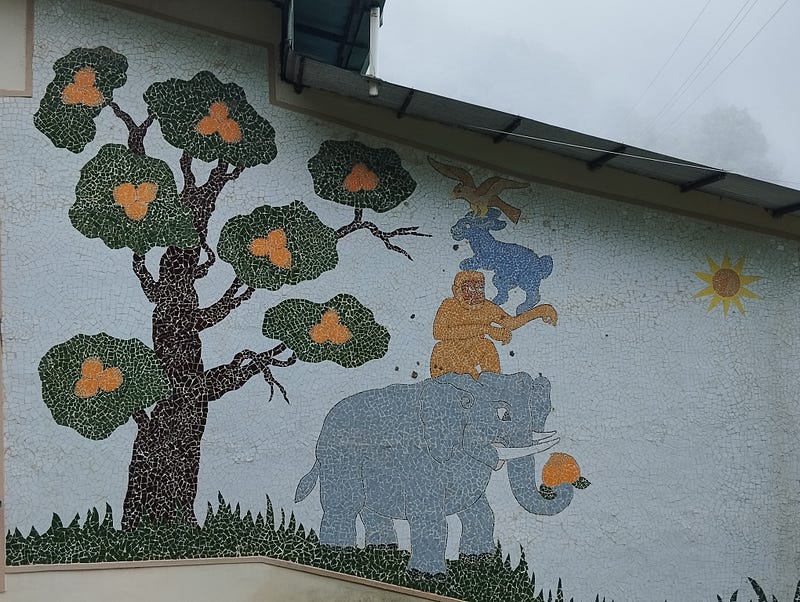
This mosaic at the Tibetan Children’s Village (TCV) school shows the four harmonious animals — a partridge, a hare, a monkey and an elephant — from one of the jakata tales. These tales form part of the Buddhist mythology concerning the previous births of the Buddha in both human and animal form.
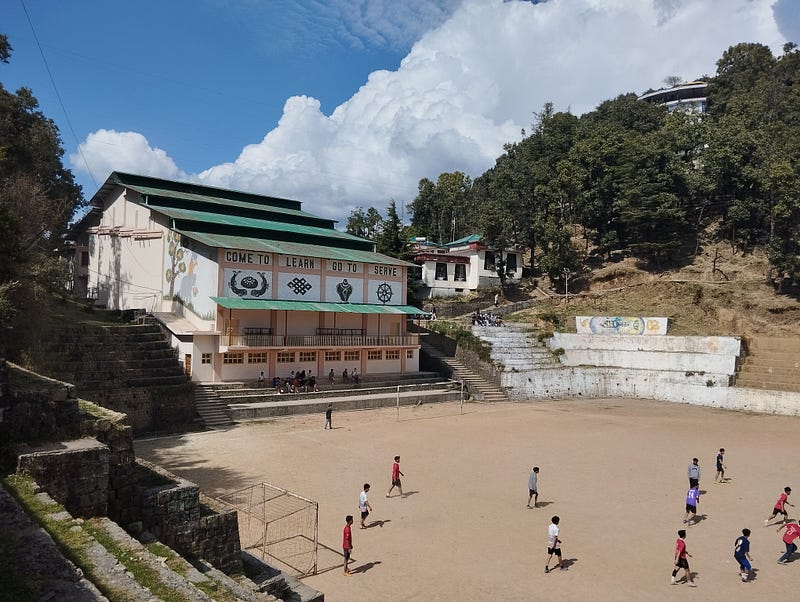
Tibetan Children’s Villages were founded in 1960 as an integrated community in exile for the care and education of orphans, destitutes and refugee children from Tibet. From 1964 until 2006 TCV schools were presided over by Jetsun Pema, the sister of the Dalai Lama.
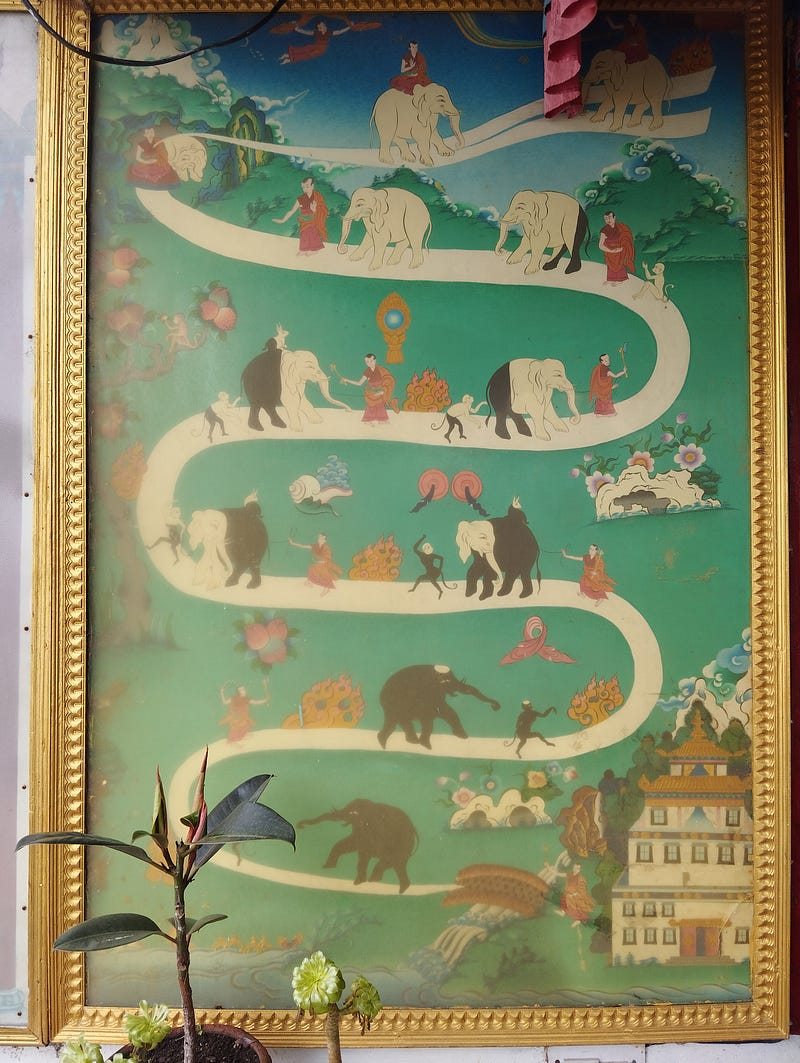
This thangka is hung outside the temple at the TCV school. It shows the 9 stages of Shamatha meditation. At stage 1 the monk begins chasing the black elephant, which represents the mind afflicted by mental dullness. The monkey represents distraction or mental agitation. By stage 9 the monk, atop the elephant, has tamed the mind and attained perfect equanimity.
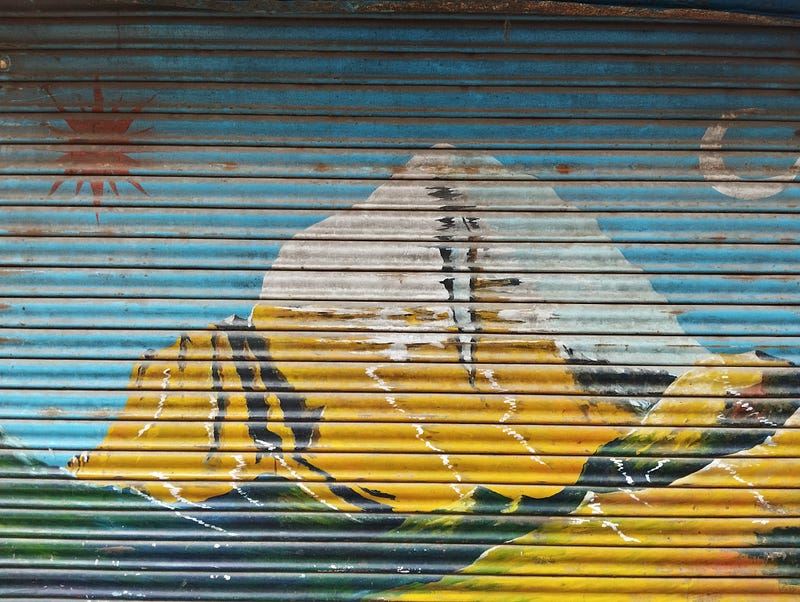
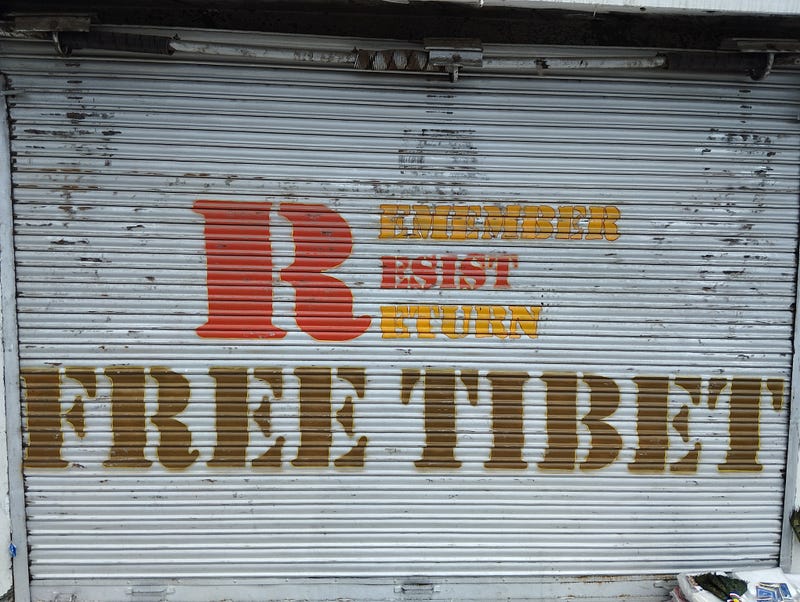
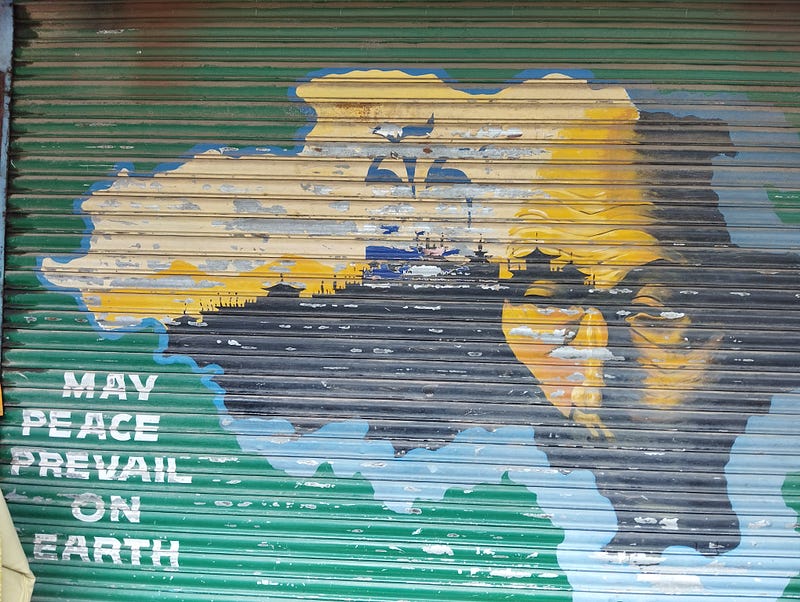
Many shop shutters in McLeod Ganj feature slogans or artworks. These three are on the Temple road.
Thanks to Kenny Minker for inspiring me to go and take these photographs. I got the idea from his excellent piece about the US-Mexico border:
I also enjoyed this piece by Maria Kriskovich, the street art in Melbourne looks incredible:


