avatarKenny Minker

Summary

The web content describes a road trip along the US-Mexico border, documenting the street art on the border fence and reflecting on the harsh realities faced by migrants.

Abstract

In 2016, the author embarked on a journey along the US-Mexico border, capturing the somber and impactful street art that decorates the border fence. The images and captions convey the gravity of the situation, with the fence symbolizing both a physical barrier and a representation of the challenges faced by migrants. The artwork, including names of deceased migrants and an upside-down American flag painted by deported veterans, serves as a poignant reminder of the perilous journey many undertake, with over 8,000 migrants having lost their lives since 1998. The desert landscape's lethal dangers are highlighted, as are the contrasts between life on either side of the border in cities like Mexicali and Calexico. The piece also acknowledges other responses to the Globetrotters challenge by Joel R. Dennstedt and Anne Bonfert, and points to related stories on street art in Latin America and Namibia.

Opinions

  • The street art along the border fence is seen as a powerful and somber reflection of the deadly risks associated with the US-Mexico border crossing.
  • The border fence itself is viewed as a potent symbol, both physically dividing nations and metaphorically representing the human cost of immigration policies.
  • The upside-down American flag is interpreted as a symbol of distress and a political statement by deported US military veterans.
  • The desert landscape is portrayed as a lethal hazard for migrants, emphasizing the desperation that drives them to traverse such dangerous terrain.
  • The proximity of Mexican and US communities is noted, with the backyards of California residents visible through the fence in Mexicali, illustrating the interconnectedness of border life.
  • The inclusion of other authors' responses and related stories suggests a broader cultural and artistic significance of street art in highlighting social issues.

Street Art On the US-Mexico Border

Globetrotter’s monthly challenge response
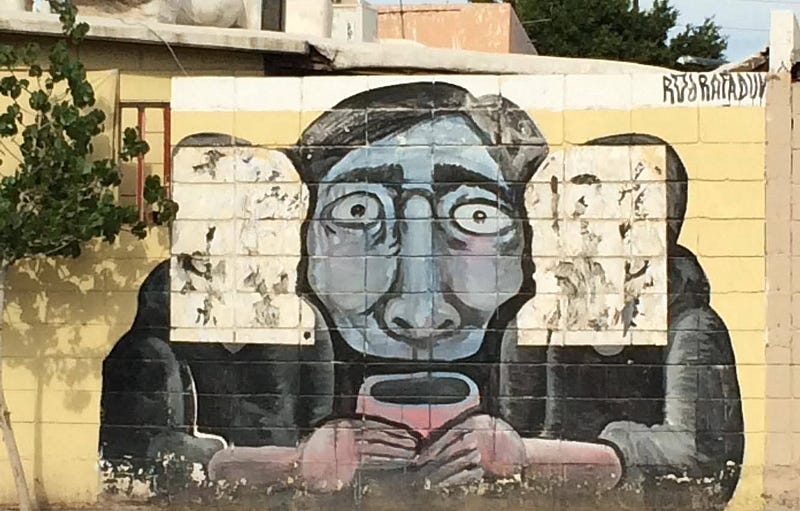
All photos by the author from the US/Mexico border

In 2016, I road-tripped along the US-Mexico border, starting in Tijuana and heading east. You can read more about that trip here.

The fencing that runs along much of the border begins in Tijuana, where it extends into the ocean.
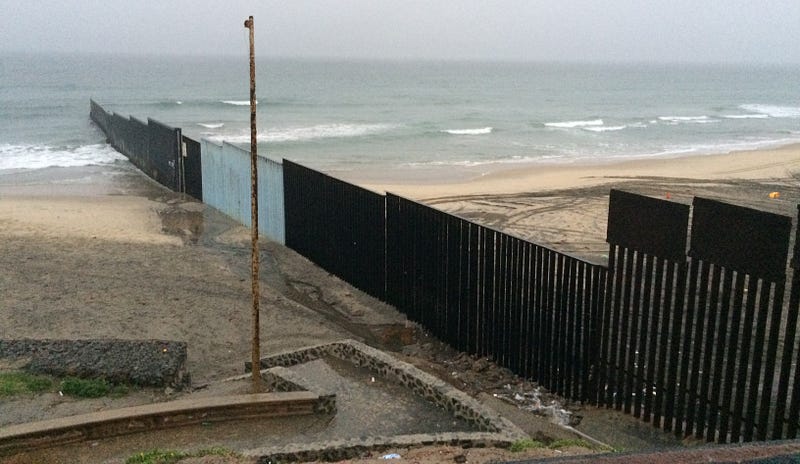
The fence is powerful both physically and symbolically. The street art that adorns the pickets is somber and full of gravity, reflecting the harsh reality of one of the world’s deadliest land borders. Since 1998, more than 8,000 migrants have died while trying to enter the US via Mexico.

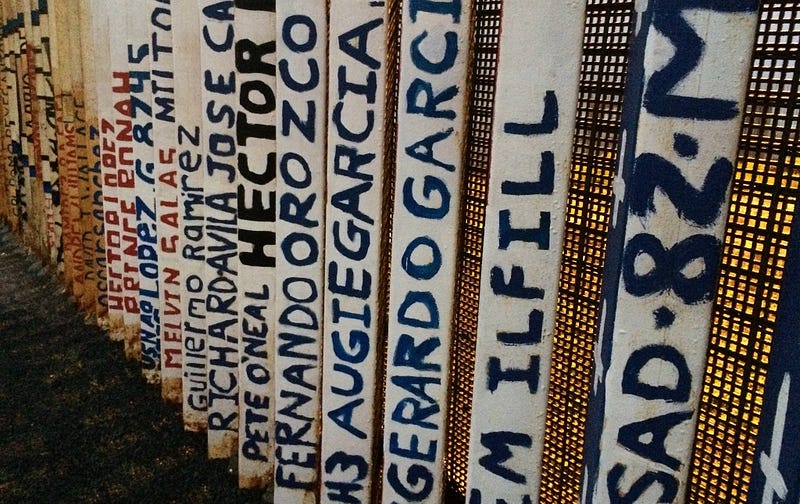
One section of the border fence bears the names of migrants who didn’t survive the journey.
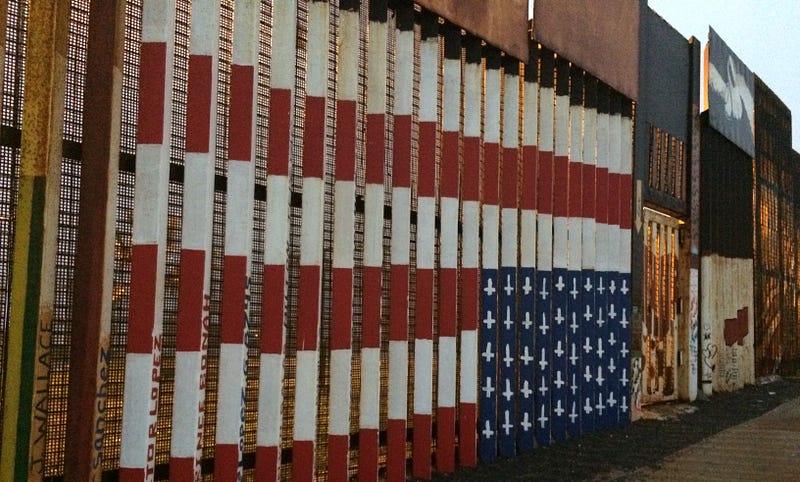
Nearby: an upside-down American flag.

A flipped flag is a symbol of distress. This one was painted by deported US military veterans.
Moving east along the border, I saw the desert landscape that poses a lethal danger for desperate migrants.
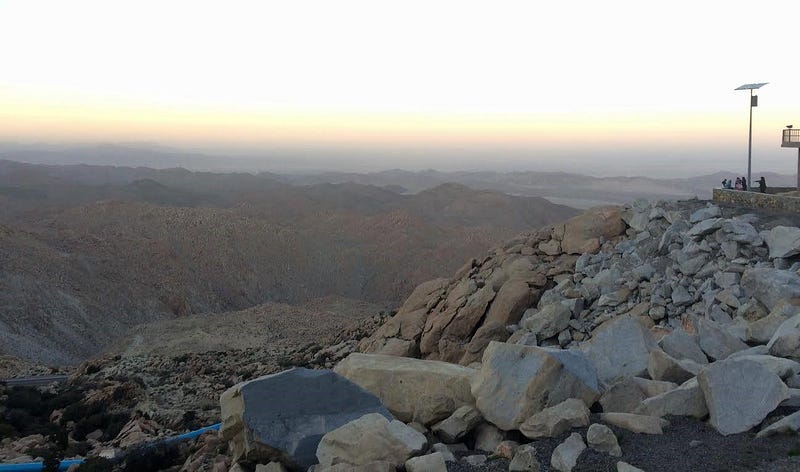
Imagine traversing that expanse on foot.

I reentered the US where two aptly-named cities straddle the border: Mexicali on the Mexico side and Calexico on the US side. Through the fence in Mexicali, you can see the backyards of California residents.

Here are a few images of Mexicali street art and graffiti.
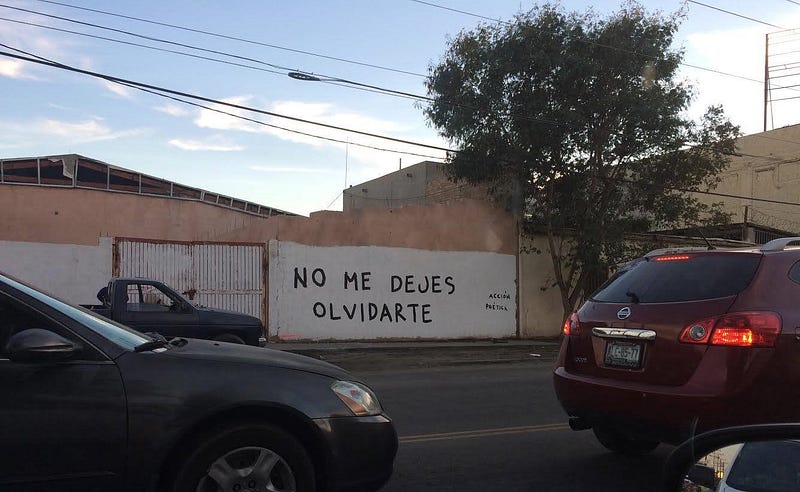
No me dejes olvidarte means “don’t let me forget you.”

Here are a few more terrific responses to this month’s Globetrotters challenge by Joel R. Dennstedt and Anne Bonfert.

Monthly Challenge
Street Art
Graffiti
Travel
Photography
Recommended from ReadMedium