
Strategies to Tell Yourself You Are Enough
How I manage imposter syndrome as a POC at Harvard
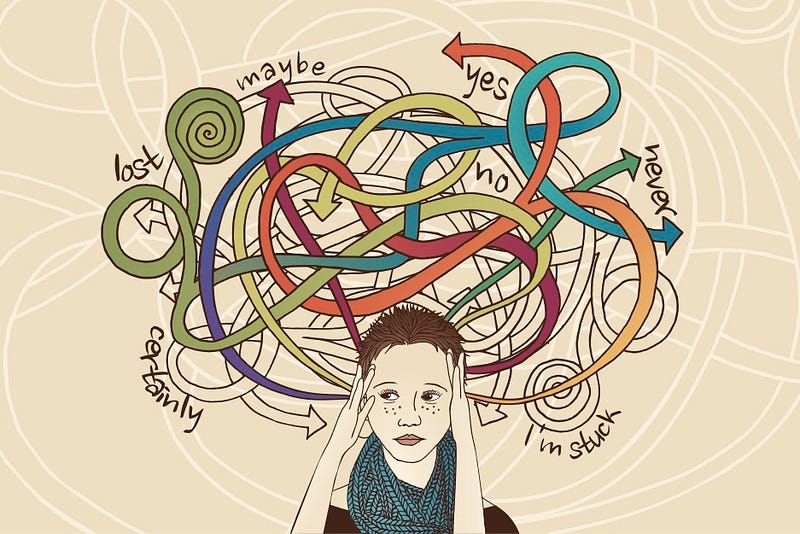
I always feel insecure. Even when I’m objectively doing okay, I still think I don’t belong. Why is it so annoying that when I worked so hard to achieve something, all I end up feeling is anxious, stressed, and doubtful?
Imposter syndrome — the chronic “feeling of inadequacy that persists despite evident success” is real.
As a first-generation law student, non-native English speaker, and a woman of color, attending Harvard Law is like being a Mudblood at Hogwarts. Or maybe worse. (Read my law school survival in this story).
Over the years, I have found ways to manage imposter syndrome. I don’t use the word overcome because it is misleading.
Feeling inadequate is an inherent element of stepping out of our comfort zones. A healthy dose of anxiety not only improves performance but also keeps our egos in check.
Too much anxiety, on the other hand, impairs performance and drives us into a rabbit hole of self-doubt. Reminding ourselves that we are enough, and we are not alone is key to managing imposter syndrome.
I believe imposter syndrome need not be a lasting component of hard-fought successes.
1. Don’t Compare Other People’s Outsides to Your Insides
Most people don’t announce to the world that they feel like an imposter.
Contrary to all the confident smiles we see, imposter syndrome is not rare at all. A systematic review of imposter syndrome by the Journal of General Internal Medicine found that imposter syndrome is as prevalent as 82%, depending on the assessment metrics and population measured. It is experienced across gender lines, but more prevalent among ethnic minorities.
Recognizing that we are not alone in feeling inadequate is an important first step. Imposter syndrome is just a normal part of the process where we adapt to a challenging environment and internalize our achievements. It is nothing out of the ordinary.
Why is the grass always greener on the other side?
First, most physical manifestations of stress and anxiety are not displayed publicly.
Adjusting to Harvard Law was tough, I felt inferior and intimidated on a daily basis. As a result, I developed insomnia and gastronomical issues, but most of my classmates would not have seen these symptoms. I was not actively trying to hide my stress, but sleeping and stomach problems aren’t topics that naturally come up in a school setting.
Under the same theory, I will not be aware of my peers’ psychosomatic symptoms either. The grass is not necessarily greener on the other side.
Second, many coping mechanisms are socially acceptable behaviors that we will not even realize they are stress responses.
I tend to drink more in social settings when I feel insecure. The day when my first semester grades came out (which I did quite poorly — imposter alert!), I was very eager to stay longer at a friend’s birthday party to get one, or two more drinks, when normally I would have left to go to bed by midnight. But who is going to notice this slight spike in my drinking pattern? No one.
The same goes for the coping mechanisms of other people. Some might exercise more, others might deactivate their Facebook accounts. Yet, we will not be able to tell if these seemingly normal behaviors are in fact coping mechanisms.
All I’m trying to say is, stress manifests differently for everyone. Most manifestations are not apparent. Your peers might seem calm and collected and you might wonder why is everyone acting so normal while you are dying on the inside. Chances are they are dying on the inside as well, you just don’t see it.
You are not alone. It’s okay to feel inadequate.
2. Talk About Your Problems
If imposter syndrome is so common, then why do we always feel like we are the only fraud in the room?
Because no one talks about it. Then, we falsely assume no one else is feeling the same way as we are.
Social psychologists call this shared false assumption pluralistic ignorance. It refers to the effect when “people think one thing and do another because they are deluded about the majority’s real views and then are conforming to that delusion.”
The classic example of pluralistic ignorance is the story of The Emperor’s New Clothes. Although people privately see the emperor’s nakedness, they collectively praised the emperor’s clothes because they falsely assume that everyone else ‘sees’ a garment. It is peer pressure dipped in irony.
Pluralistic ignorance plays out in imposter syndrome when everyone in the group assumes no one else feels like an imposter. Consequently, everyone acts as if they are comfortable and confident.
My advice is to set a new norm. Acknowledge imposter syndrome. Talk about imposter syndrome. Be the trendsetter.
After my first week of law school classes, I felt inadequate and lonely as I was intimidated by how smart people were.
One day, I bumped into a classmate of mine who graduated from an Ivy League college and worked on the Capitol Hill before law school. Impressive resume, right? But out of my desperation for human connection, I opened up about my insecurities. I told her how law school might not be for me, I even told her I considered dropping out.
To my surprise, despite having an impressive resume, she felt the same way as I did. We bonded over our shared feelings of inadequacy and remained close friends for the next three years.
Turns out, many people are in the same boat. Throughout my time at law school, whenever I opened up to people about my stress and insecurities, a surprising number of people echo my struggles.
By acknowledging imposter syndrome, we break the illusion that we are the only ones suffering.
Help yourself and help others by creating an environment that is open and inclusive to struggles big and small.
Imposter syndrome might not be so scary after all.

3. Fake It Till You Make It
If all else fails, fake it till you make it. Now I know this is a controversial one because faking is never the real solution — but hear me out first:
Psychologists confirmed that our behaviors influence our emotions. For instance, smiling makes us feel happier: by moving muscles on our faces to smile, the movement ‘tricks our brains’ into producing neurological responses that resemble happiness.
I tried this principle on imposter syndrome. Is it true that the more I pretend to be confident, the more I actually feel confident?
I figured networking events with employers are good testing grounds. Ugh, networking — the thing that everyone says it’s important but no one enjoys. Seeing a room full of accomplished lawyers, I felt like a fraud trying to fish for a job.
With the help of a glass of free champagne at networking events, I mustered up the courage and introduced myself to a few lawyers with my rehearsed introductory speech while constantly reminding myself to stand tall, smile, maintain eye contact, and not to fiddle with my hair — small gestures that signal confidence.
After a few exchanges, the momentum picked up. I was no longer staring down at my plate of heavy hors d’oeuvres and forcing myself to come up with something that sounded clever. I felt clever.
The effects of ‘fake it till you make it’ is a self-fulfilling prophecy. A self-fulfilling prophecy is a belief that causes itself to come true because we subsconsciously behave according to the belief.
By pretending to be a confident conversation-starter, I unconsciously behaved in ways that made me appear engaging and eloquent. The people I talked to also unconsciously paid more attention to me.
The conversations turned out great.
The positive interactions that flowed from my initial pretense became a reality. I might not be so out-of-place after all.
Takeaways
Feeling like a fraud is neither uncommon nor pathological. It takes time to internalize our achievements and make peace with our insecurities.
However, we often erroneously assume we are the only ones feeling inadequate. This is far from true.
It is okay to be stressed, it is normal to feel inadequate, and there are things we can do to make the stress more manageable. These are by no means perfect solutions, but when anxiety is through the roof, these strategies help get us through one more tough day.
Next time you feel like an imposter: stop assuming, talk about it, and practice confidence.
You are enough even though you might not think so. Keep going!


