
Stonehenge, Sand Pits, and Garbage Dumps
Stories from my childhood
When I was a kid, we lived in England — Lakenheath, exactly—about an hour's drive north of London. My father was in the US Air Force, and we were stationed there in the 70s for four years. I was five years old when we arrived and have many fond memories of living there. Even the injuries I received make me nostalgic.
Typically, when an Air Force family goes to England, immersion doesn’t occur with the English people. Air Force people tend to stick with other Air Force people — or Americans — and they don’t fully experience English/native culture — or if they do it is marginal or tourist-based.
Our experience was different however, because my father was asked by the Mormon church to become the Branch President — the ecclesiastical leader — of a small branch of the church in Cambridge, England. We spent every weekend and at least one weeknight every week in Cambridge, developing friendships that felt as strong as family.
We even had an Auntie Doris, who was no relation, but we called her that, nonetheless. I remember having tea there on many occasions (and by tea, I mean the repast, not actual tea, as Mormons don’t drink tea).
Cambridge was at least a 45-minute drive from Lakenheath. The scenery was diverse — with fields, farms, and forests — but my mother often had to find ways to entertain a 5-year-old and a 3-year-old (my brother, James, was 2 years younger than me) for such a long and frequent journey.
Along the stretch of this 30-mile road, we would always drive through a forested area, which sometimes completely blocked out the sun. When we drove through this area at night, my mother would tell us to hurry up and get on the floorboards of our Humber, because the headless horseman might be out. This terrified and thrilled us with excitement, breaking up the monotony of our drive.
Summer Memories
Every summer we spent time together as a family — camping in the local forests, visiting Cornwall and other coastal towns, and visiting tourist sites, such as castles and Stonehenge. These are some of my favorite memories of England.
My father bought 8 army-supply sleeping bags — the big green ones, filled with down (we were constantly spitting out feathers), and he loved to take us camping. There were 6 of us kids and we each had our own sleeping bag. I remember one summer, he strung a taut line between two trees and draped a large sheet of plastic over it, tying the edges down such that the bottom of the tarp was a little more than a foot off the ground. That was our tent for the week. My lifelong love of camping started in those forests.
I remember smelling the sea air in Cornwall, Wales, and and other coastal areas — trudging through quicksand-like stony beaches, mixed with shells. It was quite a workout running or walking through those shores. I also remember all of the little shops, English Breakfasts, and cobblestone roads.
I can still smell fish and chips, wrapped in newspaper. Once, when we didn’t have much money, my mom told us to search through the couch corners to see if we could scrounge up enough change to buy some fish and chips in the little town of Lakenheath.
Somehow that couch — the magic couch — always had enough money in it to make the purchase. Looking back, I suspect it was supplemented with coins from my mom’s purse.
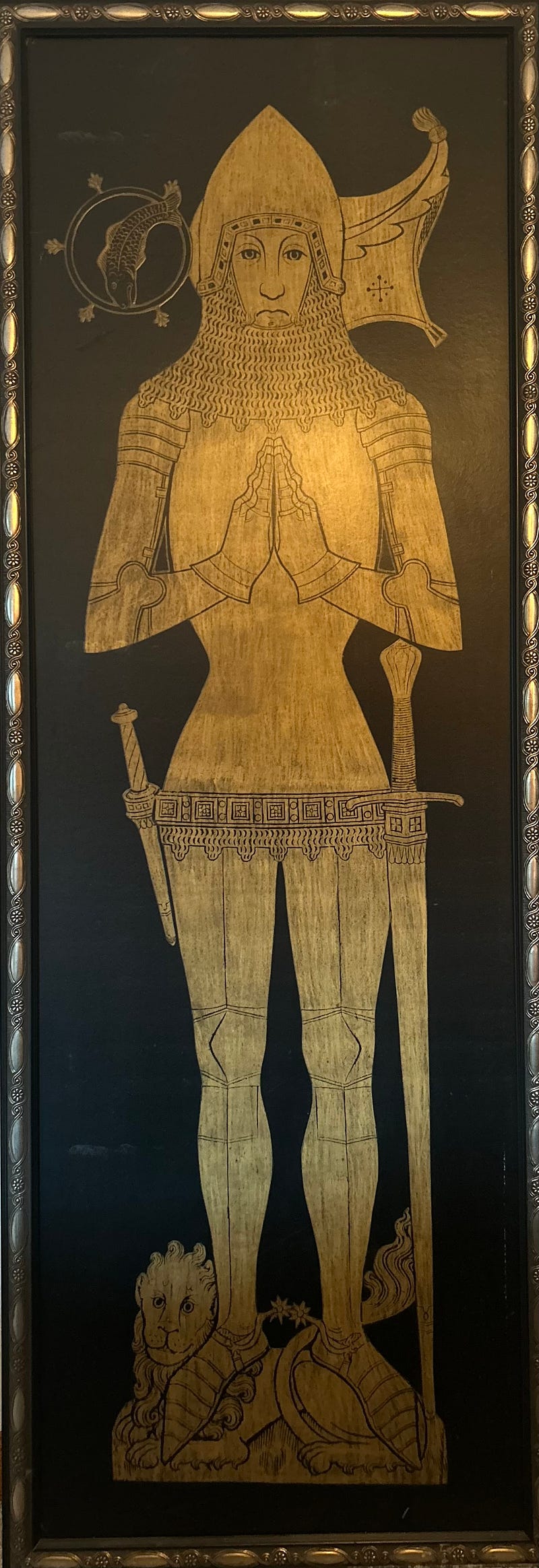
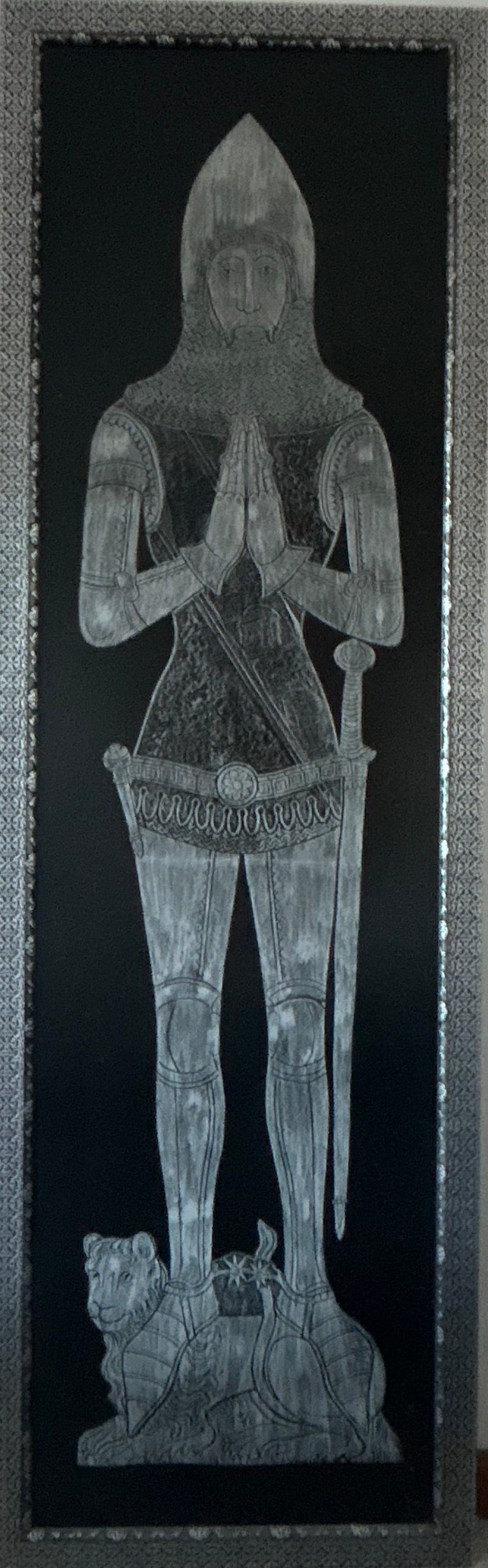
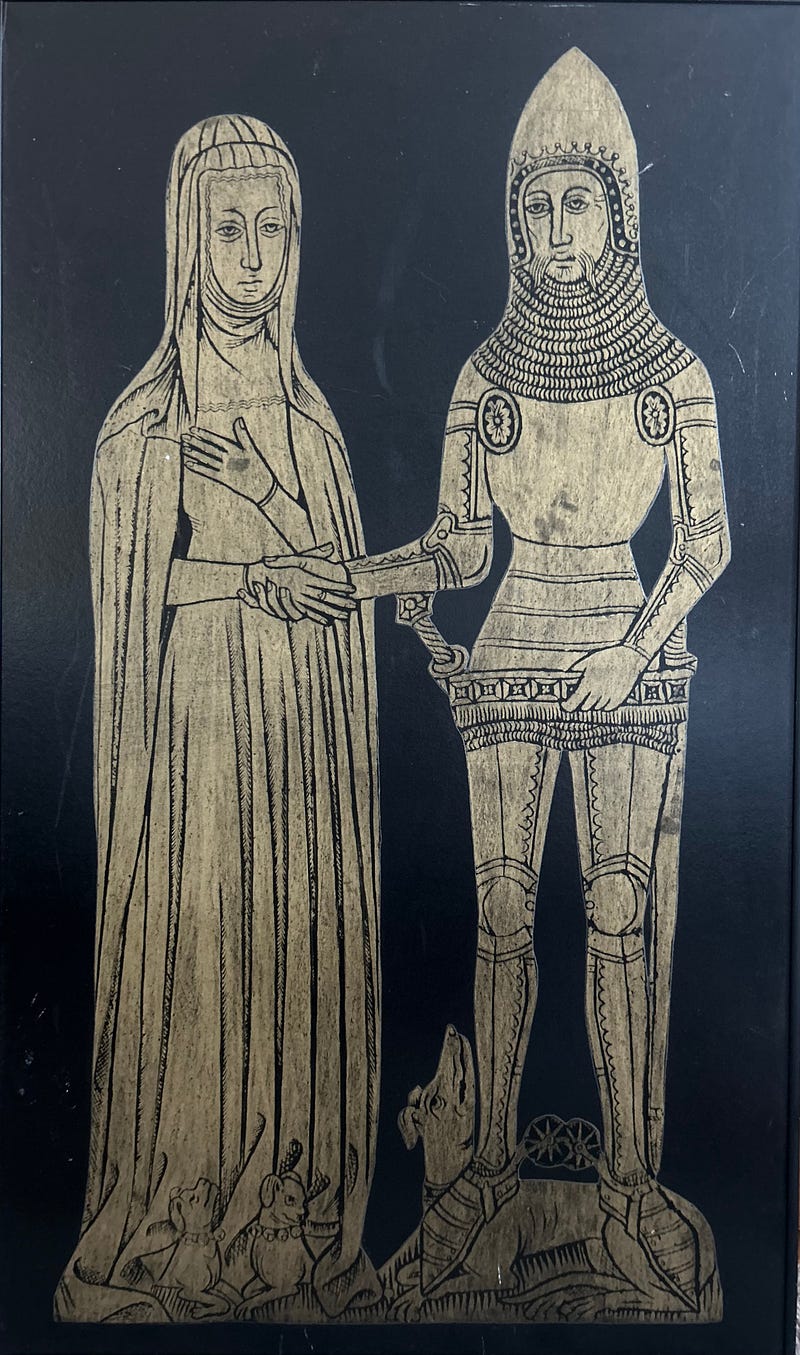
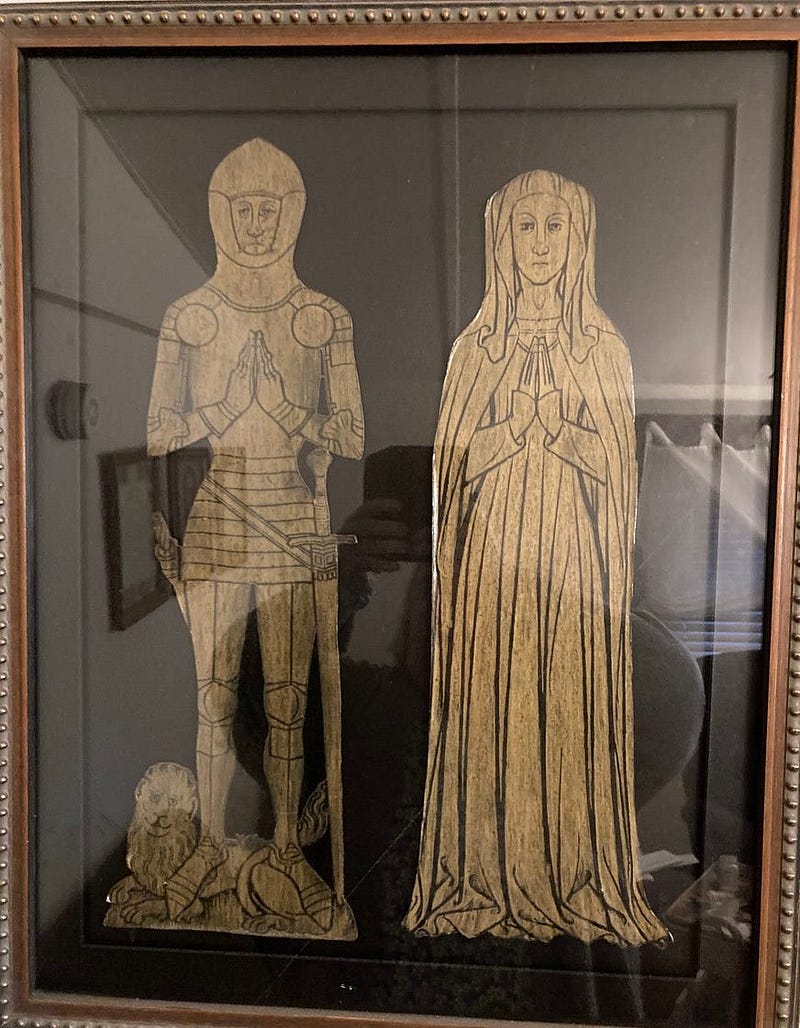
One of my mom’s favorite hobbies was brass rubbing — laying down black paper on brass burial engravings and rubbing the image with different types of wax, graphite, or chalk, duplicating the image on the paper.
Most of the engravings were from the 13th through the 15th centuries and they were anywhere from 12 inches to 6 feet tall. If you try to do that today, the historical sites and churches no longer allow rubbing of the originals, only replicas.
My mom did hundreds of brass rubbings, all over the country, before they restricted the practice. Each of us inherited some of these brass rubbings through the years, many of them ornately framed.
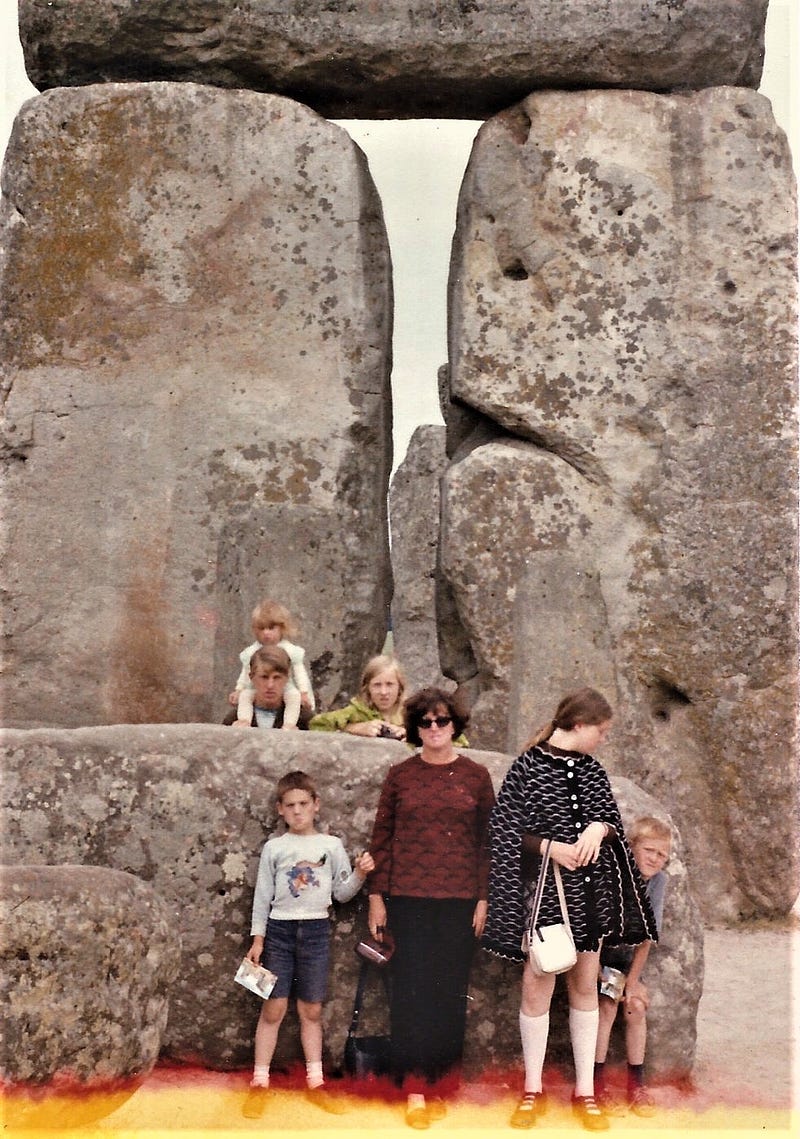
Another tourist location we visited — frequented by many — was Stonehenge, the circle of unexplainable monoliths in Wiltshire, England. Today, if you go to this site on a public tour, you must stay at least 30 feet away from the stones. But when we were there in the early 70s, you could simply walk up to the stones, as seen below in our family photo. I’m the one hiding behind my sister’s poncho.
Sand Pits and Garbage Dumps
We also did many things by ourselves — my brother, James and I, as we were inseparable. We played in the small suburban neighborhood we lived in and would run or ride our bikes barefooted all during the summer. That’s just what kids do. Huckleberry Finn and Tom Sawyer rarely wore shoes, and neither did we.
We had a fort in the middle of a small grove of trees and shrubbery (when discussing England, one must always mention shrubbery, just ask Monty Python). There was a firepit in the middle and we would go there with friends daily, walking through a field of stinging nettles, attempting unsuccessfully to avoid the stings. We imagined ourselves as Robin Hood and his band of merry men in Sherwood Forrest.
Occasionally, when feeling adventurous, we would ride our bikes about a mile from our house, where two of our favorite attractions existed; A large sand pit and a garbage dump.
I grew up reading the Eddie Wilson book series by Carolyn Haywood. It was about a boy who went on adventures around his town, often accomplishing grand schemes in simple ways. There was at least one of the books about Eddie finding things that people threw away. He would take them home and do something useful with them. Inspired by these stories we frequented places like the dump, just to see if we could find anything “useful.”
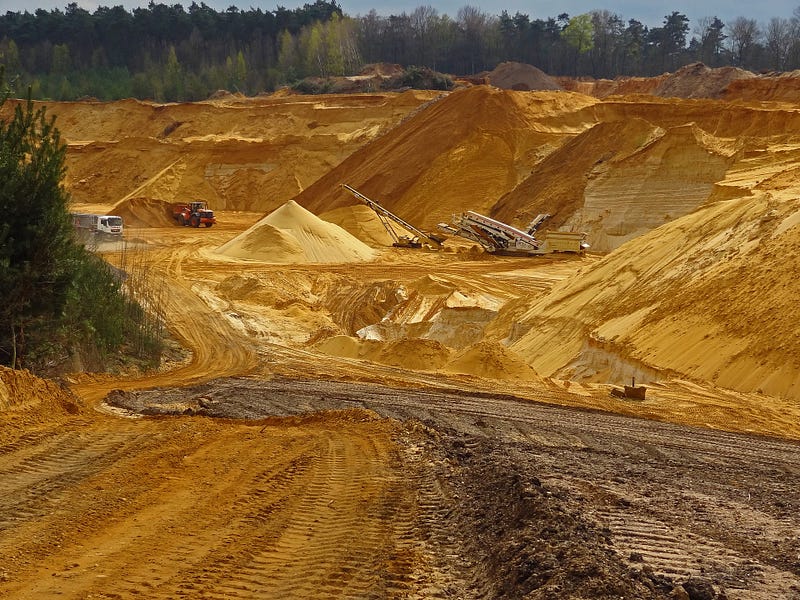
Not far from the dump was a giant sand pit. It was just a big hole in the ground where clean sand was taken away in dump trucks. The cliffs surrounding the sand pit were anywhere from 10 to 25 feet high and the pit was at least 500 feet across. You could jump off the cliffs and land softly in the sand below, similar to how skiers jump from heights and land softly in the powdery snow.
We would spend hours jumping and falling into the sand. Egging each other on we would jump with more intricate moves and from higher cliffs. We never got hurt in this activity. After we got our fill of the sand pit, we would wander over to the dump to find “useful” stuff before returning home.
It was during one of these visits to the dump, probably the last visit I can remember, that something happened. We were walking around, looking here and there, when we came across a small pit that looked perfectly normal. The top of the pit was black and nothing seemed out of the ordinary. However, it turned out to be a fire pit that had burned down to coals, which were hiding, covertly, below the black surface.
On my first step onto the pit, my right foot sunk about 1–2 inches into the hot coals. My brain had not yet realized what was going on. But before my other foot could step into it, my brain suddenly received messages from my first foot that it was on fire.
Fire! Lava! Jump now! My other foot skirted the top of the pit and landed on the opposite side, safe and unburned. My right foot, however, was badly burned, up to the ankle.
We later found it was between a 2nd and 3rd-degree burn. All I know is it burned like hell and it was over a mile to the house. Two huge water blisters formed on each side of my foot, about 3–4 inches long. We had our bikes with us, so after running to them, I jumped on mine and started peddling as fast as I could.
As a young Mormon boy, I was feeling scared and crying. I remembered from church lessons that prayer was important in times like this. So I pulled my bike over and stopped to pray that I could get out of this predicament alive. Such were the exaggerated ideas that ran through my head, and I was always a very believing child.
I jumped back on my bike and started riding as fast as I could. For brief moments I was able to forget about the pain and burning, and just enjoy the wind in my face.
When I finally arrived home my mom wasn’t there — she was out shopping somewhere for the family. I went to the neighbor’s house. This was back before cell phones, so we just had to wait for my mom to get home, about an hour or so later. The neighbor seemed to be competent in her treatment of my injury, but I was probably 7 or 8, what would I know?
After my mom arrived, she whisked me off to the Air Force Base hospital, where I was treated for my burns. It was the most long-lasting and painful injury of my entire life. It ached all the time, despite the drugs, and it took over two weeks to recover.
Every time they changed the bandages the pain escalated. But the pain eventually receded, and my injury healed. You can still see the scars on my foot, 50 years later.
I sometimes wonder if this is similar to childbirth because I now look back at that time as just another awesome memory of my childhood adventure in a country that still holds a place in my heart today. I no longer feel the pain from that event but look back with fondness as I remember it, all of it.
There were many other memories I had there. From drawing pictures of the Norman Conquest in elementary school, instead of the American Revolution/Uprising (from the British perspective) to drilling holes in chestnuts to make weapons of war. All of these things were part of my childhood, growing up there. But some of my favorites on the list are Stonehenge, sand pits, and garbage dumps.
To read more than 5 stories a month, join Medium through the link below.
Here are a few of my other stories and poems.


