Stoic Pantheism and the Rise of the Alienated Sage
Fortifying Stoicism with Existentialism
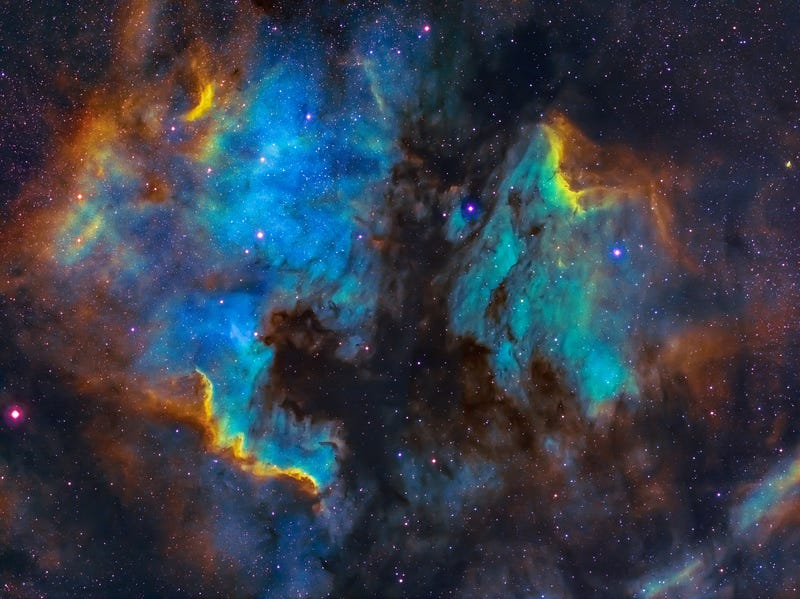
Stoicism is a form of virtue ethics that’s grounded in pantheism, but Stoicism conflicts with existentialism in certain crucial respects. To show this, I’ll draw on the Stanford and Internet Encyclopedia of Philosophy (SEP and IEP) articles’ explications. Then I’ll critique Stoic ethics from a late-modern vantage point.
Stoic pantheism and virtue ethics
For virtue ethicists, morality is a practical problem of how to get what you should want or what’s best for you. The ancient Greek philosophers assumed this ultimate good is happiness, so the moral or ethical question is just one of knowing how to be happy and of being able to put that knowledge into practice. Learning how to apply our knowledge is a type of training. Our parents, for example, may teach us how to be good and how to fit into society.
The skills we acquire from such ethical training are virtues, and the Stoics thought that the exercise of virtue is the very stuff of happiness. When we act well, we’re happy regardless of whether we achieve narrow goals, such as obtaining wealth, fame, or friends. Stoic happiness isn’t exactly, then, a goal or an object to be had but an excelling in our motivations and in our techniques. Whether we succeed or fail when we try our best is up to how the world is fated to unfold, which is mostly beyond anyone’s control.
Here Stoic ethics meets up with metaphysics because the Stoics conceived of the cosmos as the body and mind of a divine being. To quote from SEP, “the Stoic God is immanent throughout the whole of creation and directs its development down to the smallest detail…The entire cosmos is a living thing and God stands to the cosmos as an animal’s life force stands to the animal’s body, enlivening, moving and directing it by its presence throughout.”
More specifically, “God is identified with an eternal reason (logos) or intelligent designing fire or a breath (pneuma) which structures matter in accordance with Its plan…The designing fire is likened to sperm or seed which contains the first principles or directions of all the things which will subsequently develop.”
Thus, “Because the whole of the world is identical with the fully rational creature which is God, each part of it is naturally constituted so that it seeks what is appropriate or suitable to it, just as our own body parts are so constituted as to preserve both themselves and the whole of which they are parts. The Stoic doctrine of the natural attachment to what is appropriate (oikeiôsis) thus provides a foundation in nature for an objective ordering of preferences.”
That analogy between a person’s relation to the cosmos, and a body part’s relation to the whole body reduces ethics to functionalism. What’s good for the foot, the ear, or the stomach is to serve the body as best it can, given its distinctive capacities. A foot can help a body stand, an ear can detect sounds, and a stomach can digest food. Those are their natural purposes or their proper functions, and they can perform those functions in better or worse ways, depending on whether they’re healthy or ill.
Likewise, “When I perform an action that accords with my nature and for which a good reason can be given, then I perform what the Stoics call a ‘proper function’ (kathêkon) — something that it “falls to me” to do.” And “A proper function becomes a fully correct action (katorthôma) only when it is perfected as an action of the specific kind to which it belongs, and so is done virtuously.”
A good reason must be given to justify human actions because our distinctive capacity is our rationality, our ability to understand the world around us. Thus, “The perfection of one’s rational nature is the condition of being virtuous.”
Suppose there’s an apparent conflict of interests, and we must decide how to act. In that case, the best course “is the one which is ultimately both natural and rational: that is, the one that, so far as I can tell from my experience with what happens in the course of nature…is most in agreement with the unfolding of nature’s rational and providential plan.”
The recognition of our functional position within a divine and indeed eternally recurring cosmos, and thus of our being subject to natural fate led Zeno, the founder of Stoicism, to think of happiness as “a good flow of life,” a thought which has a Taoist ring to it. ‘Cleanthes clarified that with the formulation that the end [of happiness] was “living in agreement with nature.”’ And Chrysippus amplified this to (among other formulations) “living in accordance with experience of what happens by nature.”
Stoic apathy
How can there be any question of morality, you might be wondering, when everything in the universe unfolds by divine necessity? How can there be illness in God’s body parts, or anything less than heavenly excellence in the achievement of God’s plan? The Stoic’s God wasn’t the monotheist’s perfect being, but a self-organizing universe of parts. This development passes through stages, so some parts might anticipate future stages of the process by excelling in their functions, while others might lag.
There’s also no Stoic question of divine judgment of creatures, so as the IEP notes, “the Stoics shifted the emphasis from moral responsibility to moral worth and dignity.” That is, morality for Stoics is effectively about reconciling the fact that we’re slaves to our natural functions, with our rational suspicion that we somehow stand apart from the universe as free, potentially alienated or grossly dysfunctional beings. We ought to submit both to the will of the cosmos and to the plan for our human nature, but we’re happy when we can submit with honour and dignity.
The Stoic sage, for example, eschews irrational emotions or “passions” seemingly because they call too much attention to our lowly role as cogs in God’s body. To return to SEP,
passions or pathê are literally ‘things which one undergoes’ and are to be contrasted with actions or things that one does. Thus, the view that one should be ‘apathetic,’ in its original Hellenistic sense, is not the view that you shouldn’t care about anything, but rather the view that you should not be psychologically subject to anything — manipulated and moved by it, rather than yourself being actively and positively in command of your reactions and responses to things as they occur or are in prospect.
This Stoic prizing of apathy seems inconsistent, however, with the overall functionalist picture sketched above. How could it be undignified to be carried away by emotions, but virtuous to bend to natural fate? Possibly, this Stoic attitude towards emotions is only a parochial remnant of Greek patriarchy and sexism, the presumption being that men are the better part of human nature, and men are more rational and less emotional than women.
Anomalies in the wilderness
Regardless, this problem calls attention to a more fundamental one, which is that the Stoic equivocates in speaking of what’s “natural.” The Stoic wants to say that when everything follows its “nature” as an instance of its type, the thing is also acting “naturally,” meaning that it’s acting in accordance with the whole of nature (with God’s plan). But those are separate senses and it’s fallacious to assume they’re necessarily in alignment.
Suppose, for example, there were supernatural beings capable of performing miracles. If an angel descends and cures a blind man and thereby acts according to its “nature” as a member of the angelic species, would we still want to say that the angel’s action is “natural” in the sense that it conforms to how the universe generally works? No, since the very definition of a miracle is of an event which doesn’t conform in that way.
Of course, we can dismiss that thought experiment by positing that there are no such miracles or supernatural species. But I present to you the virtual miracle of the black hole. A black hole is what’s left by a star that’s shrunk to the point of being a gravitational singularity. What’s left is a hole in space and time that warps and traps everything that crosses its threshold, including light. Setting aside the metaphysical question of whether black holes are natural or supernatural, what seems clear is that black holes are antithetical to the natural order.
While there may be no miracles in nature, then, there are evidently anti-natural anomalies. Nature isn’t monolithic in its order or plan. The cosmic “rationality” is free to be schizophrenic or discombobulated; hence, the emergent levels of complexity, the possible gap in logic between quantum and relativistic physics, and the monstrous absurdity of all strictly natural, mindless evolutions.
Another such anomaly, besides the black hole, is precisely human “nature.” Our kind is anomalous because of our extraordinary autonomy, self-awareness, and rational self-creativity. To speak of “human nature,” then, is to beg the question and to gloss over the alarming extent of our unnaturalness. Progress for our species in the Anthropocene is evidently bad for most other species and perhaps even for the planet’s ability to support life.
To avoid confusion, we can refer to nature — in the sense of the totality of the cosmos — as “the wilderness,” and we can think of “human nature” as a process of humanizing the wilderness, of replacing nature in that universal sense with the artifacts (cultures, machines, civilizations) that extend our mentality. The point is that our creative destructions and displacements are unnatural or virtually supernatural in that they’re palpably anti-natural, that is, anti-wilderness.
Of course, the anomaly of human nature rests on the anomaly of organic life in general, given Erwin Schrodinger’s definition of “life.” In What is Life?, Schrodinger says that, while not being metaphysically supernatural, living things avoid the decay to thermodynamical equilibrium by homeostatically maintaining negative entropy in their systems. Organisms do so by robbing other living things of their order, a process called “the eating of food.”
Moreover, carbon-based life brings to mind a further disharmony, which is that carbon might be alien to Earth. The equilibrium reached in the carbon cycle has made for vast periods of stability for life, punctuated by mass extinction events caused by the oceans’ acidification or by cataclysmic volcanic eruptions, as the planet expels the carbon that’s poisonous to its geological processes.
From this perspective, personhood seems like the weaponization of animality, and the weapon is pointed at nature (in the sense of the wilderness). There’s a truce between natural environments and animals in that animal species submit to a niche and to their role in a food chain. By contrast, people might be more like cancers in knowing no boundaries and in being single-minded in our “progressive” pursuits. “Progress” is a euphemism for being implacably opposed to the wild state of nature. We progress by moving away from life in the wild.
When we’re true to our nature, then, we’re effectively at war with nature in the broader, cosmic sense. This conflict is obscured by the fact that the Stoic’s pantheism is insufficiently naturalistic.
Alienated sages and a conflict of pantheisms
As skeptical as the ancient Greek philosophers were, most rejected the naïve religions only by replacing them with philosophies that posited abstract stand-ins for the gods. Plato said the universe of many things is driven by a single being of pure, perfect goodness. Aristotle compared that primary mover of all natural motions to a self-sufficient philosopher, attracting natural evolutions with its absent-minded cogitations. The Stoics’ God is likewise made in the philosopher’s image, being a great mind that wears the universe as its body and that’s achieved self-mastery by assigning all its body parts their respective functions.
If we naturalize the Stoic’s pantheism, by granting that nature is supremely self-creative while denying the anthropocentric assumption that the universe should be compared to a person, we’re left with a disturbing cosmicist picture of a monstrous wasteland that would neatly account for people’s apparent urge to revolt from the wilderness by progressively building artificial refuges.
The question is whether the Stoic’s proper functions and moral purposes are real or are just projections of how we think a human mind would run things if a mind oversaw cosmic evolution. Put differently, the question is what truly undirected evolution could be.
Consider, for example, the Stoic theory of how we go through stages of self-identification. First, we identify with our bodies, but as we mature and become more reasonable, we identify with our mind and thus with virtue and with our social and other abstract roles. An IEP article calls this “the theory of ‘appropriation,’ or oikeiôsis,” the latter being a technical term meaning ‘the recognition of something as one’s own, as belonging to oneself. The opposite of oikeiôsis is allotriôsis, which neatly translates as “alienation.”’
What Stoicism would have us overlook, though, is the existential alienation that follows from an even greater maturity, when we see through the stale myths of the philosopher’s God and dismiss the analogy between rationality and the natural order. True, there’s marvellous regularity in how the universe seems to be unfolding. The complexity of mathematics, physics, biology and of all the other sciences testifies to nature’s systematicity.
But that order isn’t enough for a mind or for a plan. Those attributions are vestiges of naïve religion’s anthropocentrism. Take an ordered sequence of events, and strip its source of any reasonableness, consciousness, or intention, and the more suitable analogy we’re left with is that between nature and the grotesque monsters that populate horror stories, the most pertinent being the zombie.
The question, then, is whether there’s any such thing as a non-alienated sage. The more we know about nature’s inhuman scope and its mindless indifference and pointlessness, the less reassured we should be by any self-help expert’s proffering of our alleged “proper natural function.” Should we eagerly submit to the cosmic zombie’s embrace or does the wise course begin with horrific recognition of our existential condition, and end with the creation of unnatural (blessedly artificial and humane) worlds?