
Stablecoins $USDC and $DAI Lose Their Peg to The Dollar
A New Wave Of Panic In The Crypto Market
Centralized stablecoin $USDC is in jeopardy after the bankruptcy of Circle’s partner and crypto-friendly bank, Silicon Valley Bank, caused a chain reaction.
The SVB collapse created a $3.3 Billion gap in USDC’s accounting books. USDC is issued and managed by a Coinbase-Circle joint partnership and regulated by the US financial authorities.
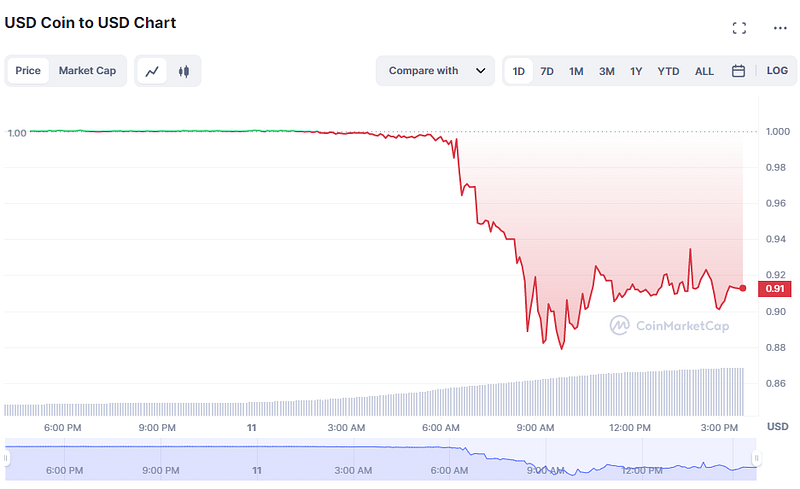
Trust in USDC shattered as the stablecoin depegged from the dollar, and its price dropped to a low of $0.80 on the exchange Bitstamp and $0,83 on Bybit and Bitfinex. $USDC recovered some of its losses and trades at $0.90 at the time of writing.
Overall, the cryptocurrency market seems unaffected by the USDC sharp decline and depeg, although, concerns exist about a new “bank run” regarding crypto-connected centralized services, as $USDC maintained (before the depeg) a $41 Billion market cap executing tens of billions of dollars in trading volumes daily.
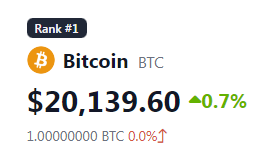
Bitcoin ($BTC) is up 0,7%, Ethereum is up by 1,6%, and most cryptocurrencies follow the same trend.
As $USDC depegged, the contagion spread to MakerDAO’s $DAI, a decentralized stablecoin mostly backed by stablecoin $USDC.
DAI is currently trading below the 1:1 peg to the dollar at $0,91.

Coinbase-Backed $USDC Lossed The Peg
Almost one year ago, algorithmic stablecoin UST collapsed together with the operator company Tera Luna, an event that marked the beginning of a lengthy and severe bear market.
A depeg in the USDC stablecoin has never happened before, although analysts attempt to calm investors, as the differences between USDC and the now collapsed algorithmic stablecoin UST are clear.
The current price of USDC reflects the loss of trust by the market in a centralized stablecoin which emanates from the collapse of partner bank SVB (Silicon Valley Bank).
While the current rate is 10% lower than the peg, USDC also seems to miss about 10% of its reserves, so the market stands in equilibrium within the current short-term parameters.
However, rebuilding trust might be an issue, and recovering the peg would require immediate action by the operators of $USDC.
A 1:1 peg to the dollar demands 1:1 proof of reserves.
More investors will flee if the negative sentiment doesn’t change soon.
Why Did DAI Also Depeg?
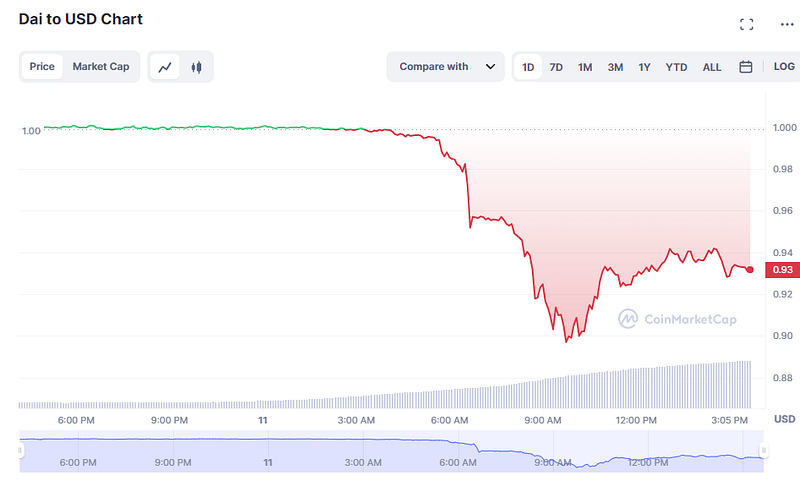
Algorithmic stablecoin DAI is over-coletarized, although the majority of the collateral is in $USDC making it vulnerable to USDC issues.
DAI’s exposure to USDC is more than $3 Billion, therefore, alarms sounded at MakerDAO (the platform operating DAI), which plans an “urgent executive proposal to mitigate risks to the protocol” (source: CoinTelegraph).
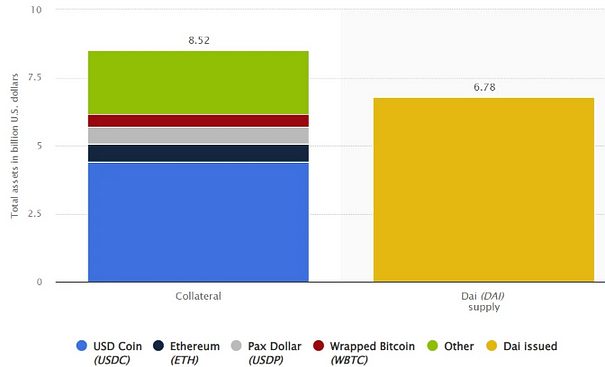
In the past we’ve discussed DAI and its point of failure ($USDC) concluding:
We can regard experimental decentralized stablecoins like DAI as more resilient, however, they also carry issues the DAI community might want to fix.
Backing a decentralized stablecoin with centralized stablecoins doesn’t seem to make sense.
Read more:
MakerDAO, is down 10% following DAIs depeg.
Tether
Tether ($USDT), on the other hand, was unaffected and did not react negatively to the USDC depeg.
Instead, it maintained the 1:1 peg with high trading volumes.
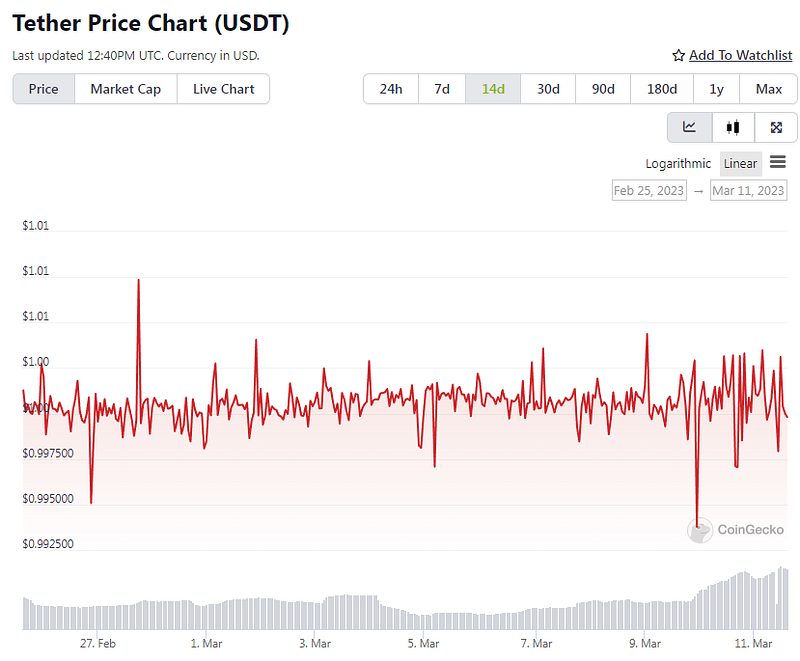
Centralized stablecoin Tether ($USDT) is the stablecoin market leader and a fierce competitor of USDC.
Tether was not affected by $USDC’s current issues, and its CTO announced recently that USDT had no exposure to the recent banks collapse.
On the contrary to USDC, USDT enjoys increased volumes, marking the fierce competition that exists within the stablecoin market as we previously observed:
Tether presents a BDO attestation of reserves every three months (link). However, USDC was also performing attestations.
While reserves perhaps cover stablecoins issuance, stablecoins contain unaccounted systemic risk with factors that can emerge at any time, especially when the economy is moving toward a recession.
Tron’s USDD
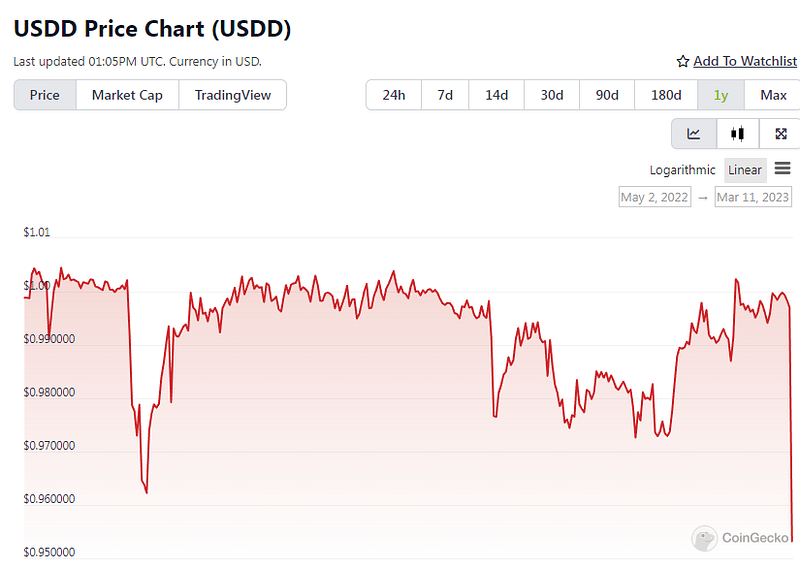
Tron’s stablecoin $USDD also lost the peg (again) and now trades at $0,95.
Gemini Dollar ($GUSD)
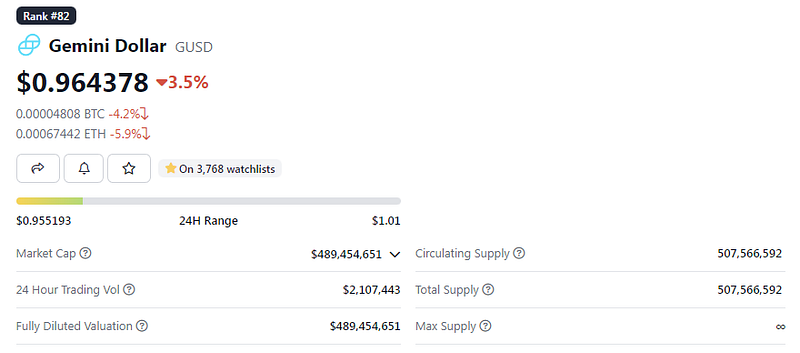
Winklevoss Twins stablecoin GUSD is trading at 3,5% below the peg, with its total market cap at $20 million lower.
Gemini exchange is in danger of bankruptcy for several months after its partner Genesis (a Grayscale company) declared bankruptcy in November 2022.
Read more:
As the contagion spreads, the connected entities that survived the 2022 crypto “mayhem” will endure more losses.
Regardless, Gemini announced hours ago that it has no banking connection with the recently collapsed Silicon Valley Bank.
In Conclusion

Within my work, I’ve often expressed the view that stablecoins are not as stable as they want you to believe.
Eventually, every stablecoin will depeg and collapse.
Trusted stablecoins will not survive in the long run. Turbulences in global markets and economic cycles present a threat to currencies pegged to the dollar (fiat or crypto).
Backing a currency to the dollar and achieving stability demands earning global trust, but that takes a super economy of the size of China to achieve. Thus, it is nearly impossible to survive in the long run, especially when stablecoins increase to unsustainable and unmanageable sizes.
The higher the stablecoins issuance, the harder it will be to perform damage control when difficulties occur.
Crypto stablecoins are defenseless to interference, manipulation, and the threats economic cycles pose. Primarily, though, they are vulnerable to their inherent flaws of permissioned nature, and centralized control.
- Cover Picture on Pixabay (background)
Disclaimer
Content published in this article is used for research and educational purposes and falls within the guidelines of fair use. No copyright infringement intended. If you are, or represent, the copyright owner of images used in this article, and have an issue with the use of said material, please notify me.
Also Read:
Platforms:
● read.cash ● noise.cash ● noise.app ● Medium ● Hive ● Steemit ●Vocal ● Minds ● Publish0x ● Twitter ● CashRain
Also visit my second Medium profile: Ex Cathedra and delve into the unknown!
Medium Membership:
Your membership fee directly supports Pantera and other writers you read. You’ll also get full access to every story on Medium:
Don’t forget to Subscribe and Like if you enjoyed this article!