avatarSusan Alison

Summary

St Patrick's Day, celebrated on March 17th, commemorates Saint Patrick, the patron saint of Ireland, known for using the shamrock to explain the Christian Trinity and banishing snakes from Ireland, although the latter is a legend as snakes were absent before his time; the day is widely celebrated with parades, especially in the US, where Irish ancestry is significant.

Abstract

Saint Patrick's Day, observed annually on March 17th, honors the fifth-century Christian missionary who became Ireland's patron saint. Celebrated as the 'Feast of Saint Patrick' and the 'Day of the Festival of Patrick,' the day marks his death and is associated with the shamrock, now Ireland's official flower, which Saint Patrick used to illustrate the concept of the Holy Trinity. Despite the legend that he drove snakes out of Ireland, evidence suggests they were not present there during his lifetime. The day is marked by festivities, including over a hundred parades in the United States, where a significant portion of the population claims Irish heritage. Notable events include the world's oldest St Patrick's Day parade in New York City, which attracts millions of spectators, and the unique 98-foot-long parade in Arkansas. Additionally, the Chicago River is dyed green, and Guinness sales surge on this day, which also encourages wearing green to avoid being pinched and enjoying traditional Irish-American cuisine like corned beef and cabbage.

Opinions

  • The author suggests that the absence of snakes in Ireland predated Saint Patrick's ministry, challenging the myth of his role in banishing them.
  • The significance of the shamrock in Irish culture is emphasized, highlighting its adoption as the national flower and its symbolic representation of the Holy Trinity.
  • The widespread celebration of St Patrick's Day in the United States, with its large Irish-American population, is noted, indicating a strong cultural connection and pride in Irish heritage.
  • The author seems to appreciate the festive nature of the celebrations, from the grandeur of the New York City parade to the quirky short parade in Arkansas.
  • The tradition of wearing green on St Patrick's Day is presented with a touch of humor, as not doing so might lead to playful pinching.
  • The poem 'St Patrick's Day' by Jean Blewett and other greetings are shared, possibly to convey the joyous and sentimental aspects of the holiday.
  • The inclusion of a line-dancing sheep video suggests a lighthearted approach to the celebrations and an embrace of the day's whimsical traditions.
  • The author encourages readers to explore further writings and art by Susan Alison, indicating admiration for her work.
  • A cost-effective AI service recommendation is made at the end, suggesting the author's endorsement of the service for those interested in AI capabilities similar to ChatGPT Plus (GPT-4).

St Patrick’s Day is 17th March

It’s also known as: ‘Feast of Saint Patrick’ and the ‘Day of the Festival of Patrick’

Painting by Susan Alison

Saint Patrick was a Christian missionary in Ireland in the fifth century.

He is the patron saint of Ireland along with Brigit of Kildare and Columba.

When he was a teenager he lived in (Roman) Britain, but was captured by Irish pirates, taken to Ireland and enslaved. He worked as a shepherd, but escaped a few years later and returned home to his family.

After becoming a cleric he went back to Ireland. He had become the patron saint by the seventh century.

His death-date is supposed to be 17th March which is why that is the date celebrated by so many across the world.

None of the dates are certain.
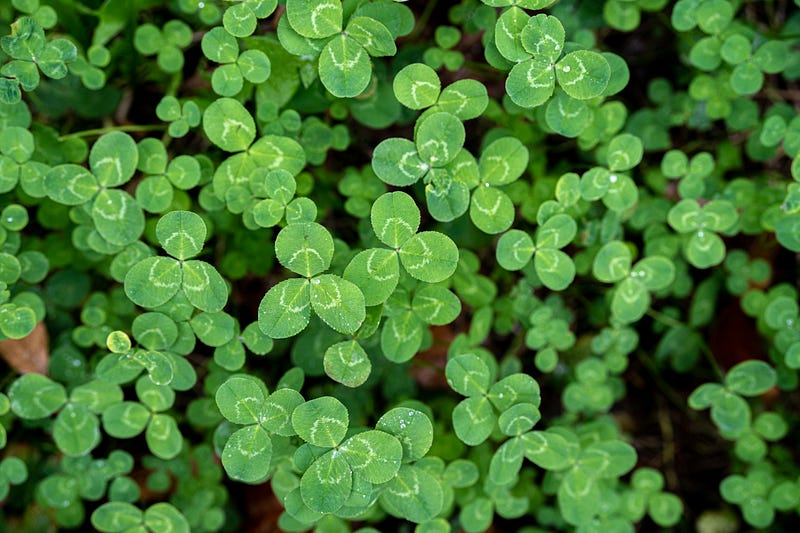
Photo by Artur Kornakov on Unsplash

The shamrock is associated with Patrick because he used it to illustrate the Christian Trinity. It is now the official flower of Ireland.
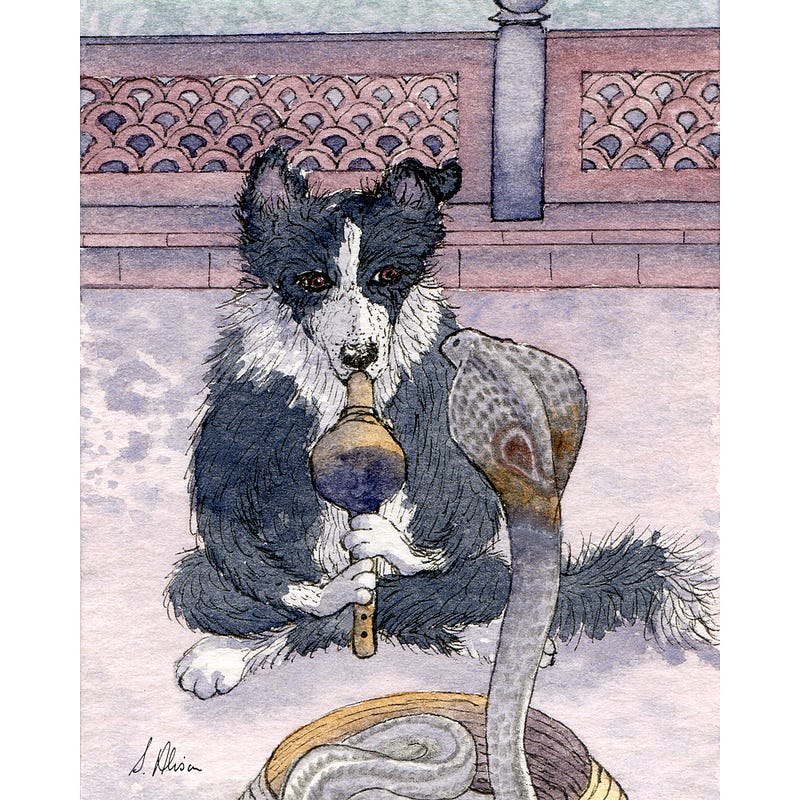
Painting by Susan Alison

Legend says Patrick banished snakes from Ireland. However, it would seem the absence of snakes in Ireland was noted a century or so prior to his birth.

(And, anyway — what’s wrong with snakes?)

Painting by Susan Alison

About 12% of Americans are of Irish ancestry, and more than one hundred Saint Patrick parades are held across the USA in March.

Apparently there are more Irish people living in the US than in Ireland.

The first New York City parade took place in 1762. This parade is the world’s oldest, and the largest in the US with over 150,000 participants. The route it takes is 1.5 miles long and is lined with three million or more spectators. It takes five hours to parade by.

The shortest St Patrick’s Day parade runs for ninety-eight feet in Arkansas.

While these are taking place in NYC and Arkansas, the Chicago River is dyed green; and Guinness sales double.

It’s good to wear green on St Patrick’s Day because, if you don’t, you’re liable to be pinched(!) It’s a good day for corned beef and cabbage, too.

Painting by Susan Alison

There follows some greetings for your cards, a poem, and a video involving line-dancing sheep:

“May your days be many, and your troubles be few.”

‘St Patrick’s Day’ by Jean Blewett

There’s an Isle, a green Isle, set in the sea, Here’s to the Saint that blessed it! And here’s to the billows wild and free That for centuries have caressed it!

Here’s to the day when the men that roam Send longing eyes o’er the water! Here’s to the land that still spells home To each loyal son and daughter!

Here’s to old Ireland — fair, I ween, With the blue skies stretched above her! Here’s to her shamrock warm and green, And here’s to the hearts that love her!

Shaun the sheep and pals wish you every line-dancing, foot-tapping best thing, too!

“May you live as long as you want, And never want as long as you live.”

“As you slide down the banister of life, May the splinters never point the wrong way.”

Card design by Susan Alison

Susan’s Amazon Page / Susan’s Etsy Store/ newsletter sign-up

Read more from me: © Susan Alison 2022

Art
Dogs
St Patricks Day
Cards
Leprechaun
Recommended from ReadMedium
avatarDavid Rudder
Wings That Swing Me

Into flight.

2 min read