
Spare Us the Misogyny When it Comes to What a Woman Wears
Chinese pianist Yuja Wang likes to dress as sensually as the music she performs, and there’s nothing wrong with that
I never heard of Chinese pianist Yuja Wang or classical music critic Norman Lebrecht until recently, when Lebrecht wrote a damning critique of the classical prodigy titled “Spare us the skintight sonata.”
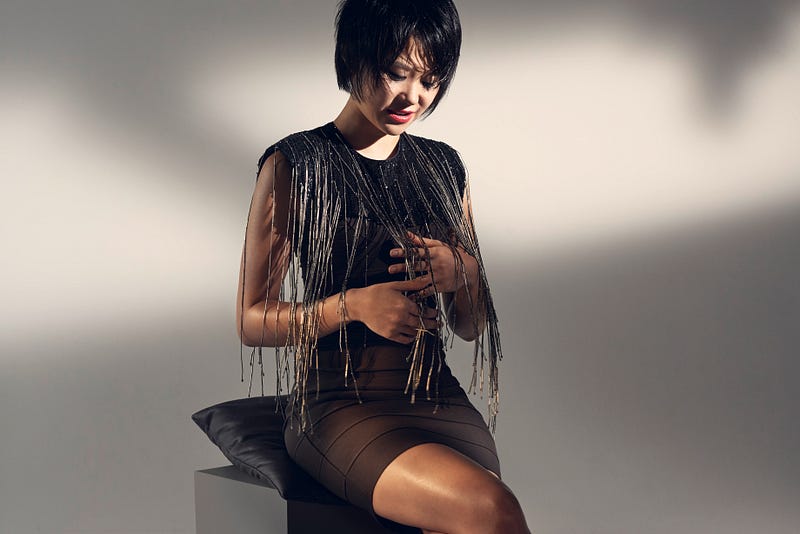
The acclaimed 34-year-old Wang likes to wear barely-there outfits and 5-inch stilettos, a topic of discussion as much as her stellar performances. Apparently, the 73-year-old Lebrecht is just too distracted by her show of legs to focus on her music:
“Onto a stage bounds a young woman in a backless gown slit up to the hip, or a micro-dress cut an inch below the butt. That’s right, I’ve turned into a fashion critic. And the moment these words appear I shall come under a social-media onslaught for committing the unforgivable male offence of reporting what a female artist wears, instead of how she plays. My defence is that Yuja Wang does everything possible to draw attention to her appearance. She habitually changes costume in a concert interval to show more leg and she feeds the internet with a stream of selfies in halter tops and skimpy shorts
Lebrecht also once took issue with Wang wearing sunglasses during a recital in Canada, calling her “attention seeking” (she actually had a traumatic incident at the airport hours before, and was hiding her red, swollen eyes) so it’s not just her teeny dresses he objects to — it’s that she seeks attention.
How dare a woman do that? How dare she draw attention to her appearance?
Yet, here’s what men like Norman Lebrecht just don’t seem to understand: men set up the system that women have to navigate— women are only valuable when they’re young, attractive and sexy—but then men get upset if a woman, working within the harsh parameters set up for her, fully owns it: OK, you want young, attractive and sexy? I’ll give you young, attractive and sexy, but I’m doing it my way. Which is exactly what Wang is doing.
Wang says she dresses the way she does less for the male gaze, but because that’s what feels good when she plays so passionately. As she tells The Guardian:
“If a beautiful male pianist wears tight pants, I’m not going to think, ‘What’s in those pants’? OK, maybe. But if the music is beautiful and sensual, why not dress to fit? It’s about power and persuasion. Perhaps it’s a little sadomasochistic of me. But if I’m going to get naked with my music, I may as well be comfortable while I’m at it.”
When she showed up a decade ago in a tiny, tight orange dress and stilettos, the Los Angeles Times critic observed that if “she walked the Academy Awards red carpet in this outfit, she would have been noticed. She looked great.”
So, attention = good. But maybe only in places where the public deems it appropriate.
More importantly, he noted, she played great, and after the initial shock of her skimpy outfit, that’s all that seemed to matter:
“when the cameras got enough of her legs and showed her fingers, there was a noticeable collective concentration on the music, and more gasps and bursts of applause at crazy hard passages. In the end, Wang managed to make her dress serve the music, and that’s something.”
When I wrote a few months ago about the controversy over older women like Madonna and Halle Berry displaying their sexuality, it seemed to me that it’s only a problem when women themselves take control of the narrative and celebrate their body publicly the way they want to instead of having others exploit and profit from it.
I’m not exactly sure that’s what’s behind Lebrecht’s inability to focus on Wang’s mastery of the piano and the “crazy hard passages.” But this part of his essay reveals much about what he thinks not just about Wang, but about women in general:
“She is 34 and there’s a sell-by date to consider. Workouts and makeovers can offer an extension but not past 40. She needs to find a new dimension, evidence of a soul that transcends her physicality. … What she needs is a comprehensive change of wardrobe.”
A “sell-by date”? One that ends at 40? Is he talking about a woman who can slay anything written by Chopin, Brahms, Handel, Schubert, on the piano, or a woman who is still able to pop out a baby? Or is he saying that a woman past 40 can’t wear a “micro-dress cut an inch below the butt” and 5-inch heels (of course she can)? Or is he saying that a woman becomes invisible and irrelevant at age 40, or at the very least no one will want to look at her when she’s 40, no matter how much she seeks attention?
If women try to live by the rules people like Lebrecht have created for women, we will never feel good in our own skin. There is a huge swath of people — hetero and bisexual women, as well as gay men — who are trying to fit into what men consider attractive, which is generally pretty narrow, and then suffering if we don’t.
I am done giving them all that power. Aren’t you?
Hey, I’ve written on a book on changing the narrative about middle-aged and older women, “Not Too Old For That: How Women Are Changing the Story of Aging” (April 2022). Interested? Follow me here, on Medium, and on Twitter, Facebook or Instagram. If you want to support my work and have unlimited access to my writing and the writing of all Medium writers, please become a member here. And if you’re interested in changing marriage, please check out the book I co-authored, The New I Do: Reshaping Marriage for Skeptics, Realists and Rebels. You can support your local indie bookstore (please do) or order it on Amazon. We’re also on Audible.
For more of the good stuff, follow Fourth Wave, where we’re changing the world for the better, one story at a time. Got one of your own? Submit to the Wave!


