
Older Women Display Their Sexuality — Get Over It
Madonna and Halle Berry are just the latest to get unfairly criticized for posting half-naked photos of their aging bodies
Madonna and Halle Berry have caused a kerfuffle.
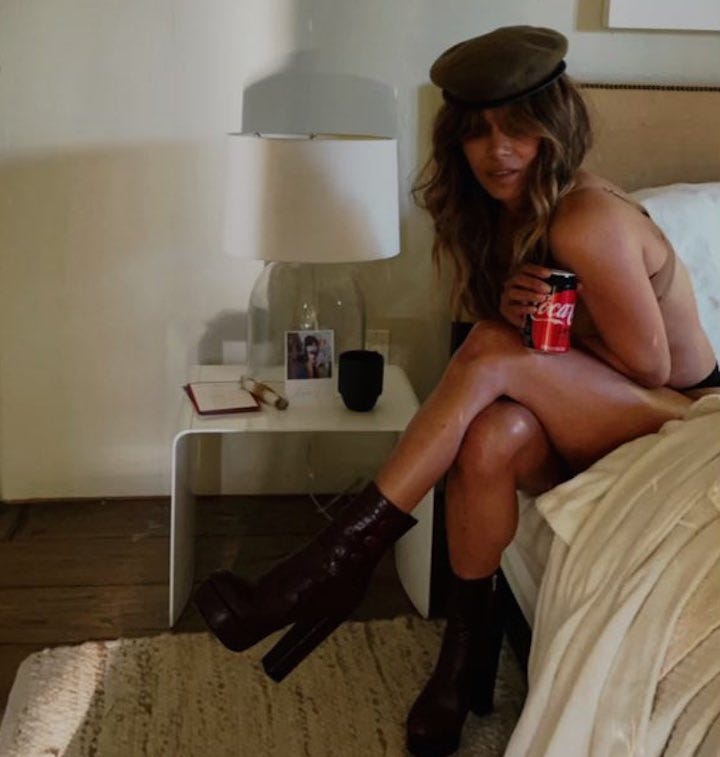
The 62-year-old Madonna posted a few selfies on Instagram in a barely there leather bra, lacy lingerie and a hat a few days ago. Berry, 53, did similarly, posting a photo of herself on Twitter in her underwear, a kick-ass pair of boots and a hat. (What’s with the hats, gals?)
So of course there were some negative comments about the inappropriateness of women like them baring so much skin because, you know, age — ew.
Similar comments were made when model Paulina Porizkova, 55, posted a nude photo of herself in support of Elizabeth Hurley, 55, who also faced criticism after sharing a topless bikini photo to Instagram, earlier this year. As Porizkova noted:
“When I was in my twenties and thirties, the less I wore — the more popular I was. In my forties, I could walk around practically naked and illicit nothing more than a ticket for public indecency. At fifty, I am reviled for it. ‘Put on your clothes, grandma. Hungry for attention, are you? A little desperate here? You’re pathetic.’ Why is sexiness and nudity applauded in a woman’s youth and reviled in her maturity? Because of men.”
It’s that youth and beauty thing. But is there something going on beyond just that? Could it be that the real problem is when women take control of the narrative and celebrate their body publicly the way they want to instead of others using women’s youth and beauty to promote consumer culture?
Maybe. As psychology professor Wendy Walsh says:
“People can get confused when women use their sexuality and wisdom. When it comes to power, it’s often either/or.”
Right — and maybe we don’t want women to own their own power.
Sadly, it wasn’t just men laying on the judgment; it was also women.
When Jennifer Lopez and Shakira turned the Super Bowl 2020 halftime show into a display of fierce female power and unapologetic female sexuality — at 50 and 43 years old respectively — many viewers were shocked and upset, prompting more than 1,300 complaints to the Federal Communications Commission. Some found it pornographic and not “family-friendly,” whatever that means. A similar reaction occurred when Cardi B and Megan Thee Stallion performed their No. 1 song “WAP” — a song that celebrates female pleasure — at this year’s Grammys, although the rappers are in their 20s.
But some women had a more inward-focused reaction to J.Lo and Shakira’s performance, such as middle-aged author Jennifer Weiner: Oh, do I have to look like that at 50, too?
Writing in The New York Times, Weiner says:
“Some members of my social-media community were in awe. Others — myself included — were feeling personally judged. I’m just a few months younger than J. Lo, and, with every birthday, I have asked: Is this the year it ends? … Women watch a 15-minute show featuring elite entertainers and, in some cases, end up feeling bad about ourselves. … Women see inspiration or goals we’ve failed to attain or a pretty stick to beat ourselves up with. We hear a voice (sponsored by Weight Watchers and Revlon and Planet Fitness and Jenny Craig) whispering, This can be yours, if you just work hard enough.”
Weiner admits that she would rather happily wrap herself in her Eileen Fisher tunic and embrace turning 50 “as the year when I’d be done.”
“Done” is an interesting word. Done with what? Done with seeking the male gaze and thus done with having to primp, dye, Botox, wax, diet and exercise to compete with other women for that gaze at an age when society tells us we’re invisible anyway, so why even bother?
Maybe you can relate to her desire to be “done” and also seek more forgiving clothing (and who doesn’t during the pandemic?), going gray, not wearing makeup. But why isn’t there room to celebrate or champion — or at least not feel diminished by — women who don’t want to be done?
Why can’t women of any age own our sexual power and display it in whatever way we want, including wearing barely there lingerie (and, evidently hats)?
As professor Kathleen Woodward writes:
“Slips and bras need not signal only youth. I’ll repeat this. The feminist aging body, entailing gender and sexuality as the continuing site of identity, need not be a contradiction in terms. … Aging — for ourselves individually and for all of us, no matter our age — is a feminist issue.”
It is. So how are we going to own it?
Hey, I’m working on a book on changing the narrative about middle-aged and older women, “Not Too Old for That: How Women are Changing the Story of Aging.” Interested? Follow me here, on Medium, and on Twitter, Facebook or Instagram. If you want to support my work and have unlimited access to my writing and the writing of all Medium writers, please become a member here. And if you’re interested in changing marriage, please check out the book I co-authored, The New I Do: Reshaping Marriage for Skeptics, Realists and Rebels. You can support your local indie bookstore (please do) or order it on Amazon. We’re also on Audible.
For more of the good stuff, follow Fourth Wave, where we’re changing the world for the better, one story at a time. Got one of your own? Submit to the Wave!


