
Space for Hope: We’ve Shown That We Can Be Better
This is the story of my town. Amid our tragedy and unrest, maybe there is still reason to be optimistic about America.
The United States is on edge. Jobs are disappearing. Cities burn. Protestesters ask why we see the same injustices over and over. The Washington Post maintains a helpful database of police shootings. In 2019, 41 unarmed persons were shot, and a simple table shows that black citizens are much more likely to be killed by police than other races:
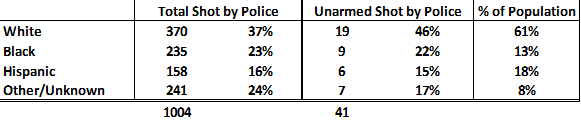
Some point to high-crime inner-city hotbeds as the cause. They miss that those neighborhoods suffered a century of segregated or failing schools, redlining, damaging urban renewal, failed public housing experiments, and other forms of either malice or neglect.
Angry, frustrated Americans of all races wonder why we see the same stories played out over and over. We feel like nothing changes. Yet amid this history, there is evidence that the country’s culture does change, has changed for the better, and continues to evolve.
Just look at my town.
Mansfield, Texas in the 1950s and 1960s
Twenty-five miles southeast of Fort Worth, barely still inside Tarrant County, was the small town of Mansfield. In 1956, it might have been one of the most obviously and aggressively segregated towns in the country.
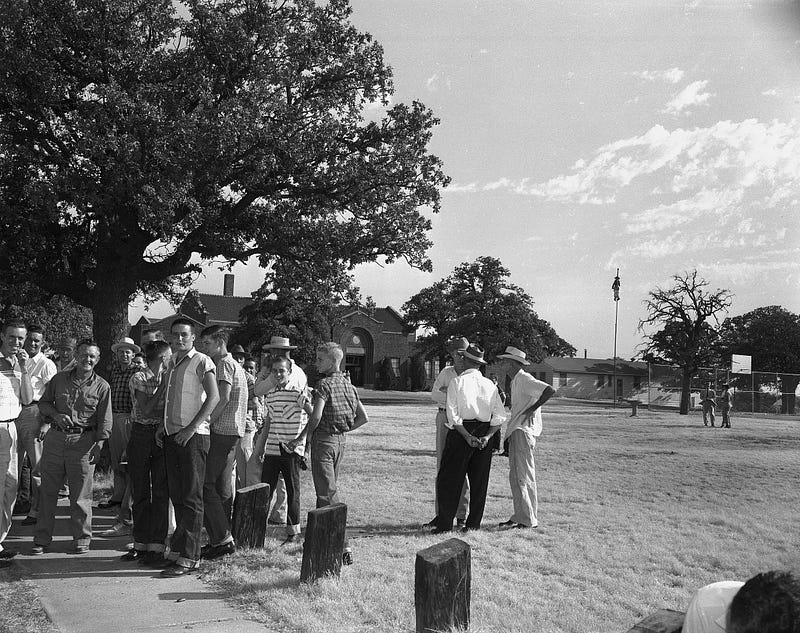
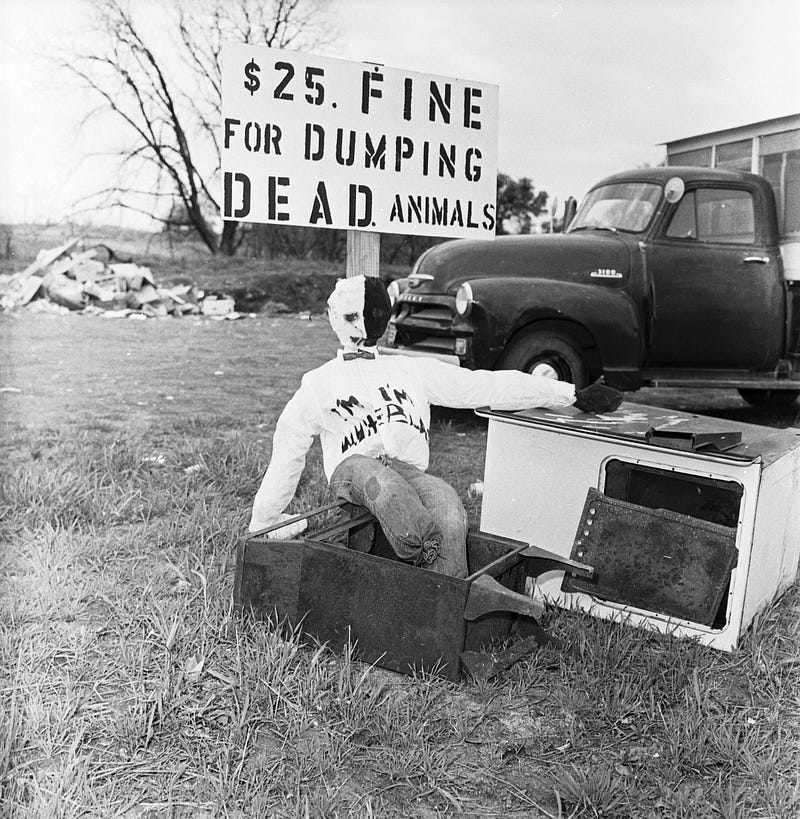
After Brown v. Board of Education of Topeka, school segregation was ruled inherently unequal. Black students in the Mansfield area and the NAACP sued for admission, and a federal court ordered desegregation. The town turned ugly. Effigies of black men were hung around town, including from the flagpole of the high school. Protests by white residents broke out, and they gathered by the high school to physically block black students from registering.
This was state-sponsored discrimination in action. The mayor supported segregation. The police chief supported segregation. The superintendent of schools supported segregation. Did the governor step in? Yes! He sent the vaunted Texas Rangers to Mansfield to prevent desegregation. A tiny town in Texas defied the federal government and President Eisenhower, with an otherwise laudable civil rights record, just ignored the issue. [For more information on Mansfield protests, see this piece by Coshandra Dillard, with some great pictures]
This action perhaps emboldened Orville Faubus, governor of Arkansas, and Eisenhower ultimately deployed federal troops to Little Rock in 1957. George Wallace used the same playbook in 1963 to try and stop integration at the University of Alabama.
Against this backdrop, another significant racial drama played out in Mansfield. By 1960, John Howard Griffin had already led a dramatic life that most only dream of. Born in 1920, he left Texas for France at fifteen years old to study music and medicine. When war came he joined the French Resistance for a few years, then returned to the US and joined the Army Air Corps. He was sent to the Pacific, married a native woman, was blinded in an air raid, returned to the US, converted to Catholicism, married a music student, had four kids, spent time paralyzed, wrote famous novels, and recovered his sight.
This would be enough of a lifetime for many, but Griffin, a resident at his family’s farm in Mansfield through the 1950s, decided to explore racism in America. He shaved his hair, injected medication to darken his skin, and tanned as much as he could. Then, he spent six weeks in 1959 traveling the South as a black man.
His pursuits made no friends in Mansfield, a town where someone seemed to make a hobby of hanging in effigy. A half white/half black likeness was hung downtown, and Griffin and family were forced to flee their home to Mexico. There, he documented his travels in the famous ethnography, Black Like Me.
Mansfield schools finally desegregated in 1965, reportedly the longest that any school district defied a federal order. It was not the last segregation battle in the country; as recently as 2018, a federal judge had to order a school district in Mississippi to desegregate.
Mansfield schools today
When I moved to Mansfield in 2001, I didn’t know any of this history despite being born and raised a few miles away in Irving, Texas. Like tens of thousands of others in the late 90s and early 00s, I came to the town with a young family chasing good schools, cheap housing, and a short commute to my job. By this point, the effigy makers had mellowed or died off.
With the influx of young families, we opened a second high school in 2002 and are now up to six high schools. The town perceives Mansfield high, two miles down the road from the original pictured above, as the ‘rich’ and ‘white’ school, but in reality, the school district balances roughly equal numbers of poor and minority students attend each. Outcomes aren't markedly different between the schools either.
Around five years ago I took my youngest daughter to the daddy-daughter dance at her elementary school, in our upscale but not wealthy neighborhood. I’m not a fan of daddy-daughter dances, but she had her heart set on it. What I saw in the elementary school gym warmed my heart and fills me with hope to this day.
I saw little girls dancing together. Black girls, Hispanic girls, Asian girls, middle-eastern girls, white girls. They hugged, they laughed, they danced, and they played. With the innocence of elementary school children, they neglected to clump together and sort by skin tone. Now aware of Mansfield’s history, I knew that this sort of casual mixing would have been unthinkable in the 1960s.
For those who don’t have children, realize that while sweet and unspoiled, third and fourth graders are also smart and can still be cruel. They know rules, and they know ‘different’ and ‘other.’ The only explanation for what I saw is that their parents had failed to train them to hate properly, and if you want hate to work it really helps to start young.
Demonstrations today
This weekend I witnessed another sign unthinkable in Mansfield in previous generations. As our family drove through town, clumps of protestors gathered at busy intersections holding “Honk if you’re not a racist” signs. A steady stream of cars honked.
There were black demonstrators, white demonstrators, and those in between. There were young adults and younger teenagers. I wonder if any of the little girls I saw dancing together were standing on the street corner together in solidarity?
Instead of responding with shouts and bricks as one would have expected in the 1950s, people were bringing them water, Gatorade, and popsicles to ward off the hot day.
I see occasional racism in our town. Sometimes when you are a pasty white middle-aged man, others assume you will agree that there are too many of ‘them’ around. Sometimes it’s just casual assumptions. No, dumb-ass, that’s not the school janitor, that’s the Assistant Principal.
As far as I know, our police are professionals doing the best jobs they can, but then again I go years at a time without interaction, so maybe I don’t have the perspective to judge. Regardless, George Floyd can happen anywhere, in any police department if it allows poor training, lax discipline, or tolerates officers with a pattern of misconduct.
What I can say with some level of certainty, based on what I observe, is that this is not the same town with the same culture as the 1950s and 1960s. Marching to prevent integration was a normal, acceptable sort of thing that the majority of citizens supported. Today, standing on a corner protesting racism is a normal, acceptable, and community-supported activity.
We have become a better society and can be better still.
You might also like:
Brian E. Wish works as a quality engineer in the aerospace industry. He has spent 29 years active and reserve in the US Air Force, where he holds the rank of Colonel. He has a bachelor’s from the US Air Force Academy, a master’s from Bowie State, and a Ph.D. in Public and Urban Administration from UT Arlington. The opinions expressed here are his own.


