
South to North: My Journey Through Vietnam Part 2
From the enchanting city of Hue to the misty Northern Highlands.
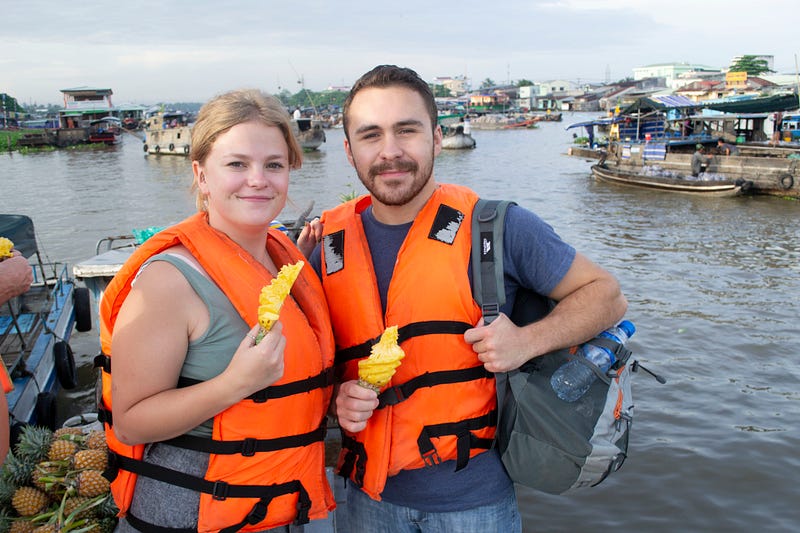
In Part 1, we made our way from the largest city in Vietnam, the high-energy Ho Chi Minh City (Saigon) to central Vietnam where we visited the quaint town of Hoi An and the mystical former capital of Hue. In Part 2 we make our way north to the current capital of Hanoi and beyond…
Hanoi
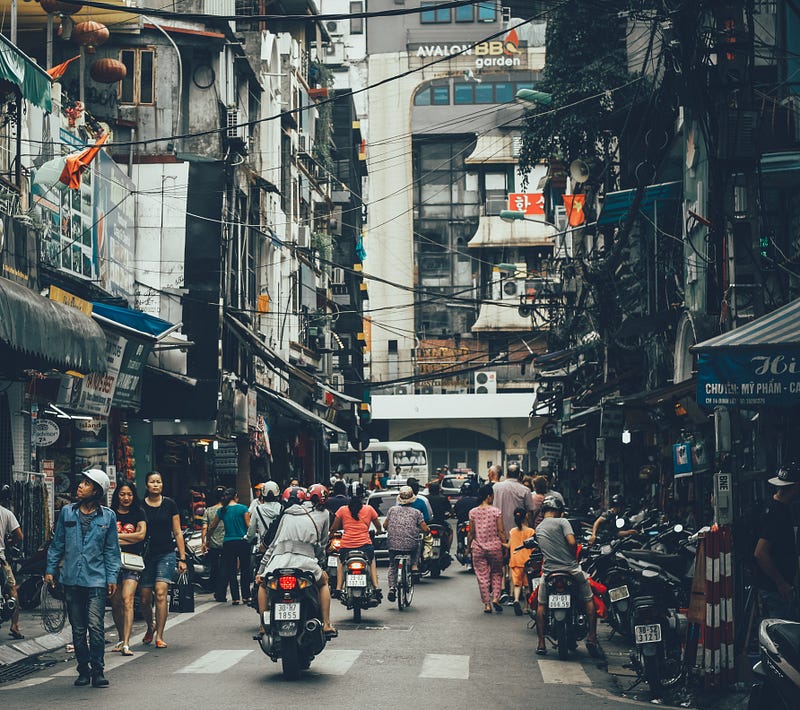
Hanoi is unapologetically Vietnamese. The country’s raw capital is bursting with character and timeless charm. Hanoi is my favourite place in Vietnam, and if given the chance; it may be yours too.
For me, Hanoi was love at first sight. I adored everything about this city from its age-worn narrow streets to its authenticity and unwavering stubbornness, it is clear from first glance that Hanoi is for the Vietnamese.
Hanoi is a maze of yellow paint-peeled streets, a city artistically decaying under the weight of time. Exploring Hanoi is a pleasure, with something interesting to see around every corner. Whether that be a peaceful stroll around the picturesque Hoan Kiem Lake or getting lost walking through Hanoi’s themed streets:
Pro-Tip: When exploring Hanoi, look out for themed streets. Acting almost like shopping aisles, each of these themed streets specialises in a particular item. For example, you have a flower street, a metal work street, a lantern street and even a street dedicated to Hanoi’s prized dish, Cha Ca (Vietnamese stir-fried fish with dill).
You can even pay your respects to Vietnam’s former leader Ho Chi Minh (Ok this one is for the morbidly curious type, you can literally view Uncle Ho’s preserved body through a glass tomb, the whole activity is quite an odd experience).
When the sun sets and your busy day exploring this great city has come to an end, taking in Hanoi’s nightlife is a great way to cap off the evening. Hanoi doesn’t have the same bar culture as Ho Chi Minh City, with a lot of its action taking place around the previously mentioned Hoan Kiem Lake. The lake provides a backdrop for a whole assortment of activities, from street performers and dancing to music festivals and even a boxing event!
Hanoi is a heavy hitter on the Vietnamese food scene too, with the aforementioned Cha Ca and bún chả being the city’s main dishes. Bún chả is a dish composed of grilled lemongrass pork patties and vermicelli rice noodles served with a bundle of herbs and a broth made from Vietnam’s famous nước cham.
However, despite my love for Hanoi, I found that many fellow travellers didn’t share my thoughts on the capital. Whenever I raved about Hanoi, I was met with a mostly negative response to the city, which was a shock to me. To each their own, but Hanoi is mandatory when visiting Vietnam.
Would I go back?: I would actually like to live there for a few months and use it as a base to explore the Red River Delta region of Vietnam. The city is very liveable, with a variety of things to see and do, along with a good selection of restaurants. Most of all though, it captures the essence of urban Vietnam. I would suggest leaving about 3–4 days to get a good feel for the city, Halong Bay and Tam Coc are only a couple of hours away by road making Hanoi the perfect base in the north.
Halong Bay
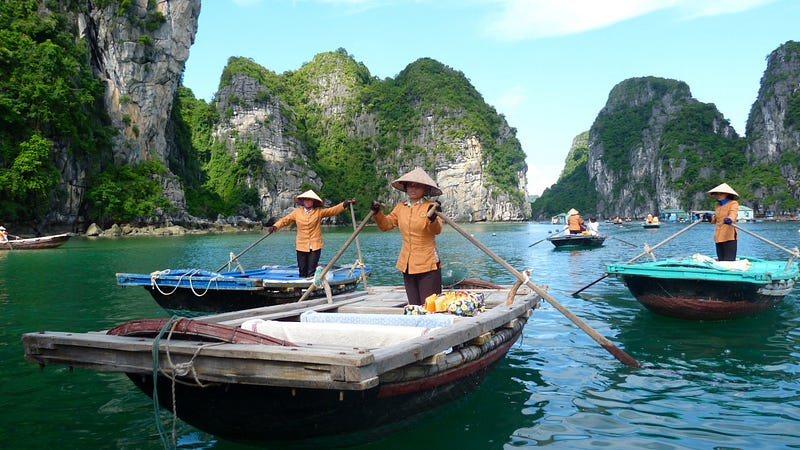
Halong Bay is a cluster of domineering emerald-topped limestone karsts, drowned by the serene jade waters of the Gulf of Tonkin. No trip to Vietnam is complete without visiting these glistening gems of the South China Sea.
Iconic and breathtaking, Vietnam’s most popular destination is sure to win over the hearts of even those hardest to please. We enjoyed our overnight tour of the relaxing Halong Bay, but there are a few things we would do differently next time.
While the 1,600 islands/islets are largely uninhabited, the bay is pretty busy with tour cruise boats. Your stay amongst the beautiful, tranquil scenery will be occasionally invaded by the dreaded party boat, whose blaring pop hits pull you from the moment at any given notice. Luckily, most of the boat groups are respectful of noise pollution but be aware that you may be placed near a party boat in the evening.
The tour we took was fairly small, with only 8 passengers on board, including us. However, all the boats seemingly take you to the same few spots within the bay, leading to a pleasant albeit samey experience.
All in all, Halong Bay is a must-see location in Vietnam; but there are better ways to see the bay if you have a few days to spare on your trip. Next time I would like to stay in the local area on one of Halong Bay’s islands and use a private tour or even a local fishing boat to explore the bay instead. This way we would have more room to relax, without the crowds and rigid schedule. It would be cool to see the floating villages too.
Would I go back?: Yes, but I would do it as I stated above. Cruise boats are a good choice if time is tight, but do thorough research before booking the excursion to avoid disappointment. Halong Bay isn’t the only bay, with Bai Tu Long and Lan Ha bays being more than worthy alternatives, with a fraction of the tourists.
Northern Highlands
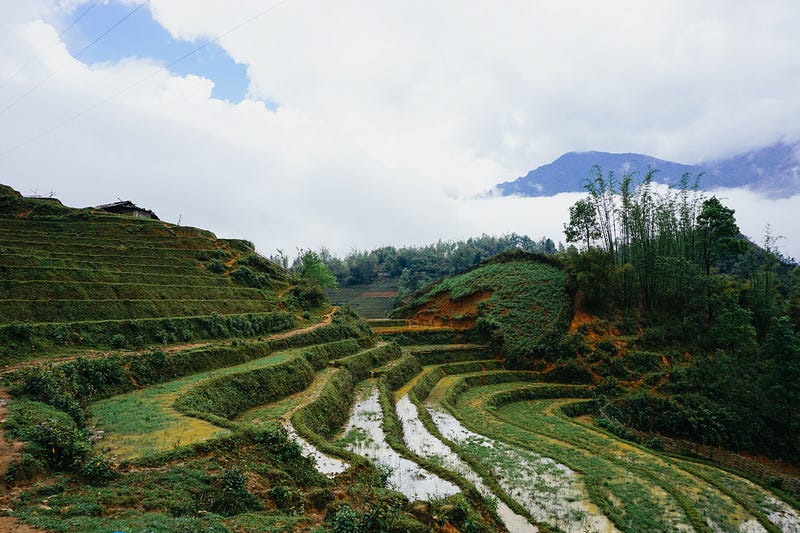
OK full disclosure, we didn’t actually do that much within the Northern Highlands region of Vietnam. Our stay was fairly brief and our naivety was on full display, as we didn’t quite realise how difficult it was to get from place to place in this area. However, our time here was really enjoyable and made me hungry to explore the place in greater depth.
Our brief glimpse of this region taught us a lot about Vietnam. Firstly, how truly diverse the country is, with a plethora of beautiful and interesting people groups inhabiting this high altitude, mountainous region. There are a total of 54 ethnic groups in Vietnam, with the Northern Highlands being home to a large portion of these people groups.
Unsurprisingly, this region is completely different to the rest of Vietnam. Everything from the lush, picturesque rice paddy fields, that gently cascade down the imposing hills, to the people, who proudly display their ethnic heritage with their stunning, intricate outfits. This region is totally unique.
Culture Fact: The Hmong people make up about 1.3% of Vietnam’s population. The Hmong population is further broken down into 4 distinct groups, the Hmong Hoa, Black Hmong, White Hmong and Green Hmong, all of which can be found throughout this region. You don’t have to go as far as Vietnam to meet a Hmong community, with California and Minnesota having substantial communities of their own.
The Northern Highlands offer some of the country’s best hiking opportunities, with a variety of routes and trails to cater for both inexperienced and experienced hikers alike. However, if you are new to hiking I would suggest staying around the Sapa area, which offers some easier routes whilst still providing a taste of the Northern Highlands.
Pro-Tip: Source out a decent guide. Usually, the tour guides in Vietnam are local women from one of the many ethnic groups, as they have expert-level knowledge of the surrounding areas. Their English is also pretty good and they make great hiking companions (though they may show up even the fittest hikers, trust me they scale mountains as we would walk to the corner shop).
Be warned, even though the women and children from these areas are quite friendly, you will often be asked to buy their goods. This region is very poor and the people supplement their agricultural income by selling various items, usually knitwear. They never come across as rude or aggressive, but my God are they persistent! Buying their stuff or accepting them as paid guides is a nice way of helping the local community. However, they often work in groups and will likely ask that you buy something from each of them, which may become difficult in a region with a handful of ATMs.
Would I go back?: Yes, I would love to explore the region properly. We stayed with a local Black Hmong family which was amazing and hugely insightful. However, I didn’t feel like we did the region justice in general. Next time I would love to explore Ha Giang and more remote areas further north-east.
Mekong River Delta
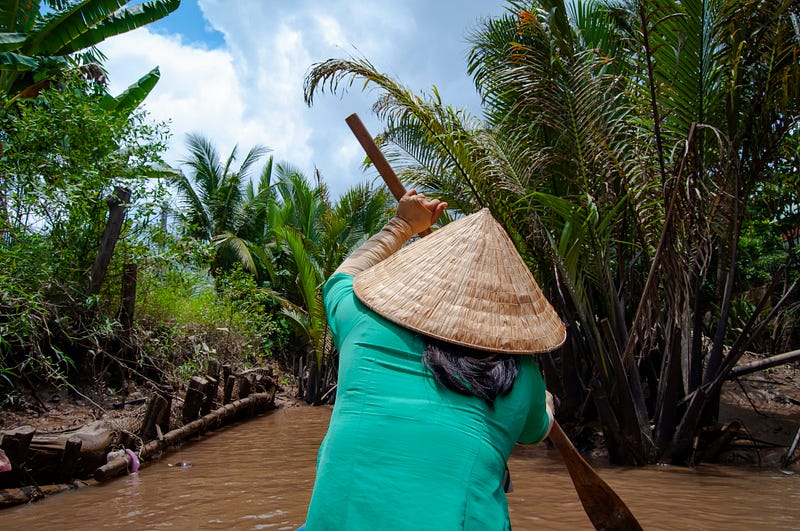
Our time in northern Vietnam had come to an end, so we made our way back to HCMC to catch our return flight. We set our sights on the mighty Mekong River Delta with half a week to kill.
The Mekong River Delta region of Vietnam was always a place I wanted to visit, however, we couldn’t find space for it during the planning phase. Thankfully we did.
The Mekong River Delta was another major highlight of our trip and a thoroughly immersive experience. The surging, muddy Mekong’s escape into the South China Sea had provided several civilisations with a chance to thrive in these fertile lands. A visit to the Mekong River Delta of Vietnam shows a unique way of life revolving around these life-giving tributaries and stems that make up the Mekong Delta.
Cruising through the various waterways that scar this beautiful land was one of the greatest experiences of the entire trip. With luscious overgrowth flanking on either side, the muddy waters of the Mekong take you on a relaxing journey through the bread-basket (or rice-basket) of Vietnam.
Watch the people of the Mekong use this geographical masterpiece for all aspects of life, from transport and business pursuits to fishing and bathing.
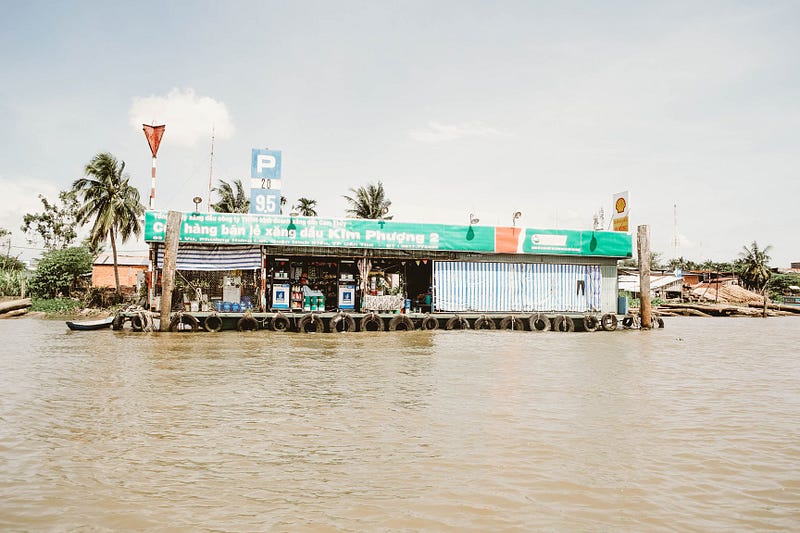
To get an overall taste of the Mekong River Delta in a short time, we went down the tour route. Our local tour guide was great and a good laugh, he gave us a good taste of this fantastic region, from the coconut sweet-making factories to the rice paper factories (I had a go at making rice paper, botched the whole bloody process, much to the dismay of the cook).
We even dined Mekong style on a variety of local grilled goods. They were fresh out of river rat, so we got frog, quail and snake instead. The frog and quail were really good… the snake on the other hand was like a rubber band, in both texture and taste, even the flavourful lime, chilli-salt and fish sauce mix couldn’t save this dish.
Would I go back?: Definitely, the Mekong River Delta has a lot to offer, whilst being a laid-back and relaxing experience. Actually, our next visit to Vietnam will focus on the south, so we will hopefully be back soon.
Will you be going to Vietnam soon?
Vietnam has been my favourite travel destination to date, so I may be a little biased, but I would recommend Vietnam any day. Feel free to comment about your own Vietnamese adventure! Give us a follow to keep up-to-date as we continue our Vietnam travel series.
Thanks for reading!


