
Sorry, I Only Just Saw Your Message!
A rant about loose friendships when we reach adulthood

It was dinner time. We were talking about our day. The hubby had a busy day as usual, full of meetings, and I had just spent a chilled out day with our son. But we both agreed that we felt drained and that after putting our son to bed we would just chill.
And then, I don’t know why or where it came from, I heard myself say this:
“For as long as you like me, I know I deserve to be liked.”
Then I burst into tears.
Young Adulthood Was Easy

When I left school and went to university I adopted the classic IDGAF attitude. I made some friends and felt truly accepted for the first time — I was bullied at school and even though the bullying stopped after just a year or two, I never felt comfortable enough to come out of my shell in that place.
New city, new educational establishment, new me, I thought. And great it was — my uni days were the best.
After university, things got a bit difficult. All of my best friends, the ones I can call upon day and night and who knows me inside out, the friends I consider a signed and sealed deal never to be broken — they were all hours away, either scattered around the country or abroad. All of them.
But I was in my early 20s and I felt confident and optimistic about making new connections through my work. Low and behold, I made some great friends and it felt easy. A lot of my new friends were in a similar situation to me — fresh out of college, open-minded, exploring a new town with the goal of making new friends. I fitted in perfectly.
Rejection as An Adult Hit Hard
I worked for an internet security company and I got to know a colleague who sat opposite me for a big part of my time there. She was funny, intelligent, a great listener, and just an overall good person. We’ll call her Vanessa.
When I moved away and changed job, I tried to keep in touch with my old colleagues. Some replied, some withered, and some I am still very close to today.
But I was particularly confused that I had not heard back from Vanessa after sending her a couple of messages because I regarded her as a good friend. At first, I thought nothing of it and left it a few weeks before trying to make contact again.
When she didn’t react, I felt a bit hurt. On the rare occasion that she did respond, but in short, it hurt more.
Never had I considered that our friendship wasn’t mutual. I started to feel almost betrayed because I didn’t consider her just a colleague, or even an acquaintance. We had inside jokes and shared lunch breaks. We discussed our pasts, our families, our ideas, and our dreams. I confided in her, and she reciprocated.
I thought we were close friends and felt a little fooled to consider that she didn’t feel the same.
I tried to email Vanessa a couple more times, and, since I received no reply, my last email was (although in hindsight a bit immature) a huge rant to her. I never got a response.
Understanding How Friendships Work
The thing is, I get that friends come and go. We lose contact, we have our busy lives, and we move on.
I also get that some friendships are only temporary.
Some only work when you have one thing in common that you do together, like your job or a gym class. As soon as that one thing stops, the friendship can easily vanish.
I have let many friendships go without feeling bitter, hurt, or angry.
But this one stung.
I still think about Vanessa, and I haven’t seen or spoken to her all this time — it’s been 6 years.
It’s possible that she hated me all along but couldn't bring herself to tell me.
Or the polar opposite — it’s possible she didn’t give me a second thought because we no longer had the one thing in common that held us together, and I was overthinking it.
It would be nice to believe that there was nothing personal, but somehow, I can’t convince myself of that.
It was the fact that I thought rejections from friends were only dealt out during childhood, so it hit me when it happened during my early adulthood. It dawned on me that it was going to be harder to maintain friendships as I grew older.
Flexibility of Friendships
Devonte was gobsmacked. I tried to laugh off my random burst mid cry and he said,
“No. We have to talk this out. This is serious.”
I told him once again how much I miss my friends. The ones I have no insecurities about whether or not they like me. The friends I’m not worried about offending. The friends who accept me and I accept completely and wholeheartedly. The friends who can see me crumble in front of them and will tell me to get a grip as they hold me. The ones I laugh with till we cry.
The ones who are scattered all over the country and abroad.
Don’t get me wrong — I know people where we live I have a few friends here.
But I feel like now that I’m in my 30s it’s really hard to get past this invisible barrier. Partly because the kids are distracting and don’t allow much room for adult conversation — I hold no grudge there.
But also partly because it’s hard to know when you’re past the superficial stage in friendship.
A deep conversation might actually push a friend away if they aren’t ready to become vulnerable.
There seems to be this difficulty understanding when the feelings towards a friendship are mutual.
Whatever happened to the days where you walked up to someone and just asked them to be your friend? And to the days where if you had an argument, you could just say you did not want to be their friend anymore — and then make up the next day because you learned to get through the tough times?
Instead, we seem to be in a phase where we get secretly offended at someone’s comment but do nothing about it but complain behind their back to our spouse or other friends.
We accept the excuses about how they only just saw our message, sorry! But they don’t try to reschedule a time to meet up.
We seem to just be OK with a friend who keeps saying “we should meet up!” but never actually sets anything up.
Why are fresh adult friendships so loose?
Devonte asked me what I would do about it.
I brushed him off and carried on complaining:
I wish I had a close friend who could just turn up unannounced. I wish I had a friend who lived next to me who could drag me out for a run with her. I wish I had a friend whose kids I could babysit so she could go out with her partner on a much-needed date, (post-lockdown — the restaurants are still closed). A close friend who knew she could depend on me and I on her for a laugh, a rant, or simply, company.
“True friendship comes when the silence between two people is comfortable.” – David Tyson
I reasoned that I get everyone is busy. Everyone works, whether it’s for an employer or themselves, and everybody has a family.
I am also very good at keeping busy — and this is it. If I don’t need to prioritise them, I can make use of my time. I am not bored. But I do have wiggle room and I want to have someone to distribute my time to who also wants to prioritise their time with me.
And to those who do give me some of their time or wish to but genuinely cannot — this article is in no way aimed at you, and I sincerely appreciate you.
I Googled “friendships during adulthood” because I needed to know I wasn’t the only one who felt this way. I wasn’t wrong.
Kristen Fuller M.D. for Psychology Today said:
“A common complaint from many post-college adults is how difficult it is to make new friends.”
According to the Internet, many think the same things I do — it’s hard to make and maintain friendships in adulthood. We just all seem to accept that as being a part of life.
I don’t know whether I can accept it. Don’t get me wrong — I’m all for having acquaintances and loose connections — I think all types of friendships are beneficial. And maybe I’m being childish for wanting, or expecting, more.
I am a mother, a wife, a sister, a daughter, a worker, and a friend. Friendships make the cut in my list of top priorities.
The Lesson
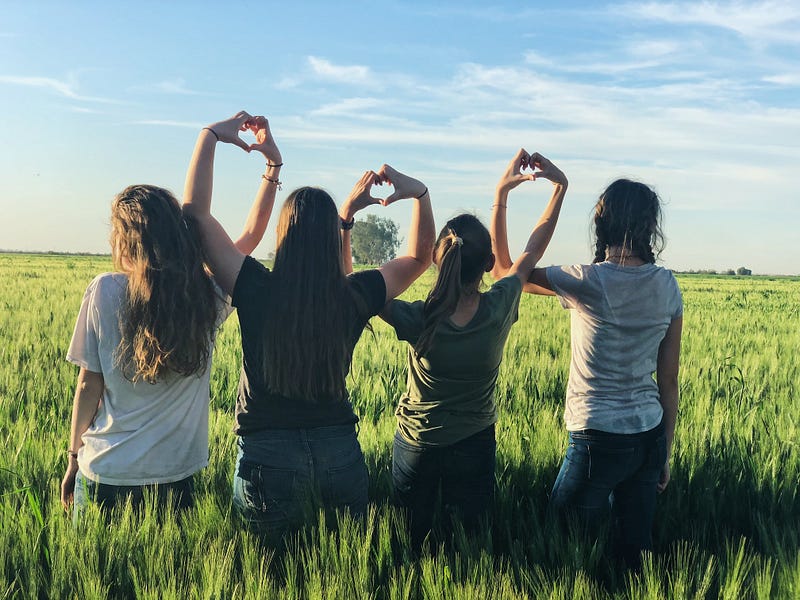
Devonte told me to just get up and call the friends I cherish, no matter where they are, for those are the ones who need a lifetime of nurture. He’s absolutely right — they are just as and if not more important than the new friendships I seek — it would be pointless trying to make new friends if that meant sacrificing my existing ones.
The problem is me. But not in the sense that I am not likable, or a bad friend.
It is my perspective that needs to alter. I won’t accept that the potential for new deep emotional friendships isn’t there.
But I can’t just complain and do nothing about it.
I decided that I would let go of my negative feelings surrounding friendships and focus on reacting more positively.
If a friendship doesn’t grow, I need to be able to move on swiftly rather than dwell. The saying Devonte shared with me a while ago, “fail fast” came to mind — I could apply it to friendships, too.
By stripping away the expectations I hold of others I would be doing myself a favour rather than them.
I will put my all in regardless, and if it is not reciprocated, I shall move on to the next one, until one sticks. In the meantime, I will keep nurturing old friendships, for they are worth it.
“Never idealize others. They will never live up to your expectations. Don’t over-analyze your relationships. Stop playing games. A growing relationship can only be nurtured by genuineness. “ – Leo F. Buscaglia
Sylvia Emokpae, thinker and philosopher, is passionate about self-love and motherhood. See more work like this.


