
MUSIC INFLUENCES
Sometimes I’m Hank Marvin
You’ve got to be a damn good guitarist for your name to go into the dictionary
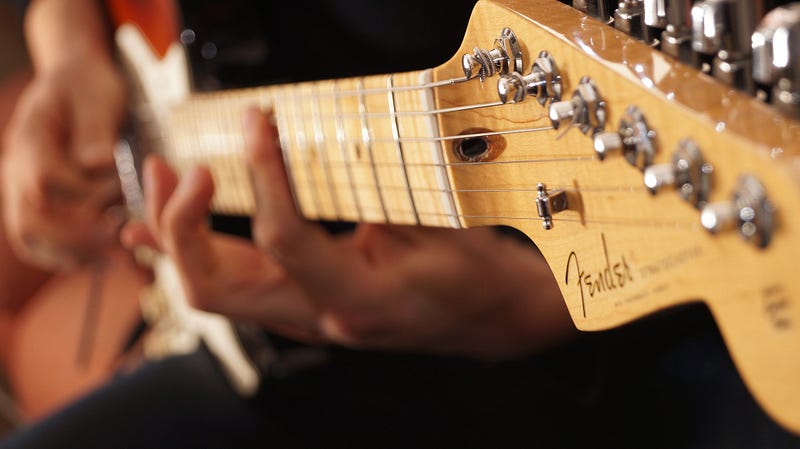
I’m not often Hank Marvin, but it can happen.
I’m occasionally Hank Marvin when I first get up in the morning or after a long run. Sometimes my wife is Hank Marvin too. She didn’t know this at first because she’s not from England so I had to explain it to her.
When you’re a guitar legend, like Hank Marvin, you can become an adjective in British English — Hank Marvin means very hungry; it’s Cockney rhyming slang for starvin’ (starving).
Will the real Hank Marvin please stand up and play?
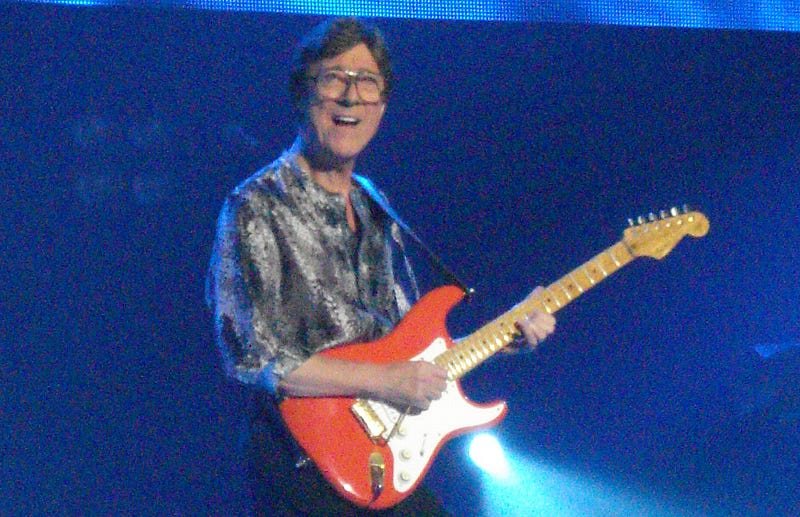
Hank Marvin is one of England’s greatest and most influential rock and pop guitarists. He influenced most of the UK’s next generation of rock guitarists in the ’60s and ’70s.
Hank Marvin fully deserves to be in the British English dictionary as an adjective because Jeff Beck, Eric Clapton, Peter Frampton, George Harrison, Mark Knopfler, Brian May, Jimmy Page, and Pete Townsend all said so. He influenced every one of them.
Hank Marvin was not his real name though; he was born Brian Rankin in Newcastle England but Brian Rankin isn’t very rock and roll. It also doesn’t rhyme with anything useful apart from spankin’ which isn’t really appropriate. Not very rock and roll either. Or maybe it is?
So Brian changed his name to Hank Marvin because that sounded cooler, like Chuck Berry, Chet Atkins, T-Bone Walker, and Buddy Holly, where Marvin got his look from.
None of the generation of British guitarists who followed after Marvin changed their names and became a new adjective, although in the case of Brian May he was already a modal verb so he had an assured spot in the dictionary. (Note to self — maybe I should send this article to The Writing Cooperative rather than the Riff?)
It all started with Elvis
Hank Marvin was the lead guitarist for The Shadows who had around 70 hits in the UK and many places around the world, although never in the USA. With Cliff Richard as the sometime singer, they dominated the UK charts until the appearance of The Beatles changed things forever.
The Shadows were formed as the backing band to Cliff Richard, a singer groomed by the UK music industry to be the ‘British Elvis Presley.’ Cliff was a good enough singer but his attempt to be an English Elvis was quite frankly, embarrassing.
Still, we got our first look at the young Hank Marvin playing guitar behind Cliff as he sang, pulled odd faces, and did some rather peculiar dance moves.
We also see the first appearance of the choreographed trademark dance steps of the Shadows. I said Hank Marvin was a great guitarist, I didn’t say he was cool.
Cliff Richard quickly reverted to what he really was, a middle-of-the-road light-entertainment singer. He hosted family-friendly TV shows and made feel-good films hoping that YouTube and The Riff would never be invented to embarrass him by showing clips of his earlier pathetic attempts to copy Elvis.
The Shadows continued as Cliff’s backing band but simultaneously recorded and toured independently. This is where Hank Marvin gained his status as one of the UK’s most influential guitarists. Despite his links to Cliff Richard.
The Shadows, no longer in the shadows
When they weren’t backing Cliff, the Shadows were an instrumental band built entirely around Hank Marvin’s guitar playing.
They started out calling themselves The Drifters which was bizarre since the US-based Drifters were already famous. The predictable lawsuit threat soon flew its way across the Atlantic and they changed their name to The Shadows.
After a couple of failures on their own, they hit the big time with the instrumental, Apache in 1960. Apache showcased the classic Hank Marvin vibrato Stratocaster guitar style for the first time to a wide audience. It was a phenomenon and Apache was №1 in the UK for 5 weeks and a massive hit in Australia and across Europe.
The Shadows further honed their choreographed stage movements as seen from another top ten hit, FBI.
Other worldwide hits (minus the US) included Man of Mystery, The Frightened City, Kon Tiki, Wonderful Land and Foot Tapper.
Hank Marvin guitar legend
Hank Marvin introduced the concept of the lead guitarist being the band leader and the definitive sound of the band to UK popular music. This is seen through his protegés Eric Clapton, Mark Knopfler, and Jeff Beck as band leaders and the sound of their own bands and also in the instantly individual guitar sounds of The Smiths (Johnny Marr), Led Zeppelin (Jimmy Page), and Queen (Brian Modal Verb).
As soon as you hear any of these groups you know exactly who they are, even before the singer starts.
Marvin’s guitar sound was so dominant in The Shadows they went through three different drummers and six bass guitarists and no one really noticed. Marvin also wrote many of the Shadows hits before Lennon and McCartney made singer-songwriters the standard for bands.
Hank Marvin is living proof you don’t need to be a rebel and live the rock and roll lifestyle to be a guitar legend. You can be a bit of a nerd too. Now that’s really cool.
If you enjoyed this piece of historical music culture, you can find more here:
Or my failed attempts to be a rock star here: